
Third-party data use fell from 75 to 61 percent in just two years
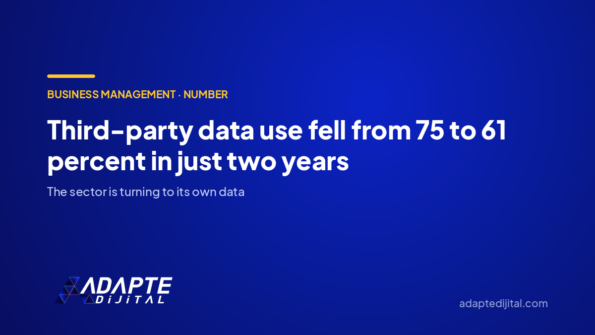
The industry is dropping bought data and turning back to its own customers. The measurement shows this shift plainly: third-party data use among digital marketers fell from 75 percent to 61 percent in two years.
This is what you have been doing for years anyway. Now the large players are arriving at the same place. They just took longer to get here. Size slows everything down. Turning a large operation takes years. Your advantage is that you can turn in a week.
What the Number Says
BU BÖLÜMÜN ÖZETİ
- The fall is fast and deliberate
- Regulation is not the only cause
- Owned data takes its place
Three findings.
The fall is fast and deliberate
Fourteen points across two years is a movement the sector rarely produces. This is no slow drift but a conscious change of direction. The decision was made and it is being applied. Budgets have already moved. Reversing them is unlikely. Money that moves once rarely moves back.
Regulation is not the only cause
Privacy rules certainly play a part but they do not explain it alone. The accuracy of bought data is also under question. Nobody is confident those names genuinely care. Costs rise every year while returns fall. An equation breaking on both sides does not last long. The exit decision writes itself. The numbers make the argument on their own. Nobody needs convincing.
Owned data takes its place
The budget freed up moves toward directly collected information. So the sector is switching from buying to accumulating. The direction has settled and no reversal is expected. The reasons look durable too. Neither rules nor costs are going backwards.
What the Headline Misses
BU BÖLÜMÜN ÖZETİ
- Use is not ending, weight is shifting
- You were already on this side
- Your own data is property
Three details.
Use is not ending, weight is shifting
Sixty-one percent remains a high figure. Bought data has not been abandoned. What changed is the order of priority; it used to come first and now sits second. Mixed use is becoming common. Both can run side by side. What changed is which one leads the plan.
You were already on this side
That market always belonged to large budgets and small businesses never entered it. So you are not experiencing a loss here. The side that needs to adapt is the large organisation losing volume. You were already standing in the right place.
Your own data is property
Bought data is rented and paid for again every year. Your own data accumulates and stays yours. Across three years the difference shows clearly. One leaves nothing behind. The other writes itself into your company’s value. The gap between them widens annually.
What a Business Should Do
BU BÖLÜMÜN ÖZETİ
- A half-hour inventory
- First move: gather the scattered
- Next move: grow it steadily
Three steps.
A half-hour inventory
Write down what you hold: customer list, past enquiries, contact records. Considerably more usually turns up than expected. It was scattered rather than absent.
First move: gather the scattered
Data sitting in five places cannot be used at all. Bringing it into one place is the first and easiest step.
Next move: grow it steadily
Every new customer means one more row. Those rows accumulate. Three years later you hold something nobody can sell you.
Rented data gets paid for every year. Your own data gains a little value every year.