
Beymen ran a bag contest with 12 student teams, what does a brand gain from campuses?
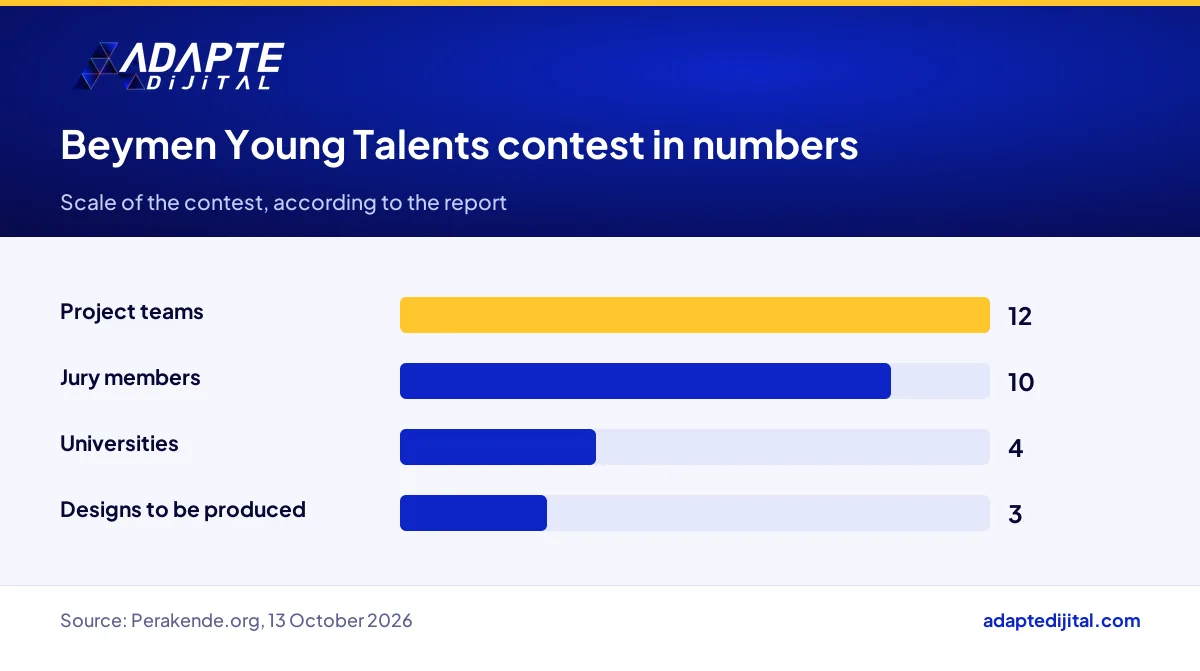
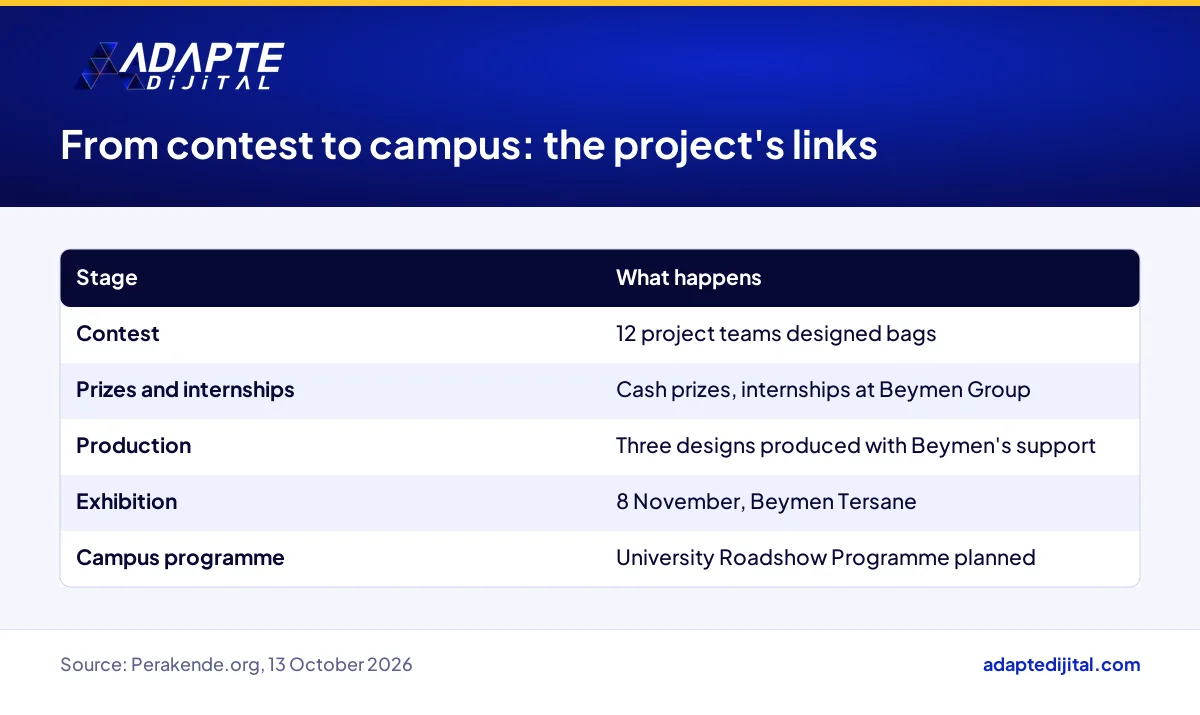
Beymen ran a bag design contest for 12 student project teams from four universities, all inspired by Anatolia’s cultural heritage, and announced the winners at a press event at Istanbul Modern (Perakende.org, 13 October 2026). Teams from Marmara University took first and second place, and a team from Istanbul Bilgi University came third. Winners received cash prizes and internships at Beymen Group; the prize amounts were not disclosed.
For a brand owner, the takeaway is that a contest run with universities can grow into a much longer chain than a one-day event. A project that continues through internships, production and an exhibition gives the brand both a talent pool and a story it can tell for months.
Which universities competed in the Beymen Young Talents Design Contest?
Students from Mimar Sinan Fine Arts University, Marmara University, Bahçeşehir University and Istanbul Bilgi University took part. In total, 12 project teams each developed a bag design rooted in Anatolia’s cultural heritage. The contest was set up as part of Beymen’s exhibition “Timeless Treasures – The Eternal Journey of the Bag”.
Why does Beymen tie its design contest to a cultural heritage line?
Because the contest continues a line that has run since 2023 rather than standing alone. In 2023, its 50th year, Beymen created a trilogy called “Golden Opulence”, made up of an exhibition, a book and a documentary. The 2026 contest hands the same heritage to students for a fresh reading.
Why does a retail brand like Beymen gain from a design contest with universities?
Three gains stand out: reputation, a talent pool and content. All three are visible in Beymen’s case. International names on the jury feed reputation, internships feed the talent pool, and the exhibition and production feed content. How much the brand gains depends on how long the project keeps going after the awards.
Who do university design partnerships like Beymen’s affect in retail?
Luxury, fashion and accessory retailers that lead with design and brand identity gain most. Chains that compete only on price, with no clear identity, may get little back from a project like this. Universities, exhibition venues and the workshops on the production side are affected indirectly.
What does Beymen’s contest mean online and in search?
A contest like this produces content that can link a brand with a cultural context in searches such as “Anatolian motif bag” or “Tulip Era design”. For that, the project needs a permanent page on the website, updates stage by stage and links from press coverage. Social posts alone do not hold that value.
What should a brand owner considering a university project like Beymen’s do this week?
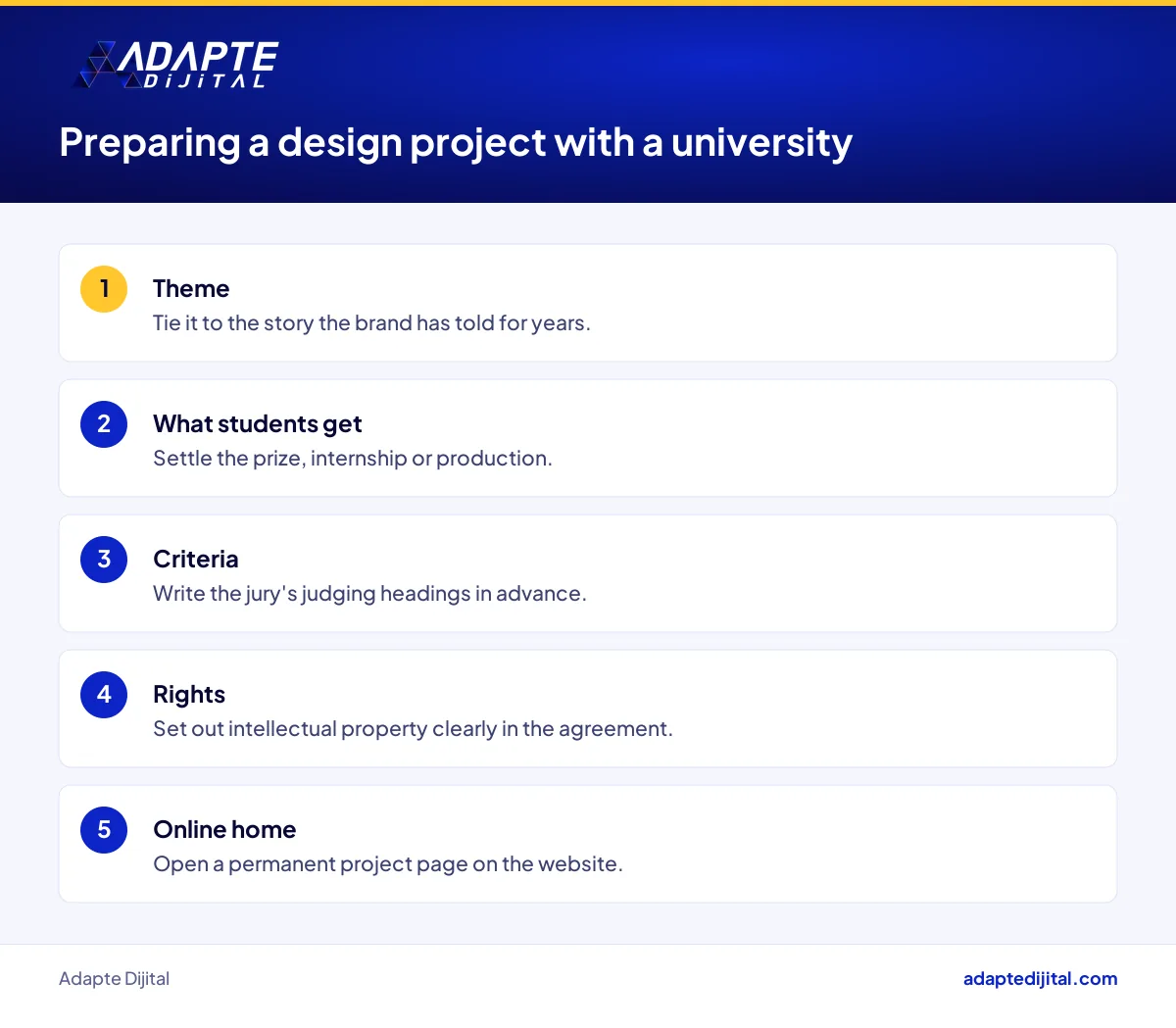
There is no need to launch a big contest this week; preparing the ground is enough. Our recommendation as a desk comes in three jobs: tie the brand story to a single theme, plan a first meeting with a nearby design department, and build the project’s online home in advance.
Quick Summary
- In the Beymen Young Talents Design Contest, 12 project teams from four universities designed bags (Perakende.org, 13 October 2026).
- “Tulip Elegance” came first and “Dilruba” second (Marmara University), with “Hatır-ı Zer” third (Istanbul Bilgi University).
- Winners received cash prizes and internships at Beymen Group; amounts were not disclosed.
- Three designs will be produced with Beymen’s support and shown in an exhibition opening at Beymen Tersane on 8 November (Perakende.org).
- The contest continues the cultural heritage line Beymen began with “Golden Opulence” in 2023 (Marketing Türkiye).
Short Glossary
- Talent pool
- Talent pool is the group of candidates a brand gets to know early, used to find people it may work with later.
- Curator
- Curator is the person appointed to decide an exhibition’s subject, works and narrative.
- Brand story
- Brand story is the narrative framework used to tell customers a brand’s values and history consistently.
Frequently Asked Questions
Next Step
If you would like to plan a university design project for your brand, with its theme, timeline and project page, fill in the Consult Your Expert form, and our desk will draw up the first-meeting list with you.
Sources: Perakende.org, 13 October 2026 · Beymen Group, management page · Marketing Türkiye, November 2023
Updated: October 2026
Sık Sorulan Sorular
According to Perakende.org, “Tulip Elegance” came first and “Dilruba” second, both from Marmara University teams. Third place went to “Hatır-ı Zer” from an Istanbul Bilgi University team. The inspirations named across the projects include the Tulip Era, Ottoman coffee culture, palace crafts and goldwork.
The criteria fall under three headings: fit with the creative brief, use of colour and pattern, and design approach. The jury had 10 members. Among them were Valentino CEO Riccardo Bellini, Fédération de la Haute Couture et de la Mode executive president Pascal Morand, and Rachid Mohamed Rachid, CEO of Mayhoola and chair of Beymen Group.
Beymen Group CEO Elif Çapçı, who also sat on the jury, calls bringing heritage together with a new generation’s creativity “one of the most meaningful ways” to carry it into the future (Perakende.org). The group’s brands are Beymen, Beymen Club, Divarese, Network and Bardot.
As reported by Marketing Türkiye, Beymen shared its research findings in that project with more than 50 global luxury brands. The brands designed pieces inspired by the research. The exhibition opened at Tophane-i Amire, curated by Laurence Benaïm.
According to Perakende.org, Benaïm also sat on the 2026 contest jury. Having the same curator involved in both projects is a concrete sign that the line runs consistently. In 2023 global brands worked on the heritage; in 2026 university students do.
A one-off campaign is forgotten; a theme carried over years settles into a brand’s identity. When customers walk into the store, they match the story in the window with one they have heard before. That match gives them a reason for loyalty that has nothing to do with price.
Working with universities moves a brand from commercial player towards a partner in culture and education. That perception carries particular weight in luxury and design-led retail. A reputation claim still needs measuring before anyone states it; the report offers no data on this.
An internship starts a working relationship with a designer the brand met through the contest. A contest lets a brand see a candidate at work, someone a standard job ad might never reach. The length of the internships was not disclosed.
The design process, jury day, production and the exhibition are four stages that can each be told separately. Every stage creates a headline for the brand’s own channels and for the press. A flow like this outlives a single campaign image.
Brands in categories where design drives the purchase, such as bags, shoes, jewellery and home textiles. In these categories a product’s story is part of what the customer buys, so a design project has more room to pay back.
A retailer with no in-house design team, buying finished goods and putting them on the shelf, gets little from the product side of a contest. For these businesses, prize and production costs may not pay off. A smaller campus event or a window project is a better place to start.
Students add a project judged by a real brand to their portfolios. Universities show their link with the industry through a concrete result. According to the report, a University Roadshow Programme with events on campuses is planned next; no schedule has been announced.
Short sections for each project, with its name, university and inspiration, plus the jury criteria and exhibition details, belong on one page. That layout helps search engines and AI assistants summarise the project correctly. Publishing student names should follow the consent of the people involved.
Links in contest coverage carry authority to the project page. If the link points to the homepage, visitors cannot find the project and the interest goes nowhere. Adding the project page address to the press release prevents that loss.
Even if the exhibition and the store are in different places, an online calendar and map details connect them. Making the event visible in local search can bring visitors all the way to the store door. We look at how an opening event affects traffic in our MediaMarkt Koru Florya piece.
If the brand has been telling one story for years, the contest should build on it. That is why Beymen’s choice of heritage looks consistent. A contest with no theme leaves nothing to remember once the awards are over.
Settle what students receive (prize, internship, production), the judging criteria, who holds the intellectual property and the exhibition timeline. Verify intellectual property and contract matters with the official source; this is not legal or financial advice.
We plan theme selection, the communication calendar and the project page as part of brand consultancy. You can read how a retailer joins an awareness project in our Boyner and Pembe Top piece, and follow other developments on our retail page.
Yes. It is possible to start with one design department, a small number of teams and a clear theme. What matters is offering a next step, such as an internship or production, alongside the prize.
That depends on the contest rules and the agreement between the parties. No information on this was disclosed for the Beymen contest. For your own project, verify with the official source; this is not legal or financial advice.
According to the report, three designs will be produced with Beymen’s support and shown in the exhibition. Whether they will go on sale has not been announced.