
Yves Rocher Foundation awards 1 million TL to Hatay silk, can local craft build a brand?
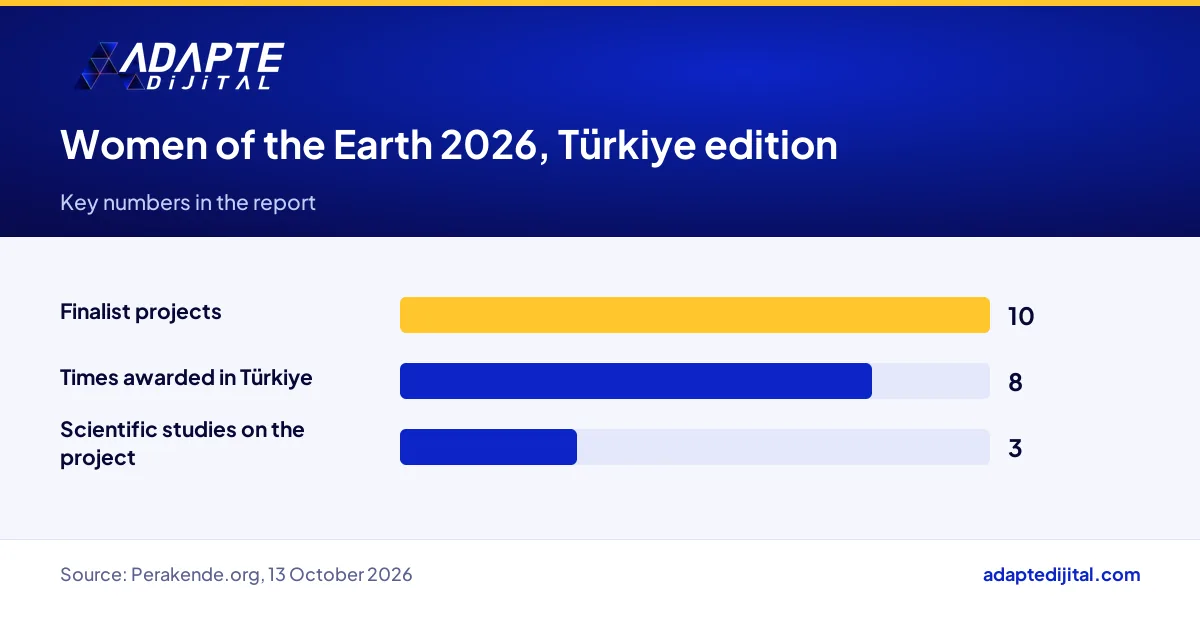
The Yves Rocher Foundation has given its 2026 Women of the Earth Award in Türkiye, worth TL 1,000,000, to Emel Duman for “İpekle Yeniden” (Silk, Once Again), a project reviving the silk heritage of Hatay, a province in southern Türkiye (Perakende.org, 13 October 2026). The award was given in Türkiye for the eighth time, and 10 finalist projects from across the country were assessed. The project has been running since 2017.
For cosmetics, textile and gift retailers, the message is simple: a local production story is a strong signal at the shelf, but only as strong as its paperwork. A brand borrowing an origin story like Hatay silk has to separate fact from claim before chasing sales.
What is Emel Duman’s İpekle Yeniden project changing in Hatay?
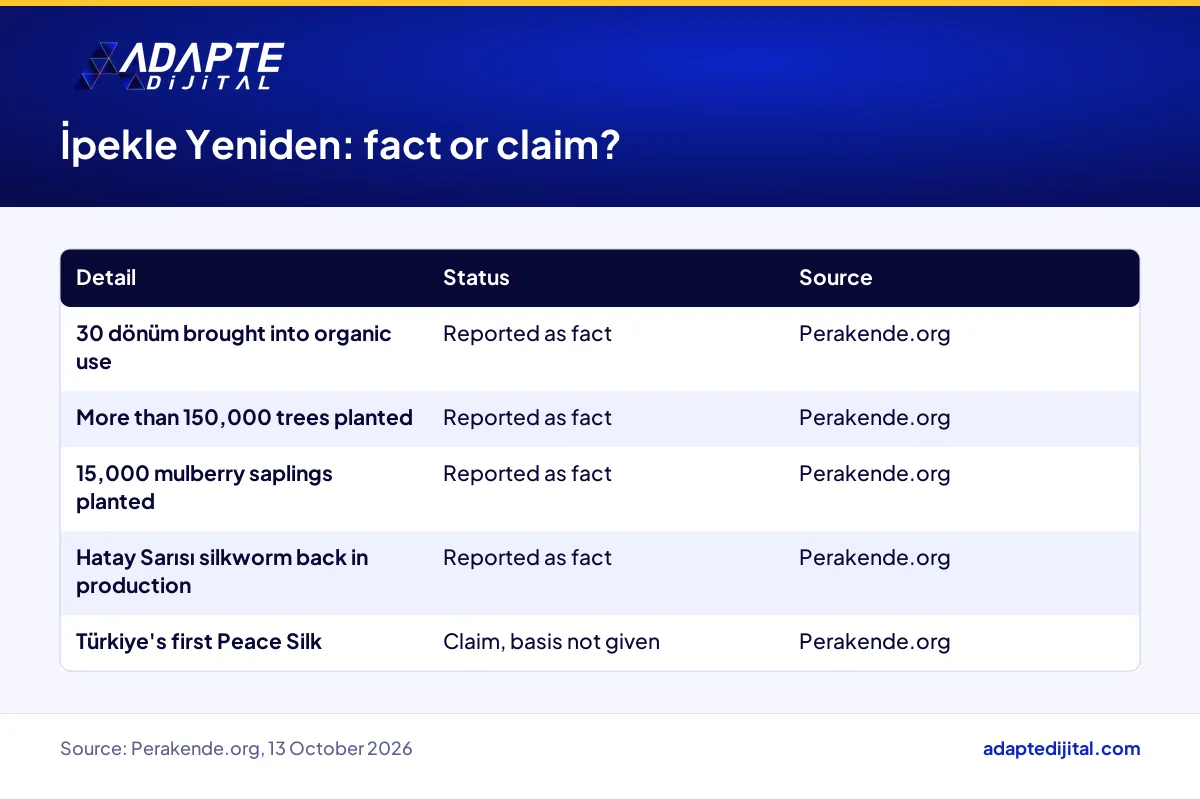
According to the report, the project restores land, plants trees and revives a local silkworm breed. Perakende.org says 30 dönüm of stony, unproductive land (the dönüm is a Turkish land unit of roughly 1,000 square metres) has been brought into organic use. More than 150,000 trees and 15,000 mulberry saplings have been planted. The report does not say whether the trees are on that land.
Why does the Yves Rocher Foundation run the Women of the Earth award?
The foundation focuses on biodiversity and supports women working in ecology through this programme. Founded in 1991 and based in France, the Yves Rocher Foundation is listed as an accredited organisation on the civil society page of the UN Convention to Combat Desertification. Its international name is Prix Terre de Femmes.
Who is affected by the Hatay silk award, and how?
The direct effect falls on local producers and women entrepreneurs; the indirect effect reaches retailers who sell origin stories. Brands using “local” and “natural” without documents come under pressure, because shoppers start asking about the story behind every product.
How can a local production story add value to a cosmetics or textile brand?
In three ways: it sets the product apart, it explains the price and it builds loyalty. On Türkiye’s cosmetics and accessories shelves in autumn 2026, similar SKUs stand side by side, and origin can be the one thing that tells them apart. But the story has to read on the shelf before the shopper reaches the till.
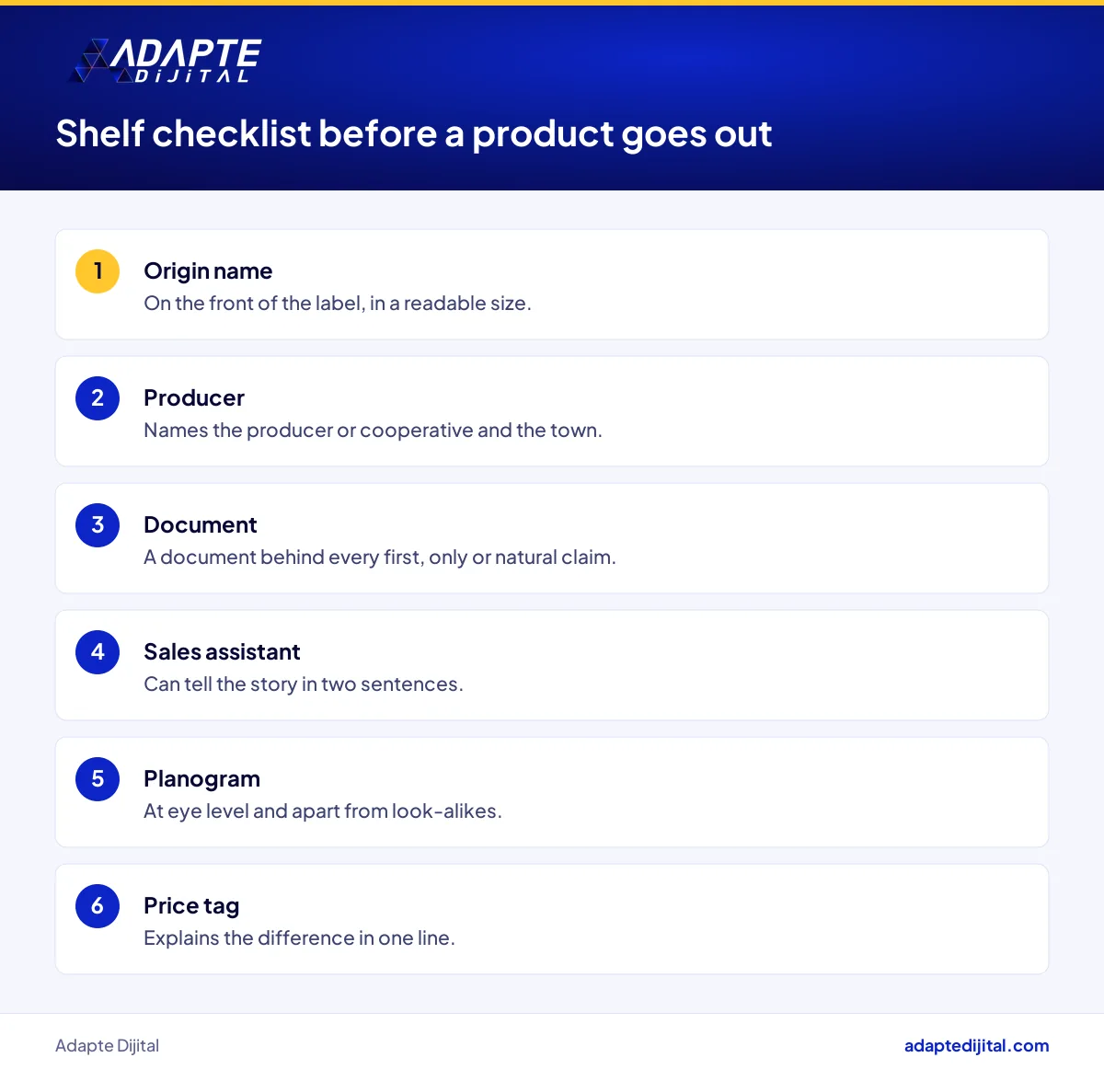
- Is the origin name on the front of the label, in a readable size?
- Does it name the producer or cooperative, and the town?
- Is there a document behind every “first”, “only” or “natural” claim?
- Can the sales assistant tell the story in two sentences?
- Is the product at eye level on the planogram, apart from look-alikes?
- Does the price tag explain the difference in one line?
How can the Hatay silk story be made visible online, in search and on marketplaces?
Award news can lift search interest briefly, and the brand with a product page ready catches it. Four areas matter: product page copy, local search, marketplace listings and content that shows proof.
What should retailers and brand owners do this week after the Hatay silk award?
Three jobs are enough this week: list every local production claim, match each to its document, and bring shelf and product page into one language. Even if no product of yours relates to this news, the audit is the same.
Quick Summary
- Emel Duman won the 2026 Women of the Earth Award in Türkiye with her “İpekle Yeniden” project (Perakende.org).
- The award is worth TL 1,000,000, was given in Türkiye for the eighth time and assessed 10 finalists (Perakende.org).
- Perakende.org reports that 30 dönüm of land was brought into production and more than 150,000 trees and 15,000 mulberry saplings were planted.
- “Türkiye’s first Peace Silk” is a claim relayed by the report, which gives no basis for it.
- A local production story adds value on the shelf only when it comes with origin, producer and proof.
Short Glossary
- Origin information
- Origin information is the label and marketing detail used to tell shoppers where and by whom a product was made.
- Planogram
- A planogram is the layout plan used to set the height and order in which products sit on a shelf.
- Average basket
- Average basket is the retail metric used to measure how much a shopper spends per visit.
Frequently Asked Questions
Next Step
To make your local production and sustainability claims speak one language on the shelf and online, fill in the consult your expert form, and our desk will go through your claims inventory with you.
Sources: Perakende.org, 13 October 2026 · Ekonomi Gazetesi, 8 April 2026 · UNCCD, Yves Rocher Foundation
Updated: October 2026
Sık Sorulan Sorular
Hatay Sarısı, or “Hatay Yellow”, is a local silkworm breed that the report says is back in production. To a retailer, that is origin information: one name that says where the product comes from and that a competitor cannot easily copy. It sticks far better than a vague “natural”.
Perakende.org reports that the project produced Türkiye’s first “Peace Silk”. The report does not define Peace Silk, and it does not say what the “first” rests on. So read it as a claim made for the project, not an established fact. A brand printing those words on a label would want the definition and the evidence first.
According to the report, the project has been the subject of three scientific papers or studies, and in 2026 it received a Living Human Treasure award. The report does not say who gives that award. Still, outside recognition shows the story does not rest only on the project’s own telling.
The award has now been given in Türkiye eight times. According to Ekonomi Gazetesi, a Turkish business daily, the 2026 call opened in April 2026; the programme has recognised more than 450 women in more than 50 countries. The same report says Türkiye took first place internationally in 2015-2016.
The desk reads it this way: the programme moves the brand’s plant-based story onto ground that is not advertising. The winning project is not the brand’s product; the gain builds up in reputation and news visibility. An award and a product claim are not the same thing.
Silk and mulberry producers and cooperatives in Hatay gain visibility. Women running ecological projects see a concrete example ahead of the next call. Concept stores and museum shops get ready-made context for silk with a clear origin.
Brands that print “traditional silk” or “locally made” but cannot show their supply chain struggle. A product whose story lives only on paper just sits on the shelf, and the sales assistant has no answer when asked. News like this makes the question more common.
Cultural tourism, regional online shops and corporate gift suppliers feel it indirectly. A supplier building a year-end gift catalogue could see interest in silk scarves with a clear origin. This is a forecast; the report has no data on it.
A shopper gives a shelf only a few seconds; if the story does not land at first glance, the product looks like its neighbour. A long paragraph on a label is like asking someone to read a novel standing in the aisle. An origin name, a producer name and one piece of proof are enough.
The desk recommends this shelf checklist for any locally made product:
It can, if the shopper sees the reason. Handwork or a local breed explains a product that lifts the average basket. If the reason stays hidden, the shopper walks out without a word.
For products bought by touch, an event turns information into experience. Our piece on JYSK’s experiential event offers a framework that also works for texture-led products like silk. Our retail page keeps similar cases in one place.
State origin, producer, material and the source of every claim plainly. Information with a named source is easier to quote. Adjectives without proof fill the page but answer nobody.
Put the origin name in the title, the place of production in the description and the workshop in the images. Fill in any regional product field. Listing one product under different titles confuses shoppers and scatters reviews.
A store selling regional products can update its business profile with the category and origin angle. Interest from the news can become searches like “where to buy Hatay silk”. A store missing from that search stays quiet, however good its window.
Put every “local”, “natural” and “first” from labels, pages, social media and campaigns into one table, with its document or “none”. For rules on advertising and label claims, verify with the official source; this is not legal or financial advice.
If a supplier runs an ecological or local production project, start its fact file now. Figures, dates, documents and photos serve an application and press relations alike.
One story on shelf, page and press is a brand decision. We handle this work as part of our brand consultancy. Our article on Rossmann Türkiye’s two-days-off model looks at how reputation is built from the inside, too.
The programme supports women working in ecology. According to Ekonomi Gazetesi, the 2026 call opened in April 2026. Check current conditions in the foundation’s official call.
Every origin statement you use needs to rest on a document. If you cannot show the producer, the place of production and the supply record, do not use the phrase. Verify the rules with the official source; this is not legal advice.
Yes, often better than for a big one. A small brand can show its producer’s name, place and face, as long as every claim is documented.