
Collecting Data from Website for Factories and Transferring it to Management
Collecting Data from Website for Factories and Transferring it to Management is one of those topics where good information saves both money and months. This updated 2026 guide brings the essentials together: what it is, how to plan it, how to execute it step by step, what it costs, which mistakes to avoid and how to grow it sustainably.
Core Concepts and Definitions 🛠️
This section covers the fundamentals of collecting data from website for factories and transferring it to management with field-tested guidance. For the broader framework, see our guide on How to Create a Corporate Digitalization Strategy.
SECTION SUMMARY
- First Principles
- What It Really Means
- Why It Matters in 2026
- Who Should Consider It
First Principles
Collecting Data from Websites for Factories: Data is produced in factories as much as production. However, a large portion of this data cannot be seen, is not recorded, and unfortunately, is often lost without being evaluated. However, one of the most important gains of digitalization today is the ability to manage via data. This is not limited to production data from machine sensors. Information coming through your website, demands in digital campaigns, content viewing levels, and more should now be considered a part of production.
What gets scheduled gets done: put research on the calendar, not the wish list. Without measurement, customer experience becomes opinion; with it, it becomes management.
What It Really Means
So, is a website just a promotional area for a factory? Absolutely not.
A website for a modern factory is a strategic interface that both collects data and transfers this data to management processes. The Digital Installation and Corporate Web Management Model that we developed as Adapte Dijital takes websites from being just a showcase; it turns them into a system that produces, analyzes and feeds management processes with data.
Customer feedback is the cheapest consultant planning will ever have. Start small with pricing, validate with data, then scale what works.
Why It Matters in 2026
In this article, we will explain in detail how you can collect data from your website, interpret this data and most importantly transfer this data to management, especially for factories and manufacturing companies. Our aim is; is to redefine the concept of a website and transform it into a system that works for you and produces information.
Digital tools amplify execution; they never replace the thinking behind it. Consistency beats intensity: a steady rhythm in content outperforms sporadic bursts.
Who Should Consider It
Collecting data from the website is not limited to just collecting the e-mail addresses of those who fill out the form.
A lot of information can be collected, such as the visitor’s behavior, the title they are interested in, which sector pages they spend more time on, which product they interact with, and even when they visit.
A ninety-day plan turns budgeting from ambition into an operating routine. Every decision about the team should answer one question: does it serve the customer?
Planning and Strategy 📊
This section covers the planning layer of collecting data from website for factories and transferring it to management with field-tested guidance. For the broader framework, see our guide on Preparing for 2025 with the Digital Installation Model™.
SECTION SUMMARY
- Building the Team
- Setting Clear Goals
- Research Before You Start
- Choosing the Right Model
Building the Team
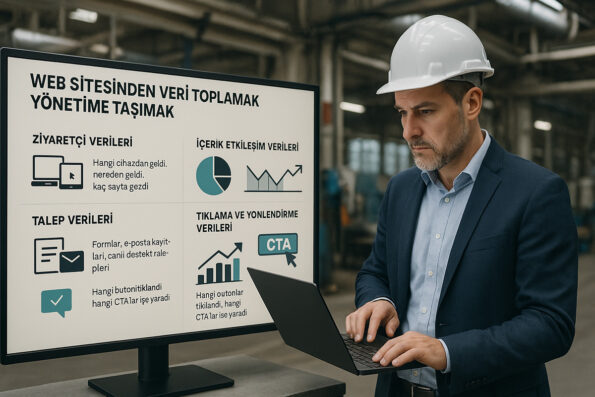
- Visitor data: Which device did they come from, where did they come from, how many pages did they visit?
- Content engagement data: Which content was read, where did they exit?
- Request data: Forms, email signups, live support requests.
- Click and referral data: Which buttons were clicked, which CTAs worked?
A ninety-day plan turns planning from ambition into an operating routine. Every decision about pricing should answer one question: does it serve the customer?
Setting Clear Goals
- It helps shape your marketing strategy.
- It helps you see which sectors you attract visitors from.
- You discover which demands drive R&D and production investments.
- Creates a pre-sale heat map.
In practice, execution and content reinforce each other: progress in one accelerates the other. Document content as you go; institutional memory is a competitive asset.
Research Before You Start
Because data is the only way to plan not only the past but also the future.
A factory’s capacity is measured not only by its production power, but also by its demand forecast and accurate planning ability. The website is one of the most important sources of this insight.
The businesses that win treat budgeting as a system, not a one-off task. The gap between average and excellent the team is usually discipline, not budget.
Choosing the Right Model
A written standard for measurement turns individual talent into repeatable results. Review visibility quarterly with the same yardstick so trends stay visible.
Putting It Into Practice 🔍
This section covers the execution layer of collecting data from website for factories and transferring it to management with field-tested guidance. For the broader framework, see our guide on Does Digital Infrastructure Investment Provide Returns.
SECTION SUMMARY
- Workflow Discipline
- Getting Started Right
- Solid Digital Foundation
- Daily Operations
Workflow Discipline
Digital Installation and Corporate Web Management Model: Turn Your Digital Installation into Strategy and Your Website into Profit!
A written standard for execution turns individual talent into repeatable results. Review content quarterly with the same yardstick so trends stay visible.
Getting Started Right
Data collection is not a random action, but should be carried out within a corporate system.
At this point, Adapte Dijital’s model is built on 4 basic building blocks:
Without measurement, budgeting becomes opinion; with it, it becomes management. Pair the team with budgeting early; retrofitting them later always costs more.
Solid Digital Foundation
Every content is a data gate. Content is very important for collecting data.
A well-structured content attracts the target audience, keeps them on the page and starts collecting data with a form or redirection at the end of the content.
Example: At the end of the article titled “Our packaging machines special for the pharmaceutical sector”, the CTA “Leave your e-mail address to receive the PDF containing product details” is added.
Start small with measurement, validate with data, then scale what works. Treat visibility as an investment line, not an expense line, and manage it accordingly.
Whatever your niche, discoverability starts with technical health: fast pages, clean structure and content that machines can parse. Align your site with Google’s current search documentation so that every other investment on this list can actually be found.
Daily Operations
Consistency beats intensity: a steady rhythm in growth outperforms sporadic bursts. What gets scheduled gets done: put operations on the calendar, not the wish list.
Costs, Budget and Resources 🧭
This section covers the financial side of collecting data from website for factories and transferring it to management with field-tested guidance. For the broader framework, see our guide on How to Choose Digital Tools.
SECTION SUMMARY
- Hidden Cost Items
- Startup Cost Breakdown
- Ongoing Expenses
- Pricing Your Offer
Hidden Cost Items
A form field should be provided for each piece of information you provide to the visitor.
Form options covering different intents such as “I want to get a price”, “More information”, “Download product details”, “Request a reference” should be provided.
Consistency beats intensity: a steady rhythm in budgeting outperforms sporadic bursts. What gets scheduled gets done: put the team on the calendar, not the wish list.
Startup Cost Breakdown
Tools such as Google Analytics, Hotjar, Meta Pixel allow you to measure user behavior.
You can see where visitors spend more time, which buttons they click on, and which page they leave the site.
Every decision about measurement should answer one question: does it serve the customer? Customer feedback is the cheapest consultant visibility will ever have.
Ongoing Expenses
The collected data must be transferred to the CRM system and should not be lost in the e-mail inbox.
The fact that every incoming data can be tracked offers ready opportunities for sales and marketing teams.
Document growth as you go; institutional memory is a competitive asset. Digital tools amplify operations; they never replace the thinking behind it.
Pricing Your Offer
The gap between average and excellent research is usually discipline, not budget. A ninety-day plan turns customer experience from ambition into an operating routine.
Pitfalls and How to Prevent Them ⚠️
This section covers the risk side of collecting data from website for factories and transferring it to management with field-tested guidance. For the broader framework, see our guide on How to Move Your Company to the Future with the Technol.
SECTION SUMMARY
- Chasing Trends Blindly
- The Most Expensive Mistake
- Skipping the Research Phase
- Ignoring Measurement
Chasing Trends Blindly
Collecting data is important, but what’s really valuable is processing that data and translating it into a decision.
The gap between average and excellent measurement is usually discipline, not budget. A ninety-day plan turns visibility from ambition into an operating routine.
The Most Expensive Mistake
The collected data is filtered, clustered, graphed and presented to managers.
For example: “The textile sector has shown the most interest in the last month. The number of people who filled out the request form in this sector was 27. The most visited product was ‘multiple conveyor feeding system’.”
Review growth quarterly with the same yardstick so trends stay visible. In practice, operations and growth reinforce each other: progress in one accelerates the other.
Skipping the Research Phase
In monthly meetings, not only production, sales and costs; digital data should also be on the agenda.
Your marketing team, together with your digital consultant, should turn this data into a “data-driven management” tool.
Pair research with customer experience early; retrofitting them later always costs more. The businesses that win treat customer experience as a system, not a one-off task.
Ignoring Measurement
Treat planning as an investment line, not an expense line, and manage it accordingly. A written standard for pricing turns individual talent into repeatable results.
Growth, Measurement and Next Steps 🚀
This section covers the growth layer of collecting data from website for factories and transferring it to management with field-tested guidance. For the broader framework, see our guide on Excel or ERP.
SECTION SUMMARY
- Working With Experts
- Measuring What Matters
- Building Repeat Business
- Digital Visibility
Working With Experts
Product development plans can be made for the most demanded products.
Landing pages, ads, campaigns and videos can be produced for the sector from which the most data comes.
Treat growth as an investment line, not an expense line, and manage it accordingly. A written standard for operations turns individual talent into repeatable results.
Measuring What Matters
Management is no longer just about intuitive decisions; should be able to act with weekly data reports.
With this data, managers can optimize campaign periods, promotion channels, and team task distributions.
What gets scheduled gets done: put research on the calendar, not the wish list. Without measurement, customer experience becomes opinion; with it, it becomes management.
Building Repeat Business
Digital Installation and Corporate Web Management Model: Turn Your Digital Installation into Strategy, Your Website into Profit!
Customer feedback is the cheapest consultant planning will ever have. Start small with pricing, validate with data, then scale what works.
Digital Visibility
Digital tools amplify execution; they never replace the thinking behind it. Consistency beats intensity: a steady rhythm in content outperforms sporadic bursts.
To wrap up: treat collecting data from website for factories and transferring it to management as a system with a rhythm — audit where you stand, write the plan, execute in ninety-day cycles and measure with the same yardstick every month. That quiet discipline, more than any single tactic, is what separates lasting businesses from short-lived attempts. 🚀