
Humm Organic launches an organic milk chocolate, what does a clean label tell shoppers?
Humm Organic has launched a cow-shaped Organic Milk Chocolate; according to the brand, it contains at least 45% cocoa solids and its recipe is organic sugar, cocoa butter, cocoa mass and skimmed milk powder (Perakende.org, 12 October 2026). The news says the product has no additives, the cocoa beans are stone-ground and the raw materials are certified organic.
Here is what it means for you: “clean label” is a strong selling line on the shelf, but it has no official definition. For a food maker, the question is what on the label backs the claim up. For a grocer, it is where a 13 g organic chocolate goes on the shelf and in the price ladder.
What is inside Humm Organic’s organic milk chocolate?
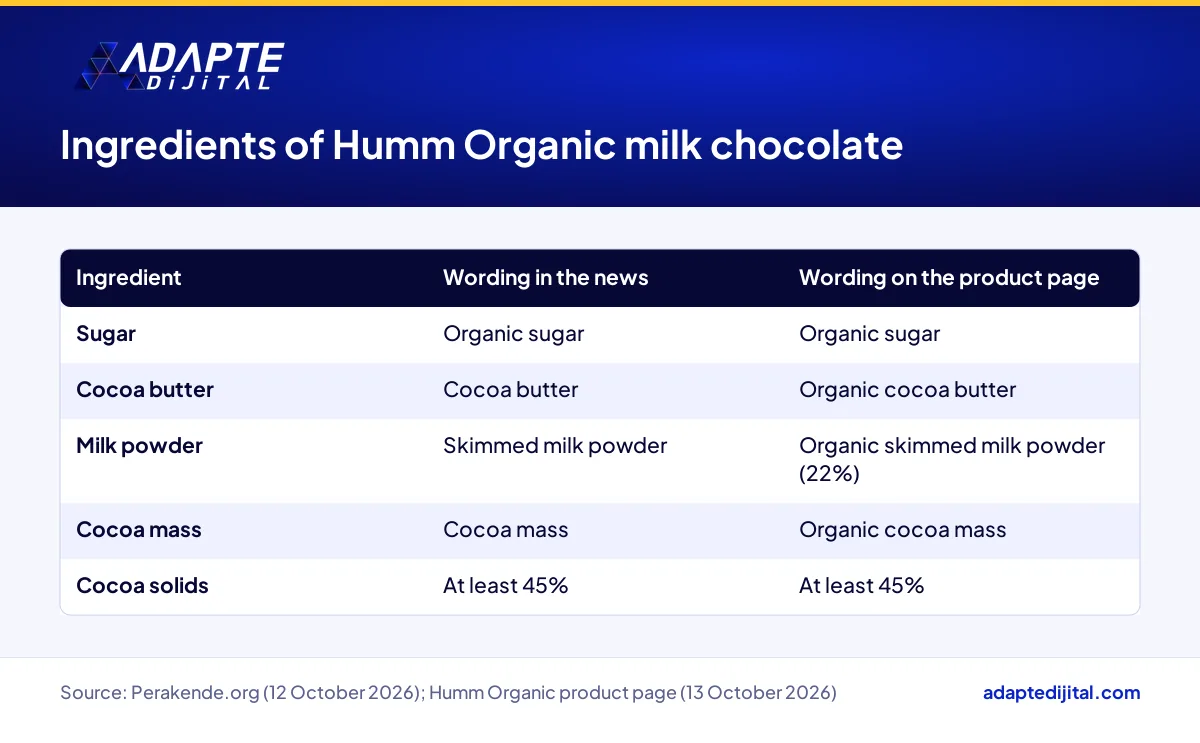
According to the product page, the ingredient list has four items: organic sugar, organic cocoa butter, organic skimmed milk powder (22%) and organic cocoa mass. Cocoa solids are at least 45%. The bar weighs 13 g, and the brand’s website also has a separate product page for a 6-pack.
What does Humm Organic’s chocolate tell a shopper in 3 seconds on the shelf?
In front of the shelf, the shopper sees the shape first. A cow-shaped chocolate stands out in the checkout crowd like a cartoon mascot waving from the shelf; for a milk chocolate, picking a cow is at least consistent. The shape wins the first look, the organic label the second, and the ingredient list the decision.
Is “clean label” an official definition, and what does it promise on Humm Organic’s pack?
No, “clean label” is not an official definition; it is used as a marketing phrase. What supports it on a label is a short, readable ingredient list, an additive statement and certification details. In Humm Organic’s case, the product page shows a short list with each organic ingredient named, the news reports no additives, and the certifier is not named.
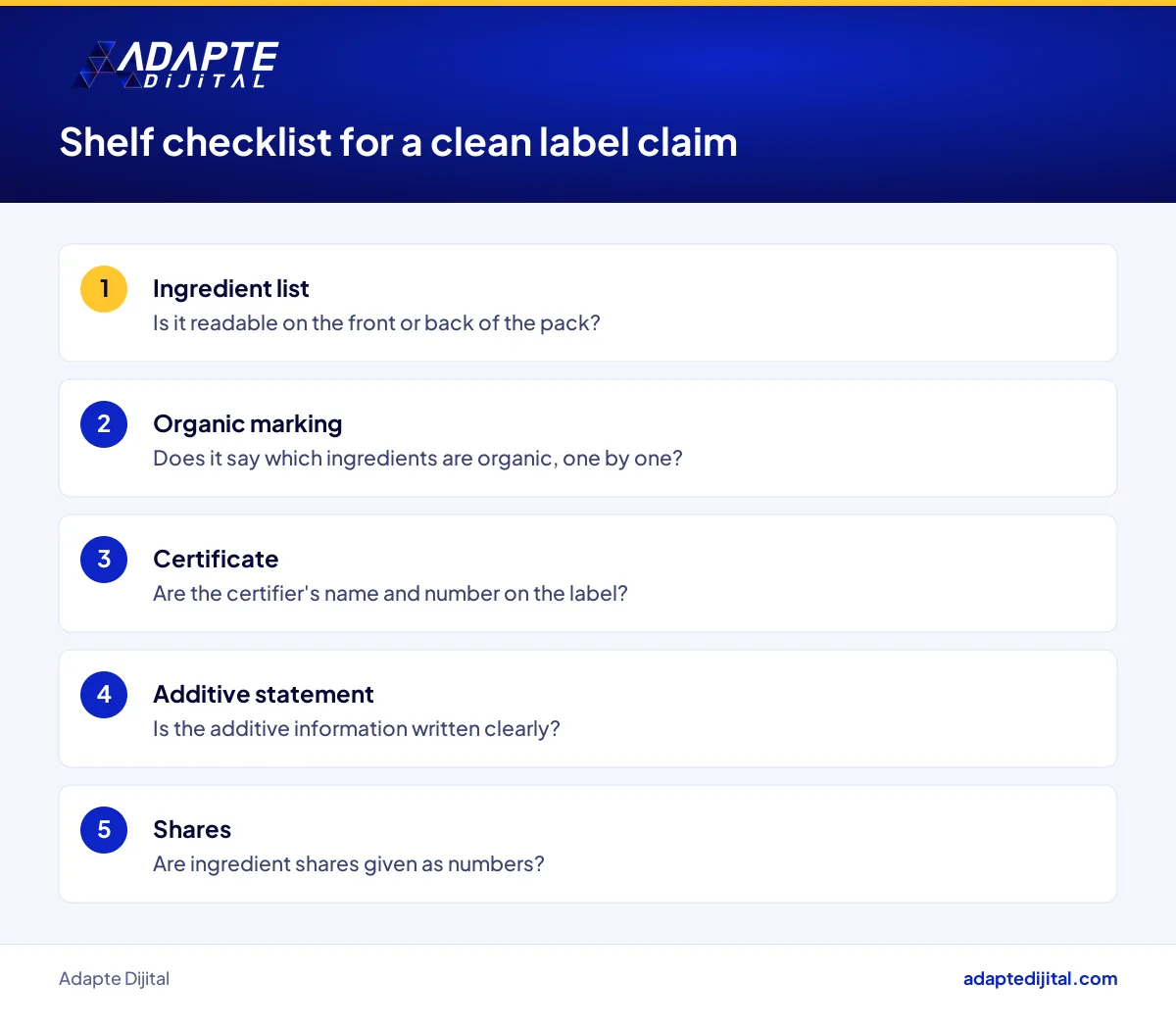
- Is the ingredient list on the front or the back, and can you read it?
- Does it say which ingredients are organic, one by one?
- Are the certifying body’s name and number on the label?
- Is the additive statement clear?
- Are ingredient shares, such as milk powder, given as numbers?
Which food makers and grocers does the organic and clean label trend affect, and how?
The most affected are small food makers competing on the same shelf. A maker that simplifies its label gains visibility; one that keeps a long ingredient list struggles. On the retail side, delis, specialty grocers and chains with an organic aisle have to strike the shelf and price balance for these products.
How should a clean label claim be told in search, on product pages and on social media?
In Türkiye in autumn 2026, part of packaged food shopping starts on a screen, and the ingredient list gets read there too. Humm Organic’s product page gives a digital copy of the label, listing each ingredient with its organic prefix and share. What the shelf says and what the screen says should match.
What should food makers and grocers do about clean label claims this week?
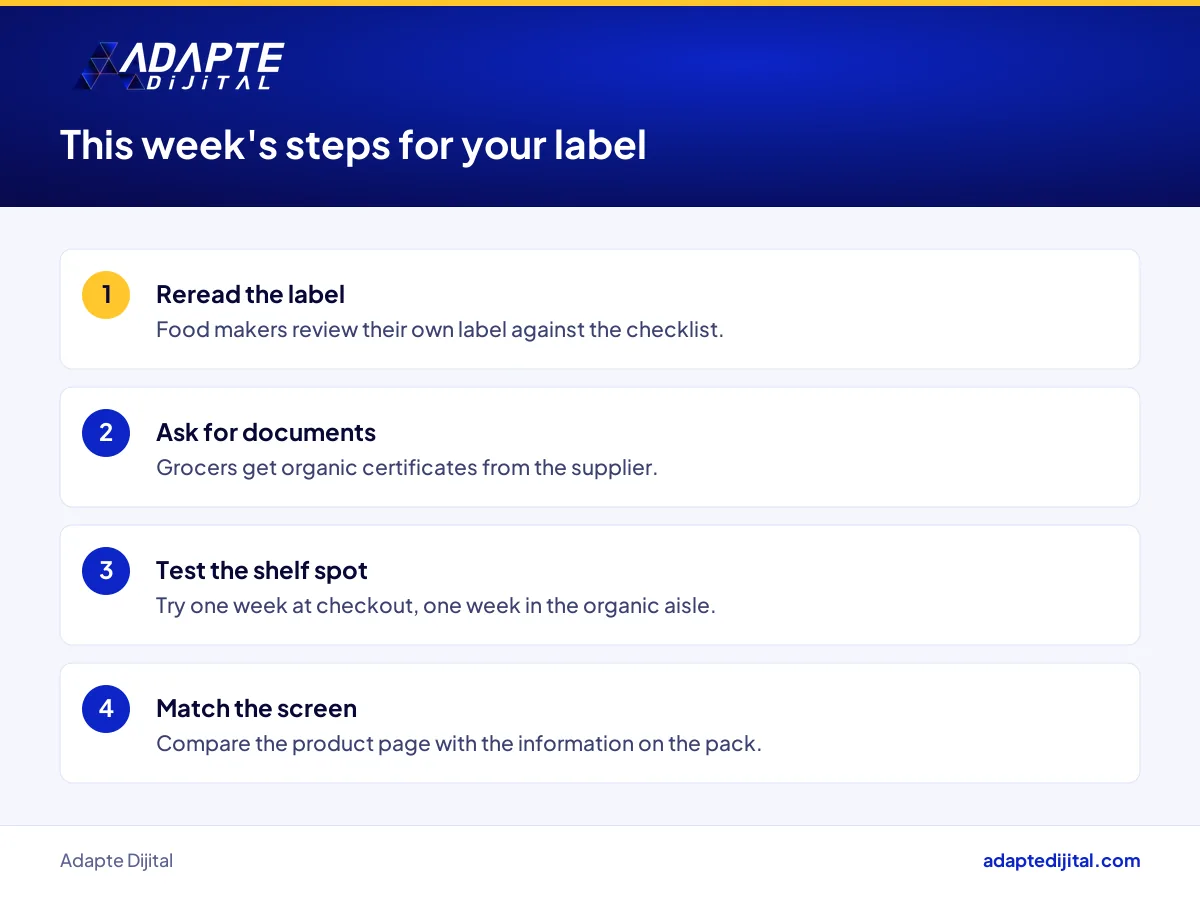
This week, food makers should reread their own label against the checklist, and grocers should ask suppliers for certificates for the products in their organic aisle. Both sides should confirm that the product page and the pack give the same information.
On our retail page we keep following shelf, label and category topics.
Quick Summary
- Humm Organic Organic Milk Chocolate contains at least 45% cocoa solids (Perakende.org, Humm product page).
- The product page gives the organic skimmed milk powder share as 22% (Humm product page).
- According to the brand, the product has no additives and its raw materials are certified organic.
- The certifying body is named neither in the news nor on the product page.
- “Clean label” is not an official definition and needs concrete details on the label to back it up.
Short Glossary
- Clean label
- Clean label is a marketing phrase with no official definition, used to describe products with a short, readable ingredient list.
- Cocoa solids
- Cocoa solids is the term used to describe the share of total solid matter in a chocolate that comes from cocoa.
- Sales per square metre
- Sales per square metre is the term used to describe the sales value one square metre of store space brings in over a given period.
Frequently Asked Questions
Next Step
If you want your product label, product page and brand story to speak the same language, fill in the consult your expert form; our team will get back to you with first steps that fit your business.
Sources: Perakende.org, 12 October 2026 · Humm Organic product page (checked on 13 October 2026)
Updated: October 2026
Sık Sorulan Sorular
Largely, yes. The recipe in the news and the list on the product page name the same four ingredients. The difference is in the detail: the product page puts “organic” before every ingredient and gives the milk powder share as 22%, while the news does not give that figure.
When checked on 13 October 2026, the product page showed a list price of TL 104.95 for 13 g, VAT included, along with a “30% off in basket” note. This price changes over time and should not be read as a recommended retail price.
The certifying body, place of production, retail channels and 6-pack price were not disclosed. Nor does the news say which supermarket chains carry the product. These gaps already give you the list of questions to ask the supplier before listing it.
With small pack sizes, decisions are quick. Shape sets the product apart from ordinary bars and may catch the eye of families with children. But shape alone does not bring repeat purchases; on the second trip, taste and price do the talking.
The word “organic” tries to explain a product’s positioning in a single word. For that explanation to be believable, the label has to say clearly what is organic. On Humm Organic’s product page, this is written out for each ingredient.
The desk suggests reviewing every product with a clean label claim against these questions before stocking it:
The proof of an organic claim is the certificate. If the certifying body is not on the label, the grocer should ask the supplier for the document. Verify the rules on organic labelling and certification with the official source; this is not legal or financial advice.
The news says the cocoa beans are stone-ground. This is a story about production method; it gives shoppers a sense of craft and care. It is not a measurable claim about taste or nutrition, and it should not be presented as one on the shelf.
The gain is the short list itself: shoppers trust a label they can read. The struggle is the cost of certification and organic raw materials. Simplifying a label means changing the recipe, which takes far longer than redesigning the pack.
An organic product gets compared with the regular one next to it. If the label does not justify the gap, shoppers pick it up, put it back, and it sits on the shelf gathering dust. Base pricing on your own purchase cost and the comparable products in your aisle; this is not pricing advice.
Packaging and label design businesses feel it indirectly. Moving ingredient details to the front of the pack changes design decisions. We look at a similar label and serving story question in our piece on how ready-made liquid sauces get onto cafe menus.
Write the list as text, in the same order and with the same shares as on the pack, not buried inside an image. That way both shoppers and search engines can read it. Humm Organic’s product page is an example of this layout.
Phrases shoppers actually type, such as “additive-free” or “organic milk chocolate”, should appear clearly in the product name and description. If you use a word that makes a claim, the basis for that claim should be visible on the page too.
A close-up of the label is more convincing than a long promotional text. We look at how brand trust is built at a local level in our piece on what local sponsorship gives a brand.
Mark each organic ingredient one by one, give shares as numbers, and make the certifying body visible. If you use an undefined phrase like “clean label”, put the concrete facts that support it right next to it. To keep the label in line with your brand story, we do this work with food makers through our brand consultancy.
Keep small organic products at the checkout for one week and in the organic aisle the next. Read from your till records which spot moves them. Make the spot with the higher sales per square metre the permanent home.
Compare the product description in your online store with the pack. Fill in any missing shares or certification details. Do not make a claim on screen that the shelf does not make.
No, “clean label” is a marketing phrase, not an official definition; check the product’s contents against the ingredient list and certification details on the label.
The certifying body is named neither in the news nor on the product page; grocers should ask the supplier for this information with documents.
The checkout and the organic aisle are two strong options; a one-week trial and your till records will show which sells more.