
Vegan Brand Sales Channels: Own Site, Supermarket, Café or Deli? Four Compared
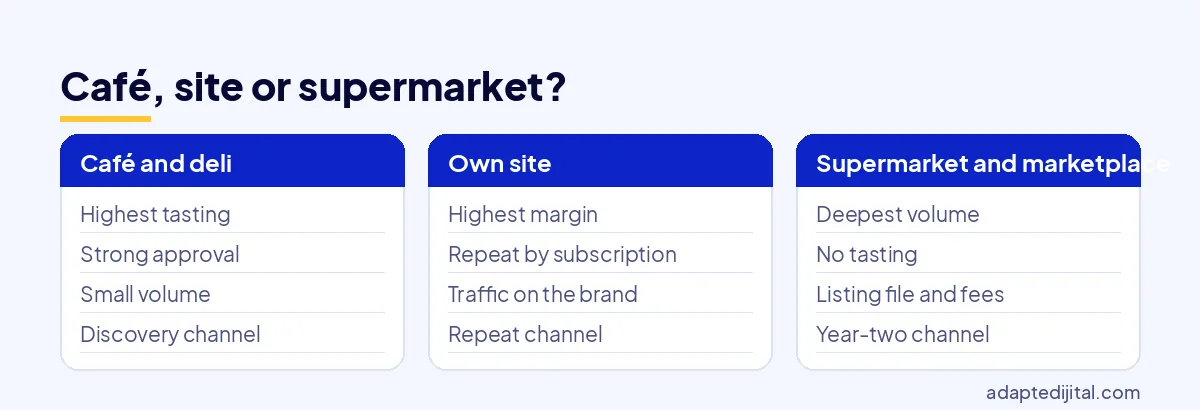
The four-channel comparison for a vegan brand in one line: plant-based drinks are tasted in cafés and repeated through site subscriptions, cheese alternatives win approval in gourmet shops and delis, snacks and bars find volume on marketplaces, and supermarket chains belong to year two or three. Cafés give tasting most cheaply but small volume. Your own site keeps margin and customer data but the brand must bring traffic; chains give shelf space but demand a listing file, shelf fees and cold chain.
This article compares the four channels on six criteria, gives the table and adds a decision rule by product group. No figures, only relative structure; no ad copy, only criteria. It ends with one main-channel suggestion for year one.
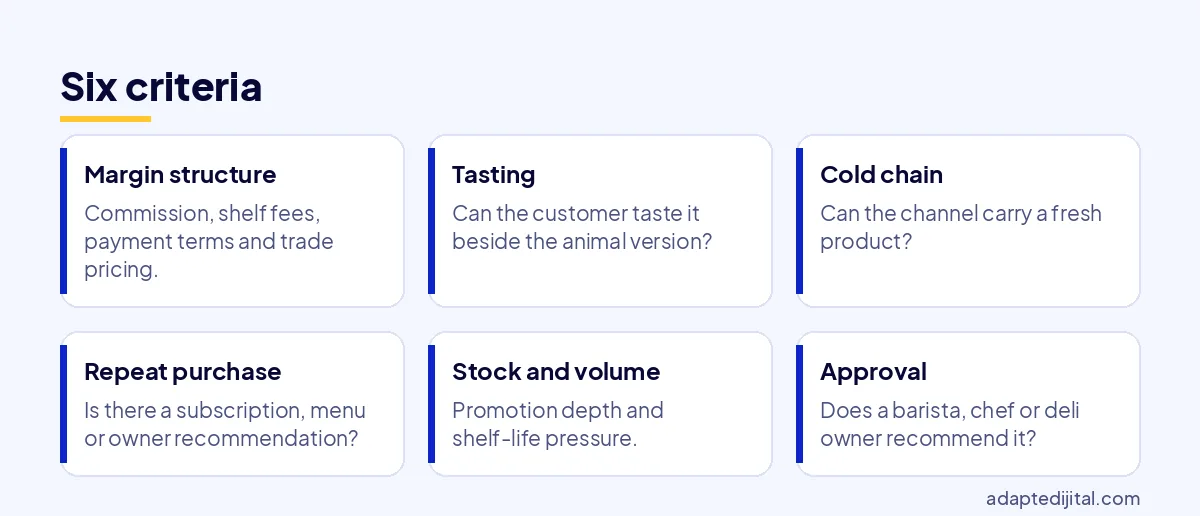
Which six criteria drive the comparison?
Margin structure, tasting opportunity, cold chain and shelf-life fit, repeat purchase, stock and volume, and approval and story. These six shape a vegan brand’s first two years; price is left out on purpose, because price is the brand’s decision, not the channel’s. Each criterion gets low, medium or high; there is no total score, since weighting depends on the product group.
Cafés and restaurants: the tasting channel
A café is the most natural trial point for a vegan product; the customer tastes the oat drink in their coffee first, then asks which brand to take home. The barista and chef act as endorsers. The trade-off is small volume and trade pricing, yet for plant-based drinks the café is often the first channel.
Pros
Free tasting, barista and chef approval, your name on the menu. A drink named on the menu is the first pack the customer recognises on the shelf.
Cons
Small volume, trade packs and pricing, and menus change with the seasons. If the café switches supplier your name quietly drops off, so tasting kits and regular visits are part of the job.
Gourmet shops and delis: the endorser’s shelf
A gourmet shop or deli owner recommends the product personally, so approval reaches the shelf at full strength. Plant-based cheese alternatives, sauces and spreads do well here because tasting happens at the counter. The trade-off is limited shelf space, consignment or credit terms and a share of scarce chiller space.
Pros
Owner approval, counter tasting and curious customers with spending power. A product on a gourmet shelf also becomes a reference in a supermarket listing file.
Cons
Few outlets, each shop a separate relationship, scarce chiller space. Slow sellers leave the shelf quietly, so agree up front on returns of products nearing their use-by date.
Own site and subscription: the repeat-purchase channel
Your own site gives the highest margin and fullest control; subscriptions, recipe content, ingredient explanations and the founder’s voice only fully work here. For plant-based drinks and snacks, subscription steadies repeat purchase. The trade-off is traffic: the brand must bring visitors, and shipping cold chain products is a separate job.
Pros
Highest margin, customer data in your hands, repeat purchase measured by subscription. Building the site and conversion is its own task, covered by e-commerce consulting.
Cons
Slow early traffic, trust built from zero, and cold shipping and returns sit with the brand. Long-life drinks and snacks ship easily; fresh cheese alternatives do not.
Supermarket chains and marketplaces: volume, paperwork, cold chain
A supermarket chain gives wide shelf space and trust in return for a listing file, shelf fees, payment terms, cold chain and a promotion calendar, which makes it a year-two or year-three channel for a small brand. Marketplaces and quick-delivery apps give ready visibility; snacks and long-life drinks find their first volume there. In both, the product is compared on price and reviews.
Pros
Ready traffic, wide reach and volume for the entry product. For seller rules and commission, the Trendyol seller page is the primary source; terms change, so read the latest there.
Cons
No tasting, no room for the story, and price sits right beside the animal version. For store setup see real profit after commission.
Four channels on six criteria: the comparison table
The table rates four channels on six criteria in relative terms: high, medium and low, no figures. There is deliberately no total score, because tasting and repeat purchase dominate for plant-based drinks, while visibility and stock turnover dominate for snacks. The last row states the role each channel plays.
Table
| Criterion | Café and restaurant | Gourmet and deli | Own site | Chain and marketplace |
|---|---|---|---|---|
| Margin structure | Medium; trade price | Medium; credit and consignment | Highest | Narrowest; fees and commission |
| Tasting | Highest | High; at the counter | Low; via samples | None |
| Cold chain fit | In the café fridge | Chiller space scarce | Hard to ship | In store yes, marketplace hard |
| Repeat purchase | Tied to the menu | Via owner advice | Strongest with subscription | Tied to promotions |
| Stock and volume | Small, steady | Small, scattered | Controlled | Deepest |
| Role | Discovery and approval | Approval and reference | Repeat and data | Volume |
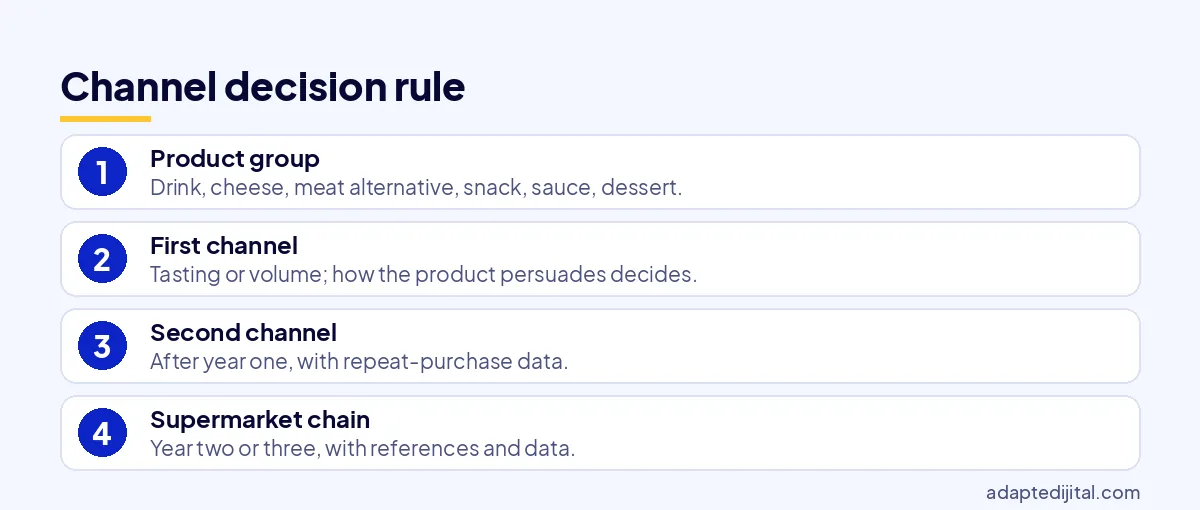
Decision rule: first and second channel by product group
The decision comes from the product group, not from preference. Plant-based drinks go to cafés, cheese alternatives and sauces to gourmet shelves, snacks and bars to marketplaces, and vegan desserts to cafés and then the site at year end. Open the second channel after year one; a brand entering all four at once stays half-done in all four.
Decision table
| Product group | First channel | Second channel | Reason |
|---|---|---|---|
| Plant-based drink | Café and restaurant | Own site, subscription | Tasted in coffee, repeated at home |
| Plant-based cheese alternative | Gourmet and deli | Café menu | Counter tasting, chiller |
| Meat alternative | Restaurant menu | Supermarket chilled aisle | The cooked version convinces |
| Snacks and bars | Marketplace | Own site, subscription | Long shelf life, price comparison |
| Sauces and spreads | Gourmet and deli | Own site, with recipes | Recipe content drives sales |
| Vegan dessert | Café | Own site, year-end gifts | Tried beside a coffee |
Year-one suggestion
Pick one main channel and read it off the table for your product group. Starting with a plant-based drink, three cafés and a site are enough; the chain file is year two’s job. The full channel order is in the pillar on starting a vegan brand, launch weeks in when a vegan brand should launch.
Frequently Asked Questions
Quick Summary
- Six criteria: margin, tasting, cold chain fit, repeat purchase, stock and volume, approval.
- Cafés carry discovery and approval, the own site repetition, chains and marketplaces volume.
- Gourmet shops and delis are the approval shelf for cheese alternatives and sauces.
- Products needing cold chain are hard to ship and hard to sell on marketplaces.
- The product group decides; the second channel opens after year one.
- Supermarket chains are usually a year-two or year-three channel.
Short Glossary
- HoReCa: short for hotels, restaurants and cafés; the first trial point for plant-based drinks
- Consignment: a shelf arrangement where you are paid for what sells and unsold stock is returned
- Shelf fee: the listing payment a supermarket chain asks to put a product on its shelf
- Subscription: a sales model where the customer receives the product automatically at set intervals
Next Step
To place your product group on the decision table, write to us via consult your expert; the scope is on the brand consultancy page. Next up: the cost of starting a vegan brand.
Updated: October 2026
Sık Sorulan Sorular
Because the real buyer of a vegan product is often not vegan and compares it with the animal version. Without tasting, curiosity brings the first purchase and nothing brings the second; the case is in why a vegan brand loses the second purchase.
Fresh plant-based drinks, cheese alternatives and meat alternatives need a cold chain; long-life drinks and snacks do not. Whether a channel carries cold chain decides whether the product can enter it at all.
After the hero product, documents and shelf-life test are ready. A brand that picks the channel first bends the product to fit, lengthening the ingredient list to hit a supermarket price; find your stage in the four-doors hub.
Brands starting with plant-based drinks, vegan desserts or coffee-side snacks. We describe the café-to-home customer in why non-vegans buy vegan products.
A brand already tasted in cafés, whose customers know its name. The café carries discovery, the site carries repetition.
Brands entering with snacks and bars, with stock and shelf life ready. A chain listing expects a gourmet-shelf reference and steady repeat-purchase data.
Export is the fifth door: it opens towards Europe’s larger vegan market with small batches and a ready document file. The framework is on the foreign trade consultancy page.
The channel is decided together with product, shelf life and budget, and brand consultancy reads all three in one table. To place your product group on it, consult your expert.
It depends on the product group: plant-based drinks start in cafés, cheese alternatives in gourmet shops and delis, snacks on marketplaces. One main channel is advised for year one.
Usually in year two or three. The listing file, shelf fees, payment terms and cold chain weigh heavily on a small brand in year one.
The highest margin, customer data and repeat purchase through subscription. In return, the brand carries traffic and cold shipping.