
People who opened their own boutique: 6 vintage and antique starts, 6 first-year lessons
People who opened their own boutique do not fit a single mould. One puts a thirty-year collection on the counter, one moves a vintage business grown on Instagram to a street address, one raises the shutters again on an antique shop inherited from a father. The starts differ, yet the first-year lessons are surprisingly alike: clients look for you on their phone first, and if they cannot find you, they do not come to the door.
Below are six hypothetical starts, from Mavişehir to Çankaya. Each is set in a scene, in the present tense. None of them is a real person, but each carries the familiar rush of someone opening this kind of shop. At the end you will find the six lessons they share and the door you might start from.
Who opens their own boutique? In 2026 you are not alone
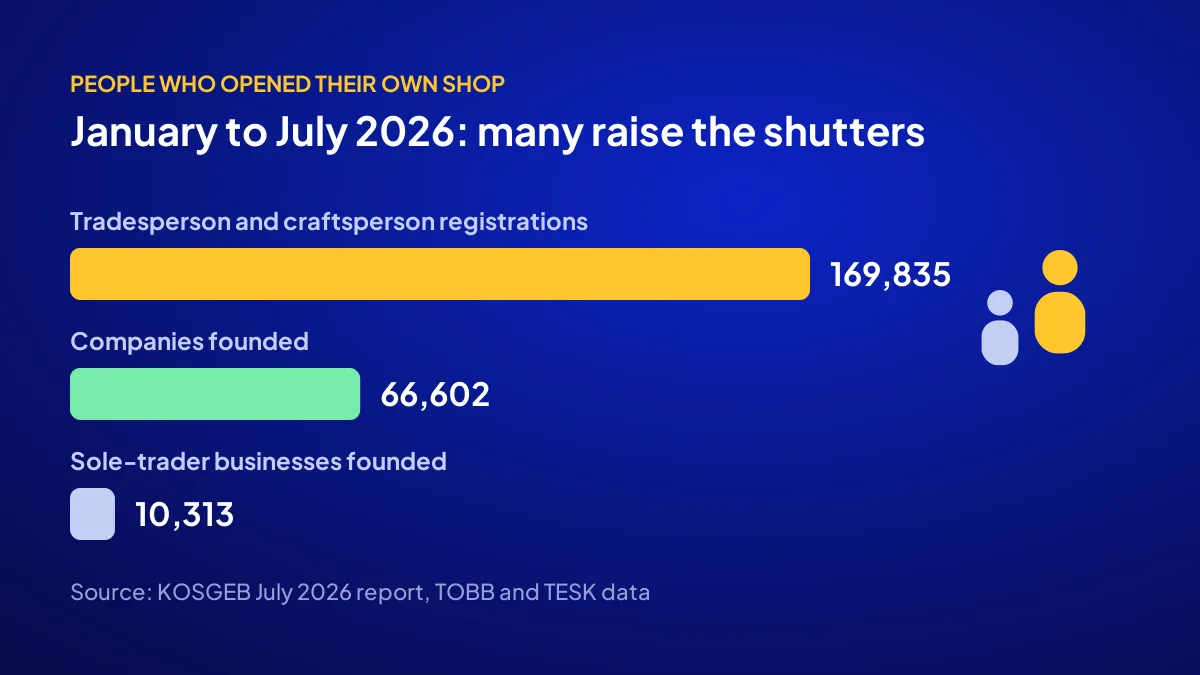
According to KOSGEB’s July 2026 report, compiled from TOBB and TESK data, 66,602 companies were founded in Turkey between January and July 2026, and 169,835 tradespeople and craftspeople completed registration. Boutiques, vintage and antique shops are a small but selective corner of that crowd. The number tells you something: many raise the shutters, few earn a place in the client’s mind.
What the number means for a boutique
Every new shop competes for the same phone screen. A discerning client turns to the shop whose name, address and window they can see together on that screen.
What sets a boutique apart
A boutique does not sell basic needs; it sells taste, story and saved time. The owner who knows what clients really buy gets through the first year with less strain.
The collector and the Instagram seller: stock ready, address new
In the first two starts, stock is not the problem. One has been collecting for thirty years, the other has been selling for three. Both lack the same thing: the shop’s name is not yet tied to anything online. The collector knows how to tell the story but does not write it down. The Instagram seller has followers but no address on Google. For both, the first job is to make what they already have searchable.
The collector in Mavişehir
A retired banker sells the 1970s porcelain and glass collected over thirty years from a small shop. She knows every piece’s story by heart. When a client walks in she can talk for hours, but if nobody walks through the door there is no one to tell.
The Instagram seller in Moda
A woman in her thirties has sold vintage clothing from her account for three years and is now opening a shop with a fitting room. Messages arrive, followers grow. But the answer to “where is your shop” is not on the map. We explain separately why Instagram alone is not enough.
The designer and the second-generation dealer: a name, but no trail
In these two starts the name is strong and the digital trail is weak. The designer has a brand in mind, but nobody searches for it yet. The second-generation antique dealer has a forty-year-old sign, yet not a single line online. For both, the first-year job is to write the name the same way everywhere and add sentences that carry trust. Then there is the rules side: old objects and brand names.
The designer in Beşiktaş
A fashion designer sells limited runs, made in small Istanbul workshops, in her own boutique. The brand name is chosen and the logo is ready. Whether someone else already holds the same name is still unclear. A preliminary search at TÜRKPATENT comes before the sign goes up.
The second-generation dealer in Çankaya
A man in his late thirties takes over the antique shop his father ran. Old clients still drop by, but fewer each year. The new generation looks at their phone first. He also rechecks whether trading pieces that may count as cultural property needs a permit; the rules may have changed since his father’s day.
The partners and the seasonal boutique: plenty of drive, a tight calendar
In the last two starts, energy is high and time is short. In the two-partner concept store, each partner tells a different story. In the seasonal boutique, half the year is busy and half is quiet. Both need the same thing in year one: a single-sentence answer to “what do we sell” and a visibility plan tied to the calendar.
Two partners in Bakırköy
Two friends bring ceramics, second-hand books and a small coffee corner together in one shop. One talks about ceramics, the other about books. On the way out, clients ask “so what exactly is this place”. The partners’ first job is to answer that question together, in one sentence.
The seasonal boutique in Çeşme
In Alaçatı, a woman sells handmade jewellery and vintage accessories from a boutique open May to October. All summer the till keeps ringing; in November the shutters come down. There is no page to answer the winter message “are you still selling”.
What shows up when you put the six profiles side by side?
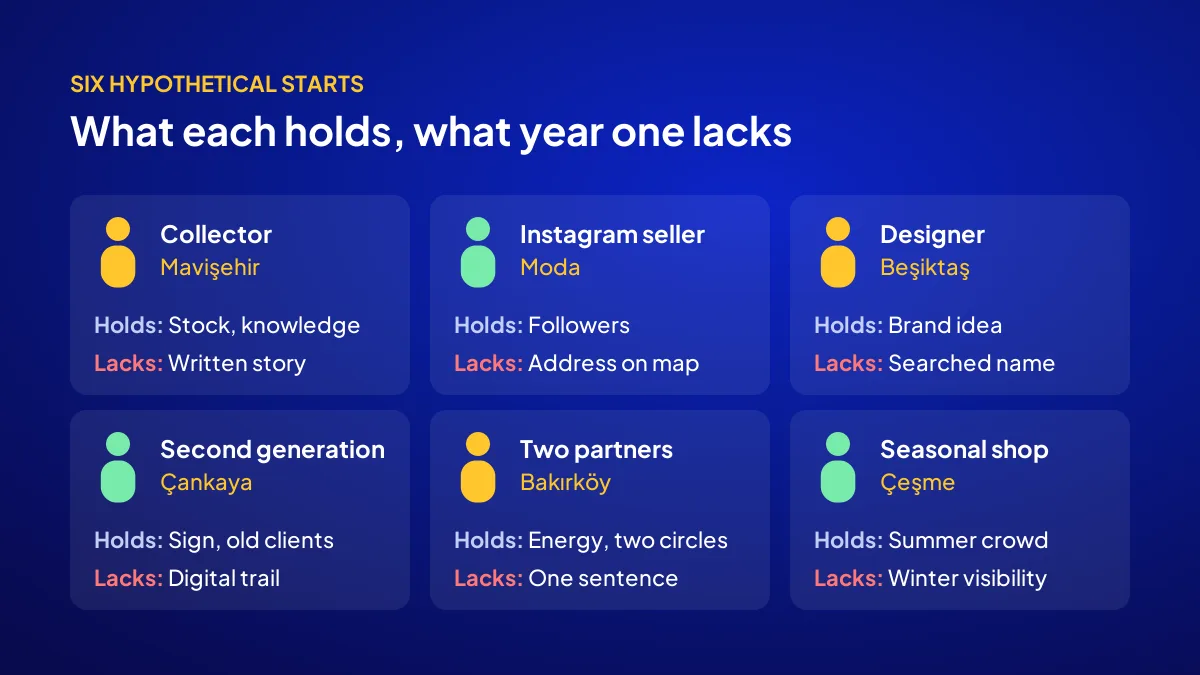
Put the six starts in one table and one thing becomes clear: nobody lacks stock or effort. What is missing is the digital ground where clients find the shop and come to trust it. The table matches district, the capital you hold and the first-year gap. Whichever row you see yourself in, the first step in the last column is for you.
| Profile | District | What they hold | First-year gap | First step |
|---|---|---|---|---|
| Collector | Mavişehir | Stock and knowledge | Written story | Write up the featured pieces |
| Instagram seller | Moda | Followers | Address on the map | Google Business Profile |
| Designer | Beşiktaş | Brand idea | A searched-for name | Preliminary name search |
| Second-generation dealer | Çankaya | Sign, old clients | Digital trail | Website and permit check |
| Two partners | Bakırköy | Energy, two circles | One sentence | Shared definition and home page |
| Seasonal boutique | Çeşme | Summer crowd | Winter visibility | Off-season page and calendar |
The shared gap is digital ground
All six have product, effort and an eye. None has a readable enough address. What the first year earns depends on how early that ground is laid.
The district detail makes a difference
Foot traffic in Moda, the season in Çeşme, the old client network in Çankaya each weigh in. The same recipe does not run in the same order in every district.
A year later, all six repeat the same 6 lessons
By the end of the first year, the six owners sound alike. None says “I wish I had spent more on ads”. Each regret is about acting earlier: putting the address, the name, the story and the rules in place before opening. The six lessons below run from the most talked about to the least.
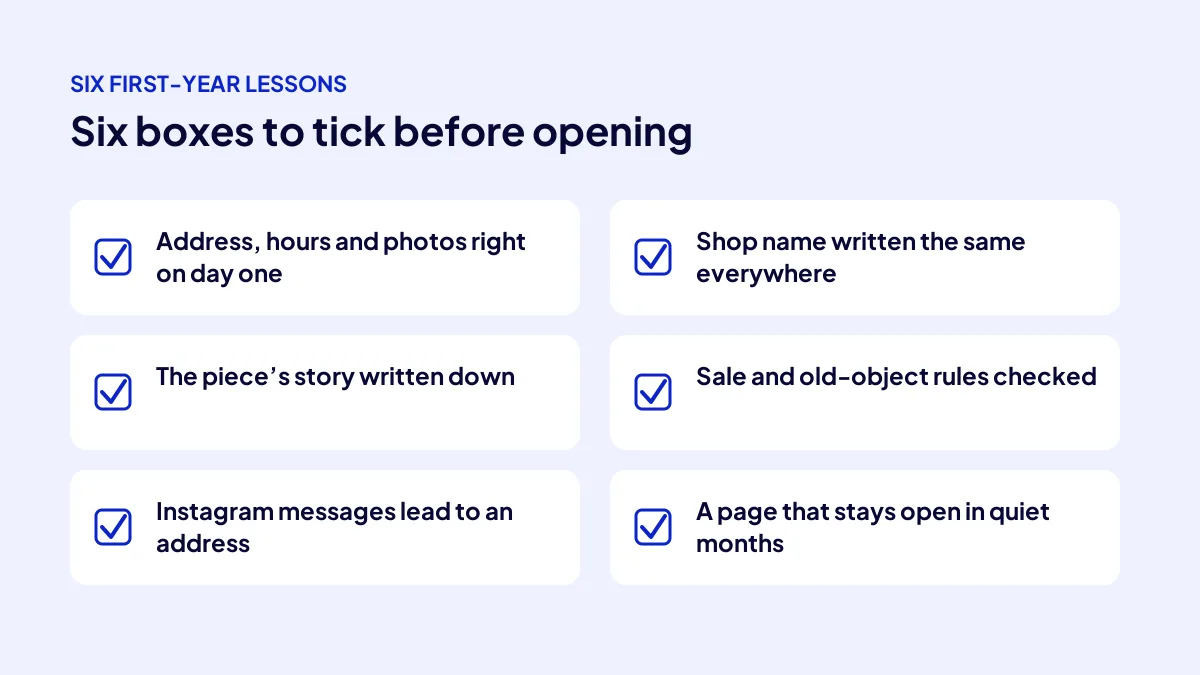
- Clients look for you on the phone first; address, hours and photos must be right on opening day.
- A piece’s story does not leave the shop until it is written down.
- A follower is not a client; an Instagram message should lead to an address and a page.
- The shop’s name must be written the same way everywhere; no search, no brand.
- Rules come first: in a sale, the previous price counts as the lowest price of the last 10 days, and old objects may need a permit.
- Quiet months need a plan; a page that stays open in winter keeps summer clients.
The least discussed but most expensive lesson
The seasonal boutique’s winter, the partners’ definition, the dealer’s permit. All are noticed at the end of year one, and the later they are noticed, the more they cost.
Who benefits from opening online before opening the shop?
At least four of these six would have had an easier first year had they opened online before signing the lease. The Dijital İş Kur (Start a Business Online) campaign rests on exactly this idea: domain, website, 108 articles, Google Business Profile and demand tracking are set up before the shop. That way you see which district and which pieces draw demand before opening. We explain the logic in open online before you open a shop.
Price and places
TRY 36,000 + VAT, fixed and paid upfront; at 20% VAT that is TRY 43,200, but check the current rate on the invoice. For the 10% coupon, just mention the code when you apply. 12 places, application deadline 1 November 2026; the delivery schedule is given in writing. The overall plan is in the new boutique promotion guide, the first three months in the first 90 days article.
Whichever of these six you are, the first-year lesson is the same: make your shop findable first, then raise the shutters.
Quick Summary
- From January to July 2026, 66,602 companies were founded and 169,835 tradespeople registered.
- None of the six starts lacks stock or effort; they lack digital ground.
- Instagram followers do not replace an address on the map.
- A preliminary brand-name search comes before the sign.
- Permits for old objects and the previous-price rule in sales are checked before opening.
- A seasonal boutique plans a page that stays open in winter.
Short Glossary
Tradesperson registration: Tradesperson registration is the official procedure used to enter a small business in the tradespeople and craftspeople registry in Turkey.
Digital ground: Digital ground is the set of site, profile and content used to make a business’s name, address and story consistently findable online.
Preliminary search: A preliminary search is the check used to see whether a chosen brand name is already registered to someone else or is confusingly similar.
Next Step
To open your boutique online before signing the lease, apply to the Start a Business Online campaign. Apply, and we will discuss a name and plan together.
Frequently Asked Questions
Source: KOSGEB — Established and Closed Business Statistics, July 2026
Sık Sorulan Sorular
Because most owners remember it only after a complaint. The advertising regulation amendment published on 1 July 2026 ties the previous price in a sale notice to the lowest price of the last 10 days. Know this rule before you announce an opening discount.
A domain in your name and one year of hosting, a corporate site with 6 main and 12 sub-pages, 108 AI SEO-ready articles across 6 keyword groups, 3 social media accounts, Google Business Profile, district and demand tracking with GA4 and Search Console, WhatsApp Business, structured data and the AI-SEO Diagnosis Card. Details, including the handover video, are on the Start a Business Online page.
First a domain, a Google Business Profile and a site that says what the shop sells. Then articles that answer the questions clients will ask, and a counter that measures demand. That way, anyone looking for you on opening day finds an address, opening hours and a story.
Trading old objects that may count as cultural property can be subject to a permit. Before opening, ask the museum directorate of the Ministry of Culture and Tourism which pieces fall within that scope. This article is not legal advice.
Profile setup is included in the package, but verification depends on Google and can take a few days. If the shop is not open yet, it is possible to appear with a service area.
Updated: October 2026