
LUFIAN presents 6 outerwear pieces for winter, what should a coat retailer check first?
LUFIAN, a Turkish clothing brand, has presented six women’s and men’s outerwear pieces for the winter season, including goose down coats, a wool-blend shirt jacket and a short coat with fur detailing (Perakende.org, 13 October 2026). The report gives no prices, sales channels or release dates for the pieces. The brand runs a store open 24/7 in the domestic airside area of Istanbul Airport.
For a store that sells coats, the takeaway is this: winter outerwear is presented through materials and colours, and the label has to back that story up. Ahead of the 2026 winter season, the real job in Istanbul’s AVMs, the Turkish term for shopping malls, and on its high streets is making sure the claim in the window and the statement on the label say the same thing. Promotional language is tested on the label, not on the rail.
Which outerwear pieces did LUFIAN present for the winter season?
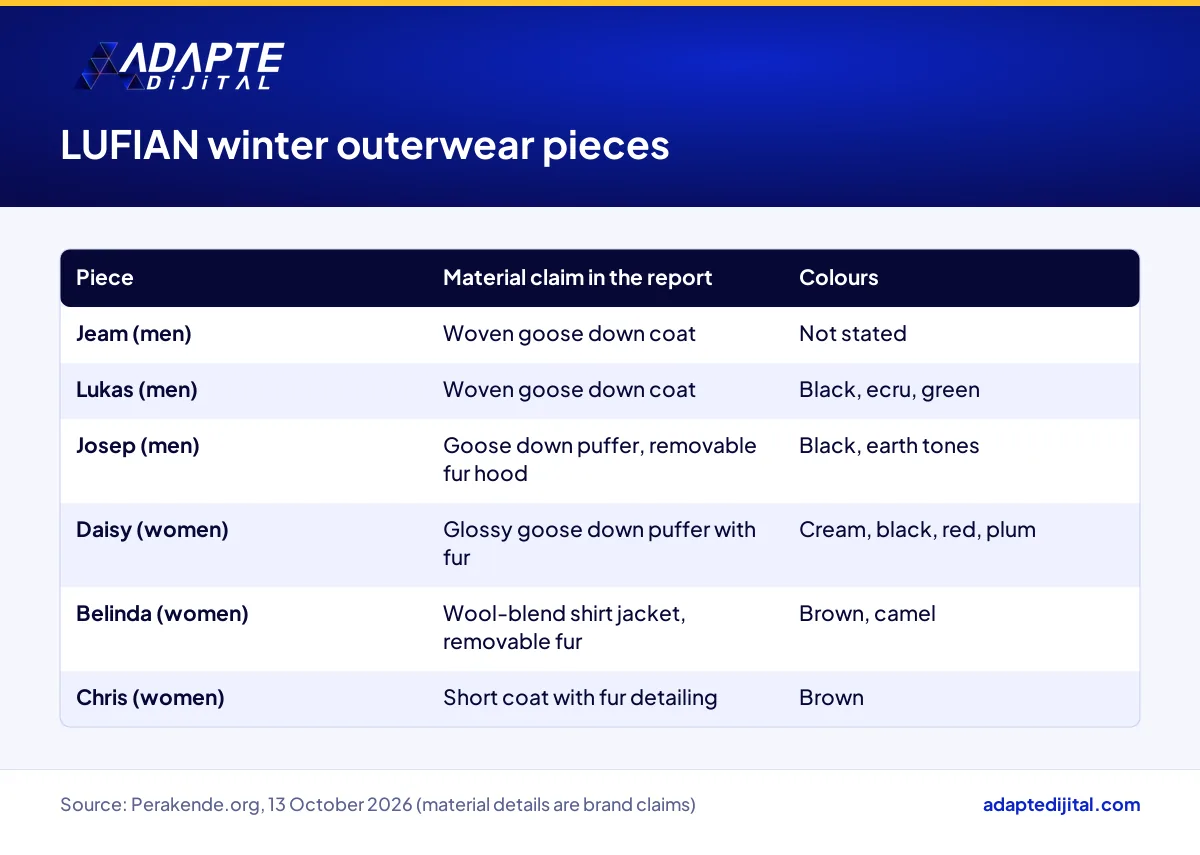
LUFIAN presented six outerwear pieces, three for men and three for women. According to Perakende.org, the men’s pieces are Jeam, Lukas and Josep, and the women’s pieces are Daisy, Belinda and Chris. The pieces are described through goose down, wool blends, woven fabric and fur detailing.
How can a store verify material claims for winter outerwear like LUFIAN’s?
A claim is verified against the product’s own label and the supplier’s documents. The words “goose down” and “wool blend” in the report are the brand’s claims; no ratios or sources are given. A store should not say anything in its sales pitch that the label does not say.
Who does LUFIAN’s winter presentation affect, and how?
It affects independent clothing stores selling coats and jackets in the same season most. When brands start telling their winter story, shoppers have more to compare in the windows. In a store that is not ready for the season, shoppers turn around at the door and stock sits on the rail until the end of the season.
How should a coat retailer build a winter window after LUFIAN’s launch?
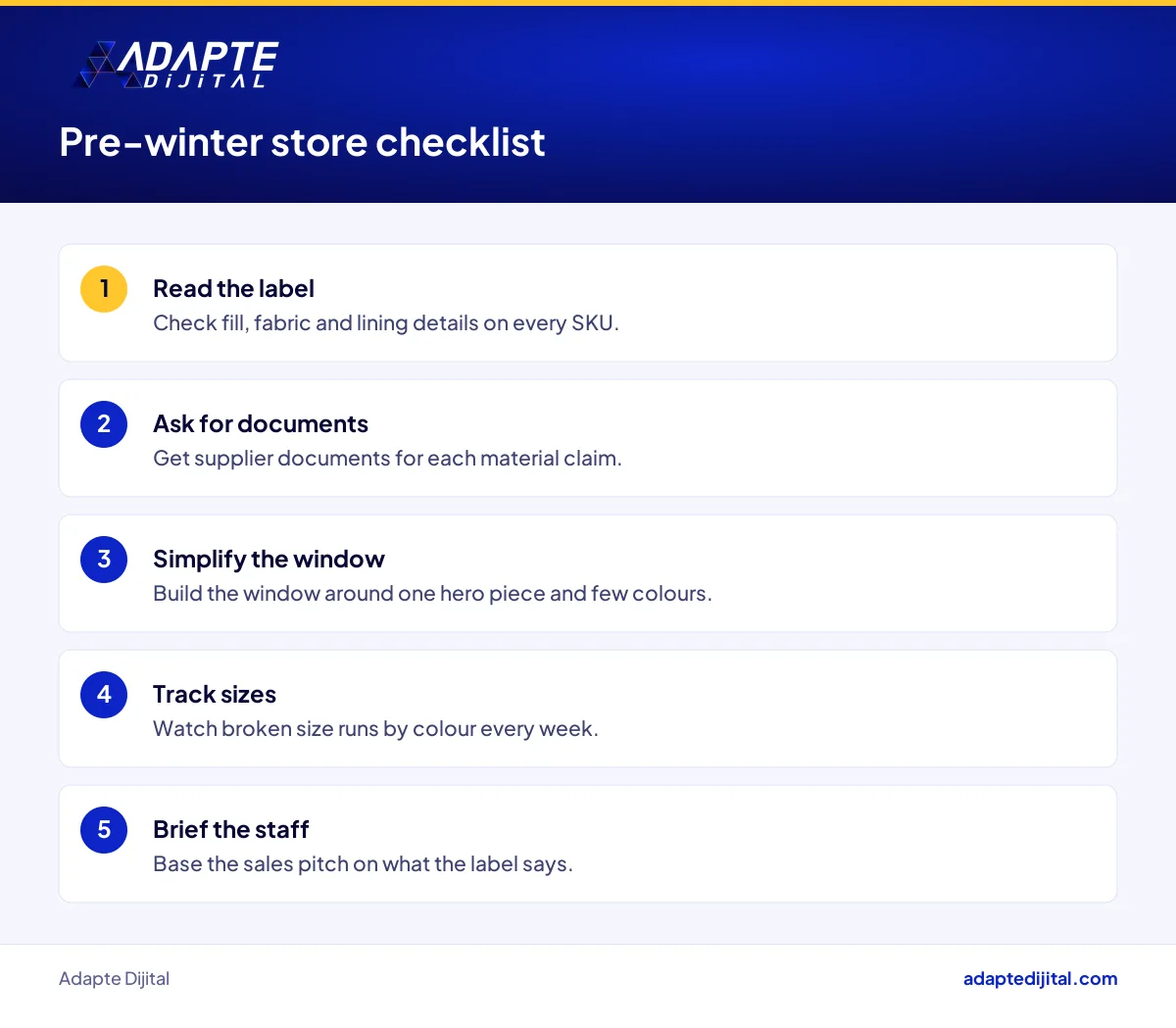
Build the window around a single material story and a limited colour palette. Telling the goose down, wool and fur stories in the same window tires shoppers out. The desk recommends one hero piece in the window, with depth in sizes and colours inside the store.
How should winter outerwear be presented in an online shop window?
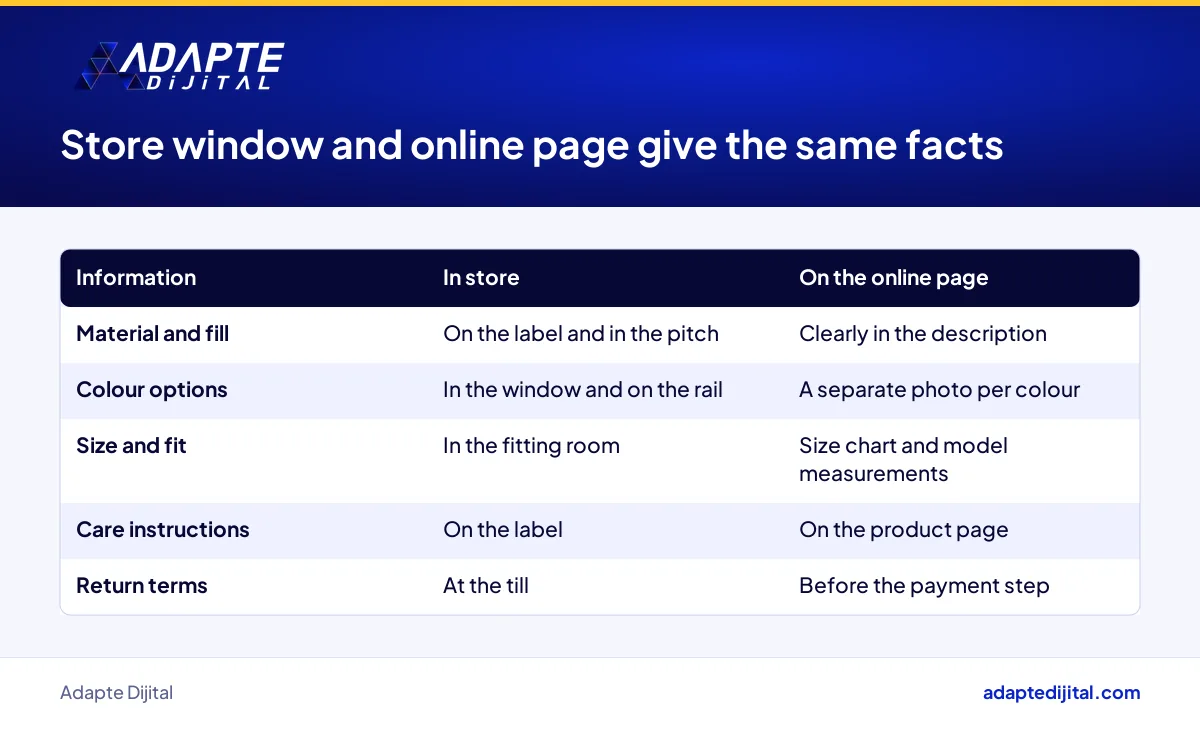
An online product page should work like a digital copy of the label. Material ratio, size chart and care instructions should be clearly written on the page. On LUFIAN’s corporate website, outerwear is split into men’s and women’s coats and gilets, a structure that helps shoppers find what they are looking for.
What should a coat retailer do this week?
Three jobs fit into this week: check the labels on winter products, build the window around one product story and match online product pages to the labels. If these steps are finished before the first selling week of the season, the till starts turning over early. We build a store’s seasonal story and brand language together through our brand consultancy work.
Quick Summary
- LUFIAN presented six outerwear pieces for winter, three for men and three for women (Perakende.org, 13 October 2026).
- The pieces are described through goose down, wool blends and fur detailing; no ratios were given.
- Prices, sales channels and launch dates are not in the report.
- The brand has a store open 24/7 in the domestic airside area of Istanbul Airport.
- For a coat retailer, the priority is to match the window story to the claims on the label.
Short Glossary
- Broken size run
- A broken size run is the term used to describe a style in which some sizes have sold out, leaving gaps in the range.
- Sales per square metre
- Sales per square metre is the efficiency measure used to describe a store’s sales divided by its selling area.
- Tenant mix
- Tenant mix is the expression used to describe the spread of sectors and brands among the stores in a shopping mall.
Frequently Asked Questions
Next Step
If you want to review your store’s winter window and product story together, fill in the consult your expert form.
Sources: Perakende.org, report on LUFIAN’s winter collection, 13 October 2026 · LUFIAN corporate website · Istanbul Airport, LUFIAN store page
Updated: October 2026
Sık Sorulan Sorular
Jeam and Lukas are described as woven goose down coats; Lukas comes in black, ecru and green. Josep is a goose down puffer coat with a hood trimmed in removable fur, offered in black and earth tones. No colours are given for Jeam.
Daisy is a glossy goose down puffer coat with fur, in cream, black, red and plum. Belinda is a wool-blend shirt jacket with removable fur, in brown and camel. Chris is a short brown coat with fur detailing.
Prices, sales channels and launch dates are not in the report. It does not say whether the fur is real or faux, nor give the down fill ratio or wool percentage. Whether these pieces are on sale at lufian.com could not be seen on the home page either.
Fill material and ratio, outer fabric and lining composition, care instructions and country of origin. For fur detailing, the type of material should be stated clearly. Verify labelling rules with the official source; this is not legal advice.
Staff say what the label says and do not guess what it leaves out. Saying “the fill is this much goose down” instead of “this one is really warm” is both honest and convincing. A wrong claim comes back as a return or a complaint.
Ask for a test report or a manufacturer’s declaration for the fill and the fabric. A document showing the type of fur detailing should also be on file. A claim without a document should not go in the window.
If the tenant mix includes several outerwear stores, shoppers weigh price and material side by side. In winter, outerwear can carry a large share of sales per square metre. A store that explains its materials poorly is left to compete on discounts.
LUFIAN’s website has a franchise application page. For a franchise store, the brand’s seasonal story is part of what the window has to carry, so the label and pitch checks above apply there too. A related piece on JYSK’s twin opening in Ankara looks at how brands decide to enter a new region.
A store open 24/7 at Istanbul Airport sells to shoppers who decide quickly before a flight. These shoppers spend little time trying things on and glance fast at labels and colours. According to the airport’s store page, the brand has been operating since 1995.
Fewer products send a clearer message. One hero coat, a scarf or beanie to complete it, and the price are enough. A crowded window does not stop anyone at the door.
Eye-catching colours such as cream and red draw attention in the window, but your own sales history should decide stock depth by colour. Track broken size runs separately for each colour. If the colour in the window sells out, place the same piece in another colour next to it.
To get a share of mall promotion traffic, look at how a promotion works inside the store itself. MediaMarkt’s opening offers at Koru Florya are a useful example to read on this. Match your window change to the weeks your own mall is busiest.
Fill material and ratio, fabric composition, size chart, model measurements and return terms. Each colour should have its own photo. Missing information often means a product added to the basket comes back as a return.
Material-led phrases such as “goose down coat” or “fur-trimmed coat” belong in product titles, along with the colour. That way the page matches the words the store uses on the label. The store’s business profile should show winter product photos and current opening hours.
For each SKU, compare the material details on the label with the supplier’s documents. Keep any product that does not match out of the window. Give sales staff a short note on what each label says.
Update colour and size orders based on the first two weeks of sales. Spotting a colour that is not selling early makes end-of-season markdowns smaller. To lift the average basket, place complementary products such as scarves and gloves next to the coats.
The Perakende.org report gives no prices. For current prices, check the brand’s own sales channels.
Ask the supplier for a document showing the fill ratio, and do not use any claim in the sales pitch that is not on the label. Verify labelling rules with the official source; this is not legal advice.
Setting it up before the first weeks of cold weather tends to work well. Check the stock and sizes of the window piece weekly and refresh it when needed.