
Measuring Agent Traffic: How to See Visits and Sales From AI Assistants
Measuring agent traffic means making visible the visits, orders and hidden influence that AI assistants and agents bring to a store. It is not easy: links sometimes carry no source information, and visits can look like direct traffic. But measurement tools improved noticeably in 2026. 📊
This article covers why agent traffic is hard to measure, what changed in Google Analytics and Search Console, how to read server logs and how to connect visits to sales. The information was compiled on 12 November 2026 from official announcements and industry sources.
Why is it hard?
BU BÖLÜMÜN ÖZETİ
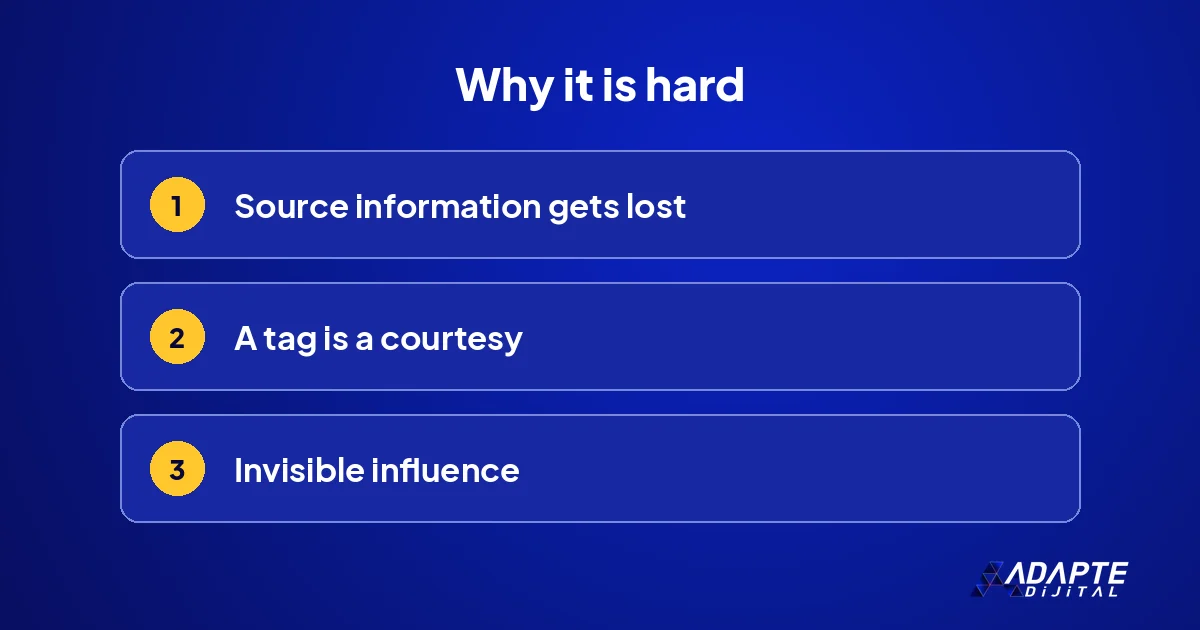
- Source information gets lost
- A tag is a courtesy
- Invisible influence
Traffic from assistants does not always identify itself the way classic channels do. Three reasons make measurement difficult.
Source information gets lost
If an assistant opens a link without referrer information, analytics counts the visit as direct traffic. Mobile apps and desktop clients often send no source information either. An unexplained rise in direct traffic is sometimes the trace of assistant visits. That is why no single report can be trusted on its own, and several sources are always read together. 🔎
A tag is a courtesy
OpenAI says ChatGPT adds a source tag to links in its search results. But between 8 and 15 October 2026, a bug removed the tags and the referrer information; visits fell into direct traffic, and the problem was fixed a week later. A tag is a convenience the platform offers, not a guarantee. Dashboards built on a single tag can break overnight without warning.
Invisible influence
An assistant recommends a product, and a few days later the customer buys it by searching for the brand or coming straight to the site. That influence is credited to the assistant in no channel at all. The real influence of assistants is larger than the measured visits. That is why measurement is completed with trends and customer surveys rather than read from one number. 🌫️
What does Google Analytics offer?
BU BÖLÜMÜN ÖZETİ
- The assistant channel
- Its limits
- A backup channel group
In 2026, Google Analytics took an important step to separate assistant traffic.
The assistant channel
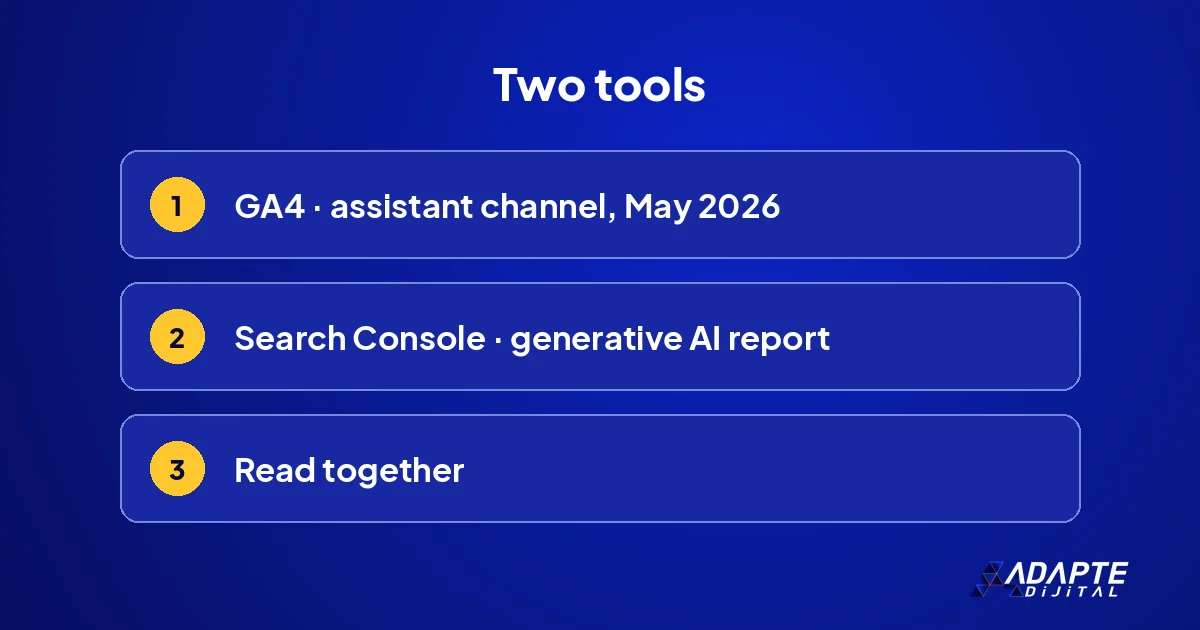
On 13 May 2026, Google announced that it had added a separate channel for visits from AI assistants to the default channel group; it became visible across all properties in early June. Visits from recognised assistants such as ChatGPT, Gemini and Claude are now grouped in this channel. No setup is needed; it appears as a new row in the traffic acquisition report. 🤖
Its limits
The channel relies on referrer information. Visits that carry no source information still stay in direct traffic. Google’s list of recognised assistants may not cover every tool either, and the list can change over time. So the channel is the visible part of assistant traffic, not all of it. Keep that limit in mind whenever the report is read or shared.
A backup channel group
If a custom channel group for assistant domains was set up earlier, it is worth keeping it for a while. Comparing the two definitions shows what the default channel misses. A custom group can also add new tools to the list for a wider net. The comparison is done once a month; wider measurement practice is discussed in performance measurement. 🧮
What does Search Console offer?
BU BÖLÜMÜN ÖZETİ
- The generative AI report
- Impressions only
- Inside the totals
Google’s own AI surfaces, AI Overviews and AI Mode, stay inside organic search in Google Analytics. Search Console is the place to look for these surfaces.
The generative AI report
On 3 June 2026, Google announced generative AI performance reports in Search Console; the report opened to a group of sites first and reached all sites in August 2026. The data starts on 18 May 2026. The report shows impressions in AI Overviews and AI Mode separately, broken down by page, country and date, which makes visibility trends readable. 📈
Impressions only
Today the report gives no click or query data; it measures impressions. You can see how often a page appears in AI answers, but not how many visits that exposure turns into. Impressions measure visibility, not sales. They should be read together with other data, such as organic sessions and orders for the same pages.
Inside the totals
Google said in June 2025 that AI Mode data counts towards the overall performance totals in Search Console. The new report does not remove that data from the totals; it shows it separately. A change in the general report can now be interpreted alongside the generative AI report, which helps explain shifts that used to be a mystery. 🔗
Server logs
BU BÖLÜMÜN ÖZETİ
- Bots and agents
- Agents dressed as browsers
- Reading the logs
Server logs can see what analytics tools cannot. Logs show which bots and agents come to your site.
Bots and agents
Assistant companies use different user agents for different jobs: some crawl content, others open pages on a user’s behalf. Companies such as OpenAI and Perplexity publish the names of these agents. Separating these names in the logs shows which pages are read by assistants, and which are never visited at all. 🧾
Agents dressed as browsers
Some agents look like an ordinary browser and do not identify themselves separately. In its lawsuit against Perplexity, Amazon alleged that the agent presented itself as a Chrome browser. Not every agent shows up in the logs, so log analysis is an estimation tool, not an exact count. It is still the best view of what assistants actually request.
Reading the logs
Logs are read once a month: which agents came, which pages they requested and whether they hit errors? An agent that is blocked or gets errors cannot see the store. Robots.txt and firewall rules are reviewed alongside this reading, and any unwanted block is removed. A short summary from your host is enough to start. 🔧
Connecting visits to sales
BU BÖLÜMÜN ÖZETİ
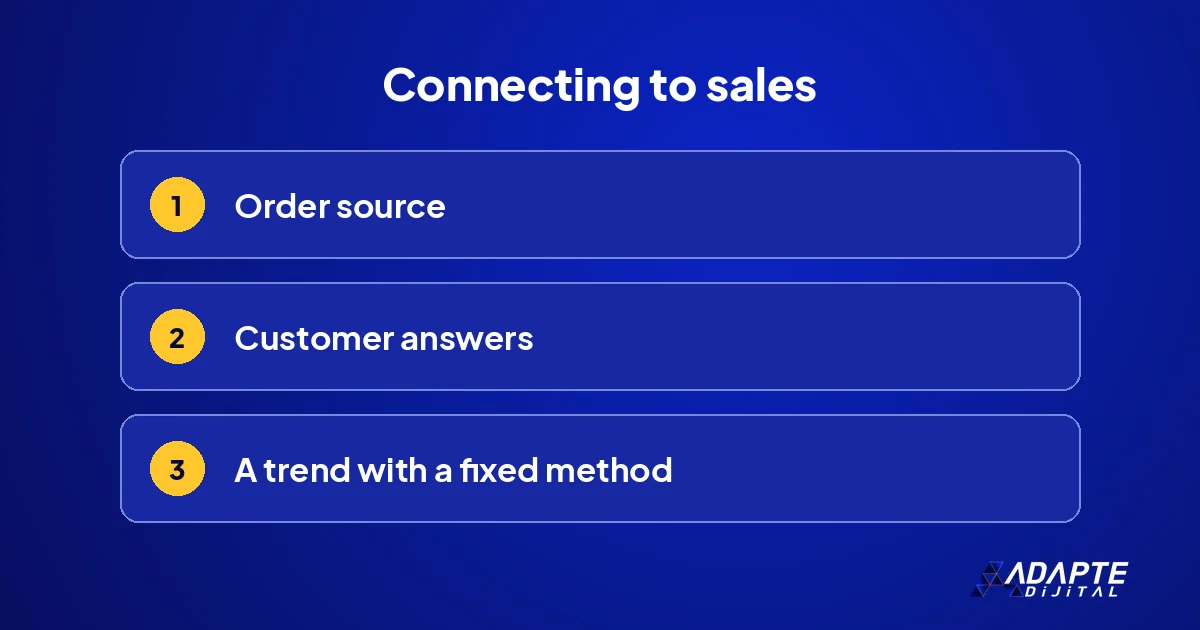
- Order source
- Asking the customer
- A trend, not certainty
The real aim of measurement is to see how assistants affect orders and revenue. For that, visit data is combined with order data.
Order source
Platforms such as WooCommerce can show in the order record which source an order came from. Assistant-sourced orders are separated with this record, and their return rates are tracked separately. How to read store reports is covered in reading WooCommerce reports. The source is part of an order’s identity. 🛒
Asking the customer
Adding an “AI assistant” option to a short “how did you find us?” question after checkout captures part of the invisible influence. The answer is not exact, but it shows the trend. Answers are counted monthly and compared with analytics data, with the order of options kept the same each month so results stay comparable.
A trend, not certainty
Even with every source combined, the full influence of assistants cannot be measured. The aim is a trend that can be compared month by month using the same method. As long as the method stays the same, even small numbers tell a meaningful story. How the six-month reading is done is set out in agent commerce at 6 months. 📉
What does Adapte Digital do for agent traffic measurement?
BU BÖLÜMÜN ÖZETİ
- A single delivery package
- What is delivered
- Where to start
We do not set measurement up once and walk away: channel definitions, server log reading and order source are combined, and a monthly reading template is handed over.
A single delivery package
Adapte Digital does not charge a monthly management fee. Work starts with a single delivery package whose scope is written down in advance: 36,000 TRY + VAT. If the work grows, the new need is defined as a separate add-on package, priced by what will be delivered rather than by the hours spent. 📦
What is delivered
The output is a Google Analytics channel setup, a Search Console reading note, a server log checklist and a monthly trend report template. How visibility in AI answers is audited is explained in AI visibility audit.
Where to start
Which packages are open, and at what price, is shown on our campaign pages, item by item. 🧭
We cover the earning-gate side of this topic in our article on agent traffic analysis.
Quick Summary
- Assistant traffic often looks like direct traffic because source information gets lost.
- Google Analytics added a separate default channel for assistants in May 2026.
- Search Console’s generative AI report shows AI Overviews and AI Mode impressions separately.
- Server logs show which agents read which pages.
- Visits are connected to sales through order source and customer answers.
Short Glossary
- Default channel group
- The list of channels Google Analytics uses to classify visits automatically by source.
- User agent
- The name a browser or bot uses to identify itself when it sends a request.
- Order source
- A record showing through which channel or referral an order arrived.
Frequently Asked Questions
Next Step
Open the traffic acquisition report in Google Analytics, note the assistant channel’s value for the last three months and write it next to direct traffic for the same period. Our campaign pages list the delivery packages that cover this work.
Sources: PPC Land — Google Analytics adds AI Assistant channel for ChatGPT, Gemini and Claude · Google Search Central — Introducing Search Generative AI performance reports in Search Console · Search Engine Roundtable — OpenAI Drops UTM Parameters From ChatGPT Results
Updated: November 2026
Sık Sorulan Sorular
Look at the assistant channel in Google Analytics and at chatgpt.com in session source. Visits without source information may stay in direct traffic.
Not in Google Analytics; those clicks sit inside organic search. Search Console’s generative AI report shows impressions separately but no clicks.
Asking your hosting panel or technical team for a short monthly summary is enough: which agents came, which pages they requested and any errors.