
The Freelancer Who Builds Agent Teams for SMEs: How Is This Profession Emerging?
The freelancer who builds agent teams for SMEs is the person who hands a small business’s repetitive work to AI agents. In 2026 open-source agent frameworks became widespread, and the tools are now within reach. What is missing is someone who understands the business’s work and can explain it to an agent. A new profession is emerging in that gap. 🚪
This article is an earning-gate file. It describes who can do this work, what they sell, how they find the first client and where the work can break down. This article is not a promise of income or investment advice; it describes what one business door looks like. Forward-looking statements are labelled as forecasts, and they will be re-read when they fall due.
What is this door, and why is it opening now?
The tools are ready; the businesses are not. Someone is needed to do the work in between.
Where things stand today
Open-source agent frameworks spread quickly through 2026, and agents running through messaging apps became ordinary. Setup still requires technical knowledge. A small business finds it hard to do alone and needs someone from outside who can both listen and build.
Who can walk through this door?
This work rests more on understanding processes than on programming. Two skills are needed together.
The skills needed
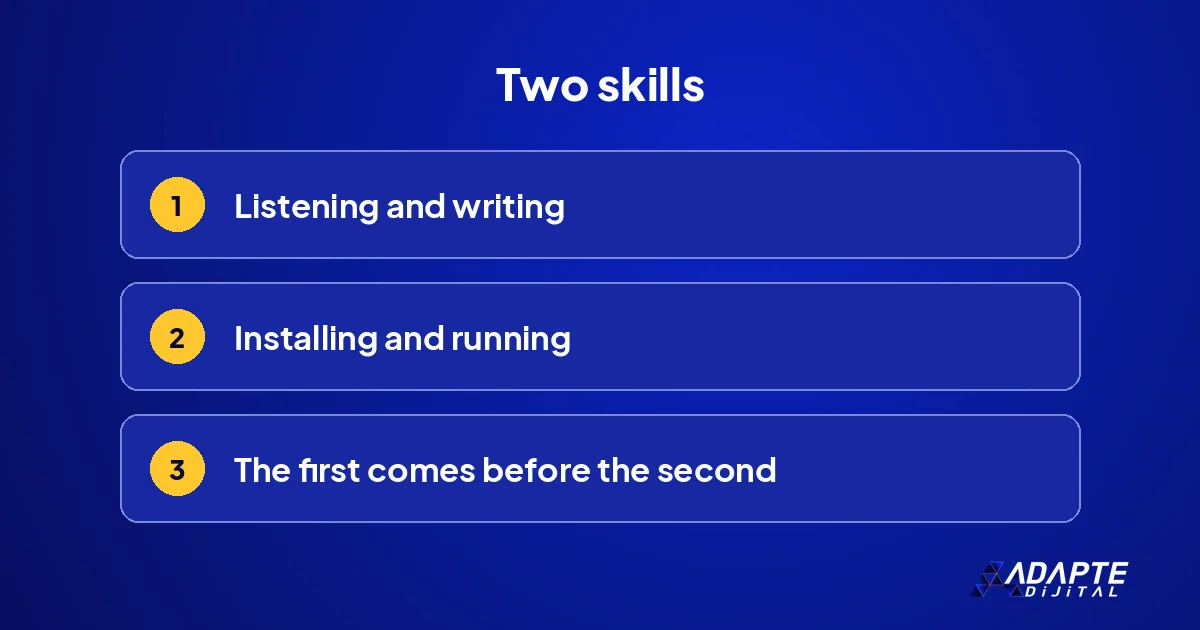
The first skill is listening: understanding how the owner does the job and putting it on one page. The second is technical: being able to install and run an agent framework. Without the first, the second is useless. Whoever cannot write the rule cannot build the agent, however good their technical skills are. 🧠
The capital needed
The capital need is low: a computer, a small usage budget for testing and time set aside for learning. The most valuable investment is setting up an agent in your own work and running it for a few months. Someone selling what they do not use themselves struggles at the first serious question.
Where does the first client come from, and how does income form?
BU BÖLÜMÜN ÖZETİ
- The first client
- Forms of income
- What not to promise
At this door the first client is rarely far away; it is often a business you already know well.
The first client
The first client is a small business whose work you know closely: a former workplace, your accountant, a relative’s shop. You offer them one job, not a big transformation. The first job should be small, with a countable result and cheap mistakes, so that success is easy to see and failure easy to survive. 🤝
Forms of income
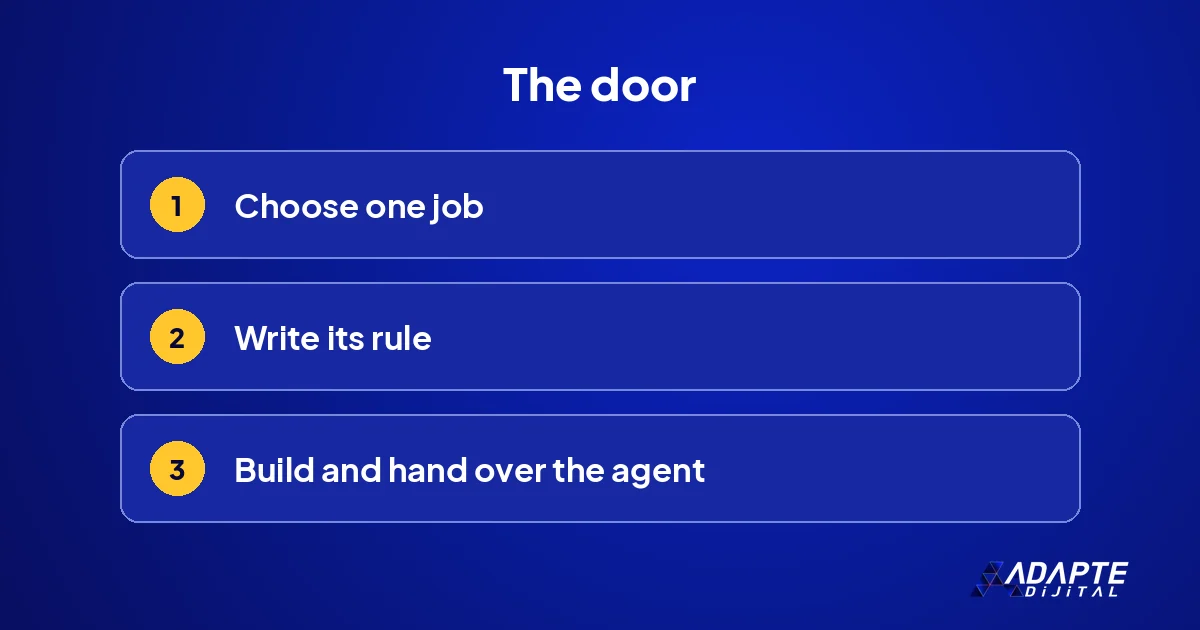
The natural form is a one-off setup: the job is chosen, the rule written, the agent built and handed over. The second form is maintaining the agent once it is running; we describe that as a separate door in the agent maintenance subscription. We give no figures; there is no settled market price for this work yet.
What not to promise
“You will not need staff any more” is not a promise to make; it is not true, and it turns the people in the business against you. What you can promise is that the time taken by the chosen job will be measured and the result shown. A measured difference is the best sales sentence there is. 📝
What are the costs and the biggest risks?
BU BÖLÜMÜN ÖZETİ
- Cost lines
- The permission and security risk
- The dependency risk
The risks look technical, but most are about relationships and responsibility.
Cost lines
The lines are learning time, usage costs during testing, time spent listening to the client and time spent answering questions after setup. The last one is the most often forgotten. If support after delivery is not defined at the start, it becomes unlimited and eats the margin of every job. ⏳
The permission and security risk
The agent reaches the business’s data. An agent with too much permission magnifies the damage when it makes a mistake. Security flaws have been reported in open-source agents, so permissions are kept narrow and irreversible actions stay with a person. Security is part of the setup, not an extra to be added later.
The dependency risk
If only you understand the agent, the business stays dependent on you; that brings work in the short term and erodes trust in the long term. Hand over the rules page and the setup notes. The business should call you because it is satisfied, not because it has no choice. A good definition of what an agent is helps clients understand what they own; see what an AI agent is and when one is built. ⚠️
What does the door’s horizon look like, and the first 90 days?
The first two items are forecasts; the third is the order you can start today.
The first 90 days
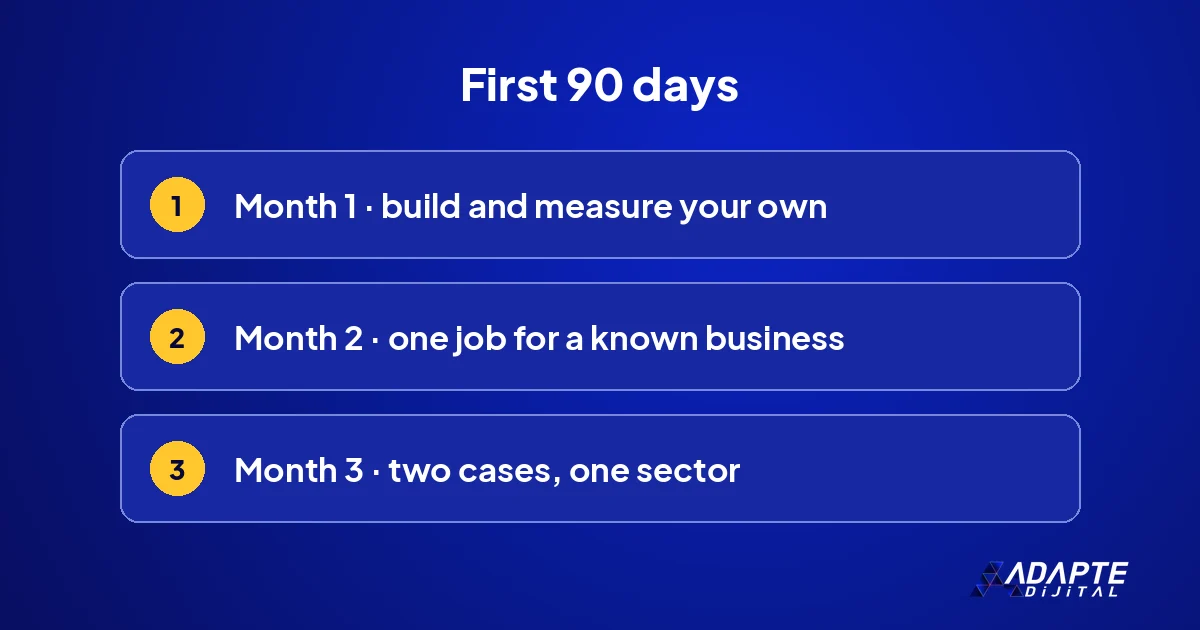
Month one: set up an agent in your own work and measure it for four weeks. Month two: hand over a single job in a business you know. Month three: turn both setups into one-page case notes and choose a sector. Two real cases are worth more than a hundred pages of promotion. Update log. 12 November 2026: first publication. The forecasts on this page are re-read when they fall due; a forecast that turns out wrong is not deleted but corrected here. 🗓️
How do you approach this door with Adapte Digital?
BU BÖLÜMÜN ÖZETİ
- A single delivery package
- What we do on the consulting side
- The infrastructure side
We built our agent system in our own work first, and we apply the same order with clients.
A single delivery package
Adapte Digital does not charge a monthly management fee. Work starts with a single delivery package whose scope is written down in advance: 36,000 TRY + VAT. If the work grows, the new need is defined as a separate add-on package, priced by what will be delivered rather than by the hours spent. 📦
What we do on the consulting side
Together we choose which job suits an agent, write the rules page and hand over the structure. The result is a documented job that the business owns, whoever maintains it afterwards.
The infrastructure side
The order of the website and content an agent reads is a separate piece of work; its scope is written on our campaign pages, with current pricing and capacity. 🧭
Quick Summary
- The door: handing one job in a small business to an agent and delivering it.
- Two skills are needed: listening and writing, then installing.
- The first client is usually a business you already know.
- Permissions stay narrow; the rules page is handed to the client.
- Specialists in one sector will stand out (forecast).
Short Glossary
- Agent
- Software that carries out a task step by step, uses tools and delivers the result.
- Rules page
- A one-page definition of a job’s input, steps, output and checking measure.
- Freelancer
- Someone who provides services in their own name without being tied to an organisation.
Frequently Asked Questions
Next Step
Choose one job you repeat every week in your own work and write its rule on one page; that is your first installation.
Sources: DeepLearning.AI — Hermes Agent Challenges OpenClaw · Five Minute AI Brief — Open Source Agentic AI: A Practical Brief
Updated: November 2026
Sık Sorulan Sorular
What is sold is a working agent job: a chosen task, a written rules page and an agent that has been set up and tested. The buyer is a small business whose time goes to repetitive work: an accounting office, an estate agency, a clinic, a small shop. They do not buy a tool; they buy a result, measured in hours returned to the week. 🎯
Small business owners have heard of agents but do not know what they are good for. The person who explains first and sets up first usually wins the business’s later work too. The first agent job is the start of a relationship. We describe how that first month goes in the first month of an agent-run company. ⏱️
One person starts and can continue alone for a long time; the work is small and repeatable by nature. Specialising in one sector makes it easier: at the third accounting office the rules page is almost ready. How freelancers compare with agencies is discussed in AI consulting agency, software firm or freelance consultant. 👥
Forecast: within a year the number of people claiming to do this work will rise quickly. What will set people apart is real installations they can show and depth in a particular sector. The generalist will get lost in the crowd, while the specialist will be recommended by clients to their peers. 🔭
Forecast: as setup gets easier, value will shift from technical installation to choosing the job and writing the rule. Installing the tool will become ordinary; choosing the right job will remain a skill that clients pay for.
Setup requires technical knowledge, but half the work is understanding processes. Someone who learns both can do it; someone who knows only one will struggle.
The one you come from or know closely. Knowing the work is half of writing the rules page.
We give no figures; there is no settled market price. Income depends on how many jobs you set up and the scope of the support you give.