
Pazarama moved its core systems to Google Cloud in one month, what changes for sellers?
Pazarama, the e-commerce platform owned by Türkiye İş Bankası, has moved its core systems to Google Cloud infrastructure, completing the switch within one month, without a service interruption, in July 2026 (Perakende.org, 5 August 2026). The move is part of an AI-focused transformation strategy the company started in 2023. The goal is to bring data analytics, AI-supported decision-making and day-to-day operations together in a single cloud ecosystem. The next planned step is building AI-powered applications with Google Gemini Enterprise.
If you sell on Pazarama in Türkiye this autumn of 2026, this news does not mean a button changes in your seller panel tomorrow morning. The report mentions no direct change for sellers, no timeline and no performance figures. What it really means is this: the platform is moving onto a base where data sits in one place and gets processed with AI. On that kind of base, the cleaner your product data is, the better the system’s chances of showing you to the right customer.
What exactly does Pazarama’s move to Google Cloud cover?
The report uses the phrase “core systems”. It does not say which systems moved, whether orders, payments, catalogue or search. Three things are known: the migration finished in July 2026, it took one month, and there was no service interruption. Investment, savings, speed gains and the previous setup are not in the report, so we do not guess.
How does moving a marketplace like Pazarama to the cloud work behind the scenes?
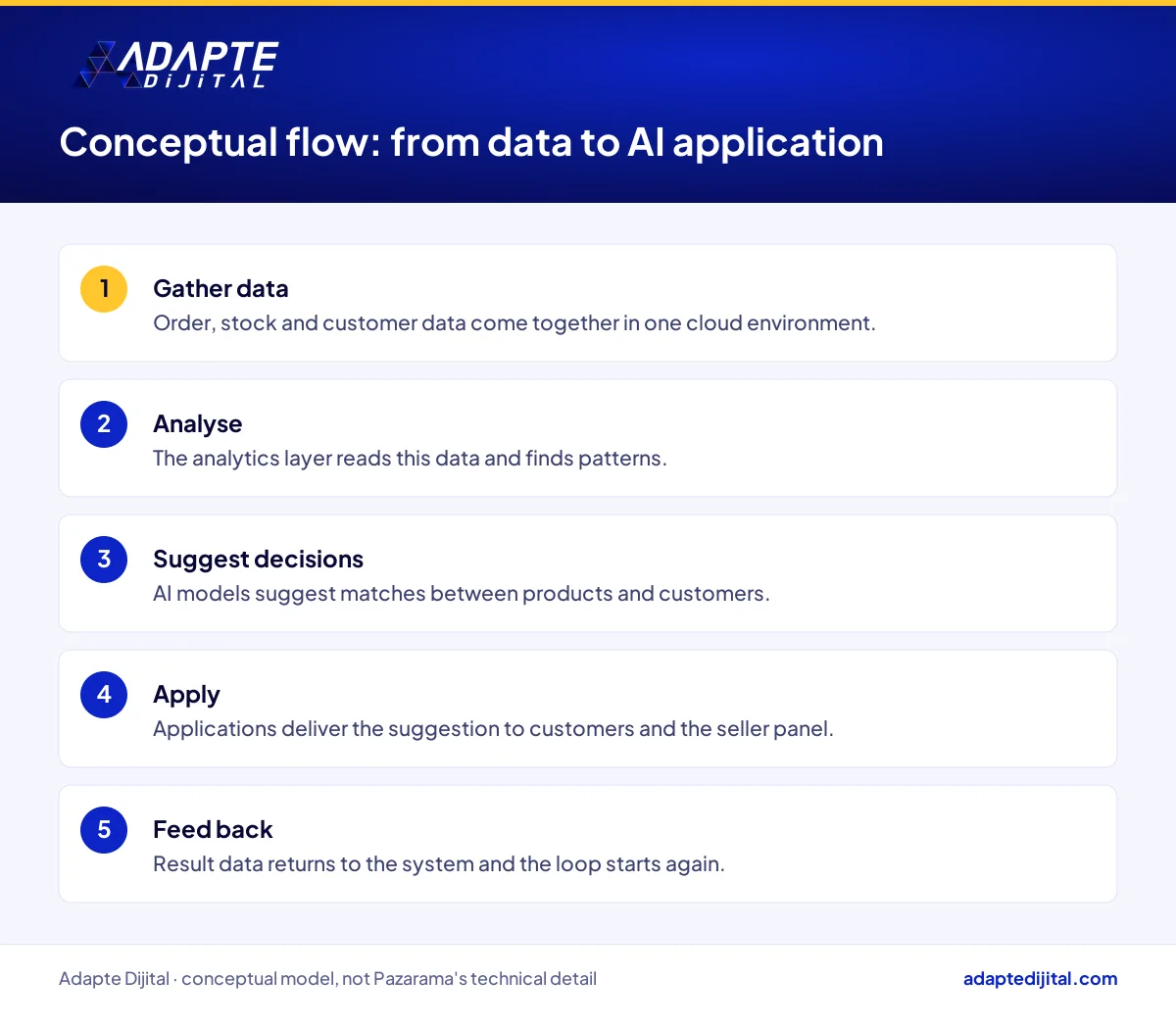
Conceptually, it works in five steps. Data is gathered into one cloud environment, an analytics layer reads it, AI models produce decision suggestions, applications deliver those suggestions to customers and sellers, and the results flow back into the system. Pazarama’s technical details are not in the report, so the flow below is a general model.
Which sellers does Pazarama’s infrastructure change affect, and how?
The effect splits along data discipline. A seller with complete product information, correct category assignments and up-to-date stock will be better prepared when personalisation and AI-powered discovery arrive. A seller with a messy catalogue will not get the same value from those tools. This is not a forecast about Pazarama; it is how AI systems generally work.
How does AI-powered discovery change a Pazarama seller’s digital visibility?
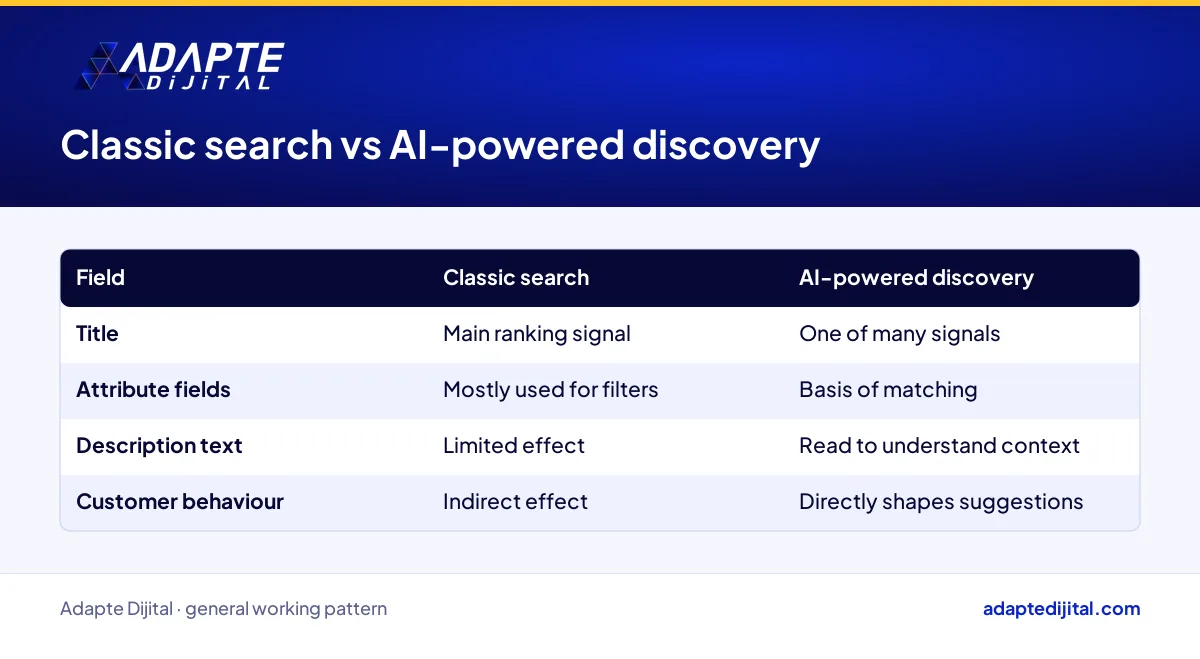
In classic marketplace search, the title and keywords lead. In AI-powered discovery, the system reads product attributes, the customer’s past behaviour and the product’s relationship to similar items together. Visibility depends on the whole of your product data rather than a single word. Which features Pazarama will add, and when, is not yet known.
What should a business building its own e-commerce stack check on the cloud side?
Four things: where and in what format your data is stored, whether the system talks to marketplaces through an API, how downtime is handled during migration, and whether you can add AI tools later. The Pazarama example shows that the last point is no longer a separate project. It is part of the infrastructure decision itself.
What should a business selling on Pazarama do this week?
BU BÖLÜMÜN ÖZETİ
- Complete the product cards of your 20 best sellers
- Confirm store terms on the official page
- Bring your product data into one source
This week, get your catalogue ready for AI-powered discovery. If your product data is already in order when the platform’s new applications arrive, you do not start from zero.
Complete the product cards of your 20 best sellers
Fill in empty attribute fields and check that the title and description say the same thing. Add at least one in-use image to products that have only one photo.
Confirm store terms on the official page
According to İş Bankası’s marketplace solutions page, businesses opening a store on Pazarama get a 1% + VAT commission on turnover up to TL 300,000 for the first three months. You need to be a registered taxpayer and able to issue invoices. Terms can change. Verify with the official source; this is not legal or financial advice.
Bring your product data into one source
If you keep separate spreadsheets for the marketplace, your own site and your social shop, link them to one master table. This is work we do; as part of e-commerce consulting, we set up catalogue and infrastructure structure together with you. We also interpret developments like this one on our retail page.
Quick Summary
- Pazarama moved its core systems to Google Cloud in one month without interruption, completing the switch in July 2026 (Perakende.org).
- The move is part of an AI-focused transformation strategy that started in 2023.
- The next step is building AI-powered applications with Google Gemini Enterprise; no timeline has been announced.
- The report includes no direct impact on sellers, no investment figure and no performance data.
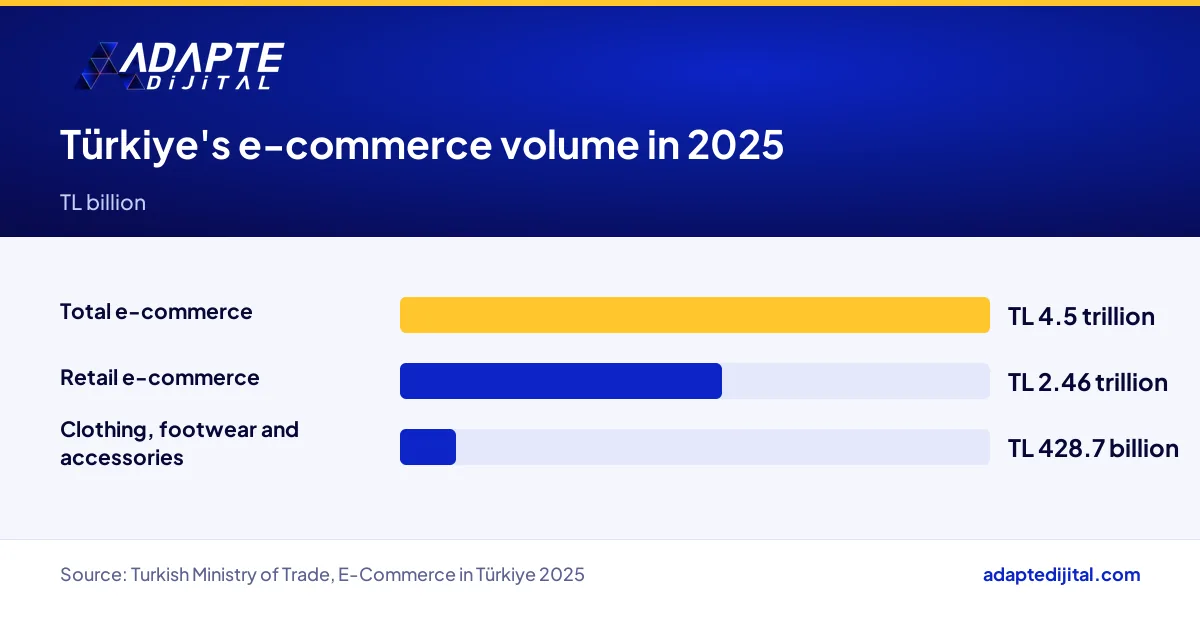
- Turkish e-commerce volume passed TL 4.5 trillion in 2025 (Ministry of Trade, E-Commerce in Türkiye 2025).
Short Glossary
- Cloud migration
- Cloud migration is the term used to describe a company moving its systems from its own servers or another environment onto a cloud provider’s infrastructure.
- SKU
- SKU is the stock code used to identify each product variant, such as a colour or size, as a separate item.
- API
- API is the connection interface used to let two pieces of software send and receive data from each other.
Frequently Asked Questions
Next Step
If you want to see together how ready your catalogue and e-commerce stack are for AI-powered discovery, fill in the consult your expert form.
Sources: Perakende.org, 5 August 2026 · Yeni Birlik Gazetesi, 6 August 2026 · Turkish Ministry of Trade, E-Commerce in Türkiye 2025 · Webrazzi, 9 October 2025 (Gemini Enterprise) · Türkiye İş Bankası, Marketplace Solutions
Updated: October 2026
Sık Sorulan Sorular
The report does not describe the method. Generally, short migrations come at the end of a long preparation period. Pazarama’s transformation strategy starts in 2023, so the one-month move in July 2026 reads as the last link in that process.
On a marketplace, even one hour of downtime is an hour where no orders come in and the till stays silent. From a seller’s point of view, the best infrastructure migration is the one nobody notices. The “no interruption” detail in the report tells you that store activity kept running during the switch.
Pazarama CEO Mehmet Bülent Kutacun describes the Google Cloud transformation as a key step in the company’s AI-focused strategy. Önder Güler, Country Director of Google Cloud Türkiye, is also among those who commented in the report.
It means order, stock, customer behaviour and campaign data live in the same environment instead of on separate servers. When data sits in one place, analytics and AI tools do not have to stitch different sources together.
Gemini Enterprise is Google’s AI platform for businesses, announced in October 2025. In Pazarama’s plan, it is the tool for building applications on top of the collected data. The report gives no timeline for which applications arrive, or when.
It works, but it works poorly. A model cannot make better decisions than the data it is fed. We see the same thing with AINEO Motor, the calculation engines we embed inside business articles: when the input fields are not clearly defined, they do not produce a meaningful result. At marketplace scale, the rule holds for far more data.
Fashion, footwear and accessories sellers with a wide SKU range, along with home goods stores. In these groups, showing the right product to the right customer feeds straight into conversion rate. According to the Turkish Ministry of Trade’s 2025 e-commerce report, clothing, footwear and accessories ranks first in Turkish e-commerce at TL 428.7 billion.
Small sellers who upload products with a one-line title and a single image. Those products just sit on the shelf, because the system does not know who to show them to. So do newcomers who built their catalogue in a hurry.
Agencies supplying content, photography and integrations to sellers, plus shipping and warehousing firms. As the platform expects better data, whoever prepares product cards and stock feeds carries a heavier load.
Structured attributes such as size, material, colour and intended use. When these fields stay empty, a model cannot match the product in the right context.
As AI channels multiply, it gets harder to see which sale came from where. We cover this separately through AppsFlyer bringing measurement to ChatGPT Ads. The same rule holds for in-marketplace ads: you cannot manage a budget you do not measure.
Indirectly, yes. The product data you clean up for a marketplace also works on your own site and in Google search. Keeping one clean product data source takes less effort than fixing each channel separately.
If you cannot export your product, customer and order data in a standard format, switching providers gets expensive. This is the first question to ask when choosing infrastructure. At the contract table, this clause weighs as much as the monthly fee.
Yes. At Pazarama, the strategy starts in 2023 and the move completes in one month in July 2026. The logic is the same at a smaller scale: data clean-up first, then integration, then go-live last. A migration that lands during a campaign period is a week of customers walking out the door.
A marketplace brings traffic quickly, while the customer relationship stays on your own site. Feeding both channels from the same product data source lets you track average basket value and stock consistency together. That setup also raises the question of how to fund growth; we look at a growing retailer’s capital options through the Saat&Saat IPO.
The report mentions no change to commissions or seller terms. Check current terms on the official pages of the platform and İş Bankası.
The report asks nothing of sellers. Still, making your product cards complete is a sensible step to prepare for AI-powered applications.
Pazarama describes them as the next step, but no date or feature list has been shared.