
Boyner backs Pembe Top for the 9th time, how can a retailer join an awareness project?
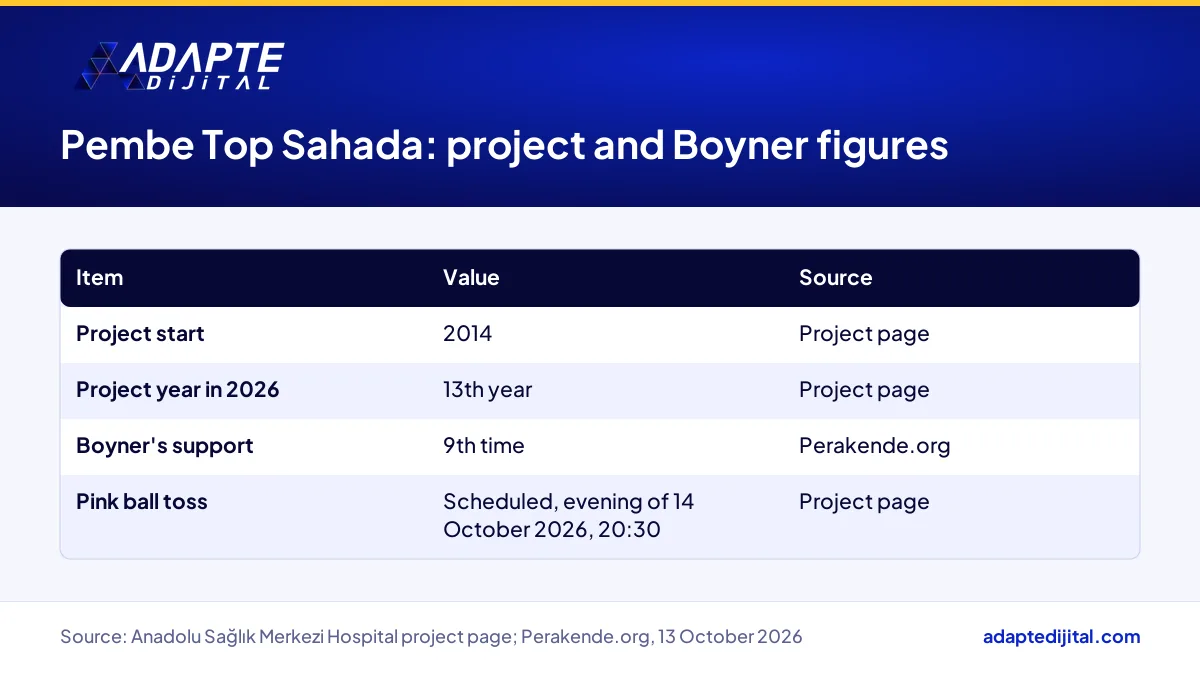
Pembe Top Sahada (Pink Ball on Court), the awareness project run by Anadolu Sağlık Merkezi Hospital and Anadolu Efes Sports Club, is in its 13th year in 2026, and Boyner is backing it for the 9th time (Anadolu Sağlık Merkezi Hospital project page; Perakende.org, 13 October 2026). The project runs through October, known as Breast Cancer Awareness Month, and aims to raise awareness of early diagnosis. According to Perakende.org, Boyner highlights the importance of early detection in its communication channels and stores.
For a store owner, the point is this: a retailer can stand behind an awareness project for years without owning it. The way to do it is to name the project owner correctly, define its own role clearly and carry the message into the store without making any health claims.
What is the Pembe Top Sahada project, and where does Boyner stand in it?
Pembe Top Sahada is an awareness project that began in 2014 and is known for a pink ball tossed up on a basketball court in October. The project owners are Anadolu Sağlık Merkezi Hospital and Anadolu Efes Sports Club. Boyner is a supporter, not an owner, and according to the report this is its 9th time backing the project.
How can a retailer like Boyner join an awareness project it does not own?
In three steps: agree its role with the project owner in writing, keep the message to text the owner has approved, and repeat its involvement in the same period each year. The picture in Boyner’s case is a model where the retailer stands in its stores and communication channels, not on the court.
How does a retailer like Boyner carry a health awareness message in store?
With text and visuals approved by the project owner, in a space kept separate from product sales. The retailer makes no health claims, quotes no figures and gives no advice on examinations or screening; it points customers to a doctor and to official sources. For accurate health information, consult your doctor and Türkiye’s Ministry of Health.
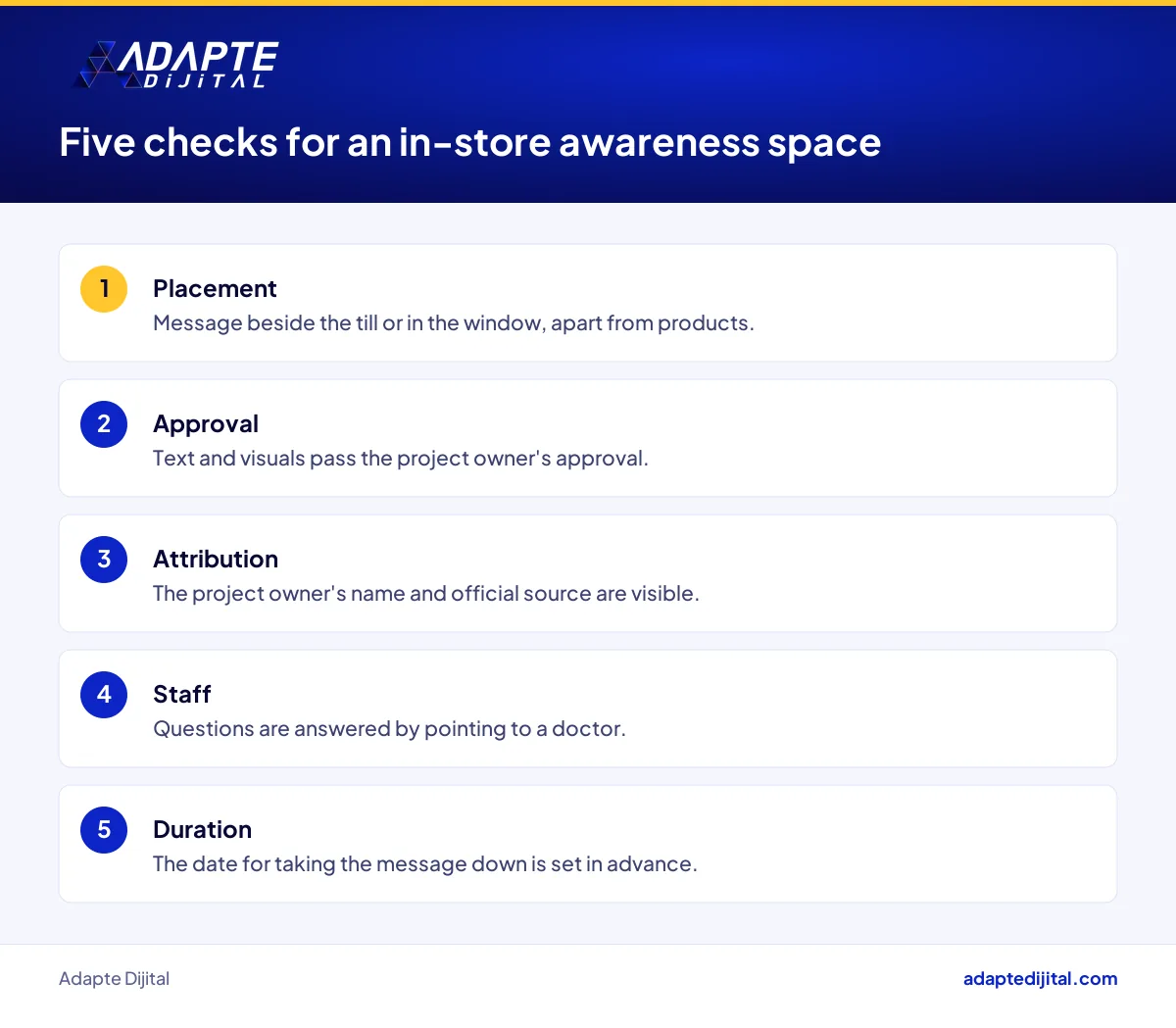
- Is the message beside the till or in the entrance window, apart from product labels?
- Have the text and visuals been approved by the project owner?
- Are the project owner’s name and a line pointing to official sources visible?
- Have staff been briefed to answer questions with “please ask your doctor”?
- Is the date for taking the message down already set?
Who does a retailer’s involvement in a project like Pembe Top affect, and how?
Clothing, cosmetics and home textile retailers whose customers are mostly women are affected most, since the message reaches that audience directly. Project owners reach a wider audience. Mall managements and other businesses on the store’s street are affected indirectly.
What should a retailer do online when backing a project like Pembe Top?
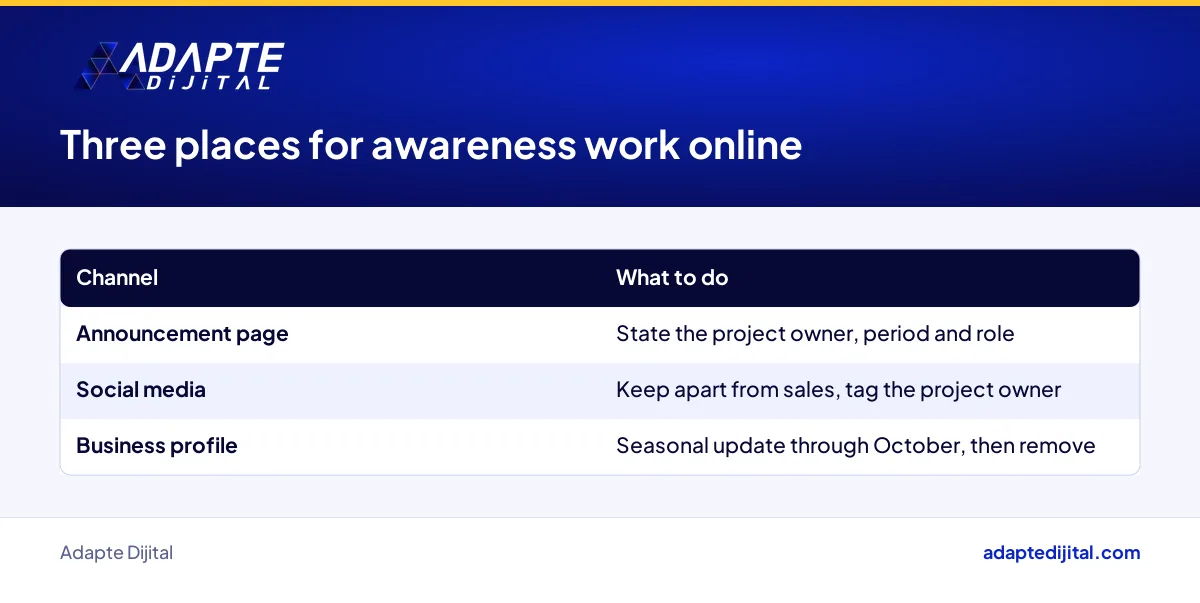
Prepare a single page or announcement that links to the project owner’s page, states the retailer’s role plainly and contains no health claims. Social posts should point to that page.
What should a store owner who wants to join an October awareness project like Boyner’s do this week?
Three jobs are enough this week: contact the institution running the project, set the in-store space and approved text, and prepare staff with a short briefing. If you are already in mid-October, aim for a small role this year and a full plan for next year.
Quick Summary
- Pembe Top Sahada is run by Anadolu Sağlık Merkezi Hospital and Anadolu Efes Sports Club and is in its 13th year in 2026 (project page).
- According to Perakende.org, Boyner backs the project for the 9th time and highlights early detection in its stores.
- The pink ball toss is scheduled for the evening of 14 October 2026, at the Anadolu Efes–Bayern Munich game (project page).
- The financial or product content of Boyner’s support has not been disclosed.
- A retailer can back such a project by naming the owner, defining its role and making no health claims.
Short Glossary
- Awareness project
- Awareness project is the communication and event work institutions run to draw public attention to an issue.
- Supporting brand
- Supporting brand is the brand that takes part in a project it does not own, used to contribute resources, space or communication channels.
- In-store communication
- In-store communication is the set of visual and spoken tools used to give customers a message in windows, at the till and on the shop floor.
Frequently Asked Questions
Next Step
If you would like to plan how your store backs an awareness project, with its role, text and online set-up, fill in the Consult Your Expert form, and our desk will draw up the plan with you.
Sources: Anadolu Sağlık Merkezi Hospital, Pembe Top Sahada (accessed 14 October 2026) · Perakende.org, 13 October 2026 · Marketing Türkiye, 13 October 2023
Updated: October 2026
Sık Sorulan Sorular
According to the hospital’s Pembe Top Sahada page, the pink ball toss is scheduled for the evening of 14 October 2026, at 20:30, during the Anadolu Efes–Bayern Munich game at the Turkcell Basketball Development Centre. This year’s volunteer supporter is Cemre Baysel. Readers coming to this page later should check separately whether the event went ahead as planned.
According to Perakende.org, Boyner draws attention to the importance of early detection in its communication channels and stores. No financial or product value has been disclosed for the support. Boyner’s involvement does not appear on the project page; it rests on the Perakende.org report.
Yes. According to the hospital’s project page, Sarar also joined the project in 2016 with an in-store awareness effort. A 2023 report by Marketing Türkiye describes the project, in its 10th year, as a partnership between the same two institutions.
Supporter, communication partner or provider of store space: this should be written down at the start. If the role stays vague, customers may mistake the project for the retailer’s own campaign. The project owner’s name should appear clearly in every message.
Taking part in the same month every year naturally links the brand and the project in customers’ minds. Support that appears once and then vanishes can look like advertising. Backing a project for the 9th time is a concrete example of that kind of continuity.
Use of names and logos, approved texts, duration and, if any, how a donation or revenue share will be disclosed should all be in writing. Verify the rules on donations and campaign announcements with the official source; this is not legal or financial advice.
Our recommendation as a desk is to use this checklist for in-store placement:
Placing a health message next to a shelf of pink products can look like turning awareness into a sales tool. Customers notice, and trust suffers. A separate space protects how seriously the message is taken.
The person at the till is not a health adviser. When a customer asks a question, pointing to the project owner’s page and suggesting a visit to a doctor is enough. Agreeing this line in advance keeps wrong information from spreading in the store.
Chains with a wide store network, high footfall and an audience that overlaps with the project get the most out of it. A single-store boutique can take part too, but should keep its role smaller. Whatever the scale, the message belongs to the project owner.
A business selling products with little link to the project, or one that ties the campaign only to discounts, will struggle. Customers may not find the involvement sincere, and the project shrinks to a poster nobody reads.
Malls can offer a suitable stage for awareness events in their common areas and can gather brands in their tenant mix around the same message. We look at how October events affect visitor traffic in our piece on the Forum malls’ October calendar.
The project’s name, owner, period and the retailer’s role, in short paragraphs. A link to the project owner’s official page should be included. For health information, that link is enough; your own text is not needed.
Calm, informative and kept apart from sales. Using a discount code or product tags in the post weakens the credibility of the awareness message. Tagging the project owner’s account makes clear who runs what.
A seasonal update on the store’s business profile makes its involvement visible in local search. Remove the update when October ends; out-of-date information leaves customers with an impression of carelessness.
Write through the institution’s contact channel with a short note on your number of stores and the role you propose. Do not use the institution’s name or logo before approval arrives.
An information card approved by the project owner, placed beside the till in one store, is a sound start. No average basket or sales target should be tied to it. We cover traffic planning for openings and event periods separately in our MediaMarkt Koru Florya piece.
We plan the communication calendar and online set-up of a partnership with a project owner as part of digital marketing consulting. You can follow similar retail developments on our retail page.
How a business takes part is up to the project owner. The institution’s contact channel can be used to apply; its name or logo should not be used before approval.
A retailer should not give medical information. The message should stay within the project owner’s approved text, and customers should be pointed to a doctor and to official sources.
A discount can make an awareness message look like a sales tool. If a donation or revenue share is being considered, it should be agreed in writing with the project owner, and the rules should be checked with the official source.