
Watsons gives Mete Yurddaş a Gulf development role, how do retailers enter the GCC?
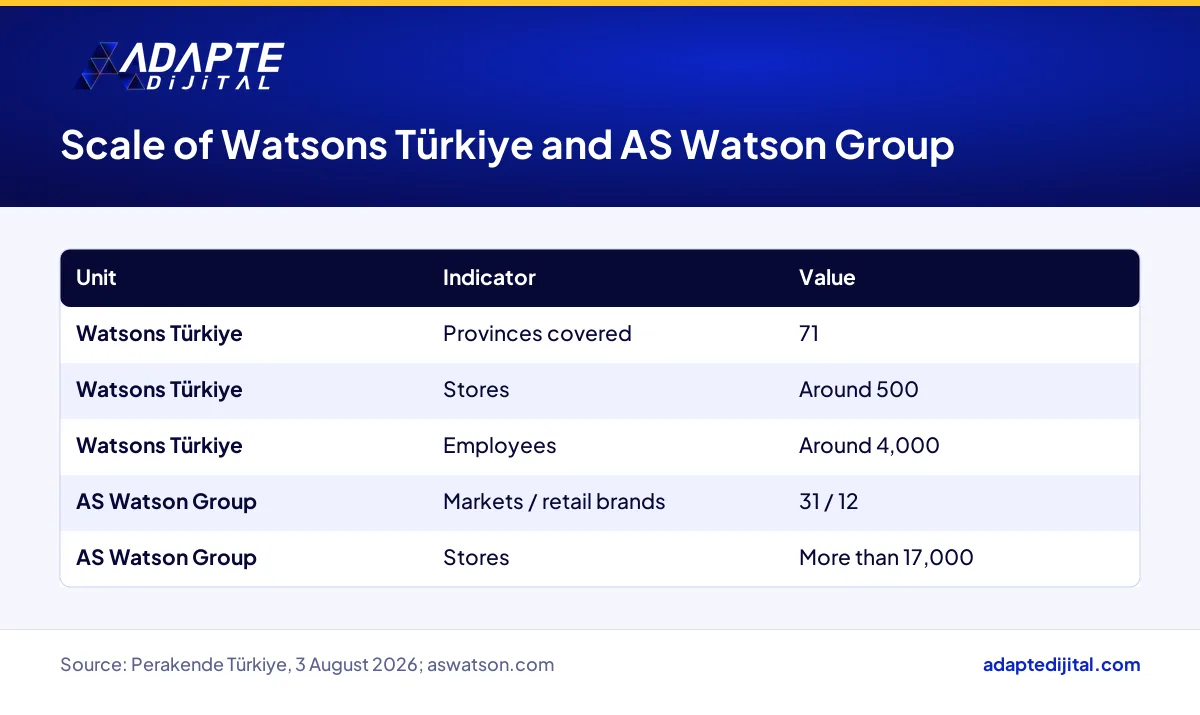
Mete Yurddaş, general manager of Watsons Türkiye, has also been responsible for the chain’s development in the Gulf since 1 June 2026, with the new title “General Manager, Watsons Türkiye and GCC (Gulf Countries) Development” (Perakende Türkiye, 3 August 2026). He keeps running the Turkish business and now contributes to growth and business development strategy in the Gulf. Watsons Türkiye operates around 500 stores in 71 provinces with roughly 4,000 employees.
What it means for you: a global chain is wiring its Gulf development into the desk that runs Türkiye. If you run a Turkish retail business and look abroad in autumn 2026, this is a reminder that the Gulf is a market you can plan for, not a distant dream. The real questions are entry model, market order and preparation.
What exactly does the Gulf role at Watsons Türkiye cover?
The news gives a clear frame. Mete Yurddaş continues to manage Türkiye and contributes to growth and business development strategy in the Gulf. The role starts on 1 June 2026, and the report appears on 3 August 2026. Which countries, how many stores, what timeline and how the Turkish team will support the Gulf are not in the report.
Which Turkish businesses does Watsons’ Gulf move affect, and how?
The direct effect is limited and the indirect effect is wide. Personal care and cosmetics manufacturers that want to supply the Gulf sit on the winning side. Small chains planning to open their own stores on the same shelf space face a harder fight. Turkish suppliers of store fixtures, visual merchandising and retail software move a step closer to the table.
Should a Turkish retailer enter the Gulf through franchising or a partnership?
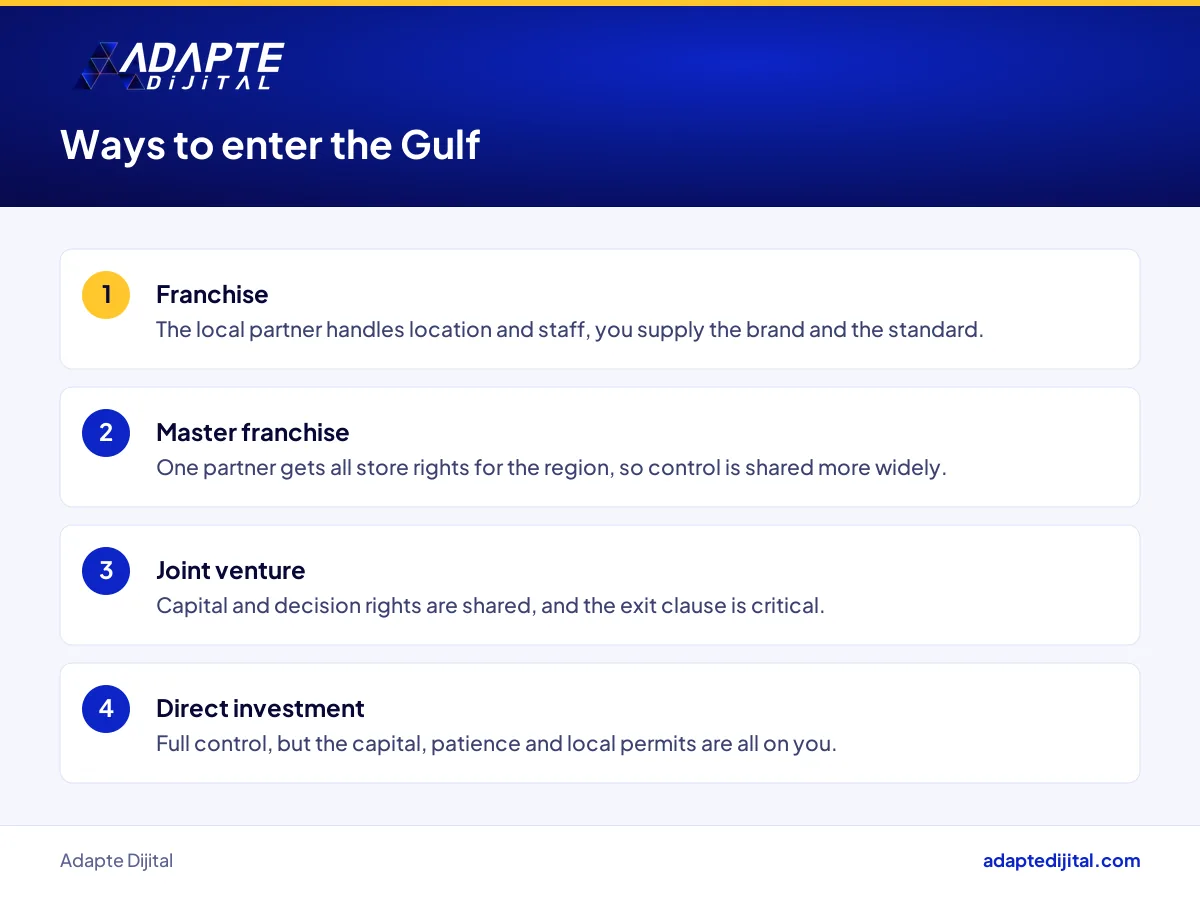
For most mid-sized retailers, the first step is franchising or master franchising with a local partner. AS Watson itself took this route into the Gulf. The group entered the region through a franchise agreement with Al-Futtaim, announced on 8 September 2020, and it was the group’s first franchise agreement.
Which Gulf country should a Turkish retailer pick as its first market?
There is no single right answer, because the choice depends on category, partner and capital. The only concrete Watsons breakdown we have is old. As of February 2023, the chain had 17 stores in the region: 10 in the UAE, 5 in Saudi Arabia and 2 in Qatar. That is not today’s picture, only the first two years of one entry.
How should a brand entering the Gulf prepare its digital side?
The search result opens before the store does. In the Gulf, customers and potential partners first see your brand on Google, on maps and on marketplaces. If your English and Arabic pages, local business profiles and product data are not ready, customers walk out of the store on opening day and you never learn why.
What should a business owner weighing the Gulf do this week?
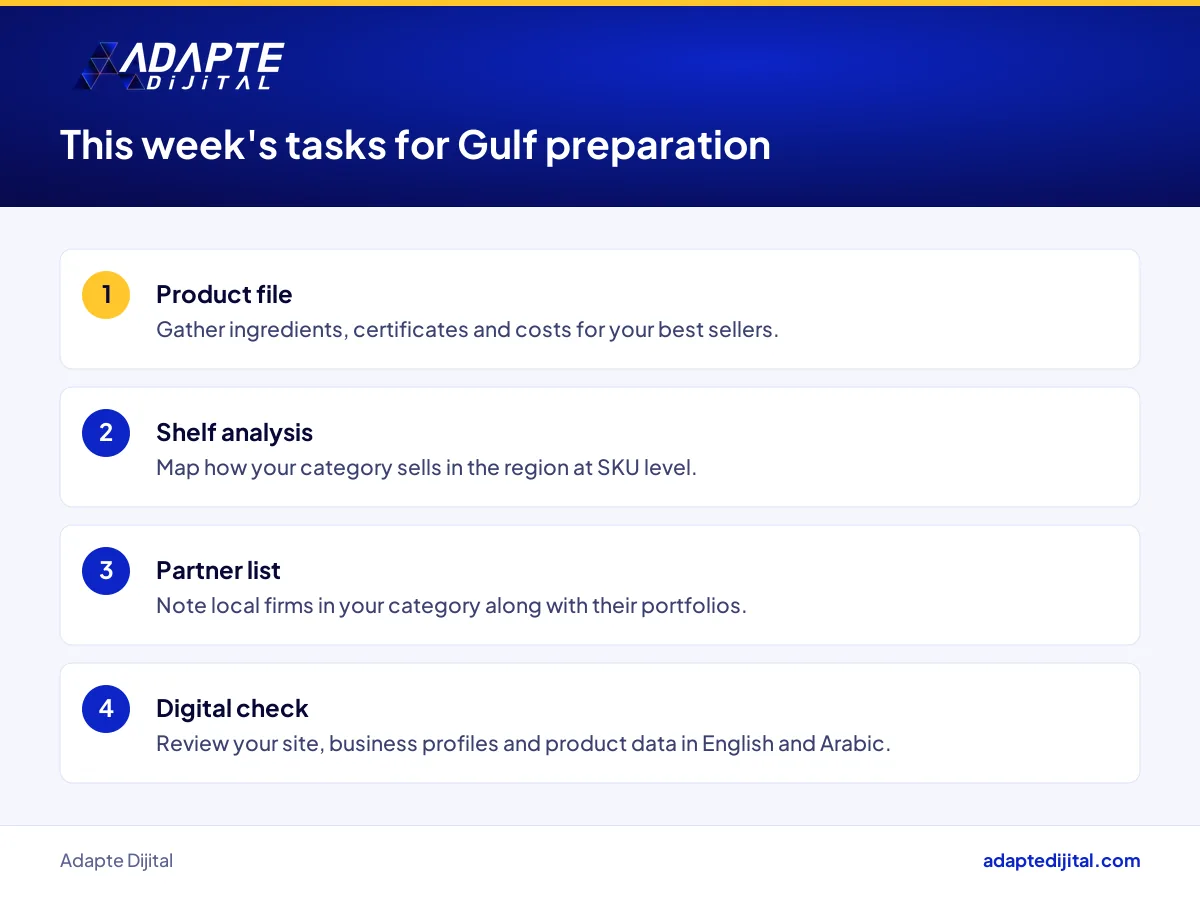
Do three concrete things this week. Map how your category sells in the Gulf down to shelf and SKU level, draw up a partner shortlist for your entry model, and review your digital assets in both languages. We run foreign trade consultancy work that builds an export market plan step by step.
We look at how to read sales per square metre in Turkish malls in our piece on AYD’s May mall index, and at how a manufacturer builds its own store network in our piece on Mısırlı’s 111-store target. For more, visit our retail page, where we interpret the retail agenda for you.
Quick Summary
- Since 1 June 2026, Mete Yurddaş has been responsible for Gulf development alongside Watsons Türkiye (Perakende Türkiye).
- Watsons Türkiye runs around 500 stores in 71 provinces with roughly 4,000 employees (Perakende Türkiye).
- AS Watson Group runs 12 brands in 31 markets with more than 17,000 stores (aswatson.com).
- The report does not give the current Gulf store count or a growth timeline.
- For a Turkish retailer eyeing the Gulf, the first decision is the entry model and the local partner.
Short Glossary
- GCC
- GCC is the abbreviation used to refer collectively to the member states of the Gulf Cooperation Council.
- Master franchise
- Master franchise is the contract model used to grant one partner the rights to all of a brand’s stores in a country or region.
- Tenant mix
- Tenant mix is the term used to describe the category and brand spread of the stores in a shopping mall.
Frequently Asked Questions
Next Step
If you want to assess your Gulf plan together, covering product, partner and digital readiness, fill in the consult your expert form.
Sources: Perakende Türkiye, 3 August 2026 · AS Watson Group corporate announcements (Al-Futtaim franchise agreement, 2020; Middle East store data, 2023) · AS Watson Group corporate website (aswatson.com).
Updated: October 2026
Sık Sorulan Sorular
Watsons Türkiye runs around 500 stores in 71 provinces and employs roughly 4,000 people. That scale means a deep bank of know-how in store openings, sourcing and staffing. It is no surprise that the Gulf role leans on it.
The group runs 12 retail brands across 31 markets with more than 17,000 stores, figures you can also see on the AS Watson Group corporate website. The report adds that the group posted revenue above 26 billion dollars in its 2025 financial year. That revenue figure appears only in the report. The Watsons brand itself operates in 16 markets across Asia, Europe and the Middle East.
The current number of Watsons stores in the Gulf, the target countries and the growth timeline are not given. The role starts on 1 June while the report runs on 3 August, so the original source of the announcement is also unclear. That is why our reading focuses on your preparation, not on guessing the group’s plan.
A management team that knows Türkiye may also know Turkish suppliers. For a manufacturer with a ready product file, complete certificates and consistent pricing, that kind of link can open a door. Getting onto the shelf, though, still starts at the negotiating table with a category manager.
When a large player strengthens its organisation in the region, rent negotiations get tougher and the competition for a place in a mall’s tenant mix sharpens. A Turkish chain with a handful of stores has to bid for the same locations against far stronger balance sheets.
Firms that do store design, shelving systems, field software and content production can follow the chains they serve in Türkiye into projects abroad. The entry ticket is a proposal file and a reference list in English and Arabic.
The local partner carries location, rent, staff and permits. You bring the brand, the products, the store standard and the training. Your capital needs drop, but you share margin and control.
If your product is strong and your local distribution is weak, a joint venture balances capital and decision rights. The partner’s mall relationships and logistics network become decisive here. Exit clauses in the contract matter as much as the entry terms.
Only if you have the capital and the patience, and you have already tested product-market fit in the region. Otherwise you pay rent for a year, open the store, then pull back because the till never gets busy enough. Company formation and ownership rules differ by country. Verify with the official source; this is not legal or financial advice.
Watsons opened its first Gulf store in Dubai Mall on 1 October 2020. Malls dense with international brands give a test store real visibility. The trade-off is high rent and an equally high expectation for sales per square metre.
According to AS Watson, the Saudi beauty and personal care market was worth 4.64 billion dollars in 2022. For a cosmetics business, that is a size worth studying on its own. Confirm the current figure with an official source before you plan on it.
In 2020, AS Watson set a target of 100 Gulf stores by the end of 2025. Today’s actual count is not in our sources. Without knowing the gap between target and result, do not build your own plan around a large chain’s announcement.
English and Arabic versions, correct language tags and contact pages split by country are the baseline. Arabic pages need a right-to-left layout. You need localisation, not just translation.
Open a separate business profile for each store and keep opening hours and photos current. Run the first months of advertising on a test budget. Track search terms and average basket size separately for each country.
Pick your best sellers. Gather ingredients, certificates, packaging language and cost data in one file. A product that just sits on the shelf at home usually does the same once you ship it to the Gulf.
Identify companies in the region that run stores or distribute in your category. For each one, note the portfolio, mall relationships and franchise experience. Put your own store standard in writing before the first meeting.
The report mentions no change to the Turkish business. Yurddaş continues to manage Türkiye and contributes to growth strategy in the Gulf.
It can, but it first needs a written store standard, reliable supply and localised digital assets. Get support from official sources and expert advice on partner choice and contract terms.
The current number is not in the report. The last known official figure is 17 stores as of February 2023, and it does not reflect today.