
easyShop recruits sellers in 21 European countries, can Turkish sellers join the platform?
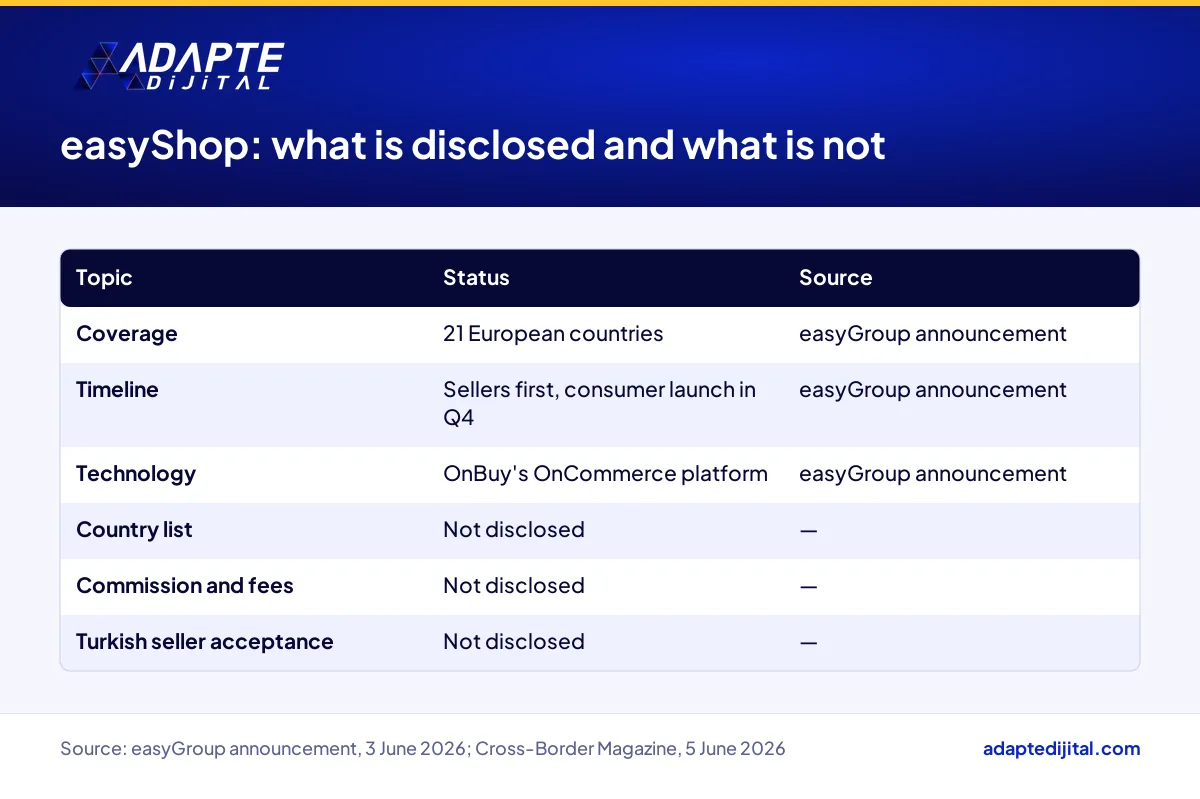
easyGroup has announced easyShop.com, a marketplace covering 21 European countries and run on OnBuy’s OnCommerce technology; seller recruitment comes first, and the consumer launch is targeted for the last quarter of 2026 (easyGroup announcement, 3 June 2026). The platform is described as a pure marketplace that sells none of its own products and holds no stock or logistics. The country list, the commission rate and whether sellers based in Türkiye can join have not been disclosed.
For a business that wants to sell from Türkiye into Europe, the meaning is this: a new door is opening, but the sign above it has not been written yet. The decision today is not “should we join” but “on what numbers would we join once the terms are out”. In autumn 2026, a Turkish SME looking at European e-commerce can use this waiting time to prepare its own margin and operations math.
When does the easyShop marketplace open, and what stage is it at now?
easyShop is currently recruiting sellers; the consumer launch is targeted for the last quarter of 2026. easyGroup’s announcement from London says seller recruitment starts before the consumer launch. In other words, the shelves fill first and shopping starts later. Interested sellers can register their interest at www.easyShop.com.
Where does the money flow in easyShop’s model, and what is left for the seller?
The direction of the money is clear; the rates are not. easyShop is described as an intermediary that holds no stock and builds no logistics or local infrastructure, so the platform’s revenue depends on fees charged to sellers. Since no fee or commission structure has been published, what a seller keeps cannot be calculated today. Cross-Border Magazine also notes this as the open question before launch.
Who does easyShop’s opening across 21 European countries affect, and how?
It affects three groups in different ways: brands already selling into Europe, SMEs looking across the border for the first time, and sellers on existing marketplaces. The winners will be businesses whose product data and shipping process are ready. The ones who struggle will be sellers who join with products they have not costed and drown in returns and shipping bills in the first month.
Which questions should a Turkish seller get answered before joining easyShop?
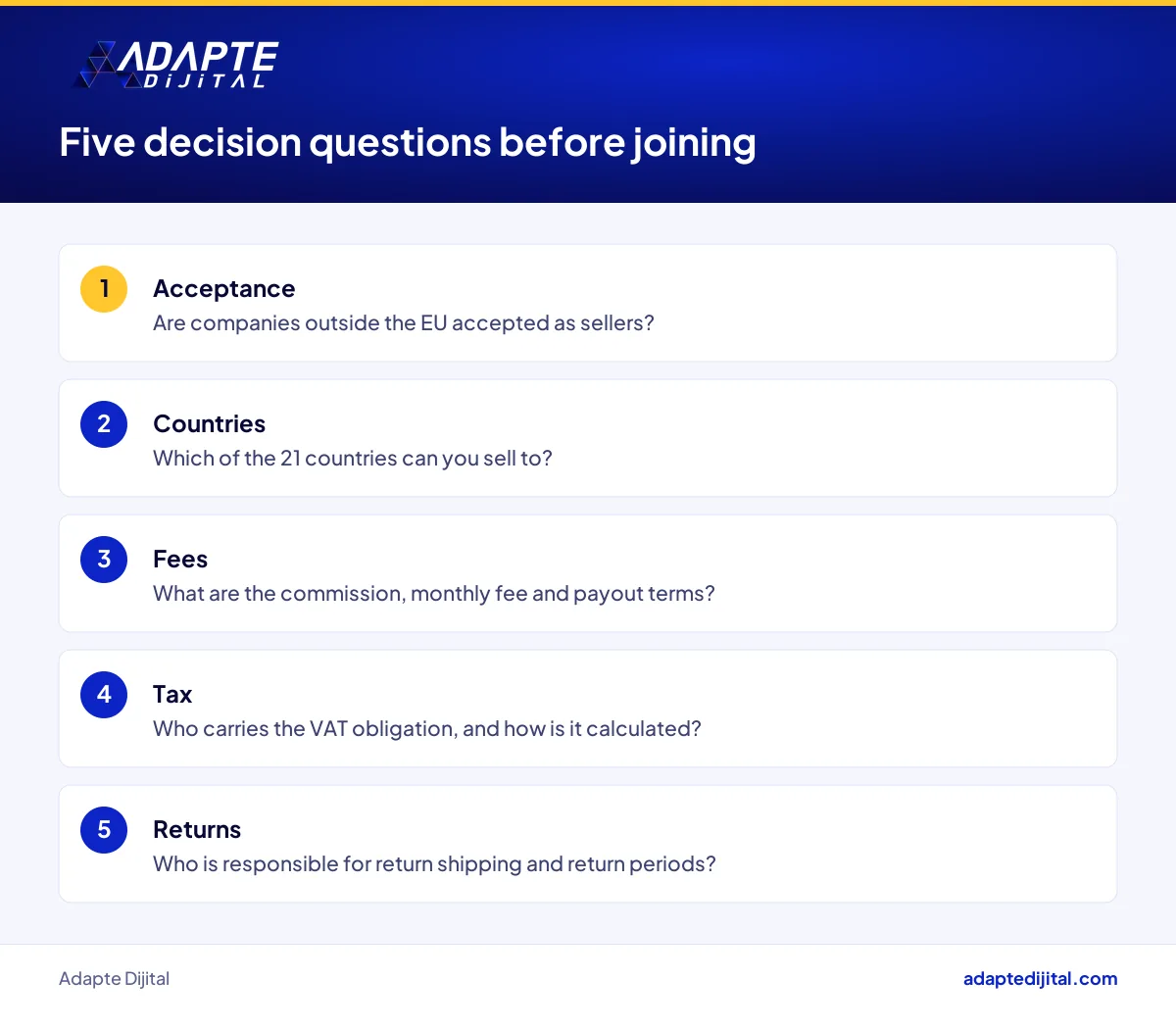
Five questions need clear answers before any decision: acceptance, countries, fees, tax and returns. Today, the primary source answers none of them. So the right move is to register interest and ask for the terms in writing; it is too early to commit stock or an ad budget.
What does a new marketplace like easyShop ask of sellers on the digital side?
It asks for clean product data, multilingual content and an ad budget you can measure. On any marketplace, product titles, category matching and accumulated reviews shape visibility. A seller with messy product data faces the same problem on every marketplace.
What should a business owner who wants to sell into Europe do this week?
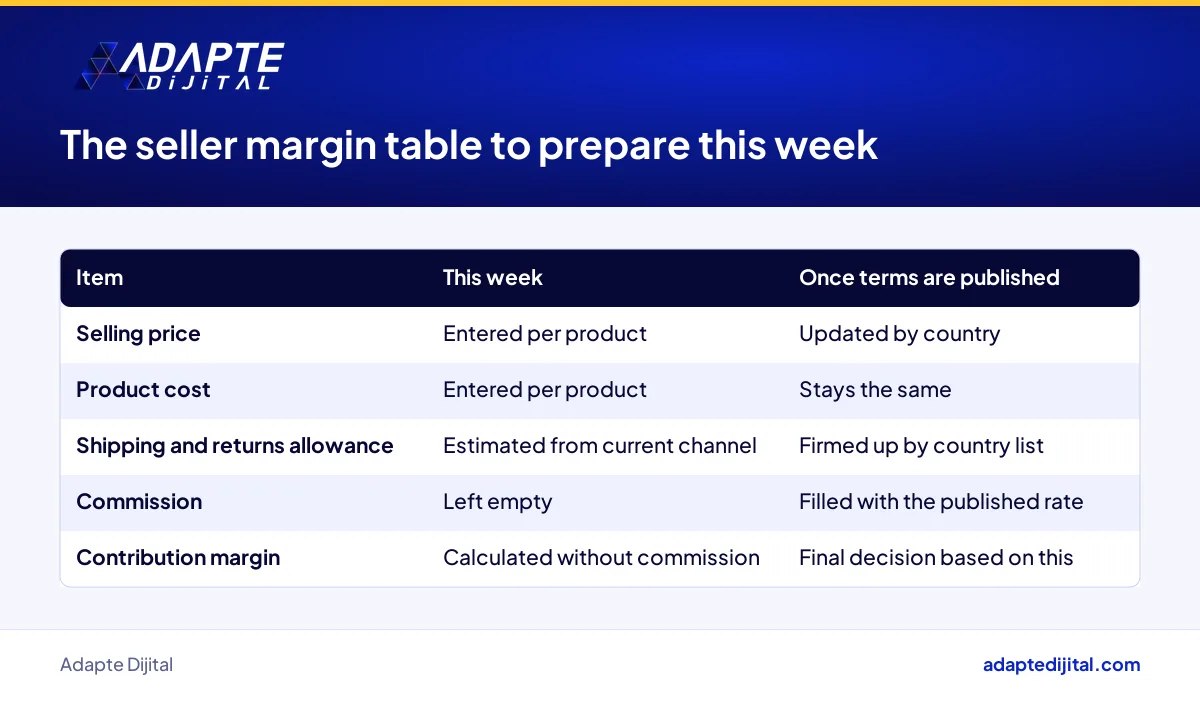
Three concrete jobs fit into this week: register interest, ask for the terms in writing and build a margin table by product. None of these steps costs money, yet together they let you decide within days once the terms are published. We build cross-border channel decisions together with margin and operations math through our e-commerce consulting work.
Quick Summary
- easyGroup announced the easyShop.com marketplace, covering 21 European countries (easyGroup, 3 June 2026).
- Seller recruitment comes first; the consumer launch is targeted for the last quarter of 2026.
- The platform runs on OnBuy’s OnCommerce technology and does not sell its own products.
- The country list, the commission structure and acceptance of Turkish sellers have not been disclosed.
- For a Turkish seller, the right step is to register interest, ask for the terms in writing and build a margin table.
Short Glossary
- Pure marketplace
- Pure marketplace is the term used to describe a platform that only connects buyers and sellers without holding stock of its own.
- Contribution margin
- Contribution margin is the concept used to describe what remains of the selling price after the costs directly tied to the product are deducted.
- Cross-border e-commerce
- Cross-border e-commerce is the expression used to describe a seller selling online to consumers in another country.
Frequently Asked Questions
Next Step
If you want to build your product and margin math for European marketplaces together, fill in the consult your expert form.
Sources: easyGroup press announcement, 3 June 2026 · Cross-Border Magazine, 5 June 2026 · Haber Gündemim, 14 October 2026
Updated: October 2026
Sık Sorulan Sorular
A Haber Gündemim report of 14 October 2026 presents the platform as if it were already live, yet its text talks about a phased opening. The primary source, easyGroup’s announcement, gives the consumer launch as a target. When you decide, the company’s own timeline is the firmer ground.
easyShop.com is the marketplace venture of Sir Stelios Haji-Ioannou, founder and owner of the easy family of brands. OnBuy runs the domain, and the platform runs on OnBuy’s OnCommerce technology. According to the announcement, the two sides agreed a long-term, significant investment; the amount was not disclosed.
Haber Gündemim writes that sellers are being invited ahead of Black Friday and Christmas; this detail is not in the primary source. If the timeline holds, the first season lands on the busiest shopping period of the year. Entering a new channel in peak season means keeping stock and shipping plans tight from day one.
According to the company, easyShop will not sell its own products, so it will not compete with sellers on the same shelf. That matters to sellers who worry about a platform promoting its own range over theirs. To see how the claim works in practice, you need the ranking and advertising rules to be published.
Cas Paton, OnBuy’s CEO and founder, says in the announcement that “easyShop removes many of the barriers that typically slow retail expansion”. That is the company’s own assessment. Whether the barriers really fall away will show in the clauses of the seller contract.
The formula is simple: from the selling price per product, subtract product cost, a shipping and returns allowance, payment fees and the commission that is not yet known. What remains is your contribution margin. Leave the commission cell empty; when the terms come out, fill in one cell and decide within minutes.
For these brands, easyShop is one more shop window. Their catalogues, multilingual descriptions and returns processes are ready, so they can get in quickly. A brand selling winter outerwear, as in LUFIAN’s winter outerwear presentation, has to carry its material and colour story into European languages.
The difficulty starts in operations, not in the product. When shipping times, customs, returns and customer emails pile up, cash stops coming in and stock sits in the warehouse. For a business that does not want to carry that load alone, the e-export consortium model is another route worth weighing.
Cross-border couriers, product photography and translation providers, and accounting and VAT advisers may see new demand. As the number of marketplaces grows, so does the work for firms selling integration software. This effect does not depend on whether the platform opens to Turkish sellers.
No source says. The announcement and the reports do not state whether sellers outside the EU will be accepted. It is too early to say “Turkish sellers can sell there”; it will become clear once seller application terms are published.
The country list has not been published, and it cannot be said that Türkiye is among them. The countries you sell to decide your shipping times, return costs and language needs. Selling to Germany and selling to Spain are not the same operation.
Haber Gündemim mentions selling in 21 markets from one account, no need to set up a company in each country, and automatic VAT calculation. These details do not appear in the primary source. Verify any tax obligations with the official source and your accountant; this is not legal or financial advice.
For every SKU, the title, description, dimensions, materials, barcode and image standard should sit in one table. Without that table, you redo the same work for every new channel. With it, joining a new marketplace shrinks to an integration setting.
Machine translation is enough to start, but size charts, care instructions and return terms need a human check. A size translated wrongly can push up your return rate. Prioritising languages once the country list is out protects your budget.
Conversion rate, average basket and return rate on your current marketplaces are your best estimates for a new channel. Split these three metrics by product group. Starting a new channel’s ad budget only with the product groups that score well on them keeps the risk small.
Alongside the sign-up form, ask the seller support team for written answers on non-EU seller acceptance, the country list, commission and monthly fees, payout terms and responsibility for returns. Keep the answers in one file. As the reference document, read easyGroup’s easyShop announcement directly.
Starting with products that have low return rates, small shipping volume and high margins is the safest path. A product with many size and colour variants makes cross-border stock tracking harder. Run your five best sellers through this filter.
Building up stock or signing with an ad agency before you see the terms would be the most expensive mistake. Read the contract clauses before you put money on the table. The excitement of a new channel should not get ahead of the math.
According to the company’s announcement, the platform is currently collecting seller sign-ups and the consumer launch is targeted for the last quarter of 2026. Wait for the platform’s official statements on sales start and acceptance terms.
No source has addressed this. Registering interest and asking in writing whether non-EU sellers are accepted is the soundest step available today.
The fee and commission structure has not been disclosed. Leaving the commission cell empty in your margin table and costing everything else now shortens your decision time.