
ETİD joins TAMPF with its 119 members, what do online and store retailers gain together?
ETİD, the Electronic Commerce Operators Association of Türkiye, has officially joined TAMPF, the Federation of Shopping Centres and Retailers of Türkiye (Perakende.org, 12 October 2026). The report describes ETİD, with its 119 members, as the umbrella body of e-commerce and TAMPF as the largest umbrella body of organised retail, and frames the move as a step toward the omnichannel era, where physical retail and digital commerce merge.
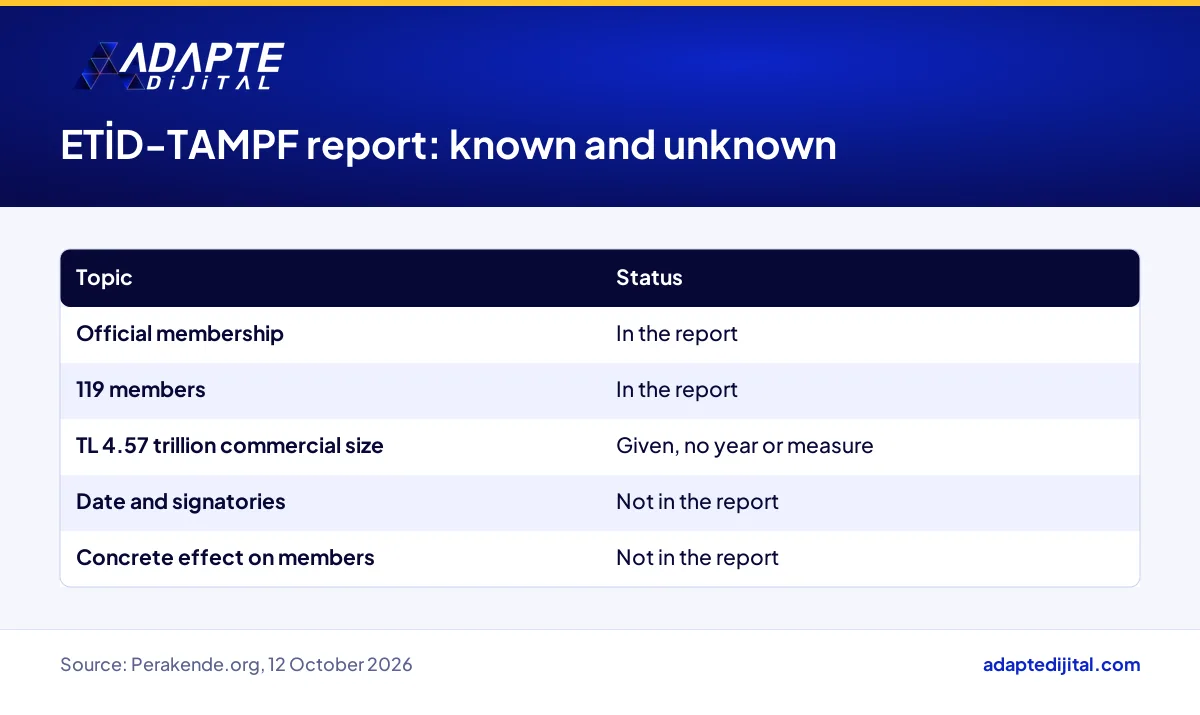
If you sell both in a store and online, here is what it means for you: the voice of both channels can now be heard under one federation when rules are discussed. The report gives no date, signatories or concrete effect on members, so keep what is confirmed apart from what is only possible.
What does ETİD joining TAMPF actually change for a retailer?
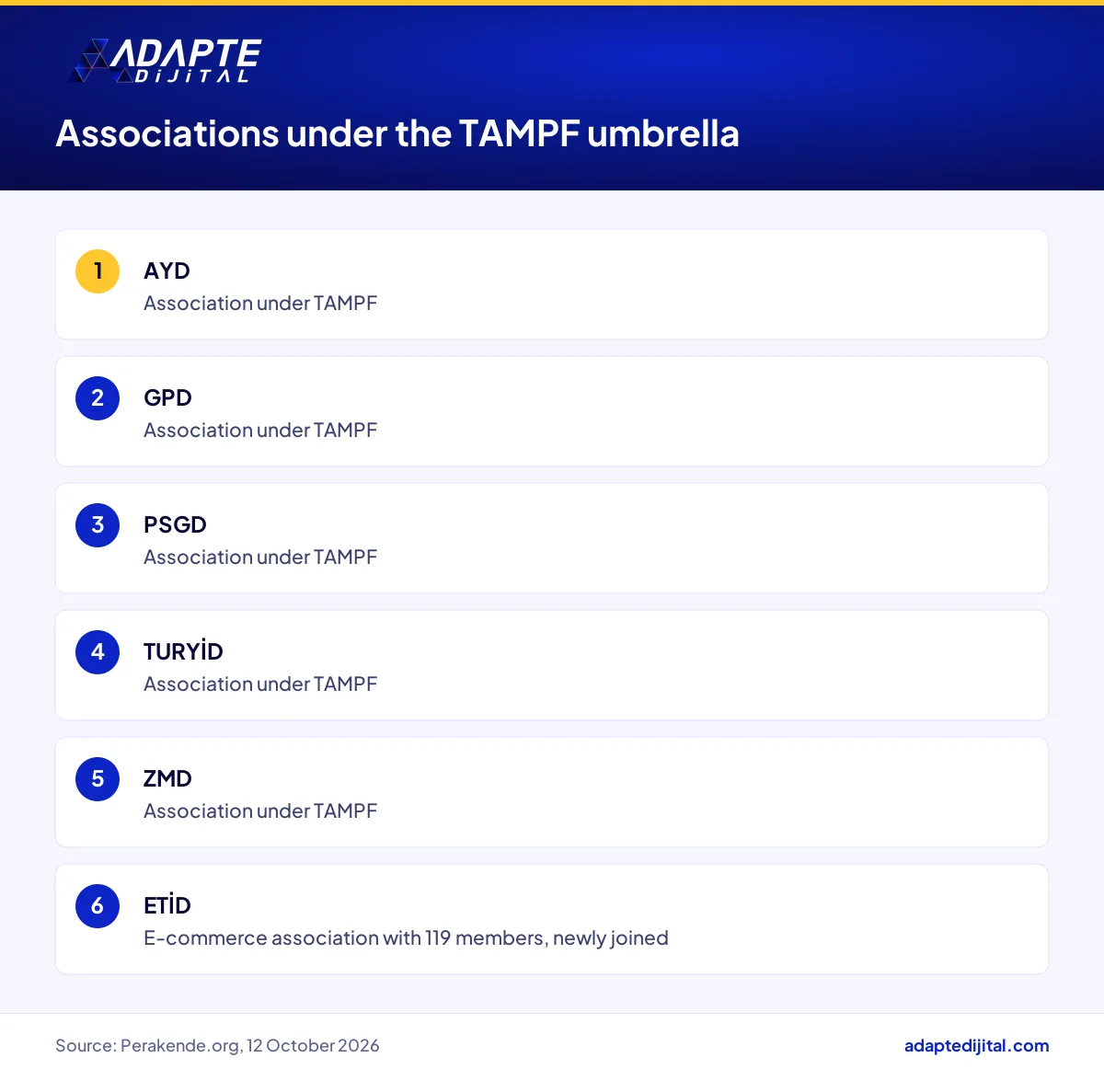
For now, the structure changes, not the rules. ETİD is now one of TAMPF’s member associations and shares the umbrella with AYD, GPD, PSGD, TURYİD and ZMD, as listed in the report (Perakende.org). No tax, rent, commission or shipping rule changes because of this step. What changes is who sits at the table when those topics come up.
Who gains and who feels pressure when ETİD and TAMPF share one roof?
The mid-sized retailer selling through both channels is affected most. A clothing, cosmetics or homeware business with a store and a website no longer has to sit between two associations with two separate agendas. A small seller that only trades online, or a shopkeeper who only rents a unit in an AVM (the Turkish term for a shopping mall), feels the effect indirectly.
What does ETİD’s TL 4.57 trillion figure show, and what doesn’t it show?
The report gives this figure as the commercial size ETİD represents (Perakende.org). It does not say which year it covers or what it measures. Whether it is members’ turnover or the total sales volume flowing through platforms is unclear from the report. So it should not be read as “Türkiye’s e-commerce volume”.
What can an omnichannel business expect from TAMPF on regulation?
No concrete gain has been announced; expectations are limited to representative weight. The report does not list outcomes such as joint lobbying, data sharing or regulatory opinions. A realistic expectation is that views on rules affecting both channels will be passed on through one channel, and with more weight.
What do ETİD and TAMPF together mean for your website, marketplace and data?
On the digital side, the message is clear: running store and online sales as if they were two separate businesses is getting harder to justify. As the channel divide thins at federation level, your website, marketplace shop and physical store need to be read from the same table at business level too.
What should a store-and-online business owner do this week after the ETİD-TAMPF news?
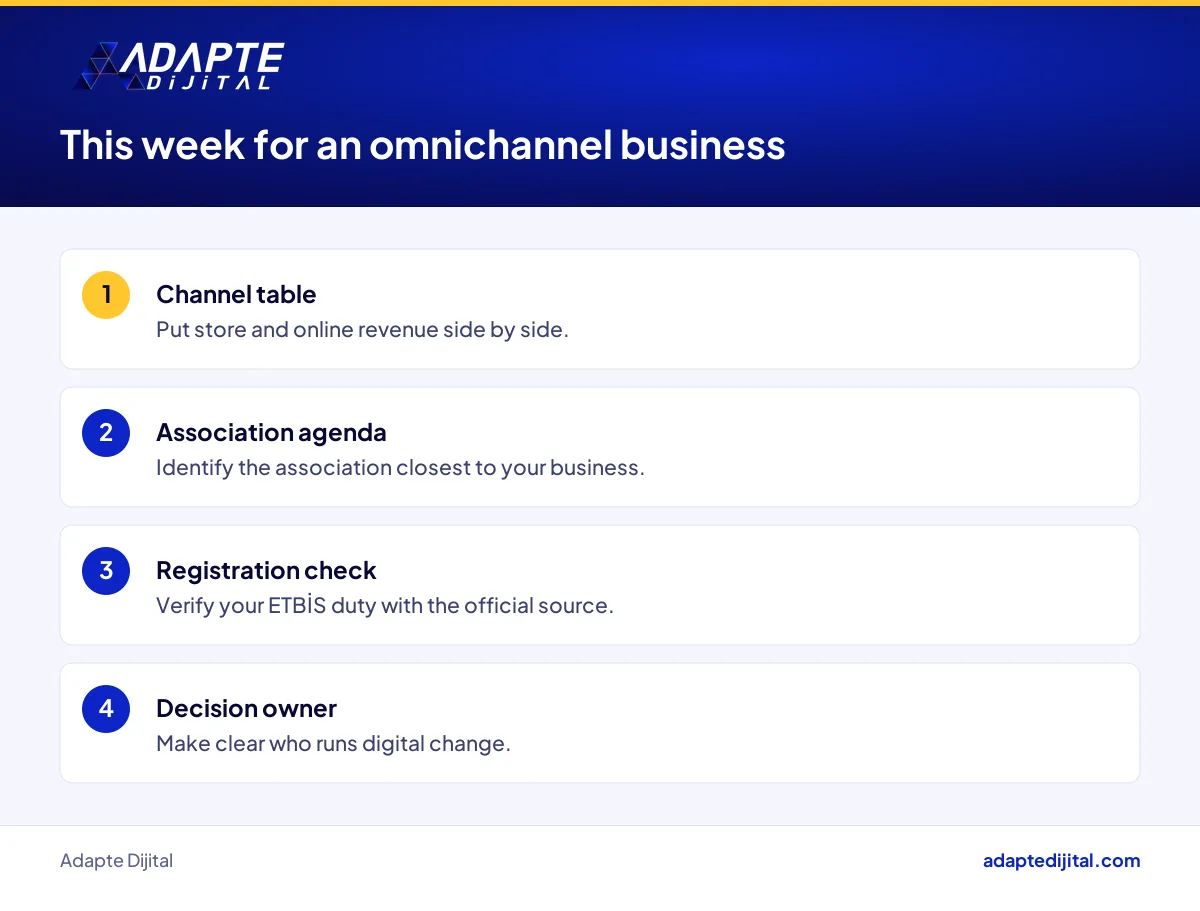
Four things: build a channel table, identify the association closest to your business, check your registration duties and settle who owns digital change. All four fit into one week.
Quick Summary
- ETİD has officially joined TAMPF (Perakende.org, 12 October 2026).
- ETİD has 119 members, and the commercial size it represents is given as TL 4.57 trillion (Perakende.org).
- Because the year and the measure behind TL 4.57 trillion are not stated, it should not be read as Türkiye’s e-commerce volume.
- The report gives no date, no signatories and no concrete effect on members.
- For an omnichannel business, the first step is reading store and online numbers in the same table.
Short Glossary
- Omnichannel
- Omnichannel is the term used to describe managing sales channels such as the store, the website and marketplaces as one customer experience.
- ETBİS
- ETBİS is the abbreviation used for the Ministry of Trade system where businesses that sell online register.
- Umbrella body
- An umbrella body is the expression used for a federation or confederation that brings several associations under one structure.
Frequently Asked Questions
Next Step
Let’s read how your store and online sales look in the same table; fill in the consult your expert form and we will build your channel plan on your own numbers. Our retail page, where we interpret the retail agenda for you, gathers the other stories as well.
Sources: Perakende.org, “E-ticaretin öncü derneği ETİD, TAMPF bünyesine katıldı”, 12 October 2026 · Republic of Türkiye Ministry of Trade, ETBİS page (linked in the text)
Updated: October 2026
Sık Sorulan Sorular
In the report’s words, TAMPF is the largest umbrella body of organised retail and ETİD is the umbrella body of the e-commerce sector. One brings together associations from store-based retail, the other brings together businesses that sell online. In Türkiye in autumn 2026, the two worlds now meet in one federation.
The report does not say on which day, or with whose signatures, the move took place. That makes it wrong to put words or intentions into anyone’s mouth. The safe reading for you is simple: the membership is official, and the details are not yet public.
The report presents the move as a step toward a period in which physical retail and digital commerce merge. In practice, your customer browses on the phone and buys in the store, or the other way round. The channels differ, the customer is the same.
Chains and brands that are working to join up their channels. Businesses that run stock, returns and campaigns from one place may no longer need to explain their case to two umbrella bodies separately. If a shared position forms on draft regulation, they see the benefit first.
The interests of the two sides do not overlap on every topic. On store rent, mall footfall and payment at the till, physical retail may have different priorities; on return periods and shipping costs, e-commerce may. If one side’s priority wins out in a joint position, a small business concentrated in the other channel may feel under-represented.
Mall management companies, shipping and logistics firms, payment providers and marketplaces. Practices such as click-and-collect and in-store returns can affect a mall’s tenant mix and sales per square metre.
As an indicator of representative weight. It tells you there is a large commercial volume behind 119 members, and it explains the weight ETİD carries inside the federation. It is no base for your own market share.
Your own figures. Write down store revenue and online revenue separately, then compare average basket size and return rate across both channels. That table tells you which channel keeps the till ringing and which one leaves stock sitting on the shelf.
Physical retail operates within Law 6585 on the Regulation of Retail Trade. Businesses that sell online must register with the Ministry of Trade’s ETBİS system through e-Devlet, the state’s online services portal, before they start trading. The basis for this duty is the ETBİS Communiqué, in force since 11 August 2017. Verify with the official source; this is not legal or financial advice.
Indirectly. When a draft rule is discussed, the federation’s view rests on problems collected from the members of its associations. If your problem never reaches an association, it is not on that table either.
There is no data to say so. The report gives no outcome on costs, commissions or taxes. A possible effect is that rules that contradict each other across the two channels get spotted earlier. That could give a business more time to prepare for a new rule.
Before visiting, your customer checks your address, opening hours and stock on a map. If your business profile is incomplete, the customer walks away before ever reaching your door. If your website does not show whether an item is in store, online visits do not turn into sales either.
Changes to commission, returns and shipping rules may now be debated from the store retailer’s point of view as well. A business selling on marketplaces that works out its profitability per SKU now can decide fast when the rules change.
A single customer record, shared stock and return reasons by channel. When these three stay apart, an online campaign creates shortages in the store, while items sitting in the store show as sold out on the website. How brands build that bond on the customer side is covered in our piece on the Lovemarks named in 16 categories.
Put the last three months of store and online revenue, average basket size and return rate side by side. Fill it from till and dashboard reports, not from estimates. The desk’s suggestion is to update the table on the same day every month, so you are the first to see the impact when a rule changes.
Among TAMPF’s AYD, GPD, PSGD, TURYİD, ZMD and ETİD, pick the one closest to your business; if you sell online, ETİD’s agenda concerns you directly. Even as a non-member, you can send the issue that affects you in writing. If your problem never reaches the table, a bigger umbrella will not make your voice heard.
Where the store manager and the e-commerce lead work toward separate targets, the channels eat into each other. Make clear who has the final say. We discuss the corporate side of that question through Çilek’s technology group head appointment. We run channel integration and marketplace planning as part of our e-commerce consulting work.
No, the membership does not change any rule on its own. What changes is that e-commerce and store retail can voice their regulatory views under the same federation.
No, the report gives the figure as the commercial size ETİD represents. Since the year and the measure are not stated, it should not be read as a national volume.
Yes, according to the Ministry of Trade, businesses that sell online must register with ETBİS through e-Devlet before they start trading. Check the current terms with the official source.