
Teknosa wins gold for its Totem 2002 campaign, how does user content turn into sales?
Teknosa, the Turkish electronics retailer, won a gold award at The Hammers Awards 2026 for its “Totem 2002” project, in the “Team that best manages user-generated content (UGC)” category of the Brand Experience Media and Content section, according to the company (DHA, 14 October 2026). The same announcement said the brand ranked first on overall brand impact score in the “Technology Market” category of the Brand Impact 2026 survey.
Here is why it matters to you: the award is not for an ad film but for what customers shared themselves. In Totem 2002, fans shared their stories and earned a personalised card and a discount (DHA). For any business with a store or an online shop, the question is how customer-made content links to a campaign, and from there to the till.
Which award did Teknosa win, and what does the Brand Impact 2026 survey say?
There are two separate items: a campaign award and a brand survey. According to the company, Teknosa won gold at The Hammers Awards 2026 with the Totem 2002 project. According to the Brand Impact 2026 survey, it ranks first on overall brand impact score in the “Technology Market” category. Both were relayed by the company; no results page from the award or the survey could be found.
How was user content built into Teknosa’s Totem 2002 campaign?
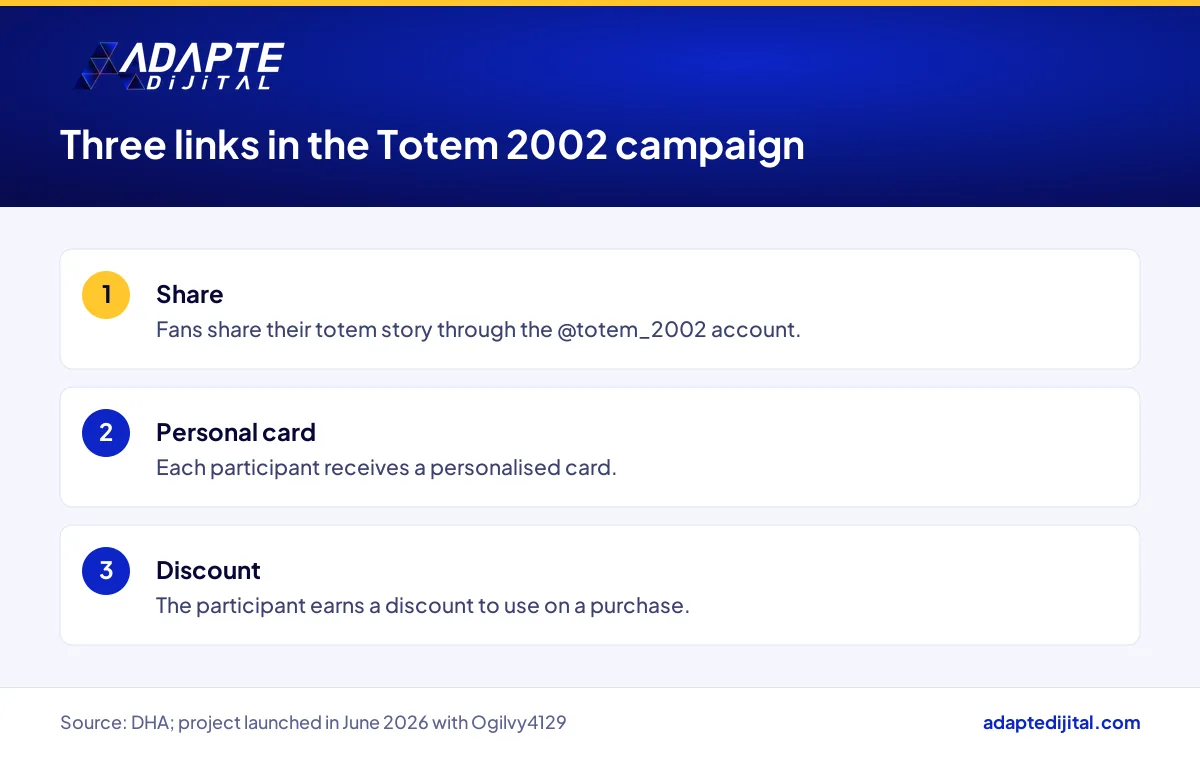
It ran on a reward-for-sharing logic. The project launched in June 2026 with the agency Ogilvy4129; fans shared their totem stories through the @totem_2002 Instagram account and earned a personalised card and a discount (DHA). The mechanic has three links: the share, a personal reward and a discount.
What does a share-for-discount UGC campaign change in a store and at the till?
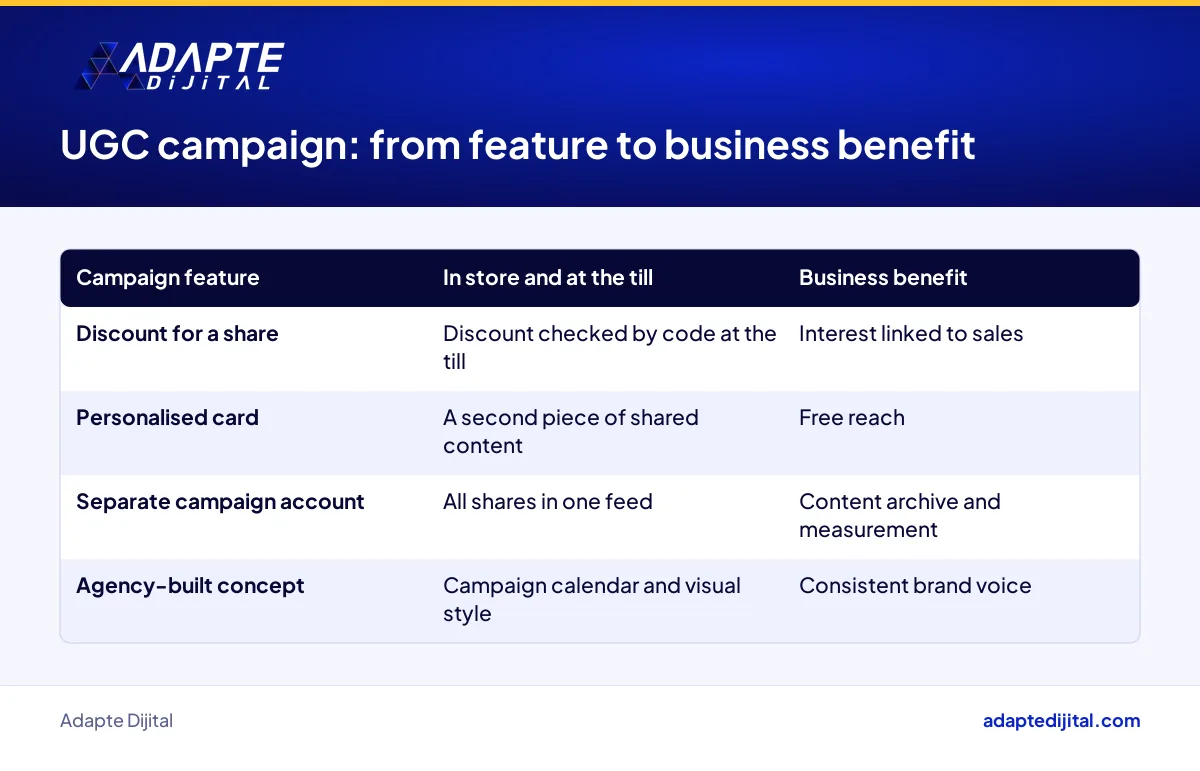
It changes three things: why customers come in, how the till handles the promotion, and the stock of content you hold. In autumn 2026, even a small electronics store, clothing shop or cafe in Türkiye can set this up. The table below maps campaign features to business benefits.
| Campaign feature | What it means in store and at the till | Business benefit |
|---|---|---|
| Discount for a share | Discount checked by code at the till | Interest linked to sales |
| Personalised card | A second piece of content customers share | Free reach |
| Separate campaign account | All shares in one feed | Content archive and measurement |
| Agency-built concept | Campaign calendar and visual style | Consistent brand voice |
Which businesses does Teknosa’s user content model affect, and how?
Businesses selling products with a story behind them gain; those without time to manage content struggle. Electronics, sports, hobby and cafe businesses work in areas where customers like to share. Social media agencies and small content moderation teams gain work indirectly.
How does a user content campaign like Teknosa’s play out on social media, search and marketplaces?
It plays out on three channels: reach on social media, trust signals in search and conversion on marketplaces. Real customer photos and reviews give shoppers more to go on when they decide. Teknosa’s company profile is on its KAP company information page; KAP is Türkiye’s public disclosure platform, and its activities run from electronics to after-sales service.
What should a business owner who wants to link user content to sales do this week?
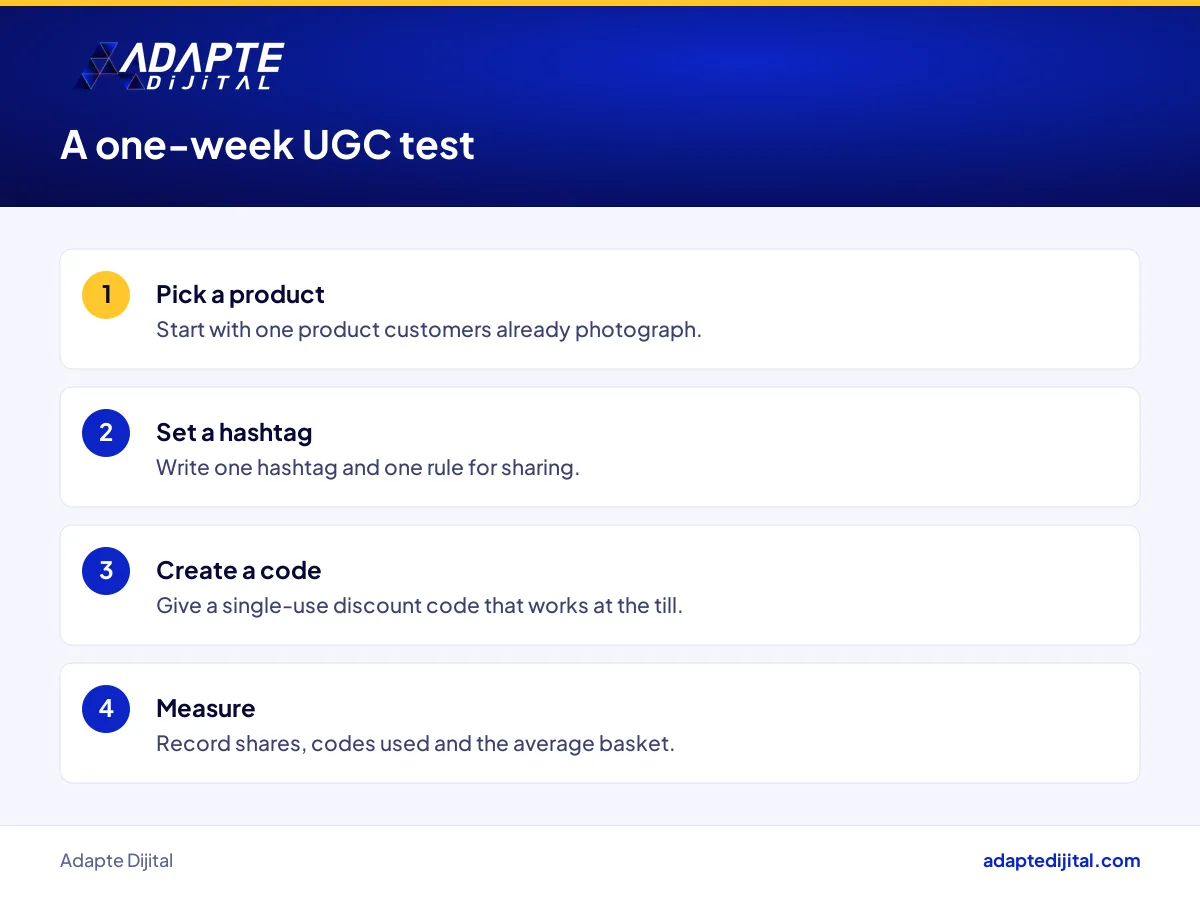
This week you can run a small test: one product, one hashtag, one discount code. After a week, count how many shares came in and how many codes were used at the till. Without measurement UGC is entertainment; with measurement it is a sales channel.
Quick Summary
- According to the company, Teknosa won gold at The Hammers Awards 2026 with the Totem 2002 project (DHA, 14 October 2026).
- The award category was the team that best manages user-generated content.
- According to the Brand Impact 2026 survey, Teknosa ranks first on overall brand impact score in the Technology Market category (10,285 consumers; DHA).
- In Totem 2002, fans earned a personalised card and a discount in return for sharing (DHA).
- No participation or sales results for the campaign appear in the sources.
Short Glossary
- UGC
- UGC is the abbreviation used to describe photos, videos, reviews and stories made by customers rather than by the brand.
- Brand impact score
- Brand impact score is the overall score used in the Brand Impact survey to combine trust, liking, reputation and sustainability with equal weight.
- Average basket
- Average basket is the retail metric used to describe total sales in a period divided by the number of purchases.
Frequently Asked Questions
Next Step
Let’s set up a one-week user content test for your own product together; fill in the consult your expert form.
Sources: DHA, report on Teknosa’s gold award and category ranking, 14 October 2026 · Patron Rehberi, 14 October 2026 · KAP, Teknosa İç ve Dış Ticaret company information
Updated: October 2026
Sık Sorulan Sorular
The survey was run by Pazarlamasyon in cooperation with Areda Piar (DHA; Patron Rehberi). It interviewed, one to one, 10,285 consumers who had direct experience with brands in the relevant categories over the last six months. Fieldwork dates and the split by province are not given in the reports.
Four criteria: trust, liking, reputation and sustainability. All four were weighted equally and turned into one overall score. The brands in the category, Teknosa’s own score and its gap to second place were not disclosed.
As a company announcement. Without the organisers’ own publication, the ranking should not be over-read. What is useful for a business owner is not the ranking but the method behind the award.
UGC is content made by customers rather than the brand: a phone photo, a short video, a review or a story. The brand collects it, features it and gives something of value in return. Its strength is that people read it as a recommendation, not as an ad.
Because it gives the participant a second piece of content to share. A card carrying someone’s own name or story is the kind of thing people post again. That is how a single share can turn into wider reach.
It connects social media interest to a sales step you can measure. A share brings likes; a discount code brings people to the till. To see which shares turned into sales, the code has to be trackable.
The discount code has to be set up in the till software, and the cashier has to know the rule. If the code fails, the customer walks out and the goodwill from the share is wasted. A test transaction before launch reduces that risk.
Tie the discount to a minimum spend or a category rather than the whole basket. Otherwise the campaign attracts only bargain hunters.
With permission, on a window screen, a shelf label or a product page. A real customer’s photo can bring a product that is just sitting on the shelf back to life. Check permissions and personal data rules with the official source; this is not legal advice.
Brands with a community: fans, collectors, hobby groups or a neighbourhood’s regulars. These customers already take photos and share them; the campaign only adds a reward to the habit.
Businesses with no routine for tracking shares, filtering out unsuitable posts and linking codes to the till. A UGC call without a plan gets a few days of attention, then ends with the till not turning over. The method needs a team and a process.
Yes, because a product owner can feed customer stories straight into product development. The path of a brand that moved from marketplaces to its own factory is covered in our piece on Şımart Teknoloji’s Ankara plant. For a manufacturer, customer reviews work like free product research.
In Totem 2002, shares were collected through a separate Instagram account (DHA). This setup keeps the main brand account uncluttered and archives campaign content in one place.
Adding customer photos and reviews to a product page keeps it richer and fresher. Image alt text and a short description help that content get found in search too. On marketplaces, reviews and photos are the cheapest way to stand out from rivals selling the same item.
It does, but language and platform rules change. For sellers who want to reach Europe, a new platform is examined in our piece on easyShop’s European marketplace. Read each marketplace’s rules on reviews and images separately.
Pick a product customers already photograph and set one hashtag for sharing. Give anyone who shares a single-use code that works at the till. Write the rule in the same sentence in the window, at the till and on your social media profile.
Number of shares, number of codes used, average basket on coded purchases and SKU-level sales of the campaign product. These four numbers tell you whether to scale the campaign up. Keep targets in one column and actual results in another.
When nobody in-house has time to track shares, collect permissions and move content onto product pages. We design and run user content campaigns through our digital media consulting work. Retail news is interpreted for you on our retail page.
Yes, you can start with one product and one discount code. What matters is that the code works at the till and that you record the number of shares and codes used.
Only with the customer’s explicit permission. Check permissions and personal data rules with the official source; this is not legal advice.
The sources give no figures for participation, discount use or sales. Only the campaign’s mechanic and the award it won have been made public.