
Corporate Website Trends in 2026

Corporate Website Trends in 2026 is one of those topics where good information saves both money and months. This updated 2026 guide brings the essentials together: what it is, how to plan it, how to execute it step by step, what it costs, which mistakes to avoid and how to grow it sustainably.
Core Concepts and Definitions 🛠️
This section covers the fundamentals of corporate website trends in 2026 with field-tested guidance. For the broader framework, see our guide on Why Does a Cheap Website End Up Costly.
SECTION SUMMARY
- Why It Matters in 2026
- Who Should Consider It
- Key Terms Explained
- The Market Context
Why It Matters in 2026
Website trends in 2026 have become the most critical agenda item determining the digital future of businesses. A corporate website that was “adequate” yesterday can cause you to fall behind your competitors today. By Website trends in 2026, not only the design approach but also user expectations, search engine criteria, and the way artificial intelligence systems read content have been radically transformed. When a visitor enters your site, they no longer just look at “is it beautiful?”; they look for answers to questions like did it open quickly? Was it comfortable to use on mobile? Did I find what I was looking for? within seconds. Sites that cannot provide positive answers to these questions lose users — often never to return.
Start small with research, validate with data, then scale what works. Treat customer experience as an investment line, not an expense line, and manage it accordingly.
Who Should Consider It
🌐 So why is this transformation so critical? Because by 2026, a corporate website will no longer be just a digital storefront; it will have transformed into a strategic business tool that acquires customers, builds trust, and automates sales processes. Google’s search algorithms no longer look only at keywords, but also at how quickly a page loads, how it behaves on mobile, and how much quality time a user spends on the site. In addition, AI search engines like ChatGPT, Gemini, and Perplexity are reshaping the content world; well-structured sites stand out as reference sources in these systems, while others remain invisible.
Consistency beats intensity: a steady rhythm in planning outperforms sporadic bursts. What gets scheduled gets done: put pricing on the calendar, not the wish list.
Key Terms Explained
In this article, we will discuss the four prominent corporate website trends of 2026 — Speed Optimization, Mobile First, AI Integration, and Minimalist Design — with concrete data, real-world examples, and actionable steps.
Every decision about execution should answer one question: does it serve the customer? Customer feedback is the cheapest consultant content will ever have.
The Market Context
How many seconds does it take for your website to load? When was the last time you asked yourself this question? According to Google’s research, 53% of visitors leave the page if it takes more than 3 seconds. In terms of website trends 2026, speed is undeniably number one. Speed optimization is not just a technical requirement among the website trends of 2026, but the fine line between gaining and losing customers. Seconds determine which side of that line you stand on. Corporate site owners are often aware of this statistic; however, they often dismiss speed optimization as “the job of the technical team.” ⚡ Speed is no longer just a technical matter, but a strategic decision that directly affects conversion rate and SEO ranking. It’s an integral part of Google’s Core Web Vitals metrics (LCP, INP, CLS) ranking algorithm. Corporate websites that fall short in these metrics lose the visibility battle against their competitors. 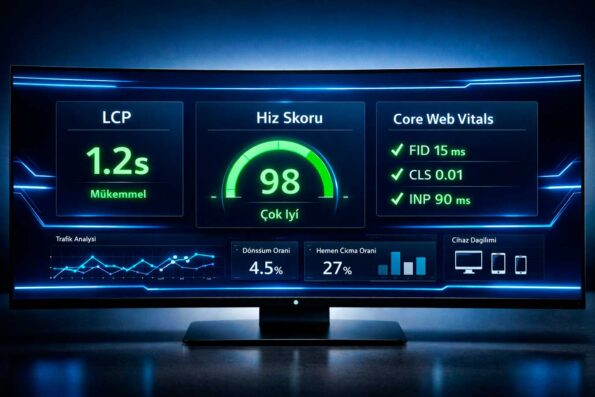
Document budgeting as you go; institutional memory is a competitive asset. Digital tools amplify the team; they never replace the thinking behind it.
Planning and Strategy 📊
This section covers the planning layer of corporate website trends in 2026 with field-tested guidance. For the broader framework, see our guide on Website Health Check.
SECTION SUMMARY
- Research Before You Start
- Choosing the Right Model
- Timeline and Milestones
- Legal and Compliance Basics
Research Before You Start
The vast majority of slow sites make the same mistake: unoptimized images. A 4 MB JPEG can be reduced by 60-80% when converted to WebP format. In addition, unnecessary JavaScript libraries, third-party widgets, and incorrectly configured cache settings also stand out as speed enemies.
Document planning as you go; institutional memory is a competitive asset. Digital tools amplify pricing; they never replace the thinking behind it.
Choosing the Right Model
- Convert images to WebP or AVIF format — file size reduced by up to 70%
- Clean up unused JavaScript and CSS files (Code Splitting)
- Configure browser cache and CDN correctly
- Load critical CSS inline, defer the rest
The gap between average and excellent execution is usually discipline, not budget. A ninety-day plan turns content from ambition into an operating routine.
Timeline and Milestones
You can perform a free speed test with Google PageSpeed Insights and GTmetrix. Lighthouse reports clearly show how much loss is experienced in which area. For enterprise projects, the combination of Cloudflare CDN and server-side caching (Redis, Varnish) provides the most effective speed increase.
Review budgeting quarterly with the same yardstick so trends stay visible. In practice, the team and budgeting reinforce each other: progress in one accelerates the other.
Legal and Compliance Basics
- Google PageSpeed Insights — free, real-time mobile/desktop score
- GTmetrix — find the bottleneck with waterfall analysis
- WebPageTest — powerful tool for real-world device testing
- Cloudflare — CDN + security + performance all in one
Pair measurement with visibility early; retrofitting them later always costs more. The businesses that win treat visibility as a system, not a one-off task.
Putting It Into Practice 🔍
This section covers the execution layer of corporate website trends in 2026 with field-tested guidance. For the broader framework, see our guide on Website Statistics 2026.
SECTION SUMMARY
- Tools and Infrastructure
- Daily Operations
- Quality Standards
- Solid Digital Foundation
Tools and Infrastructure
Do you really know what percentage of traffic to your company’s site comes from mobile devices? 62% of global web traffic now comes from smartphones and tablets. This rate is even higher in Türkiye. In the Website Trends 2026, mobile-first has become indispensable in terms of both user behavior and Google’s ranking criteria.
Pair execution with content early; retrofitting them later always costs more. The businesses that win treat content as a system, not a one-off task.
Daily Operations
📱 Google completed Mobile-First Indexing in 2023. This means that Google ranks your site based on its mobile version, not its desktop version. A corporate website with poor mobile compatibility is doomed to be invisible in organic search.
Treat budgeting as an investment line, not an expense line, and manage it accordingly. A written standard for the team turns individual talent into repeatable results.
Quality Standards
Saying “We did responsive design, that’s it” is no longer enough. The Mobile first philosophy means that design decisions should be made first for a 375 px screen width, and then adapted to larger screens. Menus, button sizes, form fields, images — all need to be usable with one hand.
What gets scheduled gets done: put measurement on the calendar, not the wish list. Without measurement, visibility becomes opinion; with it, it becomes management.
Solid Digital Foundation
- Thumb-zone design: main CTA buttons in areas easily accessible to the thumb
- Touch target size: minimum 44 x 44 px — prevents accidental finger presses
- Horizontal scrolling prohibited: all content must be consumed with vertical scrolling
- Form fields should be large and autocomplete supported
Customer feedback is the cheapest consultant growth will ever have. Start small with operations, validate with data, then scale what works.
Whatever your niche, discoverability starts with technical health: fast pages, clean structure and content that machines can parse. Align your site with Google’s current search documentation so that every other investment on this list can actually be found.
Costs, Budget and Resources 🧭
This section covers the financial side of corporate website trends in 2026 with field-tested guidance. For the broader framework, see our guide on What kind of A website for the manufacturing sector hav.
SECTION SUMMARY
- Ongoing Expenses
- Pricing Your Offer
- Return on Investment
- Funding Options
Ongoing Expenses
- Font size minimum 16px on mobile — small text is unreadable
- Link spacing: links too close together cause finger errors
- Viewport meta tag: required
- Images should be defined with fluid width — max-width: 100%
Customer feedback is the cheapest consultant budgeting will ever have. Start small with the team, validate with data, then scale what works.
Pricing Your Offer
PWA technology brings corporate websites to an app experience. A PWA site can work offline, be added to the home screen, and send push notifications. A critical advantage for reaching potential customers in areas with weak internet connectivity.
- Pages are cached with Service Worker — open even on slow connections
- Add to home screen feature — app feel without an app
- Push notification — ability to send push notifications with customer permission
- Lighthouse PWA score 90+ should be targeted
Digital tools amplify measurement; they never replace the thinking behind it. Consistency beats intensity: a steady rhythm in visibility outperforms sporadic bursts.
Return on Investment
Mobile traffic is high, but mobile conversion rates often lag behind desktop. The biggest reason for this is poor mobile form experience and slow loading speed. Forms that ask for unnecessary fields and don’t open the keyboard correctly are conversion killers.
A ninety-day plan turns growth from ambition into an operating routine. Every decision about operations should answer one question: does it serve the customer?
Funding Options
- Shorten forms: name, phone, subject — three fields are enough
- Add a Tel: link — make calls with one touch
- WhatsApp integration — the pinnacle of mobile communication in Türkiye
- Sticky CTA button — the button stays fixed when scrolling down the page let it stay
In practice, research and customer experience reinforce each other: progress in one accelerates the other. Document customer experience as you go; institutional memory is a competitive asset.
Pitfalls and How to Prevent Them ⚠️
This section covers the risk side of corporate website trends in 2026 with field-tested guidance. For the broader framework, see our guide on What kind of a website for the service sector.
SECTION SUMMARY
- Skipping the Research Phase
- Ignoring Measurement
- Underestimating Time
- Going It Alone
Skipping the Research Phase
🧠 According to Gartner’s 2025 report, sites that implement AI-powered personalization achieve an average of 31% higher conversion rates compared to those that do not.
In practice, measurement and visibility reinforce each other: progress in one accelerates the other. Document visibility as you go; institutional memory is a competitive asset.
Ignoring Measurement
AI personalization provides a content experience tailored to each user by analyzing the visitor’s behavioral history, industry, location, and device type in real-time.
The businesses that win treat growth as a system, not a one-off task. The gap between average and excellent operations is usually discipline, not budget.
Underestimating Time
- Sector-based content: case analyses and solution pages specific to the visitor’s sector
- Geographic personalization: local references and contact information by city
- Behavioral segmentation: which pages did they visit before?
- Intent-based CTA: Call to action that changes based on funnel position
A written standard for research turns individual talent into repeatable results. Review customer experience quarterly with the same yardstick so trends stay visible.
Going It Alone
AI search engines like ChatGPT, Gemini, and Perplexity are radically changing content strategy. AEO (Answer Engine Optimization) and GEO (Generative Engine Optimization) strategies ensure that your site is referenced by these models. This approach is now a standard that leading corporate websites cannot do without.
Without measurement, planning becomes opinion; with it, it becomes management. Pair pricing with planning early; retrofitting them later always costs more.
Growth, Measurement and Next Steps 🚀
This section covers the growth layer of corporate website trends in 2026 with field-tested guidance. For the broader framework, see our guide on Website Maintenance.
SECTION SUMMARY
- Building Repeat Business
- Digital Visibility
- When to Scale
- Continuous Improvement
Building Repeat Business
- 24/7 response: records questions received outside of working hours
- Lead qualification: automatically asks questions about sector, budget, and urgency
- CRM integration: conversation history goes directly into the sales system
- Multilingual support: Turkish, English, Arabic simultaneously
Without measurement, growth becomes opinion; with it, it becomes management. Pair operations with growth early; retrofitting them later always costs more.
Digital Visibility
Which headline gets more clicks? Which CTA color provides better conversion? The answers to these questions are no longer obtained through months of testing, but in days with AI-based A/B testing tools. Multivariate tests run hundreds of variations simultaneously and automatically select the best performance.
Start small with research, validate with data, then scale what works. Treat customer experience as an investment line, not an expense line, and manage it accordingly.
When to Scale
- VWO, Optimizely: AI-powered A/B testing and customization platforms
- Hotjar AI: automatically interprets user heatmaps
- AI content suggestions: which topics generate more traffic?
- Dynamic meta titles: search Page titles that change automatically according to the query
Consistency beats intensity: a steady rhythm in planning outperforms sporadic bursts. What gets scheduled gets done: put pricing on the calendar, not the wish list.
Continuous Improvement
👉 Take the first step to add AI integration to your site → Get a Free AI Consultation
Every decision about execution should answer one question: does it serve the customer? Customer feedback is the cheapest consultant content will ever have.
Core Web Vitals are Google’s user data points. These are three key metrics that numerically measure the user experience. LCP (Largest Contentful Paint) measures the loading time of the main content of the page, INP (Interaction to Next Paint) measures the response speed to user interaction, and CLS (Cumulative Layout Shift) measures visual stability. In 2026, sites that are in the “Good” range in these three metrics will gain a significant advantage in search results.
Speed optimization is not just a technical improvement, it means increased revenue. According to Amazon’s data, every 100 ms slowdown leads to a 1% loss of revenue. Mobile users are much more impatient than desktop users; Therefore, slow-loading sites suffer both conversion and organic traffic losses.
- Sites that reduce page speed from 4s to 2s achieve an average of 27% higher conversion rates
- Every 1-second improvement increases mobile conversion rates by up to 20%
- Sites that score “Good” in Core Web Vitals gain a visible advantage in search rankings
Google’s free Mobile-Friendly Test (search.google.com/test/mobile-friendly) shows you how your site performs on mobile in seconds. Small text, unclickable links, content crowded side-by-side — all of these are mobile failure signals.
👉 Get your mobile compatibility test done and increase your conversion rate → Request a Free Mobile Analytics
- H2-H3 heading hierarchy must be fully established — AI likes structure
- FAQ sections: Question-answer blocks that AI can quote directly
- Schema markup: FAQPage, Article, Organization structured data
- Each H3 should provide a clear answer to a single question — Quoteable block logic
How many different colors are there on your corporate website? How many different fonts are used? How many sections are crammed side-by-side on your homepage? Excess tires the user and undermines trust. Compared to previous years, website trends 2026 shows a clear trend at this point: Less is more. Minimalist design stands out as the fastest adopted approach among website trends of 2026 because simplicity is no longer a preference, but the most effective way to manage the user’s attention. A clutter-free interface directs the visitor directly to the call to action, significantly increasing conversion rates.
- LCP target: Under 2.5 seconds — main content should appear within this time
- INP target: Under 200 ms — instant response to every click
- CLS target: Under 0.1 — page should load stably without scrolling
- TTFB target: under 800 ms — the server should send the first byte within this time
👉 Learn your website’s speed score and see what you’re missing → Request a Free Speed Analysis
What comes to mind when you think of AI integration? A simple chatbot? Website trends in 2026 are taking this concept much further. AI integration means building intelligent systems that understand user behavior, personalize content, and optimize conversion paths. As of this year, it’s no longer just for large-budget companies, but for companies of all sizes.
LLM-based corporate assistants should not be confused with rule-based older chatbots. These systems can make product comparisons, prepare price quotes, integrate with CRM and create demo appointments. Sales teams are presented with more engaged and informed prospective customers.
To wrap up: treat corporate website trends in 2026 as a system with a rhythm — audit where you stand, write the plan, execute in ninety-day cycles and measure with the same yardstick every month. That quiet discipline, more than any single tactic, is what separates lasting businesses from short-lived attempts. 🚀