
Mothercare returns via 10-year ebebek licence, does brand licensing pay off for retailers?
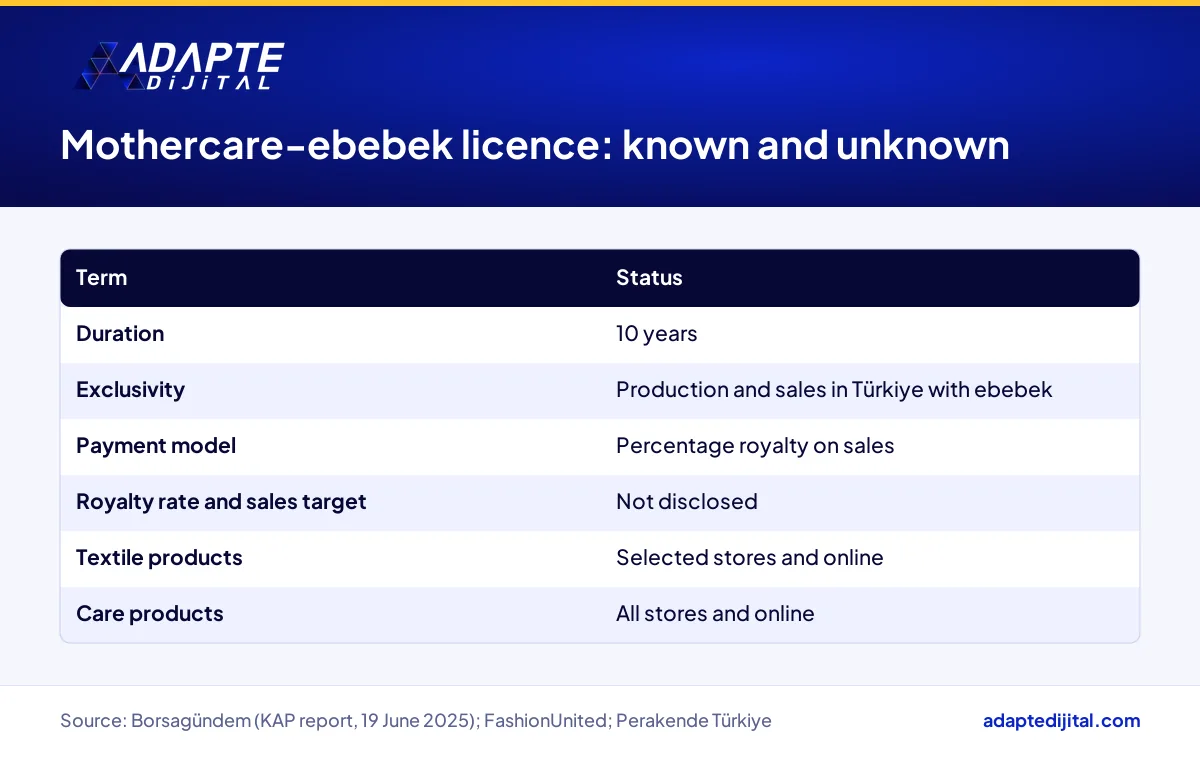
British mother-and-baby brand Mothercare is returning to Türkiye through a 10-year licensing deal with ebebek, the Turkish mother-and-baby retail chain (Perakende Türkiye, 4 August 2026). Since June 2026, Mothercare care products have been on sale in all ebebek stores and online, while textiles are sold in selected stores and online channels. The deal gives ebebek exclusive rights to produce and sell the brand in Türkiye, and ebebek pays a percentage-based licence fee on sales in return.
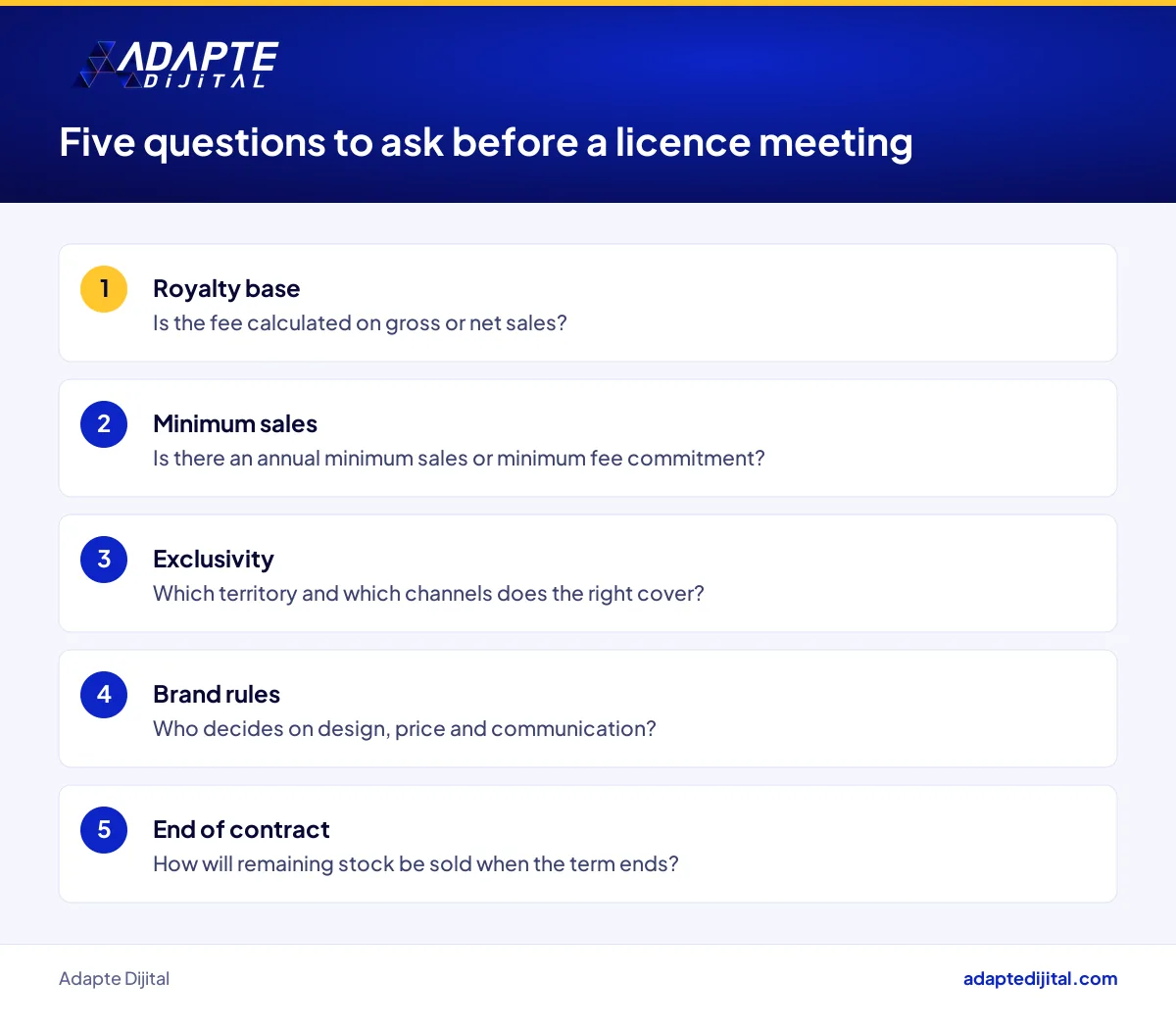
What it means for you: a chain with 311 stores in 72 provinces is moving into the premium segment by adding a well-known foreign brand next to its own label. Any retailer with stores and an online channel can consider the model, but its cost, term and risks are settled at the contract table.
What does the Mothercare and ebebek licensing deal cover?
The deal is exclusive and runs for 10 years. Only ebebek has the right to produce and sell Mothercare products in Türkiye. ebebek-branded products can also be sold in Mothercare stores outside the country. ebebek disclosed the deal on KAP, Türkiye’s public disclosure platform, on 19 June 2025, saying it expects a positive effect on revenue and profitability; the financial terms were not disclosed.
What does ebebek gain and take on under the brand licensing model?
ebebek brings a recognised brand onto its shelves without paying rent on a separate brand store. In return it shares a slice of sales and carries much of the product development and stock risk. The model works as long as brand awareness turns into sales. If the product sits on the shelf, the stock cost stays with the retailer.
The upside: awareness and a premium basket
A foreign brand arrives on the shelf with a name the customer already knows. That shortens the trust-building a new brand needs. A premium product can lift the average basket and bring a different kind of shopper into the store.
The burden: royalties, stock and brand rules
The licensee pays a share of every sale, and that cost does not disappear during markdowns. Product design, packaging and communication usually follow the brand owner’s rules. The stock cost of slow-moving SKUs stays with the retailer.
Which retailers does Mothercare’s return on ebebek’s shelves affect, and how?
The winners are multichannel mother-and-baby chains with store networks and online sales, since the model gives them a premium option. Under pressure are independent boutiques and local brands selling baby textiles in the mid-to-upper segment. Indirectly affected is the supply side: the licence grants production rights in Türkiye, but where the goods are actually made has not been disclosed.
Can foreign brand licensing pay off for small and mid-sized retailers too?
It can, but scale and channels matter. A licensor wants to see that its product will sell in enough volume. That means store count, online capacity and stock financing. For a retailer with a handful of stores, regional distribution or a limited product range may be a more realistic start.
What does the Mothercare and ebebek model mean for digital channels and search?
Search demand for the brand now flows to ebebek’s channels. A shopper in Türkiye who searches for “Mothercare” will find the products in ebebek’s online store and store locator. That calls for product pages that match the brand name, current stock data and clear rules on bidding for the brand keyword.
What should a retailer considering a licensed brand do this week?
BU BÖLÜMÜN ÖZETİ
- 1. Find the empty premium category on your shelves
- 2. Get your data ready to show a brand owner
- 3. Write down your contract questions
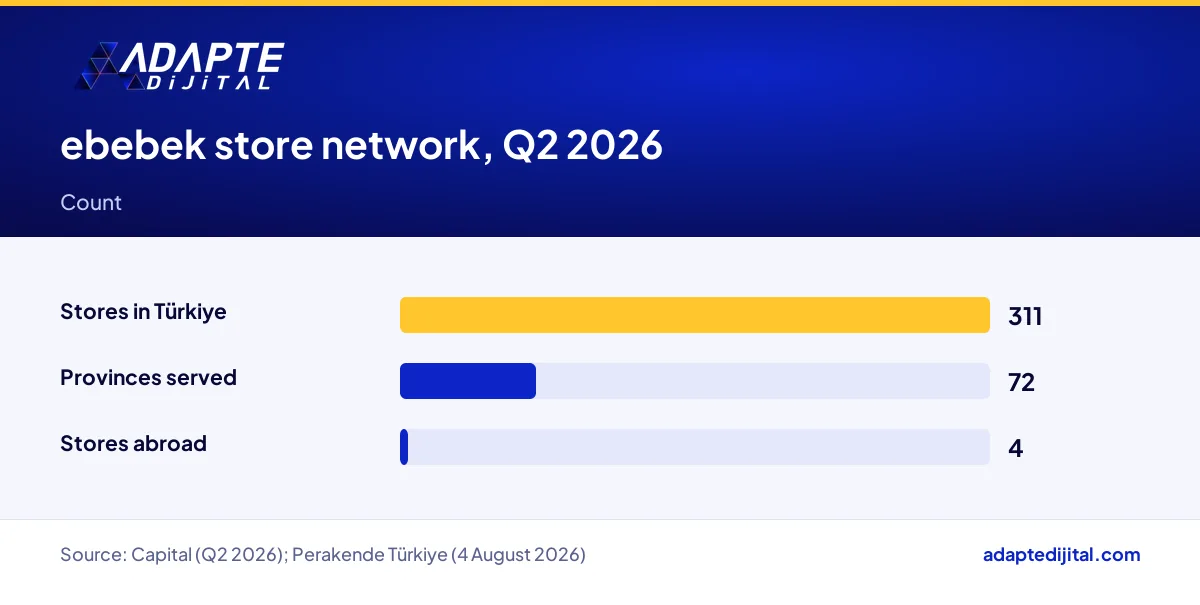
Start by reading your own shelves: in which category do customers look for a familiar brand and fail to find it? Then put sales, visitor and online traffic data for that category into one table. Third, write down the questions you will ask in any brand meeting.
1. Find the empty premium category on your shelves
For one week, note the brands customers ask for at the till that you do not carry. That list shows where a licence or distribution deal makes sense. Sometimes the till is quiet because the expected name is missing.
2. Get your data ready to show a brand owner
Put sales by store, average basket and online visits into a monthly table. A brand owner will ask for exactly this. We clarify brand positioning and brand selection decisions together with retailers through our brand consultancy service.
3. Write down your contract questions
Turn the royalty base, minimum sales, exclusive territory and end-of-contract stock into a question list. That list lets you open the meeting on your own agenda. We cover similar developments regularly on our retail page, where we interpret the retail agenda for you.
Quick Summary
- Mothercare is returning to Türkiye through a 10-year exclusive licensing deal with ebebek (Perakende Türkiye, 4 August 2026).
- Care products are sold in all ebebek stores and online, textiles in selected stores and online.
- ebebek pays a percentage royalty on sales, and the rate and sales target have not been disclosed (FashionUnited).
- ebebek reported consolidated revenue of TL 9.3 billion for Q2 2026, up 17% year on year (Capital).
- A licence brings fast awareness, but it has to be weighed against royalties, stock risk and the contract term.
Short Glossary
- Royalty
- Royalty is the term used for a percentage fee paid on sales in return for using a brand or a right.
- Exclusive licence
- Exclusive licence is the type of contract used to grant a right in a given territory to one company only.
- Private label
- Private label is the term used for products a retailer has made under its own name and sells only in its own channels.
Frequently Asked Questions
Next Step
If you are weighing a foreign brand for your shelves or strengthening your own, describe your situation in a short form and we will look at the category, channel and data side together: Consult Your Expert form.
Sources: Perakende Türkiye, “Mothercare, ebebek iş birliğiyle Türkiye pazarına döndü”, 4 August 2026; primary source: ebebek KAP material event disclosure, 19 June 2025 (as reported by Borsagündem) and KAP, Ebebek Mağazacılık company page; FashionUnited, 24 June 2025; Capital, ebebek Q2 2026 financial results.
Updated: October 2026
Sık Sorulan Sorular
Care products are in every ebebek store and on its online platforms. Textiles are sold only in selected stores and online. The report does not say how many stores are selected or which ones they are.
ebebek pays a percentage-based licence fee, a royalty, on sales of Mothercare products (FashionUnited, 24 June 2025). The rate, sales target and price positioning are undisclosed, so the effect on ebebek’s profitability cannot be quantified.
Mothercare chairman Clive Whiley called the deal “further evidence of the strength, inherent value and global appeal of the Mothercare brand”. On ebebek’s side, Mothercare products launched in June 2026 as a move into the premium segment (Capital). The return is announced with an advertising campaign built around a slogan about timeless elegance that suits every occasion.
Exclusive rights mean the same brand will not appear on a rival chain’s shelf. Because ebebek alone holds the rights in Türkiye, Mothercare becomes a product customers cannot find anywhere else.
A neighbourhood baby boutique now finds that its customers’ wish for a familiar foreign brand is met by a chain present in 72 provinces. Personal advice, a local production story and fast gift wrapping are the boutique’s real differences. We look at standing apart through a refreshed store experience in MAD Parfumeur’s Kahramanmaraş Piazza store refurbishment.
When a foreign name appears on the premium shelf, a local brand needs a sharper brand story. A brand that clearly explains its fabric, where it is made and its design choices gets picked for its substance, not just its price. Otherwise the customer turns around at the door and heads for the label they recognise.
For chains already investing in their own label, licensing is a fast way to stretch a category upwards. ebebek started online in 2001 and opened physical stores in 2003, so selling in both channels comes naturally.
Building your own brand takes longer, but the value stays with you. A licence brings fast awareness, but when the contract ends, the brand leaves too. The deciding question is what you want to own in 10 years’ time. For the opposite story, a chain growing by expanding its own store network, read about MANGO’s plan for around 10 new stores in Türkiye.
Term, exclusive territory, royalty rate and the base it is calculated on, minimum sales commitments, termination terms and what happens to remaining stock when the contract ends. Verify with the official source; this is not legal or financial advice, so check the terms with your lawyer.
When someone searches for a licensed brand, the search engine surfaces the page of the retailer that sells it. If product titles, category pages and structured data do not carry the brand name clearly, traffic slips elsewhere.
Because textiles are only in selected stores, a shopper may not find an item seen online at the nearest branch. Showing stock by store and offering click-and-collect closes that gap.
ebebek reported that monthly store visitors passed 5.5 million in May 2026, a strong bargaining figure for any licensor (Capital). A smaller retailer that tracks visitors, basket size and online traffic can also negotiate with evidence.
Care products are sold in all ebebek stores and on its online platforms. Textiles are only in selected stores and online channels, and the report does not list the selected stores.
That has not been disclosed. The only known fact is that ebebek pays a percentage-based licence fee on sales of Mothercare products. The rate, the sales target and the other financial terms are not public.
It can, but a brand owner usually wants to see sales capacity and channels. For a business with a few stores, regional distribution or a limited product range may be a more realistic start. Check the contract terms with your lawyer.