
Fersan signs a 1-year pact with MEMEDER, what does cause packaging add to a food brand?
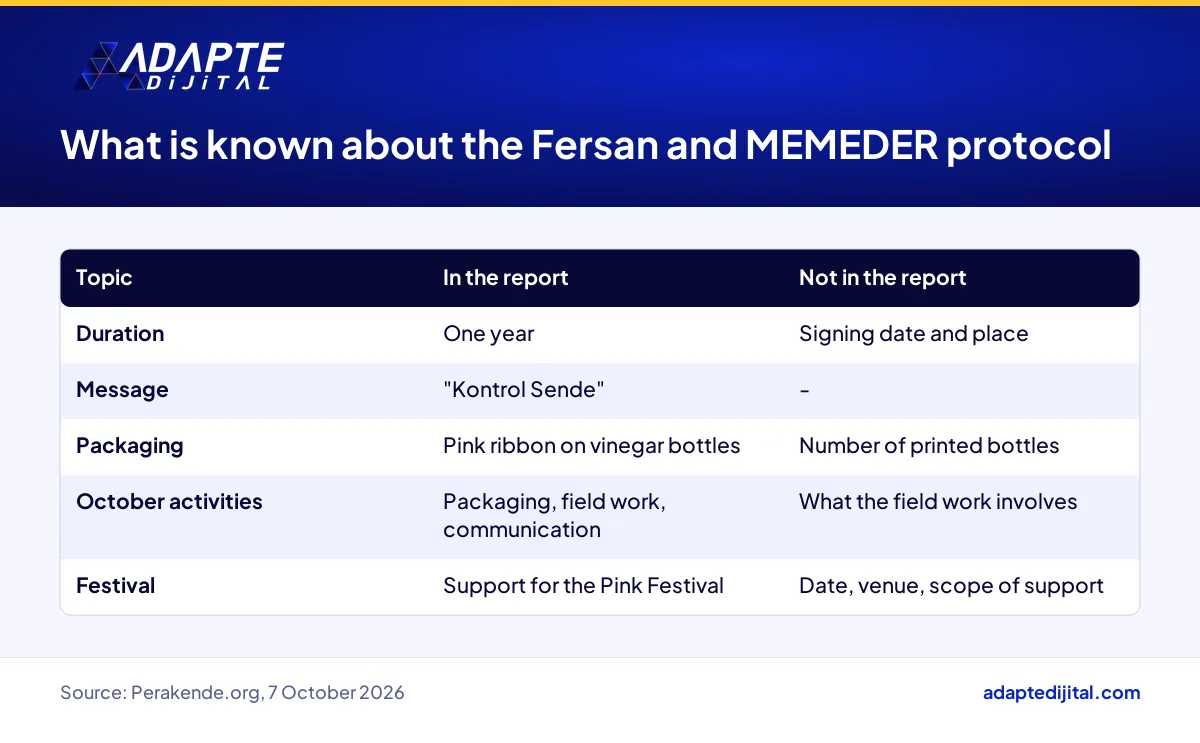
Fersan, a Turkish food company that makes vinegar and other fermented products, has signed a one-year cooperation protocol with MEMEDER, the Breast Health Association, and printed a pink ribbon on its vinegar bottles (Perakende.org, 7 October 2026). The protocol was signed in October, Breast Cancer Awareness Month, under the message “Kontrol Sende”, roughly “You’re in control”. According to the report, Fersan runs packaging, field and communication activities throughout October and supports the Pink Festival.
For a food producer fighting for shelf space, here is the point: a brand is carrying an awareness message on its own product rather than in a separate ad slot. The report gives no campaign budget and no number of bottles. For an FMCG business in Türkiye in autumn 2026, the real lesson is how packaging turns into a communication channel.
What does the Fersan and MEMEDER protocol cover?
The protocol runs for one year and aims to help women learn about breast health and keep up regular check-ups (Perakende.org). The shared message is “Kontrol Sende”. Fersan carries it on its vinegar bottles with a pink ribbon, and the report says field and communication work also continues through October. The report does not give the signing date or place.
Why is Fersan printing an awareness message on its vinegar bottles?
Because packaging is one of the widest media spaces a food brand owns. The bottle stands on the shelf, goes into the basket and stays on the kitchen counter for weeks. Reading the bottle as media is our interpretation; the report gives no reason for the choice.
What should an FMCG brand like Fersan check before a packaging partnership with a charity?
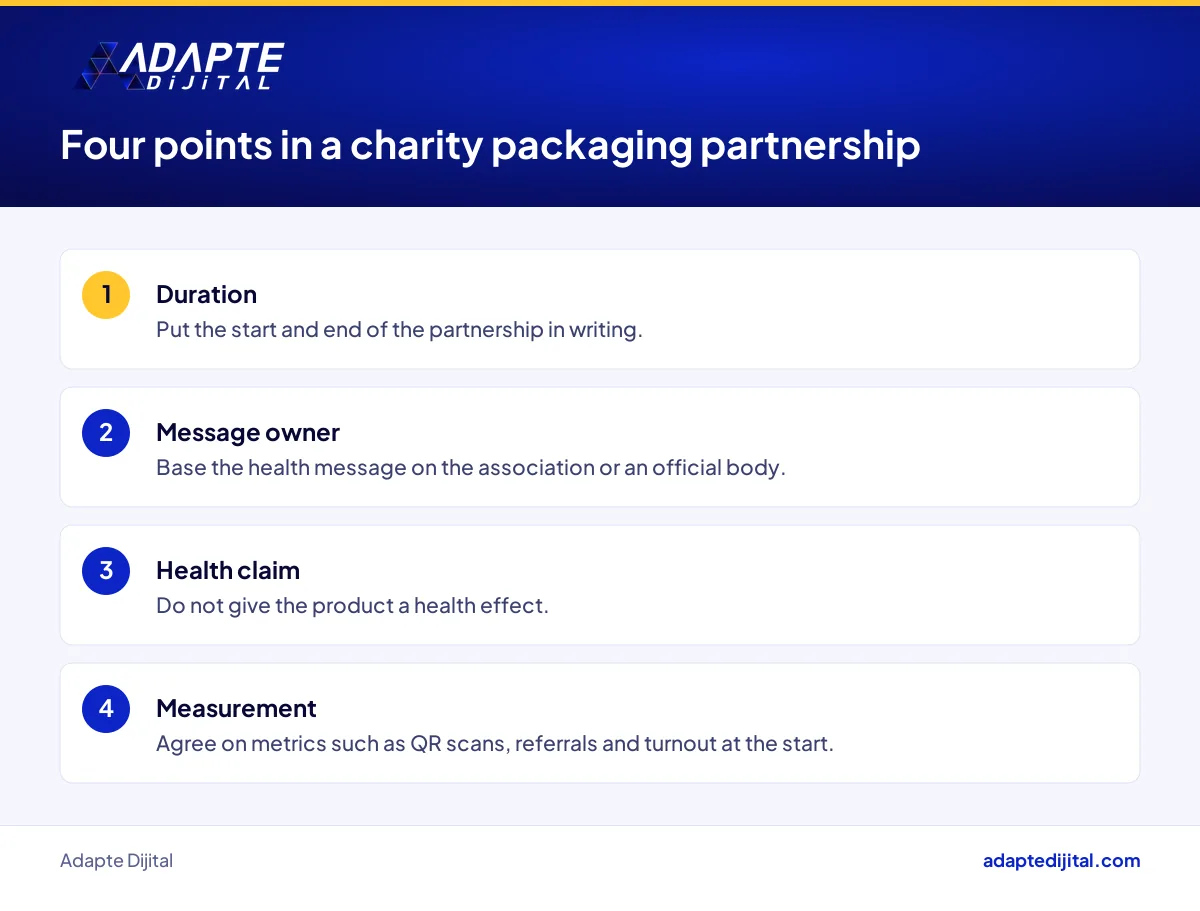
Four things stand out: duration, who owns the message, health claims and measurement. Fersan’s protocol sets a one-year frame, and its message is short and action-oriented. Put all four in writing before you reach the contract table.
Which producers and retailers do cause-packaging moves like Fersan’s affect, and how?
They matter most to makers of pantry staples that stay in the kitchen for a long time: vinegar, oil, tomato paste, spices and canned food. The ones under pressure are small producers who cannot change packaging often, because print costs and stock cycles weigh more on them. Chain supermarkets and local grocers that manage the shelf feel it indirectly.
How does Fersan’s packaging message show up in search, social media and marketplaces?
A message on the pack starts at the shelf and continues on the phone. A shopper curious about the pink ribbon searches for the brand name plus “Kontrol Sende”. If the brand’s site, social accounts and marketplace listing are out of date, that curiosity goes nowhere, and the customer simply walks away.
What should a food business that wants to use its packaging like Fersan do this week?
Start by looking at your current pack as if it were a media space. Our desk recommends choosing your single fastest-moving product, checking how it looks on the shelf and finding which surface is free for a seasonal message. If a product is gathering dust on the shelf, fix visibility first; the message comes after.
A shelf checklist before the pack goes out
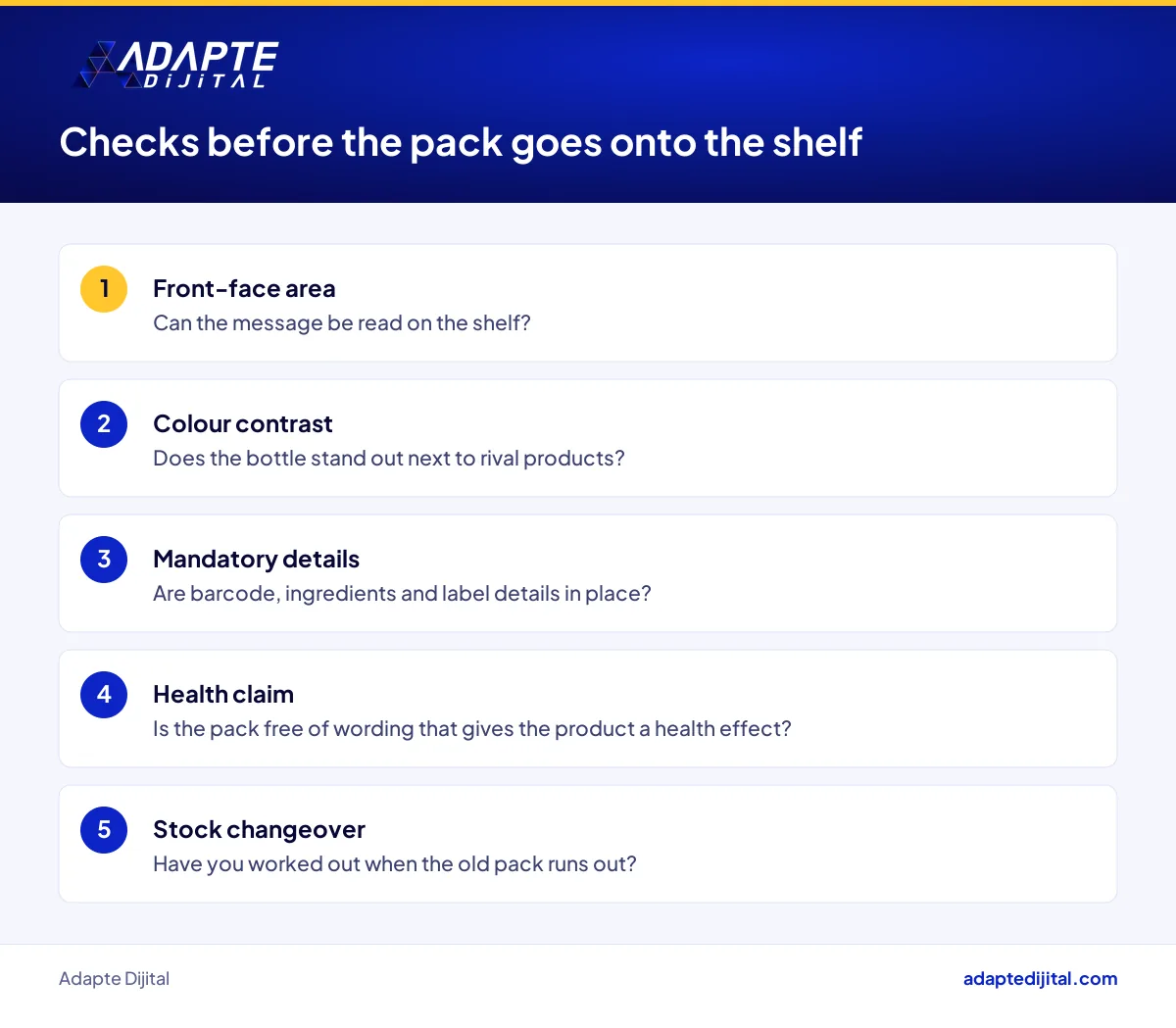
Check the front-face area set aside for the message and whether the colour stands out from rival bottles. Make sure the barcode, ingredients and mandatory label details have not moved. Confirm there is no health claim on the pack, and work out when the old stock will run out.
Quick Summary
- Fersan and MEMEDER signed a one-year cooperation protocol in October 2026 (Perakende.org, 7 October 2026).
- The shared message is “Kontrol Sende”, and Fersan printed a pink ribbon on its vinegar bottles (Perakende.org).
- According to the report, Fersan runs packaging, field and communication activities through October.
- The report gives no campaign budget and no number of printed bottles.
- A brand that carries an awareness message on its pack should not give the product a health effect.
Short Glossary
- SKU
- SKU is the stock-keeping unit used to track each size and variant of a product separately.
- Planogram
- A planogram is the layout plan used to show in which order and with how many facings products sit on a shelf.
- Seasonal pack
- A seasonal pack is the packaging term used to describe a product pack printed with a special message or design for a set period.
Frequently Asked Questions
Next Step
If you want to review your packaging and shelf visibility as a communication channel, fill in our consult your expert form.
Sources: Perakende.org, Fersan and MEMEDER cooperation protocol, 7 October 2026 · Republic of Türkiye Ministry of Health, breast cancer screening page, 22 October 2024
Updated: October 2026
Sık Sorulan Sorular
MEMEDER stands for Meme Sağlığı Derneği, the Breast Health Association; its founder and honorary president is Prof. Dr. Vahit Özmen. According to the report, the association has worked on accurate information and early-detection awareness since 2007.
Gürhan Güven, Fersan’s Chairman and CEO, says the company aims to use its reach to spread the message. According to Güven, Fersan has been a guest at “millions of households'” tables every day since 1978. That household figure is the company’s own statement; no independent data backs it.
No. This piece looks at the packaging and brand side of the partnership and gives no medical advice. Official screening information sits on the Ministry of Health’s breast cancer screening page, which says KETEM centres offer screening free of charge in every province. For accurate health information, consult your doctor and Türkiye’s Ministry of Health.
In those few seconds, colour and shape usually do more work than text. A small pink ribbon on a familiar bottle can be enough to make someone look twice. A long message gets read at home, if at all.
An ad stays on screen for seconds; packaging stays in the house until the product runs out. A vinegar bottle in the kitchen is a bit like a quiet poster that repeats the same message every day, a natural reminder for an awareness campaign.
Yes, though it often stays out of sight. A new print means running down old stock, holding two versions in the warehouse at once and keeping the barcode unchanged. The report gives no bottle count, so the scale of the seasonal print is unknown.
The content of a health-related message should belong to the association or an official body, not the brand. In Fersan’s case, the message is presented as the partnership’s shared slogan, not as a feature of the product.
No. A pink ribbon on a vinegar bottle does not mean vinegar has anything to do with health, and it must not be presented that way. Food communication linked to health falls under Turkish advertising rules. Verify with the official source; this is not legal or financial advice.
An awareness partnership is not a sales campaign, so turnover should not be its yardstick. QR code scans on the pack, traffic sent to the association’s page or turnout at field events are more honest signals. Write the chosen metric into the protocol at the start, and there is nothing to argue about at year end.
The logic holds at any scale. A small producer does not need to reprint every SKU; it can put a seasonal pack on its single fastest-moving item. A cheap option such as a sticker or a neck tag carries less risk than reprinting the whole bottle.
In October, a supermarket can group pink-pack products within the planogram to build a campaign spot. For a small grocer, a corner near the till is enough.
Copying the same colour in the same month mostly helps the first mover; another period or cause that fits your brand is sounder. We look at a food brand that brings women farmers into its brand story through Reis Gıda’s women farmers model.
Yes. If the shelf shows the pink-ribbon bottle while the marketplace shows the old image, the two channels say different things. Add the seasonal pack image with one accurate sentence about the partnership in the description. Keep any health claim out of it.
A QR code that leads to the association’s information page or the brand’s partnership page makes the message measurable. Scan counts become the partnership’s most concrete data.
Inform rather than sell: sharing the association’s message instead of “buy the pink bottle” protects the partnership’s credibility. Pointing every health-related post to an official source builds the same trust.
Ask first about its approval process for the message, the terms for using its logo and the length of the partnership. If field work is planned, put in writing who does what. In Fersan’s case, the report does not describe the field work, so do not leave that gap in your own protocol.
Building packaging, shelf visibility and the digital side in one brand voice is part of our brand consultancy work. We look at how stretched shoppers turn to small purchases through the lipstick effect in beauty retail.
According to Perakende.org, the protocol runs for one year. The report names packaging, field work and communication activities; check the parties’ own announcements for detail.
Yes, size is not a requirement. You can start with one product and a cheap surface such as a sticker or a tag; put the association’s approval process and logo terms in writing first.
Do not give the product a health effect, and base the message on an official body or the association. Check advertising rules with the official source; this is not legal advice.