
The lipstick effect returns, how can beauty retailers sell small treats in a downturn?
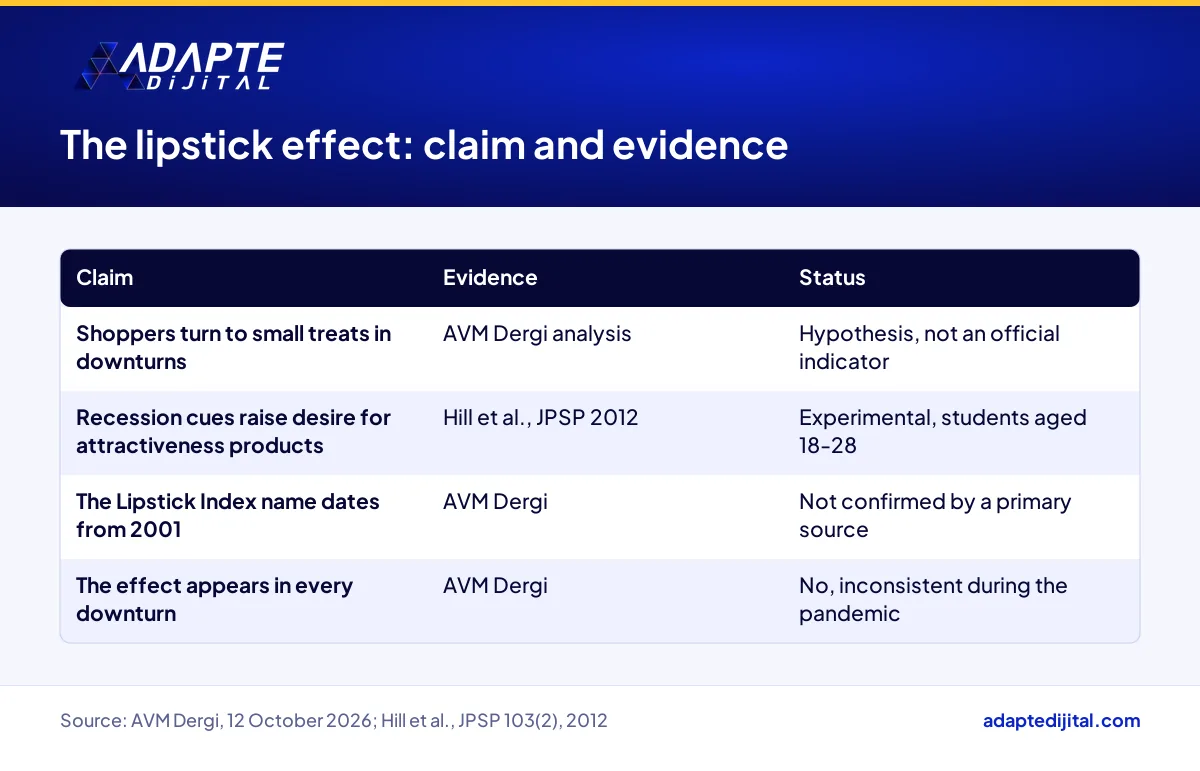
The “lipstick effect”, the idea that shoppers put off big purchases in hard times and turn to small, affordable treats, is back in the conversation, and AVM Dergi’s analysis stresses that it is a consumer behaviour hypothesis, not an official economic indicator (AVM Dergi, 12 October 2026). The same analysis says the effect does not show up in every period or every group and did not work consistently during the pandemic.
For a beauty store or brand, small purchases can be an opportunity in a downturn, but they do not arrive on their own. In Türkiye’s mall and high-street beauty stores in autumn 2026, the question is whether minis, sets and promotions reach the shelf with a price story built on performance and experience.
What is the lipstick effect, and how does AVM Dergi define it?
The lipstick effect is a hypothesis that, in uncertain times, shoppers delay big spending and turn to small, accessible rewards (AVM Dergi, a Turkish mall and retail trade publication). The analysis says the effect is not automatic and may be a shift between categories rather than a rise in total spending. It describes a tendency, not a sales promise.
Is there research behind the lipstick effect?
There is one experimental study, and it has limits. In a 2012 paper by Hill and colleagues in the Journal of Personality and Social Psychology, recession cues reduced participants’ desire for most products, such as electronics and home goods, while increasing women’s desire for products linked to attractiveness. The authors call it the first experimental demonstration of the lipstick effect.
What do L’Oréal’s first-quarter 2026 figures say about the beauty market?
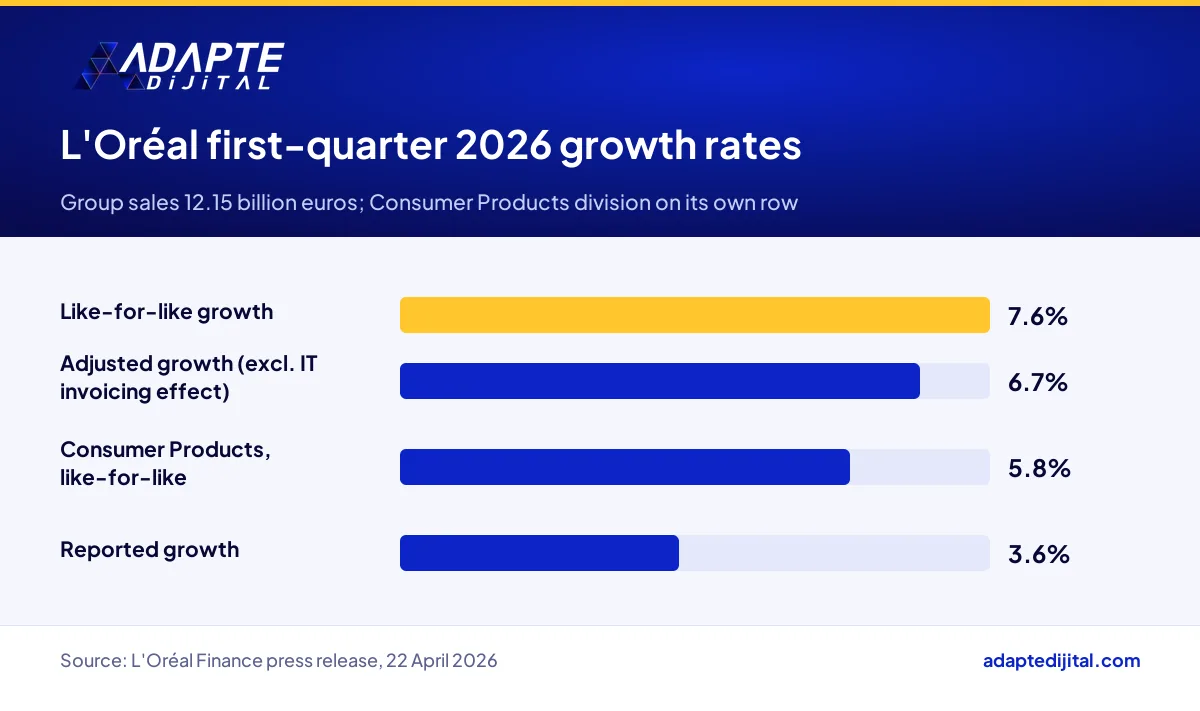
L’Oréal reported sales of 12.15 billion euros for the first quarter of 2026 (L’Oréal Finance press release, 22 April 2026). Like-for-like growth was 7.6%; adjusted growth, which the company strips of an IT invoicing timing effect, was 6.7%; reported growth was 3.6%. The release does not mention the “lipstick effect”; the figures appear here only to show how the global beauty market is moving.
Which beauty stores and brands does the small-treat trend affect, and how?
The likely winners are beauty chains, pharmacies and perfumeries that can offer minis, trial sizes and sets. The ones under pressure are boutiques that sell only full sizes at high prices; when wallets are tight, shoppers turn back at the door. Indirectly affected are gift and accessory tenants in the mall, since a shopper looking for a small treat browses their shelves too.
How can a beauty retailer make small purchases visible in search, social media and marketplaces?
Minis, trial sizes and sets should be easy to find on marketplaces and the store’s own site, with their own page or filter. If a shopper searches for “mini size” or “gift set” and the store does not appear, the product is gathering dust in the stockroom.
What should a beauty store owner do this week to sell small treats?
Rearrange the till area and the entrance shelf around small purchases. Our desk recommends gathering minis and sets in one spot, adding a short note next to each product that justifies the price, and comparing one week’s sales with the week before.
A shelf checklist before the minis go out
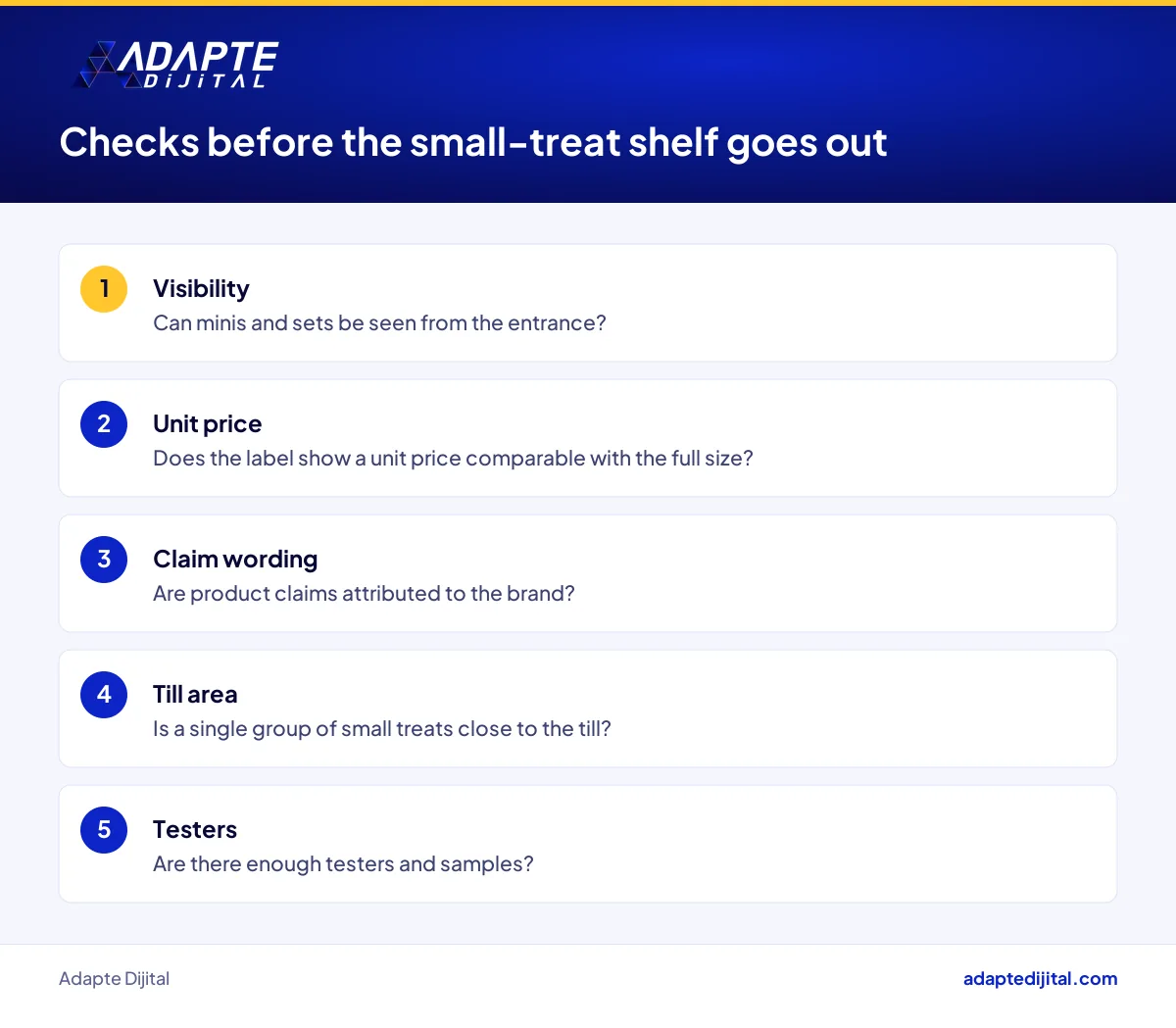
Check that minis and sets are visible from the entrance and that price labels show a unit price. Make sure product claims are attributed to the brand. Put a single group of small treats near the till, and check that you have enough testers.
Quick Summary
- AVM Dergi defines the lipstick effect as a consumer behaviour hypothesis, not an official indicator (AVM Dergi, 12 October 2026).
- A 2012 study by Hill and colleagues found that recession cues raised women’s desire for products linked to attractiveness (JPSP).
- L’Oréal’s first-quarter 2026 sales were 12.15 billion euros, with like-for-like growth of 7.6% (L’Oréal Finance, 22 April 2026).
- There is no open data showing that lipstick sales rose in Türkiye during the downturn.
- For a beauty store, small purchases need a shelf and campaign set-up that justifies price with value.
Short Glossary
- Lipstick effect
- The lipstick effect is the term used to describe a consumer behaviour hypothesis that shoppers turn to small, affordable treats in uncertain times.
- Like-for-like growth
- Like-for-like growth is the measure used to show sales growth on a comparable basis, as companies such as L’Oréal report it alongside reported growth.
- Average basket value
- Average basket value is the retail indicator used to measure the average sale per receipt over a given period.
Frequently Asked Questions
Next Step
If you want to review your shelf and campaign set-up for small purchases, fill in our consult your expert form.
Sources: L’Oréal Finance, First quarter 2026 sales, 22 April 2026 · Hill and colleagues, Boosting beauty in an economic decline, JPSP 103(2), 2012 · AVM Dergi, lipstick effect analysis, 12 October 2026 · Euromonitor, Beauty and Personal Care in Türkiye, May 2026
Updated: October 2026
Sık Sorulan Sorular
According to AVM Dergi, Estée Lauder executive Leonard Lauder noticed a rise in lipstick sales in 2001 and called it the “Lipstick Index”. That origin story comes from the analysis and has not been checked against a primary source.
According to AVM Dergi, today’s shopper is more selective: trading down in one category while paying for premium in another. The analysis describes this as a search for “value” rather than a “small luxury”. The shopper wants the treat to be worth the money.
No. The analysis says the effect appears in some periods and groups and did not work consistently during the pandemic. There is also no open data showing that lipstick or colour cosmetics sales rose in Türkiye in 2025-2026.
The experiments used university students aged 18 to 28. The first study drew on US unemployment and retail spending data from 1992 to 2011. So the finding does not carry straight over to a mall shopper in Türkiye.
According to the study, the effect depends on the product’s perceived function. It measured stated desire for products linked to attractiveness, not what people bought at a till. For the shelf, the takeaway is modest: make clear at a glance what a product does.
It supports it; it does not prove it. A lab tendency does not always repeat at a real till, so treating the idea as a hypothesis keeps your plan realistic.
The company reports one quarter in three ways. Like-for-like growth is 7.6%, and the adjusted figure of 6.7% also removes a timing effect the company defines itself. The reported figure of 3.6% is the lowest of the three, so always check which rate a headline is quoting.
According to the release, L’Oréal calls the global beauty market “dynamic” despite geopolitical and macroeconomic uncertainty. Its Consumer Products division reports sales of 4.37 billion euros and like-for-like growth of 5.8%. That is the company’s own assessment.
According to the open page of Euromonitor’s May 2026 report on Türkiye, Kosan Kozmetik and L’Oréal keep their leading positions in colour cosmetics. The same page says skincare leads value sales and colour cosmetics is growing fast. Market share percentages are not publicly available.
Chains can negotiate minis and sets directly with suppliers, stretch the SKU count by category and free up till space more easily. Whether that raises receipt count without hurting average basket value is something each store has to measure.
A boutique’s strength is experience: letting people try a product, showing what suits their skin and giving a small sample are ways to justify the price. AVM Dergi points the same way: brands should explain price through performance, durability and experience.
A shopper looking for a small treat may find it in a coffee or a dessert as well as in beauty. So beauty and food tenants in the same mall may end up competing for the same small budget. We look at how a food chain finds its place in a mall through Dürümle’s Forum Diyarbakır opening.
A mini’s page should state the volume, roughly how many uses it gives and its unit price against the full size; doing that sum first earns trust. Product claims belong to the brand and should be framed as “according to the brand”.
Short how-to videos can explain a small purchase better than a long ad. Concrete scenes, such as a product that fits in a bag, a travel set or a gift by the till, show that the treat does not strain the budget.
Add photos of minis and sets, current stock and in-mall directions to your Google Business Profile. A profile that appears in “beauty store nearby” searches brings a shopper who sets out for a small purchase straight to the door.
A promotion that tells a value story outlasts a plain discount. A free mini with a full size, or a trial set above a threshold, can protect average basket value while giving the shopper a sense of reward. We look at a brand that builds its product story from the supply side through Reis Gıda’s women farmers model.
Tying shelf layout, marketplace pages and campaign data into one plan is one of the jobs we handle as a digital marketing agency.
No. According to AVM Dergi, the lipstick effect is a hypothesis; it appears in some periods and groups and did not work consistently during the pandemic. Your campaign plan should allow for that uncertainty.
Start with the distributors and suppliers of the brands you already stock. Ask about trial sizes and sets before the season.
Sold on their own, they can. Set up as a gift with a full size or as a set above a spending threshold, they can protect average basket value while adding receipts.