
Yatas Group fills 3 senior roles from within, can internal promotion strengthen marketing?
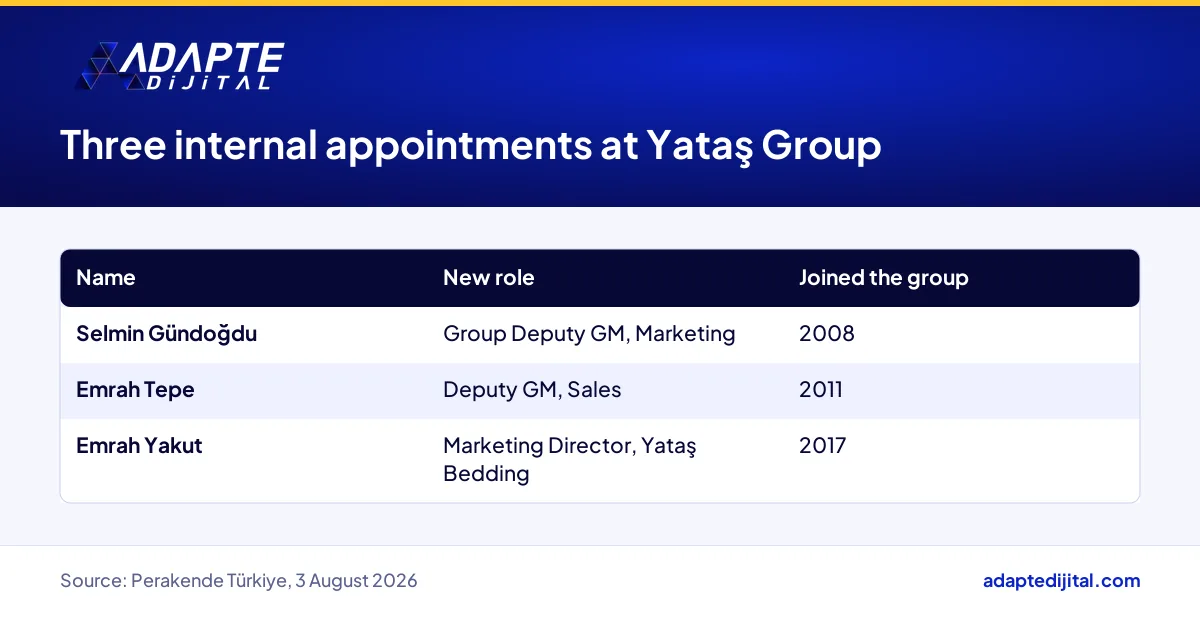
Yataş Group has made three senior appointments and filled all three seats with its own people (Perakende Türkiye, 3 August 2026). Selmin Gündoğdu becomes Group Deputy General Manager for Marketing, Emrah Tepe becomes Deputy General Manager for Sales as of May 2026, and Emrah Yakut becomes Marketing Director of Yataş Bedding.
What it means for you: a growing retail group is building its marketing and sales leadership through internal promotion, not outside hires. On top of that, the marketing of four brands and the e-commerce unit now sit under one deputy general manager. For anyone building a team in Türkiye’s home and furniture retail in autumn 2026, this is a concrete answer to the question “who goes where?”
Which three senior appointments did Yataş Group make?
There are three appointments, and all three are internal promotions. Gündoğdu moves to the top of group marketing, Tepe to the top of domestic sales, and Yakut to marketing at Yataş Bedding. Only Tepe’s start date is public: May 2026. The report does not say when Gündoğdu and Yakut take up their roles, so we make no comment on timing.
What changes when Yataş puts marketing and e-commerce under one roof?
Budget and targets land on one desk. Once the marketing of four brands and the e-commerce unit report to the same deputy general manager, the team that plans campaigns and the team that runs online sales answer for the same numbers. In many retailers these two units report separately and compete to claim each other’s wins. One roof can reduce that friction.
Promotion or outside hire, what does Yataş’s choice tell a business owner?
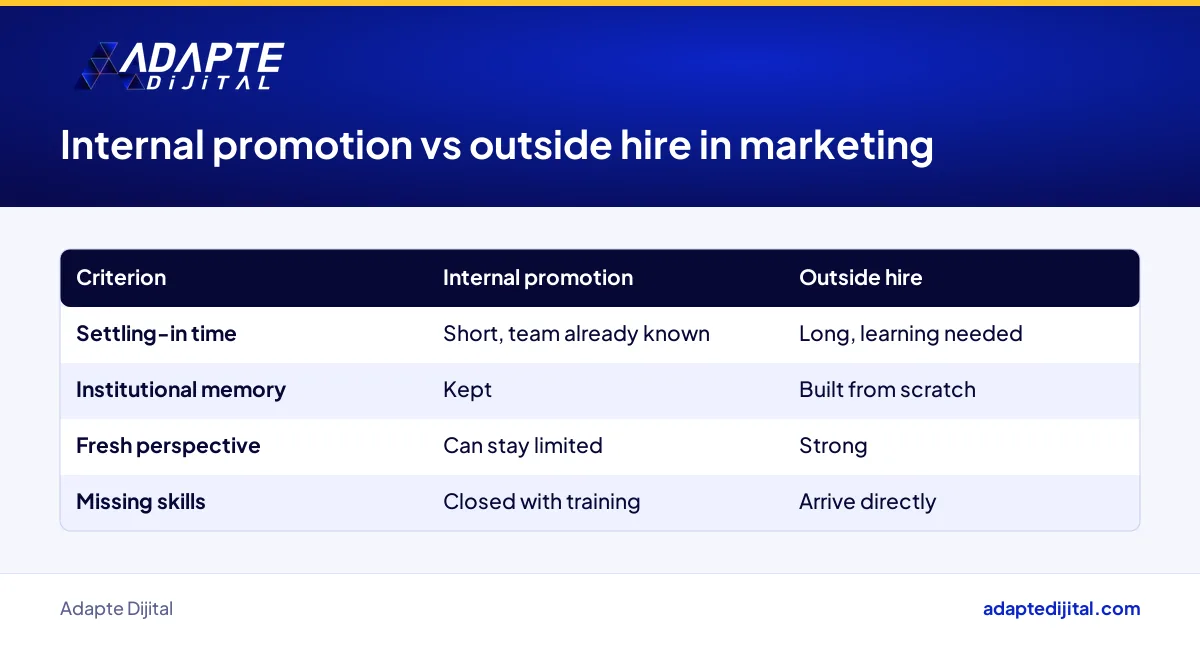
Internal promotion keeps institutional memory and shortens the handover. Gündoğdu and Tepe have spent many years inside the group, while Yakut has brought outside category experience in since 2017. That mix suggests internal promotion can be balanced with outside experience. The report gives no explanation of why Yataş made this choice.
Which retailers and brands do Yataş’s appointments affect, and how?
The effect is felt most by rival home and living brands, by the group’s store and project sales partners, and by marketing agencies. Rivals may face a more joined-up campaign rhythm. Sales partners keep working with a familiar counterpart. Agencies deal with a structure that reports to one deputy general manager instead of separate brand teams.
How do a brand’s digital channels change when Yataş-style marketing and e-commerce sit together?
The language of measurement changes. Ad spend, website traffic, marketplace sales and store visits start to be read in the same report. In that kind of structure, search visibility, social media and CRM are managed as parts of one customer journey. Campaign success is measured not just by clicks but by average basket size and repeat purchases.
What should a store or brand owner do with their org chart this week, after Yataş’s move?
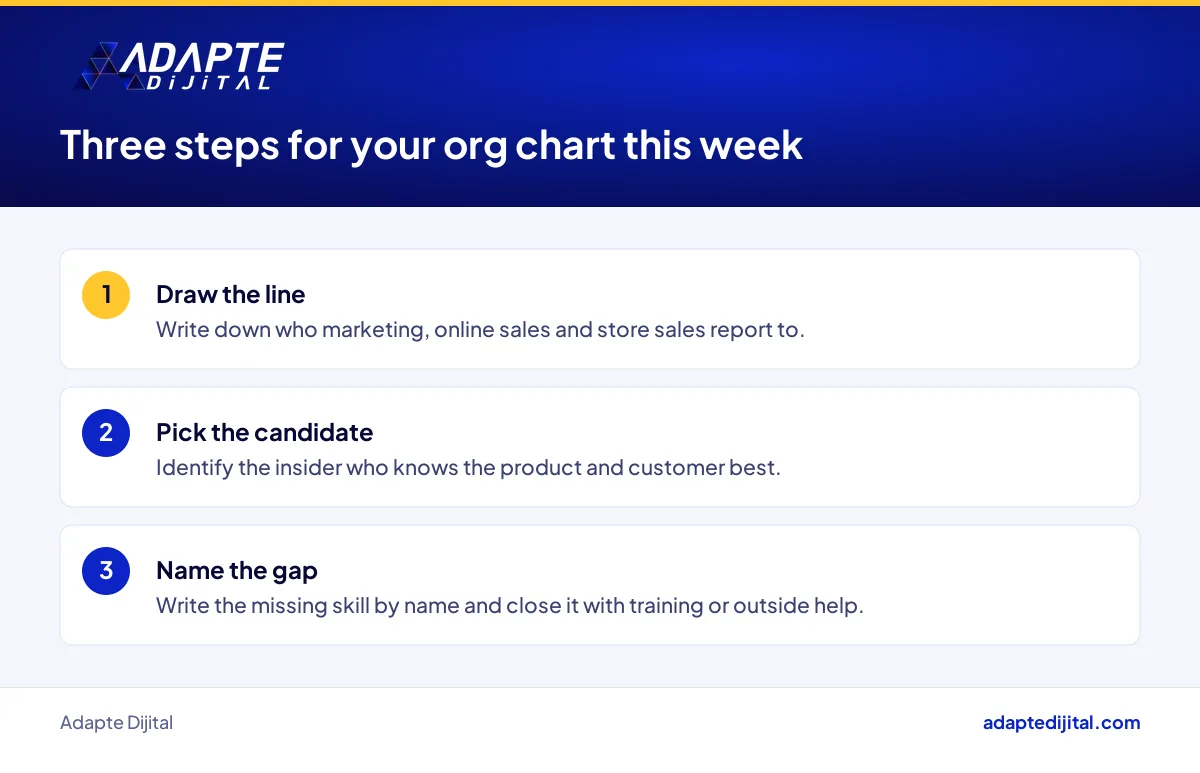
You can do three things this week: map who marketing and online sales report to, identify the person inside who is ready for promotion, and write down the missing skill by name. By the end, the question “who should I hire from outside?” becomes “which skill do I need to bring in?”
Quick Summary
- Yataş Group made three senior appointments, all of them internal promotions (Perakende Türkiye, 3 August 2026).
- Selmin Gündoğdu now leads the marketing of four brands together with the e-commerce unit.
- Emrah Tepe became Deputy General Manager for Sales as of May 2026 (Perakende Türkiye).
- Emrah Yakut, with around 20 years in the sector, became Marketing Director of Yataş Bedding (Perakende Türkiye).
- The reasons for the appointments and the start dates of the other two roles are not in the report.
Short Glossary
- Internal promotion
- Internal promotion is the HR method used to fill a vacant or newly created position with one of the company’s own employees.
- Project sales
- Project sales is the sales channel used to supply products directly to large-scale projects rather than to individual shoppers.
- Cannibalisation
- Cannibalisation is the marketing term used to describe two products or brands of the same company taking sales from each other.
Frequently Asked Questions
Next Step
If you want to tie your marketing and online sales to one goal, let’s review your current structure together. Fill in the consult your expert form and we will get back to you.
Sources: Perakende Türkiye, 3 August 2026 · KAP company list · Our retail page, where we interpret retail news for you
Updated: October 2026
Sık Sorulan Sorular
Gündoğdu will lead the marketing departments of four brands: Yataş Bedding, Enza Home, Divanev and Puffy. The e-commerce and marketing support units also report to her. She joined the group in 2008 as advertising and public relations manager, then held manager and director roles in corporate communications. Since September 2021 she has been Marketing Director of Yataş Bedding.
Tepe takes over the domestic sales organisations of all four brands, the company-owned stores and the project sales channels. He has worked at manager and director levels in the group since 2011.
Yakut is the link in the team that brings outside retail experience. He started his career at YKM, a Turkish department store chain, then worked in category management at Boyner Group, Çetinkaya Mağazacılık and Walgreens Boots Alliance Türkiye. Since 2017 he has been a product manager and product group manager inside the group. He has around 20 years of experience in the sector.
It is likely to, because the goal becomes shared. When a customer tries a mattress in the store and buys it online, two units with separate targets will see that sale as a “loss” on one side. Under one leader, the question shifts from “which channel sold it?” to “why did the customer buy?”
Cannibalisation between brands becomes easier to see. If two brands from the same group plan to send campaigns to the same customer in the same week, a single leader can spot the clash on the calendar.
A manager who comes from inside already knows the suppliers, the store teams and the story behind the stock that sits on the shelf. The first months go into making decisions, not learning the basics. The team knows them, so settling in is quicker.
The risk lives in the reflex of “we have always done it this way.” The company’s blind spots can easily become the new manager’s blind spots too. As Yakut’s case shows, adding someone who has worked at other retailers to the same team is one way to balance that risk.
An outside hire comes first when you need a skill that simply does not exist in the company. If nobody inside has grown into marketplace management or data analytics, promoting someone into that seat puts pressure on the whole team. Here the decision is made by looking at the missing skill, not at the person.
The group’s company-owned stores and sales teams gain continuity, led by a manager who has known the sales organisation for years. Partners in project sales, where the group supplies products directly to large-scale projects, also keep an uninterrupted point of contact.
Independent stores selling furniture, mattresses and home textiles may face a competitor whose campaign calendar is better coordinated. For mid-sized retailers where different people still run marketing and e-commerce, budget decisions can stay slower.
Media planning agencies, creative agencies and e-commerce platform providers are affected indirectly. When decisions sit in one place, the brief comes from one place too. That changes how suppliers pitch: the conversation is about results at group level, not brand by brand.
One leader can shift search and social ad budgets between brands according to need. If one brand’s product is piling up in stock, its ads can be dialled down and the money moved to another brand. With separate teams, the same decision can take weeks.
With products like mattresses and furniture, customers usually research online and then test in the store. That makes store location listings, reviews and “store near me” searches part of e-commerce. When marketing and e-commerce share a desk, that link in the chain does not break.
Draw three boxes: who plans campaigns, who owns website and marketplace sales, and who store sales report to. If two boxes report to different people and their targets clash, the real problem may sit on that line. When you say “the till is quiet,” look there first.
Look for the person who knows the product and the customer best, not the one with the biggest title. Then write down where that person falls short and close the gap with training or outside support. We do this work alongside businesses through our digital marketing services, setting up marketing and e-commerce as one structure.
A similar move is happening elsewhere in home and living retail: Evidea has named İrem Aydın marketing director, with CRM and digital marketing among her responsibilities. On the e-commerce platform side, ideasoft has hired Hakan Küçük as Growth Director, and there we look at how a growth role differs from marketing. Official filings by listed companies can be followed through the KAP company list (KAP is Türkiye’s public disclosure platform). We could not verify whether the Yataş appointments were filed with KAP.
If the team is small, usually yes. When one person sees both the campaign and online sales, budget and stock decisions are made faster. What matters is that this person can also see the sales figures.
Write down the missing skill by name, then fill it with training, mentoring or outside consulting. Product and customer knowledge is already inside; technical skills can come from outside.
We could not verify this. The news comes from Perakende Türkiye; you can check KAP yourself to see whether an official filing exists.