
ideasoft hires Hakan Kucuk as Growth Director, what does a growth lead do in e-commerce?
Hakan Küçük has joined ideasoft, a Turkish e-commerce platform provider, as Growth Director, where he will lead marketing, customer acquisition, CRM and conversion (Perakende.org, 30 September 2026). Here’s something most people don’t know: Küçük’s degree is not in marketing but in Electrical and Electronics Engineering. He built his career on digital marketing and growth strategy, and his most recent role was Digital Marketing and Growth Director at Param Group.
What it means for you: the “growth” role is no longer limited to tech start-ups; it now sits in the senior team of a company that powers online shops. For a small business selling online in Türkiye in autumn 2026, the question is simple. What does a growth director actually do, and whose desk should the small-scale version of that job sit on?
Which areas will ideasoft’s new Growth Director Hakan Küçük lead?
He will lead four areas: marketing, customer acquisition, CRM and conversion. The report says Küçük aims to approach growth through understanding the customer, interpreting data, channel efficiency and measuring the effect on sales and loyalty. His start date, who the role reports to and the size of his team are not in the report.
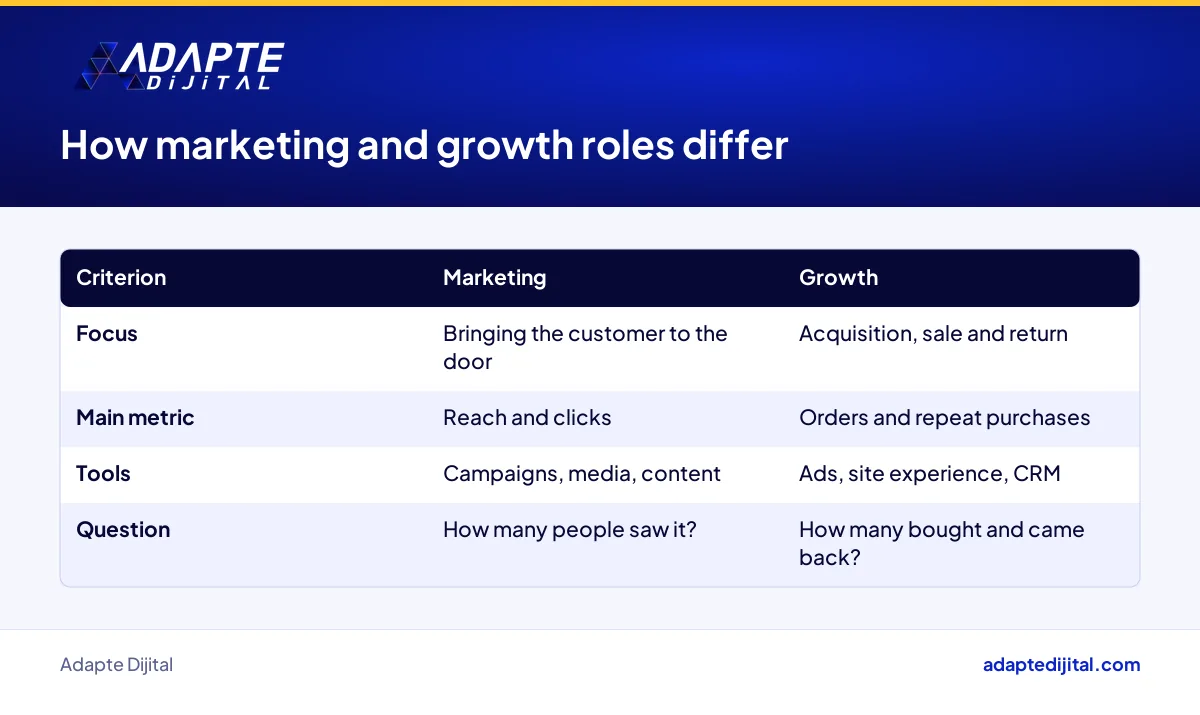
How does a growth role like ideasoft’s differ from marketing in e-commerce?
Marketing focuses on bringing the customer to the door. Growth measures, as one chain, whether the customer walks in, buys and comes back. The difference is the scope of measurement. A growth role reads advertising, website experience and CRM in the same table and works to fix the weakest link.
How does Hakan Küçük’s measurement-led growth approach translate to a small business?
It comes down to four questions: who is my customer, what is my data telling me, which channel makes money, and does my work show up in sales? In a large company a team answers these questions. In a small business, the owner or a single employee can build the same logic by giving these four questions one hour a week.
Which e-commerce businesses does ideasoft’s growth appointment affect, and how?
The businesses directly affected are online shops that run on ideasoft’s platform; rival platform providers and e-commerce agencies are affected indirectly. A platform company’s own view of growth may also shape the tools and training it offers its customers. The report gives no detail on how that will happen.
What does ideasoft’s growth approach mean for a shop’s ad, search and marketplace channels?
It means every channel becomes a metric tied to a shared goal, not a separate report. In advertising you look at orders, not clicks; in search, at traffic that converts, not rankings; on marketplaces, at profit, not turnover. The website is where these channels meet, and conversion problems usually show up there.
What should a small online shop owner do for growth this week, taking a cue from ideasoft?
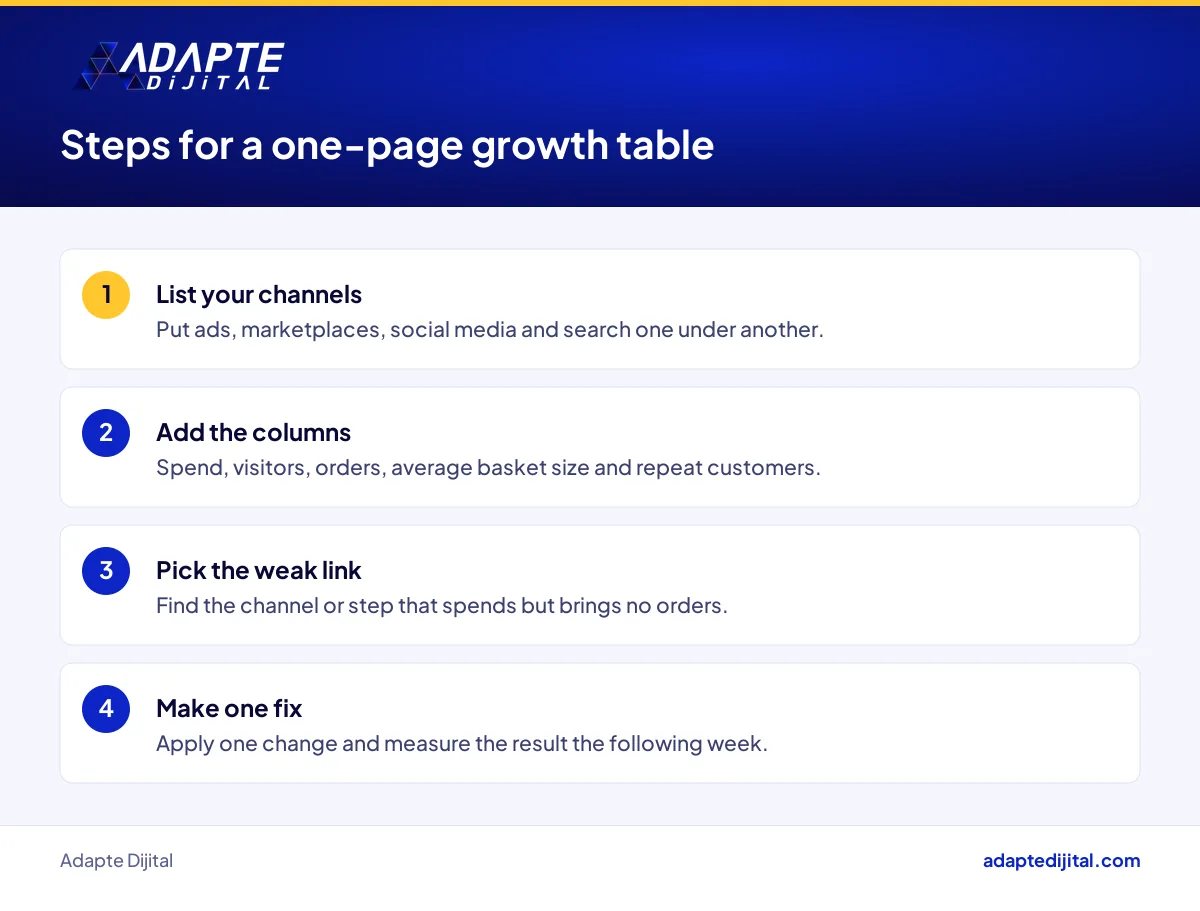
This week, build a one-page growth table: each channel’s spend, the orders it brings and the number of repeat customers. Then pick the weakest link and make one fix. Don’t fix everything at once; fix one thing and measure the result.
Quick Summary
- Hakan Küçük joined ideasoft as Growth Director (Perakende.org, 30 September 2026).
- Küçük will lead marketing, customer acquisition, CRM and conversion.
- His previous role was Digital Marketing and Growth Director at Param Group (Perakende.org).
- ideasoft says it provides the platform for more than 50,000 e-commerce businesses (ideasoft.com.tr, company statement).
- For a small business, the first growth step is one table that measures channels by orders and repeat purchases.
Short Glossary
- Growth
- Growth is the management approach used to increase sales by measuring the whole chain, from customer acquisition to repeat purchase.
- Conversion optimisation
- Conversion optimisation is the set of improvements used to help more site visitors complete a purchase.
- Channel efficiency
- Channel efficiency is the metric used to measure the sales each channel brings in against the resources spent on it.
Frequently Asked Questions
Next Step
Let’s see together which of your channels drives growth and which only drives spend. Fill in the consult your expert form and we will build your first table with you.
Sources: Perakende.org, 30 September 2026 · ideasoft About Us page · Our retail page, where we interpret retail news for you
Updated: October 2026
Sık Sorulan Sorular
In customer acquisition, SEO, campaign management and conversion optimisation. At Param Group he managed the marketing teams of the group’s companies and was responsible for CRM, customer loyalty and sales conversion. The report does not mention how long he stayed at Param Group or where he worked before.
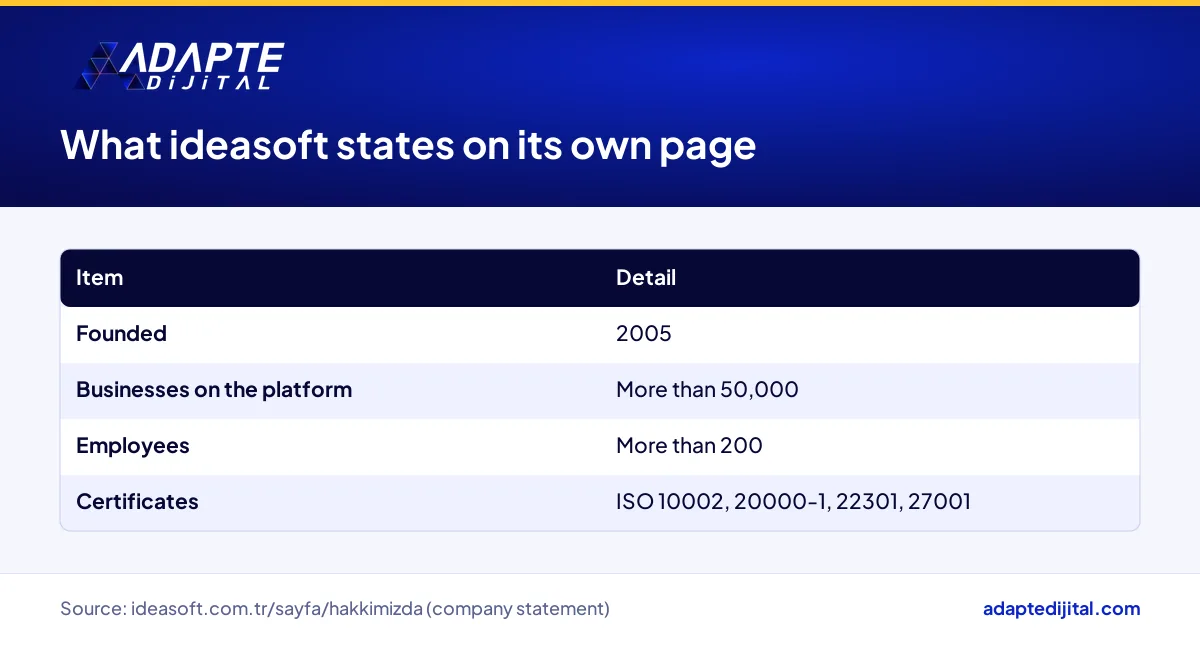
According to the company’s About Us page, ideasoft was founded in 2005, provides the platform for more than 50,000 e-commerce businesses and has more than 200 employees. The page also lists ISO 10002, ISO 20000-1, ISO 22301 and ISO 27001 certificates. These figures come from the company’s own statement, not from the news report.
The report quotes him on “understanding the customer correctly, interpreting the data correctly” (our translation). That phrase describes growth not as ad spend but as the ability to know the customer and measure what happens.
Think of a wedding. Marketing is the person who writes and sends out the invitations. The growth manager is that meticulous relative who writes the invitations, keeps the guest book at the door, notes who left dinner halfway through and changes the menu for the next wedding.
There is. Küçük’s title at Param Group was “Digital Marketing and Growth Director,” with both ideas side by side. At ideasoft his title is simply Growth Director, yet marketing still comes first in his remit. That suggests growth does not replace marketing; it absorbs it.
In everyday language: the fixes that help more of your site’s visitors finish their purchase. Shortening the checkout, showing delivery costs early in the basket and sharpening product photos are all part of it. If customers fill the basket and leave before paying, this is where the problem lies.
Open your recent orders and note who bought again and which products sell together rather than alone. This simple list is the first draft of your customer profile. You do not need an expensive tool.
Channel efficiency means looking at how many sales each channel brings in for the money and effort you put into it. Place ads, marketplaces, social media and search traffic side by side. The channel that eats money but never turns into baskets shows itself straight away.
Finding a new customer often costs more than bringing back an existing one. That is why Küçük’s approach measures the effect on loyalty as well as on sales. This is where CRM comes in: keeping customer details and getting back to people at the right time.
The company’s home page mentions more than 36 marketplace integrations. Measurement-led growth management may move towards presenting data from these channels to merchants in a clearer way. Small online sellers of anything from shoes and cosmetics to home textiles and spare parts could benefit.
Businesses that move stock only through discounts, or raise ad budgets without looking at data, will struggle. As the language of growth shifts to measurement, you hear “I sell a lot but I don’t make a profit” more often. For retailers who also count physical stores as growth, we look separately at the numbers behind opening a store in a new mall.
SEO is the work you do to appear in search engines without paying for each click. Seen through a growth lens, the question is not “what position am I in?” but “do visitors from search actually buy?” Effort spent on keywords that bring no sales lowers channel efficiency.
A marketplace brings customers, but their details often stay with the marketplace. On your own site, the customer lands in your CRM. A growth approach looks for ways to move marketplace customers to your own channel over time.
Channel name, spend, visitors, orders, average basket size and repeat customers. Six columns are enough. This table is the small-business version of the report on a growth director’s desk.
If the person running ads and the person tracking orders are different people, let them fill in the table together. For a retail example that builds marketing leadership through internal promotion, see Yataş Group’s three appointments. We set up channel measurement and conversion routines with businesses through our e-commerce consulting.
Now you know: growth is not a title that replaces marketing. It is a way of measuring customer acquisition, CRM and conversion as one chain. ideasoft is taking that view into its senior team, and you can start it with a one-page table.
Usually there is no need for a separate title. But someone has to read ad, site and customer data in the same table, and that job often falls to the owner.
No. Performance marketing mainly focuses on bringing customers in through ad channels. Growth also covers whether that customer completes the purchase and comes back.
No direct change has been announced. You can follow platform updates through the company’s official announcements and build your own growth table independently.