
Beymen Beauty Studio opens third store at Florentia Village, can beauty sell at an outlet?
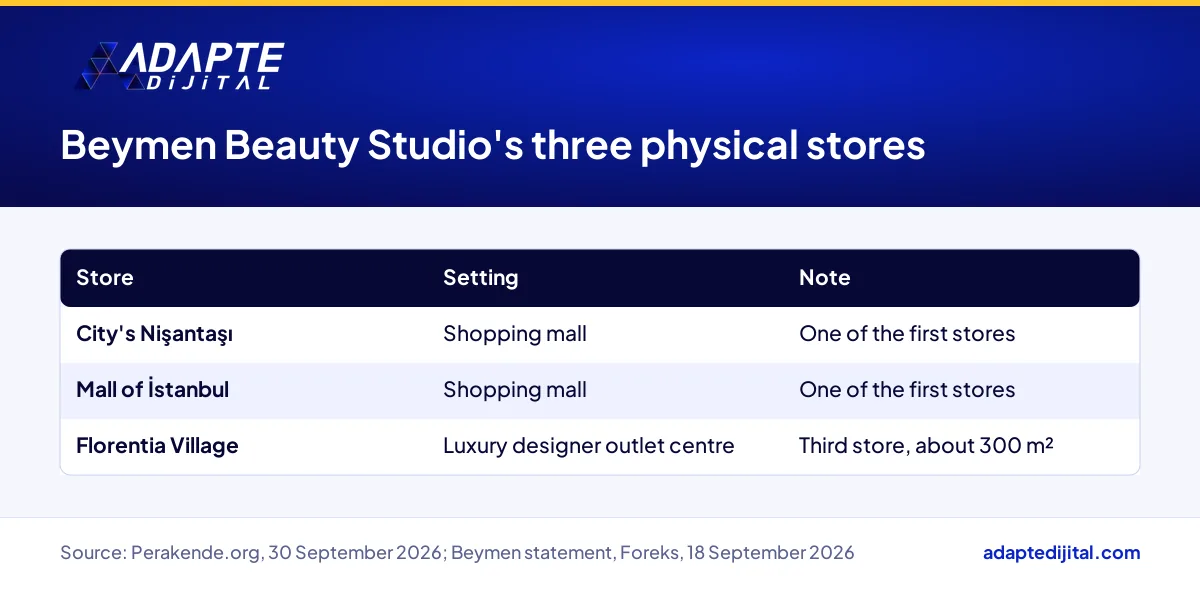
Beymen Beauty Studio has opened its third store at Florentia Village in Istanbul, a space of about 300 m² that brings skincare, fragrance, makeup and haircare under one roof, with Chambre 52 offered there for the first time (Perakende.org, 30 September 2026). The two earlier stores sit in City’s Nişantaşı and Mall of İstanbul. According to Beymen’s statement, the new store also has a flexible pop-up area.
Here’s what it means for you: luxury beauty now has shelf space in a designer outlet centre about 5 minutes from Istanbul Airport, not only in malls. If you run a cosmetics or personal care store, the question is simple. Do you go where shoppers already gather, or do you pull shoppers to your own door? For Istanbul cosmetics retail in autumn 2026, that call comes before the lease.
Why did Beymen Beauty Studio choose Florentia Village for its third store?
Three reasons stand out. First, scale: Florentia Village opened as a €250 million investment by Kalyon İnşaat and Italy’s RDM-Fingen Group, with 190 stores and 65,000 m² of leasable space in its first phase (Anadolu Ajansı, 20 September 2026). Second, the neighbour: Beymen’s own store of about 2,000 m² is in the same centre. Third, pace: the brand reached three physical stores within a year of launching.
Can Beymen Beauty Studio sell luxury beauty at an outlet centre?
Yes, as long as nobody reads the word outlet as price alone. Neither source says BBS discounts at Florentia Village; the visible plan rests on curation and experience. Beauty is an easy add-on to a luxury fashion shopper’s basket, and people buy it again.
What can a small business learn from Beymen Beauty Studio’s 300 m² store layout?
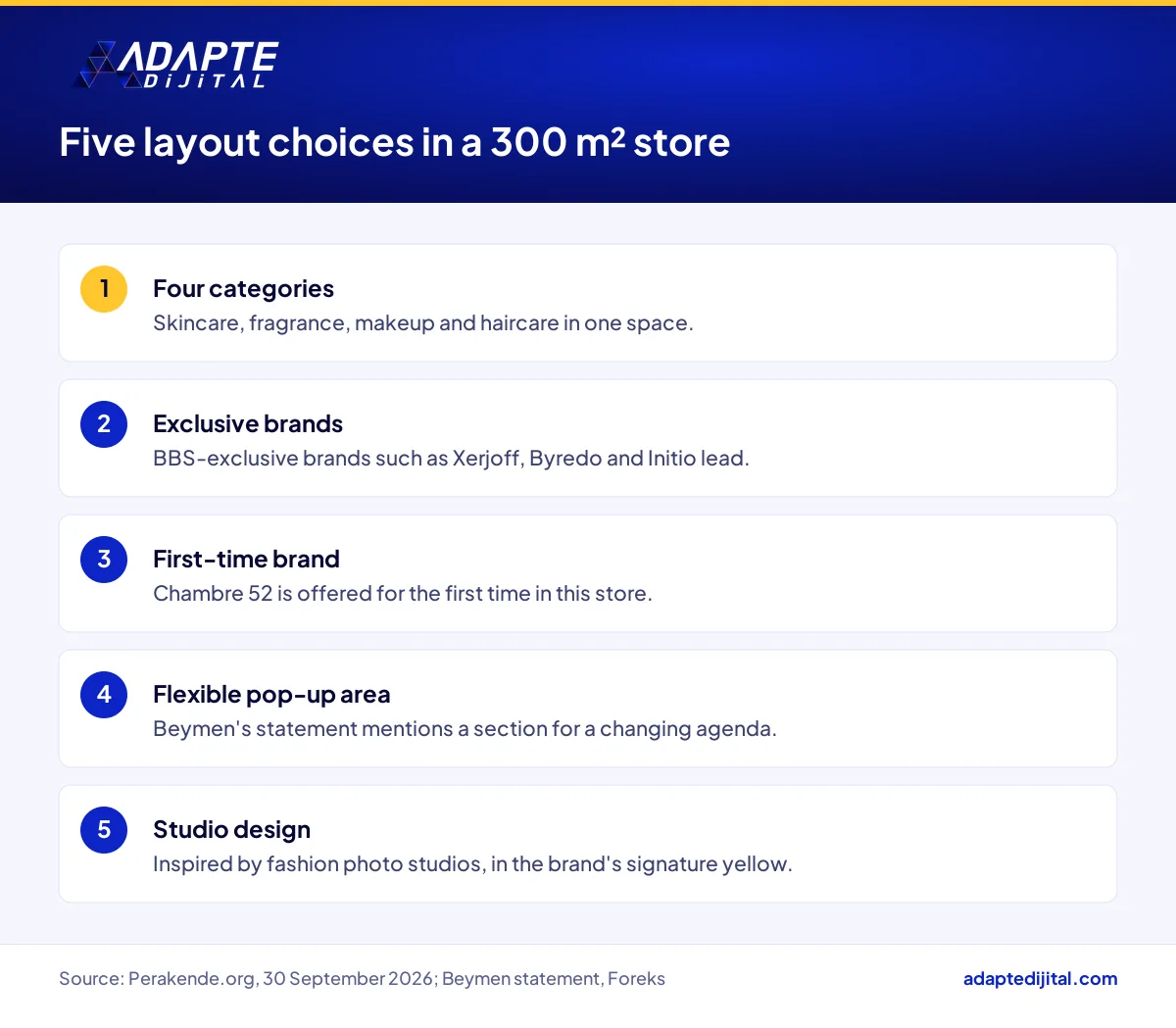
Four things: category range, store-exclusive brands, a first-time launch and flexible space. BBS fits skincare, fragrance, makeup and haircare into 300 m² and puts BBS-exclusive brands up front, such as Xerjoff, Parfums de Marly, Initio, Byredo and Westman Atelier. Chambre 52 appears here for the first time. The pop-up area gives the store an agenda that keeps changing.
Who wins and who struggles after Beymen Beauty Studio’s Florentia Village opening?
The winners are the fashion tenants in the centre and niche fragrance and skincare brands looking for visibility in Türkiye. The ones under pressure are independent perfumeries carrying the same niche brands and single-branch cosmetics shops that compete on price alone. Indirectly affected: mall managers and marketplace fragrance sellers.
What is the digital side of the Beymen Beauty Studio story for a cosmetics store?
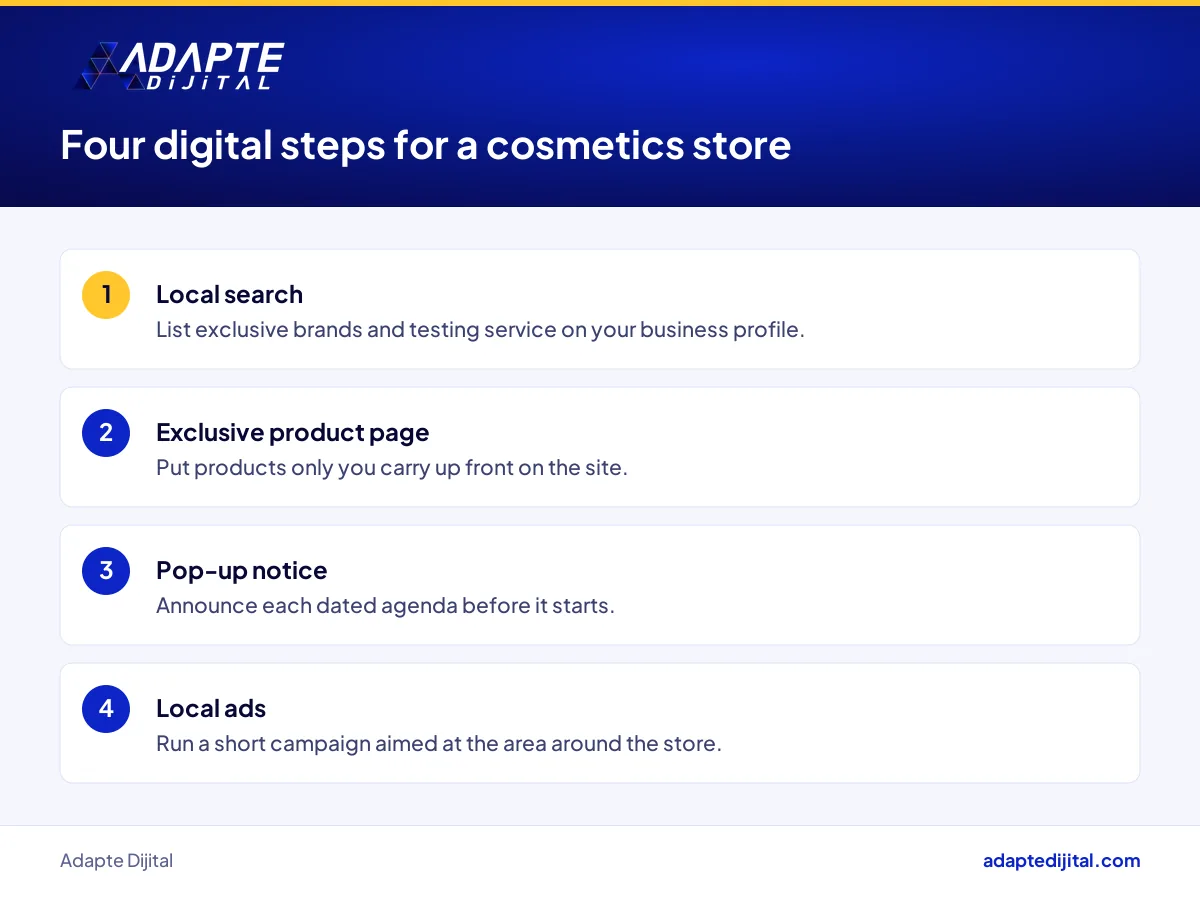
If the experience doesn’t start online, the store investment stays half finished. Alongside its physical stores, BBS runs an online channel at beymenbeautystudio.com. For a small cosmetics shop, the digital side comes down to three places: showing up in local search, putting store-exclusive products up front on the website, and announcing the pop-up agenda in advance.
What should a cosmetics store owner do this week after the Beymen Beauty Studio news?
Do four things. Scan your SKU list and mark the products only you carry, choose a pop-up corner in the store, and update your business profile with both. If a new centre has put a lease offer in front of you, ask in writing whether the visitor number on the table is a target or an actual figure.
Quick Summary
- Beymen Beauty Studio opened its third store, about 300 m², at Florentia Village (Perakende.org, 30 September 2026).
- The store covers skincare, fragrance, makeup and haircare, plus a flexible pop-up area according to Beymen’s statement.
- Chambre 52 is offered for the first time in this store, and brands such as Xerjoff and Byredo are BBS exclusives.
- Florentia Village opened with 190 stores and 65,000 m² in phase one; 15 million-plus visitors a year is a target (Anadolu Ajansı, 20 September 2026).
- For a small cosmetics shop, the lesson is to build a reason to visit from product, a pop-up calendar and local search together.
Short Glossary
- Designer outlet
- Designer outlet is the term used for a shopping destination that gathers stores of designer and luxury brands in a single centre.
- Pop-up area
- Pop-up area is the term used for a flexible section of a store set aside for a limited time for a new brand, product or event.
- Tenant mix
- Tenant mix is the term used for the spread of store categories and brands across a shopping centre.
Frequently Asked Questions
Next Step
If you want to look at your store’s reason to visit and its digital visibility together, fill in the consult your expert form and we’ll talk through a plan that fits the size of your store.
Sources: Perakende.org, 30 September 2026 · Beymen statement, Foreks, 18 September 2026 · Anadolu Ajansı, Foreks, 20 September 2026 · Beymen Beauty Studio corporate history
Updated: October 2026
Sık Sorulan Sorular
Beymen’s statement describes it as Türkiye’s first luxury designer outlet. The centre targets more than 15 million visitors a year, and that is a target, not a result. A second phase is planned to take the total area to 110,000 m².
According to Beymen Beauty Studio’s corporate history page, the brand started operating in October 2025. Today it has three physical stores and an online channel at beymenbeautystudio.com. Beymen itself opened its first store in Şişli, Istanbul, in 1971.
Look, there’s a system idea here. The parent brand draws visitors with a large store, and the beauty concept becomes the second stop for those same visitors in 300 m². Beymen’s store opened on 17 September; the sources do not say clearly whether Beauty Studio opened the same day. Either way, you bring the shopper in once and meet them at two tills.
Let’s say someone drives out on a Saturday with the afternoon set aside and no hurry. Testing a fragrance fits that rhythm.
A fragrance added to a fashion purchase is the classic move that lifts average basket value. Same logic as the small item next to your till.
There is a risk, and store design is how it gets managed. BBS takes its design cues from fashion photography studios, and the brand’s signature yellow is the main architectural element. The store presents itself as a studio, not as a department aisle.
A product you cannot find anywhere else is the product that gets people in the car. The store also carries Yves Saint Laurent, Gucci and Burberry, which shoppers find elsewhere too; the difference is the brands that live only here. At your scale, it starts with a handful of SKUs that nobody else in your area sells; we look at how a Turkish maker positions its own brand in Günsan’s push for a stronger export brand.
Offering Chambre 52 for the first time at BBS Florentia Village gives the store news value. For a small shop, the equivalent is becoming the first point of sale in town for a local maker or a new brand.
Give one corner to a rotating agenda instead of fixed stock. According to Beymen’s statement, BBS has a flexible area like this. In your store, a table, one wall or part of the window is enough; what matters is the calendar for that space. A pop-up corner without a calendar costs as much as stock gathering dust on the shelf.
Fashion tenants can win visitors who stay longer once beauty joins the tenant mix. Niche fragrance and skincare brands gain a new showcase in Türkiye.
Independent perfumeries in the area that carry the same niche brands feel it first. A shop where many customers test in store and then buy online hears “they walked in and walked out” more often. A shop racing on price alone falls behind on experience.
Mall managers have a reason to rethink where cosmetics sit in the tenant mix: a personal care and cosmetics category is being added to the AYD-Akademetre index in 2026 (BloombergHT). Marketplace fragrance sellers see products tested in store, then searched online. We also see how cosmetics retailers build ties with communities in Watsons and L’Oréal’s meeting with women producers in Kuşadası.
I’ve been looking at retail websites for years, and I’ll admit it: the first page I open is still the store locator, not the product page. Here’s what I keep seeing: the store feels like a studio, the website reads like a warehouse list. Inside: advisers, testers, good light; online: a name and a price.
Someone searching for a perfumery in your neighbourhood should see you on the map. Add your store-exclusive brands, your testing service and your pop-up calendar to your business profile. Photos should show the store and testing area, not single products.
A pop-up has a start date and an end date, so it hands you a ready reason to advertise. A short campaign aimed at the area around your store puts that dated agenda in front of the right people. We can’t send a scent through a screen yet, but we can send a reason to come in.
Pull the last three months of sales from your till and set aside the products nobody else in your area sells. Put them in the window, on the home page and on your profile. When the till isn’t ringing, the cause is often a difference nobody can see.
Pick two agendas for the next two months, say a new brand and a seasonal need. Give each a start and end date, and keep the corner for that agenda only on those dates. Let’s say the first one doesn’t land; the second date is already on the calendar, so the space never sits empty.
Let me ask you one thing: is the visitor number on the table a result or a target? Even Florentia Village’s figure of more than 15 million visitors a year is openly stated as a target. Work out sales per square metre from your own customer profile. This is not investment advice; talk to your accountant and legal adviser before you sign.
We are the team that plans the store and its digital visibility together through our digital marketing agency work. My call: beauty can sell at an outlet, as long as shoppers get a reason to go there.
It is worth considering if your customer profile matches the centre’s visitors and you can offer something exclusive. Base the decision on your own sales per square metre and customer profile, not on a target visitor number; this is not investment advice.
Neither the Perakende.org report nor Beymen’s statement says so. What the news highlights is the store-exclusive brands, the first-time offer of Chambre 52 and the flexible pop-up area.
No. A table, one wall or part of the window is enough; what matters is giving the space a calendar with start and end dates.