
Koçtaş opens 52,000-pallet Düzce hub, when should a retailer build its own warehouse?
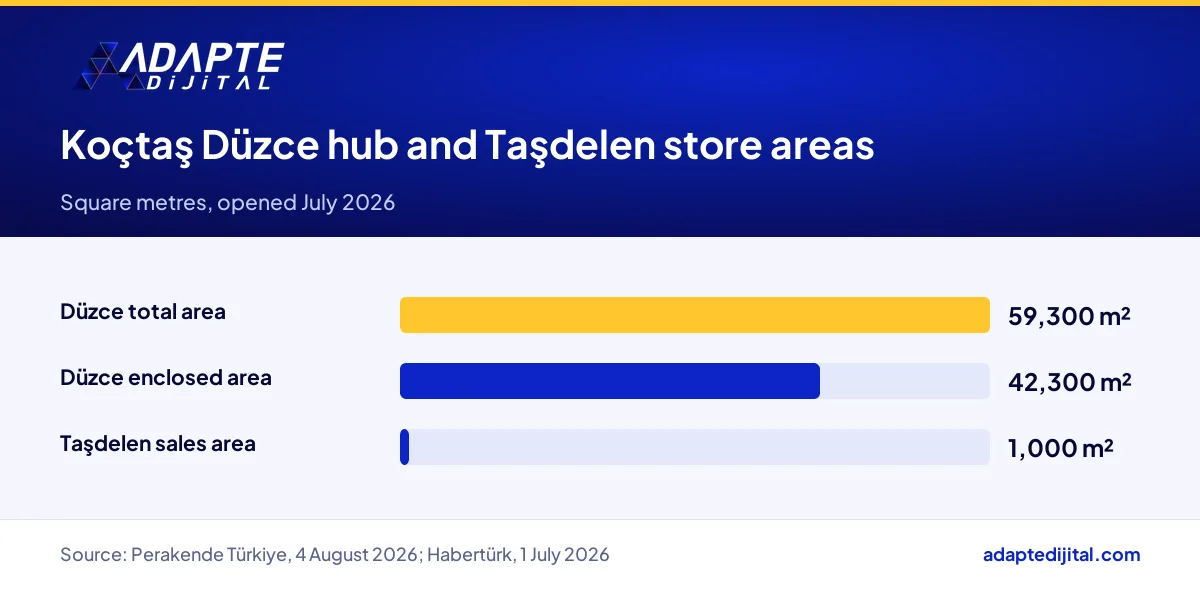
Koçtaş, one of Türkiye’s home improvement retail chains, opened a 52,000-pallet logistics hub in the Düzce Gümüşova Organised Industrial Zone and a new-format store with 1,000 m² of sales space in Taşdelen, Istanbul, on the same day (Perakende Türkiye, 4 August 2026; opening held in July 2026). The hub covers 59,300 m² in total, of which 42,300 m² is enclosed. It stocks 14,000 different products and handles operations for 160 vehicles a day.
What does this mean for you? With this hub, Koçtaş feeds both its stores and its digital channels from one place. If you run a growing retail or e-commerce business, the same question will land on your desk one day: when should you build your own warehouse, and how long should you stay with outsourced logistics?
What exactly does Koçtaş’s Düzce logistics hub do?
The hub receives supplier deliveries and distributes products to both physical stores and digital channels (Capital). In plain terms, it is a distribution centre: goods arrive, get sorted and head out again. Enclosed area means the storage space under the roof. The rest of the site is used for loading yards, vehicle lanes and parking.
When should a retailer like Koçtaş move to its own warehouse?
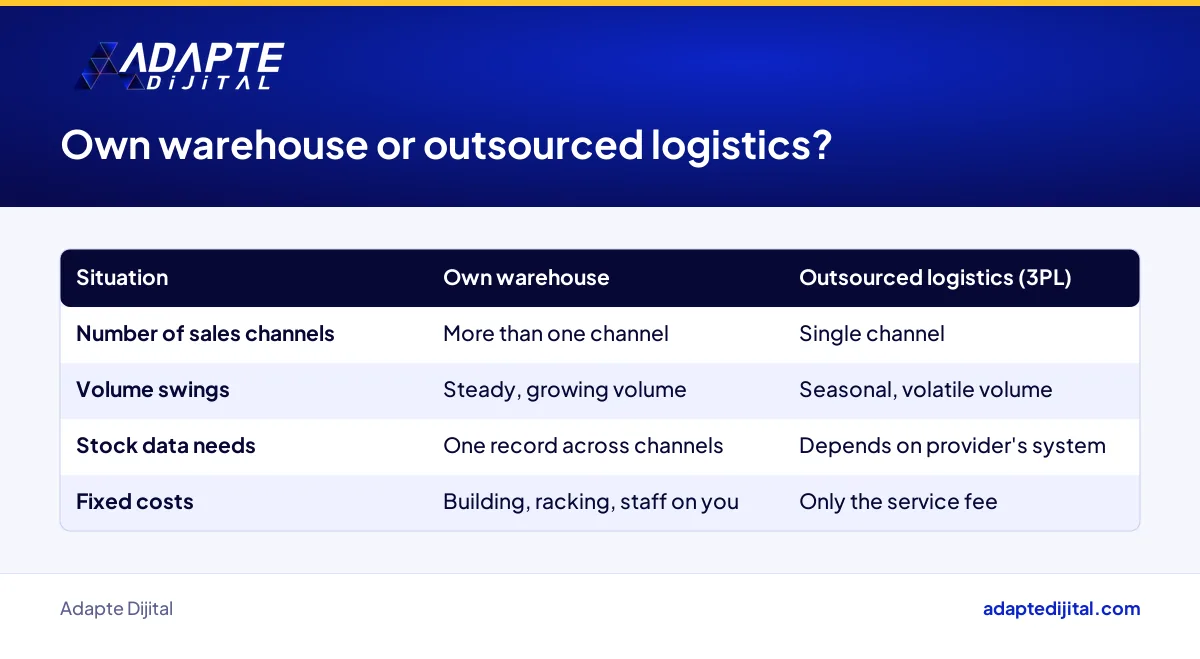
When three signs show up together: the same stock sells through more than one channel, the outsourced logistics bill grows every month, and stock data does not match across channels. One sign alone is not enough. In the Koçtaş case, the deciding factor is feeding stores and online sales from one hub. If your business has not crossed that line, a rented warehouse or outsourced logistics is still the more flexible choice.
Who does Koçtaş’s single-hub distribution model affect, and how?
It affects home improvement suppliers most, along with haulage firms in the Marmara region and regional DIY stores that sell to the same customers as Koçtaş. In Türkiye in autumn 2026, suppliers simplify their planning by sending deliveries to one address. Regional competitors, meanwhile, face a tougher comparison on delivery speed.
How does a warehouse decision like Koçtaş’s change e-commerce orders and digital channels?
Directly, because the “in stock” label on a website depends on the real count in the warehouse. Koçtaş.com.tr had earlier moved to a marketplace model (Ekonomist), and the new hub now distributes to digital channels from one point. When stock data lives in one place, the website, the ads and the store all see the same number.
How does the new-format Koçtaş store in Taşdelen work with the warehouse?
The store has 1,000 m² of sales space and sits in the Koçtaş head office building in Çekmeköy. Inside are digital kiosks plus decoration and bathroom display areas (Capital). On limited floor space, not every product can sit on a shelf. In general, a kiosk is how a customer orders an item that is not on display.
What should a growing retailer do this week about a warehouse decision?
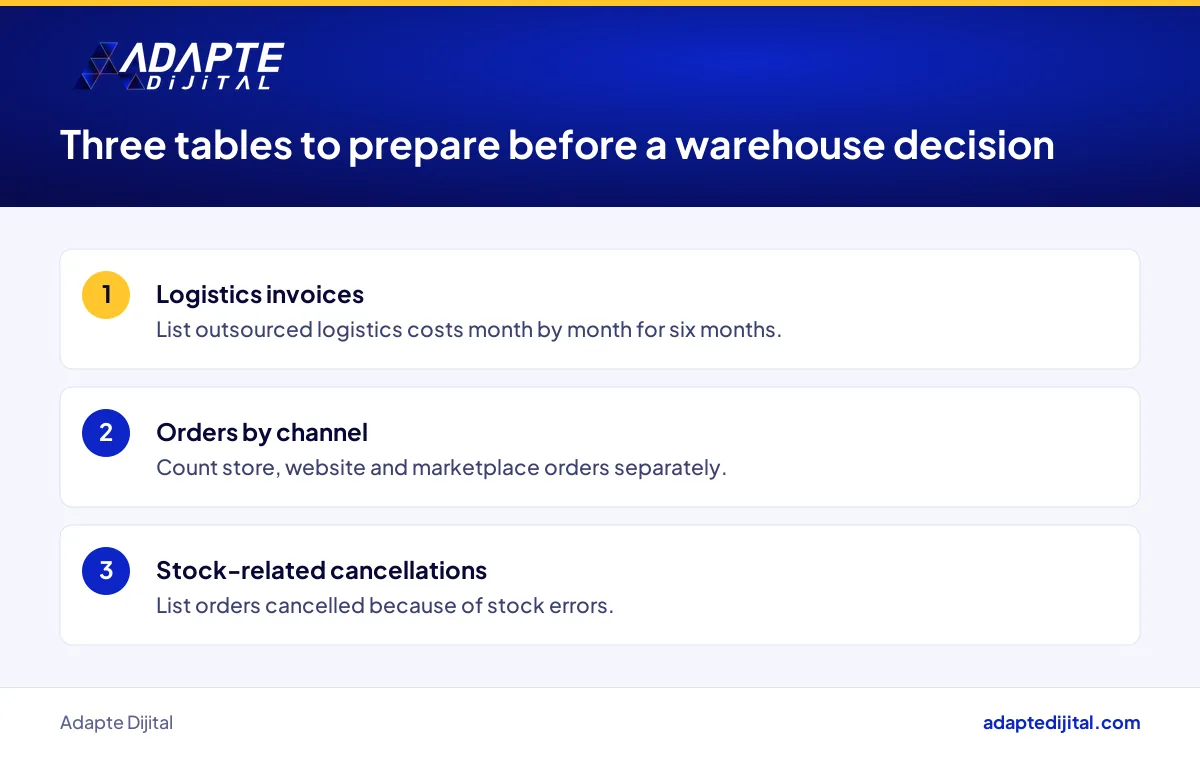
This week, put three things side by side: the last six months of outsourced logistics invoices, order counts by channel, and orders cancelled because of stock errors. These three tables show whether you have crossed the threshold. We do this work ourselves in e-commerce consulting, setting up stock, website and marketplace flows in one system.
Quick Summary
- Koçtaş’s Düzce hub has a 52,000-pallet capacity and stocks 14,000 different products (Perakende Türkiye, 4 August 2026).
- The hub covers 59,300 m² in total with 42,300 m² enclosed and runs operations for 160 vehicles a day (Perakende Türkiye; Habertürk).
- The hub distributes to physical stores and digital channels from a single point (Capital).
- The new-format Taşdelen store has 1,000 m² of sales space and digital kiosks (Perakende Türkiye; Capital).
- The threshold for your own warehouse is when the same stock starts serving more than one channel.
Short Glossary
- Pallet capacity
- Pallet capacity is the measure used to show how many loaded pallets a warehouse can hold at the same time.
- 3PL
- 3PL is the abbreviation used to describe handing storage and shipping to an outside logistics company.
- Omnichannel distribution
- Omnichannel distribution is the method used to fill store and online orders from the same stock.
Frequently Asked Questions
Next Step
If you would like to see together whether you have reached the point of needing your own warehouse, fill in the consult your expert form and we will talk through the first step based on your channels and stock.
Sources: Perakende Türkiye, 4 August 2026 · Habertürk, 1 July 2026 · Capital · Dünya (2024 groundbreaking) · Koçtaş press coverage page (linked in the text). No Koçtaş press release for this opening was found.
Updated: October 2026
Sık Sorulan Sorular
Here’s something most people don’t know: the foundation stone was laid on 27 September 2024, and the opening was first announced for July 2025 (Dünya). The actual opening came in July 2026, roughly a year later than planned. Delays are normal on large warehouse projects, so build that buffer into your own plan.
A pallet is the wooden or plastic base that goods are stacked on and moved by forklift. Pallet capacity shows how many loaded pallets the warehouse can hold at once. And 14,000 different products means 14,000 SKUs, each one a separate item that needs its own shelf address.
The 500 jobs and roughly 200 vehicles a day reported at the 2024 groundbreaking were planning-stage figures. Opening reports say 160 vehicles a day. The investment amount and headcount were not disclosed at the opening.
If your pantry is too small, you run to the shop every evening. If it is too big, forgotten jars pile up on the back shelf. A warehouse works the same way: when capacity runs ahead of sales, stock gathers dust and cash gets tied up.
Outsourced logistics, often called 3PL, means handing storage and shipping to another company. If your volume swings with the seasons and you sell through a single channel, avoiding fixed costs makes sense. Get your own quotes from several providers to compare costs.
Running a rented warehouse with your own team, or setting up a small regional transfer point, can be a stepping stone. You learn inventory management without locking capital into a building.
Bulk delivery to the hub replaces store-by-store shipping, and processes such as booked unloading slots and barcode compliance come to the front. A supplier whose labels and pallets do not meet the standard waits at the gate.
Customers now compare the delivery date on their online order with what the big player offers. At a shop that cannot give a clear delivery time, the customer walks out the door.
A separate customs and logistics centre project is also on the agenda in Düzce (ekonomim). As the area grows into a logistics base, demand can build for local firms offering storage, haulage and maintenance.
Advertising a product you do not have is money thrown away. If your product feed matches the warehouse count, sold-out items drop out of your ads automatically and your conversion rate holds up.
If you sell on several marketplaces, the most common problem is selling the same unit in two places at once. One warehouse and one stock record reduce that overlap, so cancellations do not drag down your seller rating.
Customers search for “DIY store near me” and want to see whether the item is on the shelf. A retailer that shows store stock on its website has a better chance of turning that search into a sale at the till.
A kiosk is a touchscreen ordering point inside the store. A store with little shelf space can, in principle, call products up from the warehouse instead of holding them. That way sales per square metre can rise without stock piling up in the store.
No. The format’s name and how many stores it will reach were not disclosed. For now, it is safer to read it as a test store.
Monthly logistics cost, shipping cost per order and stock turnover are enough to start. If these are rising and your channel count is growing, start pricing the own-warehouse option.
If you have a dealer or branch network, the warehouse becomes part of your service standard too; Bosch’s dealer standards example covers that side. For the distribution question of a brand ramping up production fast, see Alfemo’s dealer growth.
Now you know: the warehouse decision is made by how many channels your stock serves, not by the pallet count. Koçtaş’s corporate press coverage page is a starting point for following the company’s investments. Our retail page, where we interpret the retail agenda for you, keeps similar decisions in one place.
Usually not. If you sell through one channel and your volume swings, outsourced logistics is more flexible. Your own warehouse comes into play when the same stock starts selling through more than one channel.
The investment amount and headcount were not disclosed in the opening reports. The figures in the 2024 groundbreaking reports belong to the planning stage.
Get separate quotes for rent or land, racking, forklifts, inventory software and staff. This is for information only and is not investment advice; make the decision with your own financial adviser.