
Pluxee Türkiye earns ISO 14001 certification, when should an SME adopt an EMS?
Pluxee Türkiye has earned ISO 14001 Environmental Management System certification, bringing the identification of environmental impacts, target setting, performance monitoring and improvement under one system (Perakende.org, 21 September 2026). In Türkiye, the headline topics are the shift from paper vouchers to digital employee benefits, energy efficiency in the office and the transformation of the vehicle fleet.
Here’s what it means for you: environmental certification is no longer only a factory topic, as an employee benefits and payments company is taking the same route. And here’s something most people don’t know: according to ISO’s own page, the 2015 version of the standard was withdrawn on 15 April 2026 and replaced by ISO 14001:2026. For SMEs in Türkiye selling to corporate customers in autumn 2026, the question gets sharper: when should you adopt an environmental management system (EMS)?
What did Pluxee Türkiye certify with ISO 14001?
Pluxee Türkiye certified that it handles its environmental impacts inside a management system. According to the news, impacts are identified, tied to targets, monitored and improved. The certification body, the offices and activities covered and the validity period are not given in the news.
What does an ISO 14001 environmental management system ask of an SME?
ISO 14001 asks a business to know its environmental impact, set targets for it, measure progress and fix what falls short. According to ISO, the standard applies to organisations of any size and sector. Certification means an independent auditor has seen that this cycle does not stay on paper.
When should an SME adopt an environmental management system like Pluxee Türkiye’s?
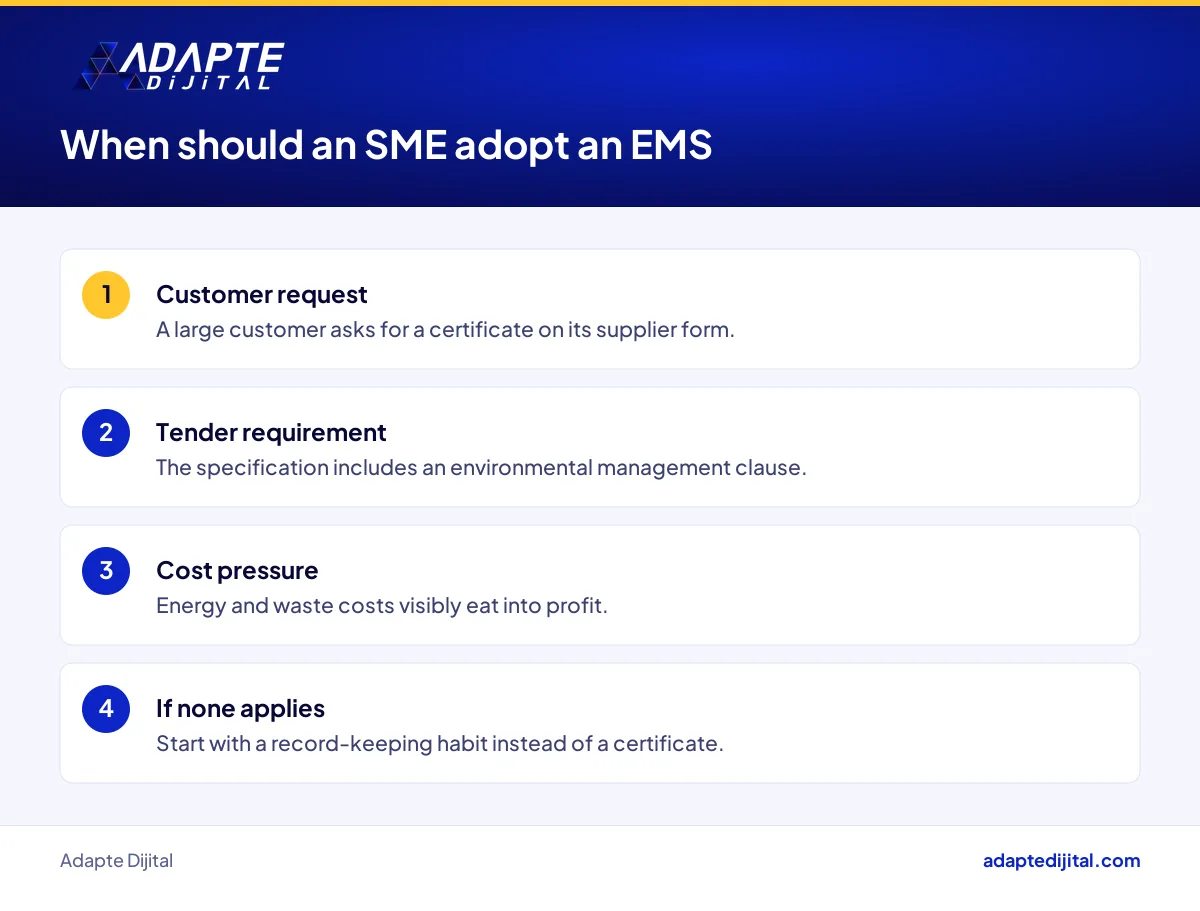
Adopt one when any of three signs appears: a large customer asks for an environmental certificate on its supplier form, a tender specification includes an environmental management clause, or energy and waste costs visibly eat into profit. If none of these applies, start with the habit of keeping records. Certification comes once the routine is in place.
Which businesses does Pluxee Türkiye’s ISO 14001 certificate affect, and how?
The direct effect lands on Pluxee Türkiye’s corporate clients, who now work with a certified benefits provider when they assess suppliers. The indirect effect reaches the member merchants that accept Pluxee and the SMEs selling to large companies. On the corporate side, collecting environmental certificates and ratings may travel down the supply chain as similar requests.
How does environmental management like Pluxee Türkiye’s show up on an SME’s website and supplier portals?
Environmental management shows up digitally in three places: the certificate and policy page on your website, the supplier portals of corporate buyers and your brand information in search results. If you hold a certificate, publish it in a verifiable way; if you do not, avoid inflated green claims. Consistency in your digital shop window works like a trust score in supplier assessments.
What should an SME owner do this week about an environmental certificate like Pluxee Türkiye’s?
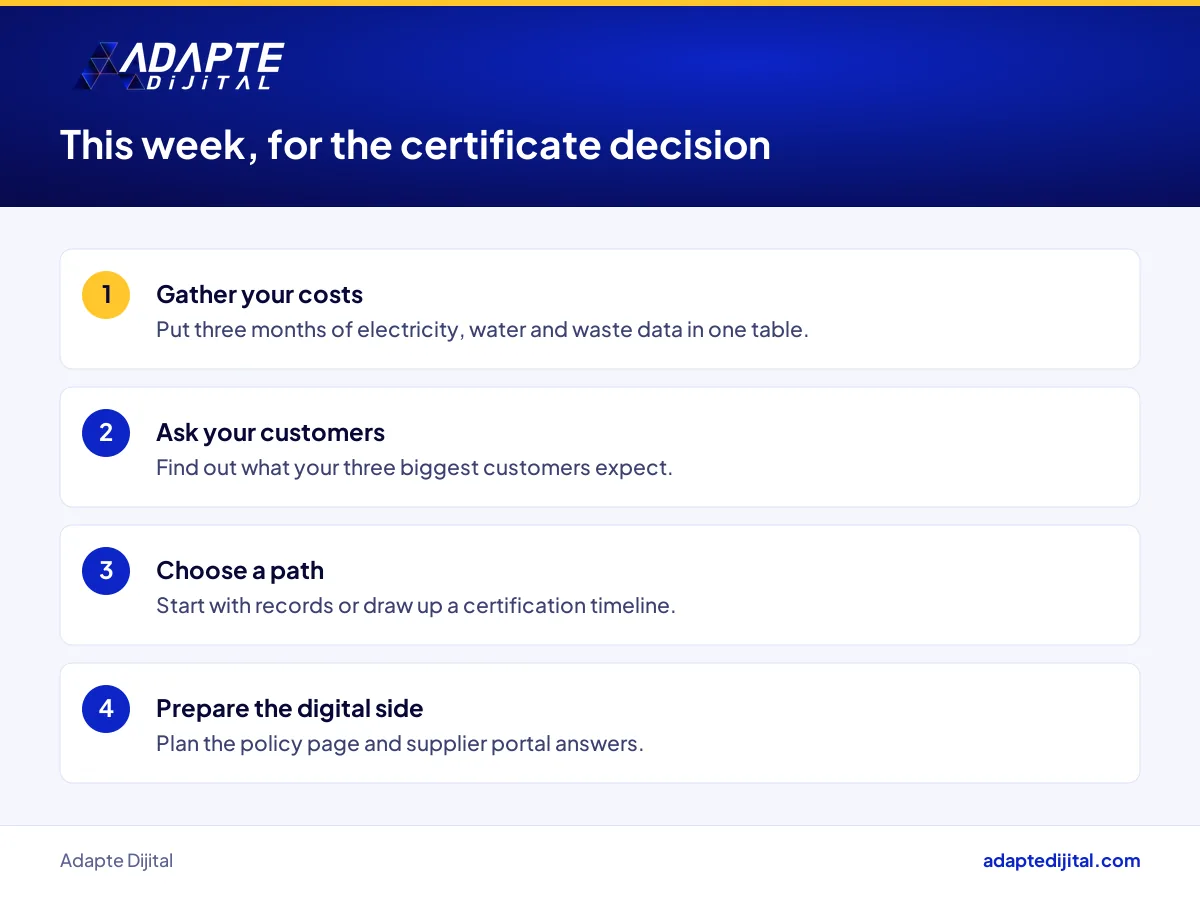
This week, gather the last three months of electricity, water and waste data in one table. Ask your three biggest customers whether they expect an environmental certificate or a supplier questionnaire. Based on the answers, pick one of two paths: start with a record-keeping routine, or draw up a certification timeline.
Quick Summary
- Pluxee Türkiye has earned ISO 14001 Environmental Management System certification (Perakende.org, 21 September 2026).
- Pluxee Group commits to a 90% cut in Scope 1-2-3 emissions by FY2035 against an FY2017 baseline (Pluxee Group).
- The EUR 8 billion target for SME member merchants is a group target, not a Türkiye target (Pluxee Group).
- According to ISO, the 2015 version was withdrawn on 15 April 2026 and replaced by ISO 14001:2026.
- For an SME, customer requests, tender terms and energy and waste costs decide when to switch.
Short Glossary
- ISO 14001
- ISO 14001 is the name of the international standard used to set the requirements for an organisation’s environmental management system.
- Scope 1-2-3 emissions
- Scope 1-2-3 emissions is the classification used to separate a company’s direct greenhouse gas emissions, those from purchased energy and those across its value chain.
- SBTi
- SBTi is the abbreviation used for the initiative that validates whether companies’ emissions reduction targets are science-based.
Frequently Asked Questions
Next Step
To present your environmental certificate and supplier information correctly across your digital channels, fill in the consult your expert form and we will plan it together.
Sources: Perakende.org, 21 September 2026 · Pluxee Group, Our Impact · ISO, ISO 14001 standard page
Updated: October 2026
Sık Sorulan Sorular
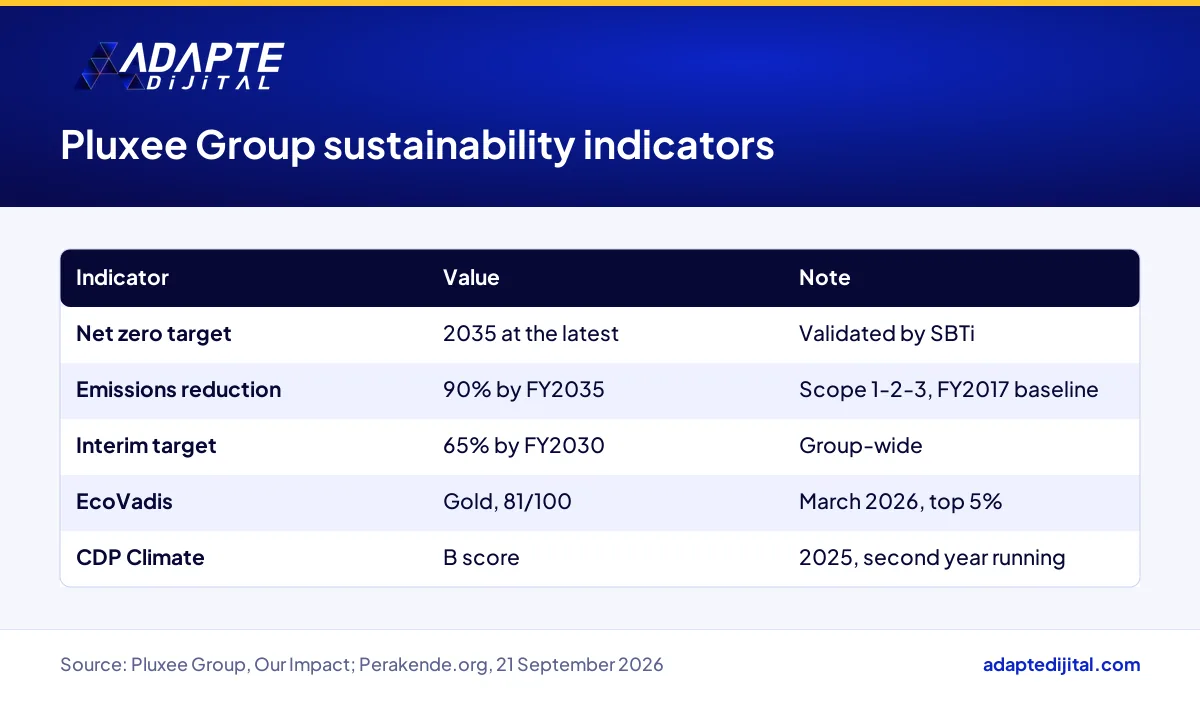
According to Pluxee Group, its target of net zero by 2035 at the latest has been validated by SBTi. The group commits to a 90% cut in absolute Scope 1-2-3 emissions by FY2035 against an FY2017 baseline, with an interim cut of 65% by FY2030. These targets belong to the whole group; no Türkiye-specific emissions figure has been published.
In March 2026 the group reached EcoVadis Gold with a score of 81/100, placing it in the top 5%. In CDP Climate 2025 it received a B score for the second year running. Think of EcoVadis as a sustainability report card for suppliers, and CDP as a rating of how fully a company discloses its climate data.
This figure belongs to Pluxee Group, not to Türkiye. The group aims to raise the business volume it brings to its SME member merchants to EUR 8 billion in fiscal 2026; in fiscal 2025 that volume was EUR 7 billion. Pluxee is also a participant in the UN Global Compact.
An environmental management system is the written routine a business uses to record and improve items such as electricity, water, waste and packaging. Here’s a comparison: getting certified is like joining a gym, and carrying the card in your wallet builds no muscle. The real work is going every month, which means keeping the records and checking the targets.
In a shop, impact usually starts with energy, packaging and waste. Window lighting, chiller cabinets, shipping boxes and receipt paper at the till make the first list. Knowing these items brings hidden costs into view, even if you never think about certification.
Read the detailed changes in ISO 14001:2026 from the official source; this is not legal or financial advice. The practical point: a business preparing for certification should ask its consultant and certification body which version they are working to. The news does not say which version Pluxee was certified against.
You cannot go into an audit before the system is running, so a business caught unprepared by the request gets squeezed. That is why starting your record-keeping before anyone asks keeps the order from slipping away.
Yes. Tracking energy bills monthly, separating waste and cutting packaging need no certificate. These steps also prepare your first evidence if you move to certification later.
Corporate employers that publish sustainability reports get a certified provider when choosing a benefits supplier. For member merchants, the shift from paper vouchers to digital benefits is a topic that moves payment habits at the till to digital. Providers of energy efficiency services for offices and fleets also benefit from this agenda.
Small businesses that sell packaging, cleaning, catering or logistics to corporate clients without keeping environmental records may struggle. When the order slips away, the till stops turning, and that is the most concrete face of having no certificate.
Tenants in an AVM, the Turkish term for a shopping mall, franchise networks and fleet leasing companies feel it indirectly. Landlords and large buyers look at how the other side runs its business; we explain how tenants are chosen through MallMark’s Park Bulvar mall leasing in Baku. Our piece on the Allianz Ailem campaign, in the same category, looks at how finance brands appear to customers.
State the scope of the certificate, the certification body and the validity period clearly. The fact that the Pluxee news leaves out these three details shows they are the first questions on a reader’s mind. Small, measurable targets are more convincing than general slogans.
Corporate buyers ask about energy, waste and policy through their portals. If the bills and records behind your answers sit in one folder, the form takes an afternoon. You can see a group-scale example of these report cards on Pluxee Group’s impact page.
The energy bill is the easiest start, because you already have it. Writing monthly consumption into a table brings a hidden cost into view, the way you finally spot stock gathering dust on the shelf. Packaging and waste records come next.
Plan the policy page on your website, the certificate section and your supplier portal answers together. We handle this digital preparation with businesses as part of our digital consulting service.
Now you know this: ISO 14001 is a logbook routine, the certificate is that logbook after an audit, and your customers and your costs decide when to make the switch. You can follow how similar developments affect businesses on our retail page, where we interpret the Turkish retail agenda for you.
The sources behind this piece contain no general obligation; where a request comes, it may come through customers and the supply chain. Verify your own situation with the official source and a certification body.
No, it is a group-wide target of Pluxee Group. The news gives no business volume figure for Türkiye.
The news gives no version. The certification body, scope and validity period have not been disclosed either.