
HC Brings an 11-Formula Shampoo Range to Watsons: What Formula Segmentation Adds
HC has launched a new shampoo range of 11 formulas, each split by hair type and need, at Watsons, the health and beauty chain (Perakende.org, 6 October 2026). The range is on sale in Watsons stores, in the Watsons mobile app and on watsons.com.tr. The report credits the brand with 19 years of hair care experience.
What it means for you: 11 answers to 11 different questions, instead of one “shampoo”, shorten the time a shopper needs to decide. If you own a personal care brand, it shows the gains and costs of splitting a range by hair or skin type.
Which 11 formulas are in HC’s new shampoo range at Watsons?
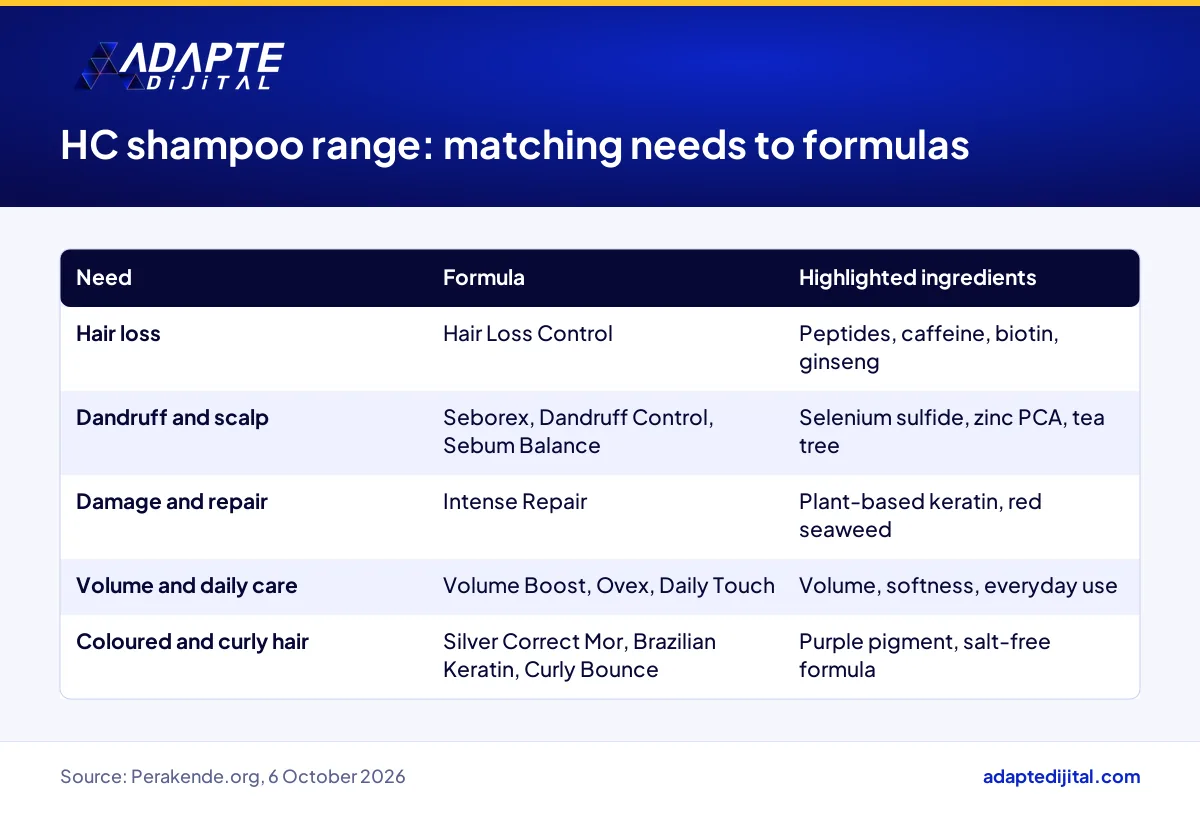
The range comes with eleven products: Hair Loss Control, Ovex, Seborex, Intense Repair, Daily Touch, Sebum Balance, Dandruff Control, Volume Boost, Brazilian Keratin, Silver Correct Mor and Curly Bounce. Each name prints the shopper’s question right on the bottle.
Why does formula segmentation work on a shampoo shelf?
Because nobody walks up to the shelf to buy “shampoo”; people come to solve a problem. Formula segmentation writes that problem into the product name. Done well, the shelf explains itself and the shopper does not walk out empty-handed.
What does selling the range through Watsons give the HC brand?
It gives three things: a ready store network, a ready digital shop window and ready customer traffic. The report does not say whether the range is exclusive to Watsons, so “a multichannel start with one chain” is a fairer reading than “an exclusive launch”.
Who does an 11-formula shampoo range affect in cosmetics retail, and how?
Winners, strugglers and the indirectly affected differ. In Türkiye’s personal care retail in autumn 2026, shelf space is limited and the number of brands is high. When a multi-formula range takes its place, every other product trying to fit into the same metre of shelf has to move.
How does HC-style formula segmentation translate to a cosmetics e-commerce site and search?
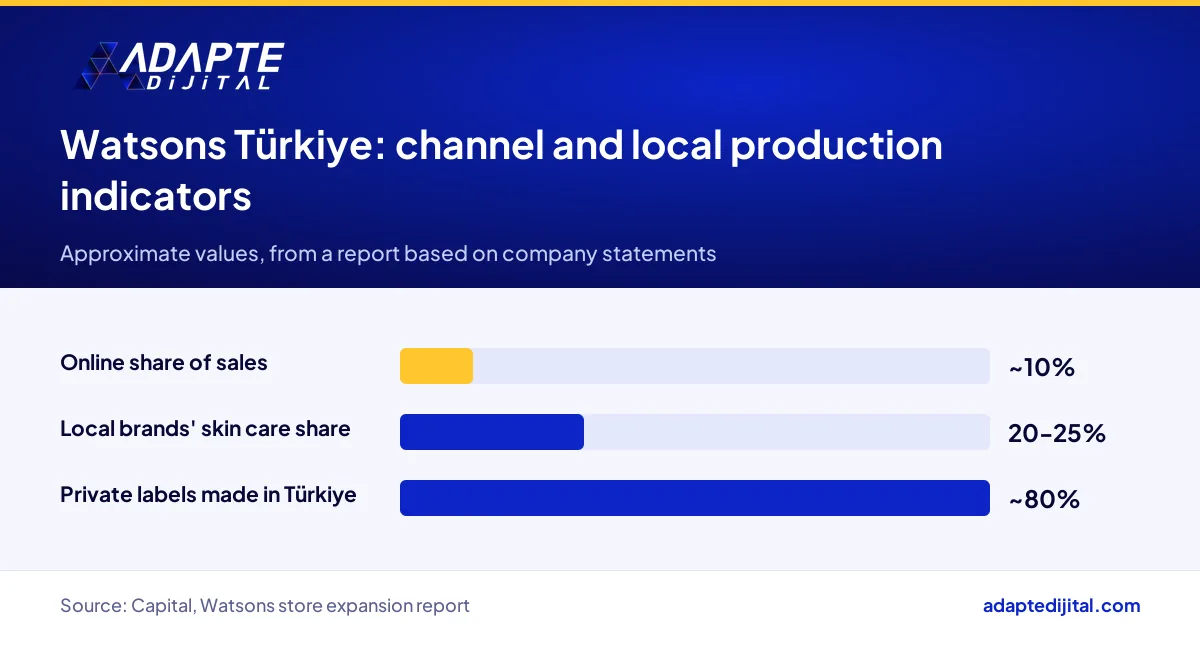
A screen has no shelf, it has filters. Online, the hair type filter, category page and product description do the job the name does in store. Capital reports that online sales make up about 10 percent of Watsons’ sales; it looks small, but the decision often starts on a screen.
What should a cosmetics brand owner do this week after HC’s launch?
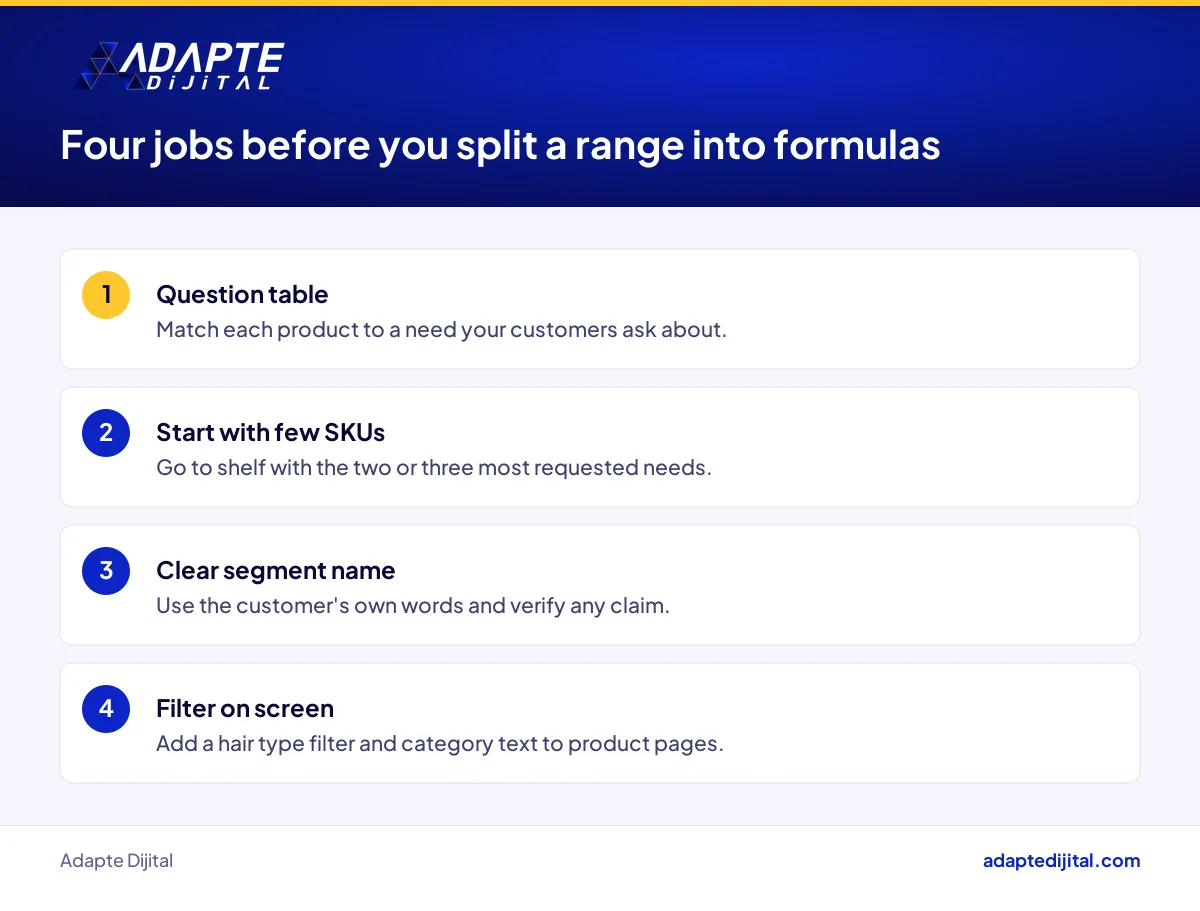
Lay out your range on a table and match each product to a customer question. Which product answers which question, which question has no answer, and which product answers a question nobody asks? The table takes an afternoon and clarifies the next steps.
Quick Summary
- HC has launched an 11-formula shampoo range at Watsons (Perakende.org, 6 October 2026).
- The range sells through Watsons stores, the mobile app and watsons.com.tr.
- The formulas are split by needs such as hair loss, dandruff, repair, volume, coloured and curly hair.
- A.S. Watson Group runs more than 17,000 stores across 31 markets (aswatson.com).
- For a small brand, segmentation starts with a few clear formulas and a filter on screen.
Short Glossary
- Formula segmentation
- Formula segmentation is the product strategy used to make the same product in separate recipes for different needs and sell each under its own name.
- SKU
- SKU is the stock-keeping unit used to track each product variant separately in inventory.
- Category management
- Category management is the retail method used to arrange a product group on the shelf and on screen around customer needs.
Frequently Asked Questions
Next Step
If you want to split your range by customer need and carry it onto the shelf, your product pages and search, fill in the consult your expert form and we will look at it together for your brand.
Sources: Perakende.org, 6 October 2026 · A.S. Watson Group corporate website · Capital, report on Watsons store expansion
Updated: October 2026
Sık Sorulan Sorular
Hair Loss Control highlights peptides, caffeine, biotin and ginseng. Seborex is presented with selenium sulfide, piroctone olamine, zinc PCA, tea tree and juniper oil. Dandruff Control and Sebum Balance are the other two products that focus on the scalp.
Intense Repair comes with plant-based keratin, an amino acid cocktail and red seaweed. Volume Boost targets volume, Ovex softness and shine, and Daily Touch everyday use. The report gives no clinical test data for the formulas, so any claim about results stays with the brand.
Silver Correct Mor is introduced as a purple-pigmented formula (“mor” is Turkish for purple). Brazilian Keratin stands apart with a salt-free formula, and Curly Bounce, as the name says, speaks to curly hair. These three serve small, loyal groups who often get lost on a general shelf.
It means making the same product in separate recipes for different needs and giving each recipe its own name. Think of a shoe shop: nobody asks for “a pair of shoes”, they give their size. Segmentation prints hair’s size on the bottle.
On a personal care shelf, bottles look alike. When the name says “hair loss”, “dandruff” or “curly”, the shopper does not have to turn the pack over and read the ingredient list. In the words of the report, the aim is to help people choose products suited to their “hair type and needs” (translated from Turkish).
No. Each formula is a separate SKU, which means a separate stock-keeping code. A weak seller just sits on the shelf gathering dust and takes space from products that move. That is why a chain’s category manager weighs every new line against sales per square metre.
Watsons belongs to A.S. Watson Group, part of CK Hutchison. The group runs more than 17,000 stores and 12 retail brands across 31 markets. Its site cites 177 million loyalty members.
Here’s something most people don’t know. According to a report in Capital, a Turkish business magazine, Watsons Türkiye opened its 500th store at Galataport in Istanbul, while the whole sector counts roughly 2,000 stores. These figures date from that report, so check the chain’s own announcements for today’s picture.
Shoppers who already know the chain try new formulas first, and card data shows which hair need sells in which store. We look at this logic more closely in our piece on Rossmann’s 16th anniversary draw and its loyalty card.
Category management gets easier: the shelf is arranged by need, and shoppers do not get lost while browsing. Basket size can grow, as one product for the scalp and another for the ends feels natural.
A general-purpose shampoo does not answer the question “is this right for my hair?”. With 11 named formulas next to it, a shopper may simply skip it. Capital reports that about 80 percent of Watsons’ private label products are made in Türkiye, so the door is far from closed for local manufacturers.
Shoppers used to “shampoo by hair type” at a chain expect the same split on their street. Salons have to explain more often which formula they recommend.
On a page of forty shampoos, visitors scan three and leave. Filters such as “oily scalp”, “coloured hair” or “curly” cut the list down to five products. If visitors cannot find what they want, the basket stays empty and the till stays quiet.
People do not type product codes into Google, they type their problem: “shampoo for hair loss”, “shampoo for dandruff”. A range name can be in English, as HC’s are, but category titles should use the shopper’s own words.
If the images of 11 products look alike on a marketplace, shoppers get confused. The first image of each product should show the need clearly, and the first line of the description should say which hair it is for.
HC arrives with 11 formulas, but the report places 19 years of experience behind them. For a new brand, starting with the two or three most requested needs keeps stock and shelf costs under control. As sales data comes in, you add new formulas.
The name should state the customer’s problem at a glance. “Anti hair loss” is clear, while an invented brand word needs explaining. Names that imply an effect fall under cosmetics regulation. Verify with the official source; this is not legal or financial advice.
Add a need-based filter to your product pages, rewrite your category titles in search language and draft your shelf labels. You can find the pre-launch preparation step by step in our piece on Çamlıca Enerji’s road to the shelf. On brand architecture and segment naming, we do this work with brands through our brand consultancy service.
Now you know: formula segmentation means writing the customer’s question into the product name, every formula is its own stock burden, and on a screen the filter does the job the name does on the shelf. For the rest of the agenda, see our retail page, where we interpret retail news for you.
According to the report, the range went on sale in Watsons stores, the Watsons mobile app and watsons.com.tr. The report does not say whether it will reach other channels.
There is no fixed number. Starting with the two or three needs your customers ask about most, then expanding based on sales data, keeps stock and shelf costs under control.
A filter helps visitors reach the product they want in fewer clicks. As the product list gets shorter, the decision gets easier and visitors are less likely to leave the site empty-handed.