
Building a Hair Care Brand: Keratin, Serum or Shampoo — Where Do You Start?
Hair care is one of the most crowded and most quickly entered areas within cosmetics: plenty of contract manufacturers, reasonable minimum quantities, fast samples. The founder’s first fork sits right there: start with a shampoo, a serum or a treatment mask?
That decision matters more than it looks, because each product type corresponds to a different buying behaviour, a different price perception and a different repeat-purchase rhythm.
This guide covers the reality of a hair care brand: the first product choice, formula and contract manufacturing, notification and claim rules, the salon channel, and the first 90 days’ output. Before moving into the cosmetics set, this category has decisions of its own.
The First Product Decision: Three Routes
Which product you start with decides your audience, your price and your competition together.
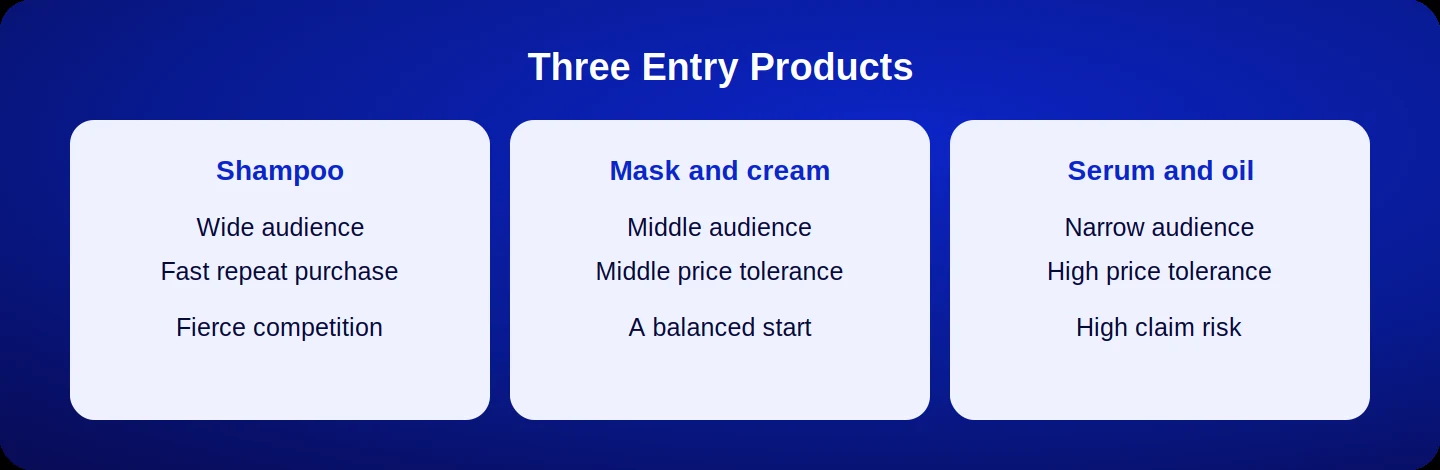
Inside the routes:
Formula and Contract Manufacturing Reality
Production is accessible here; the real issue is who owns the formula. Four headings:
Four headings:
Notification, Labelling and the Claim Line
Cosmetic regulation is this category’s entry condition. Four headings:
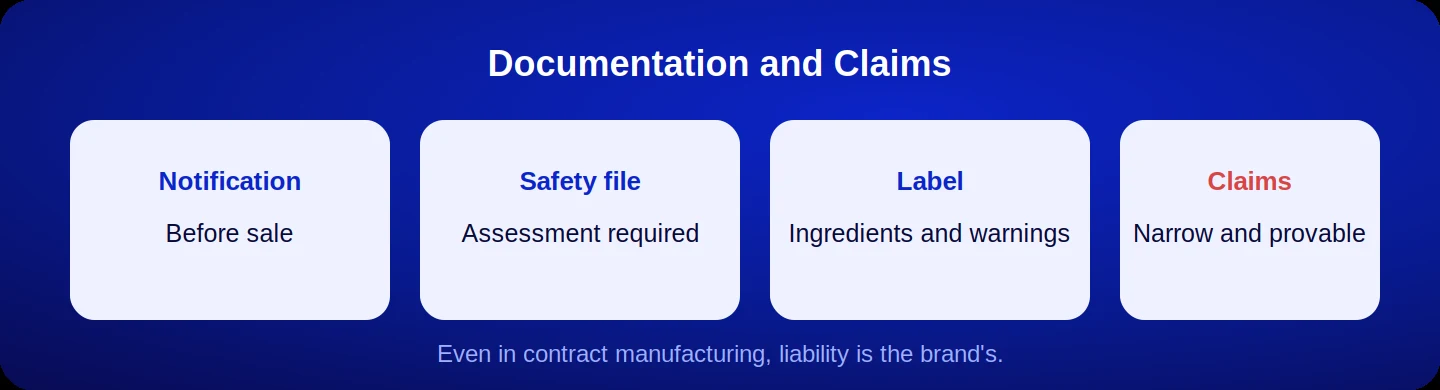
Inside the headings:
Channel: The Salon Line and Retail
Hair care has a channel of its own, and used properly it’s powerful. Four headings:
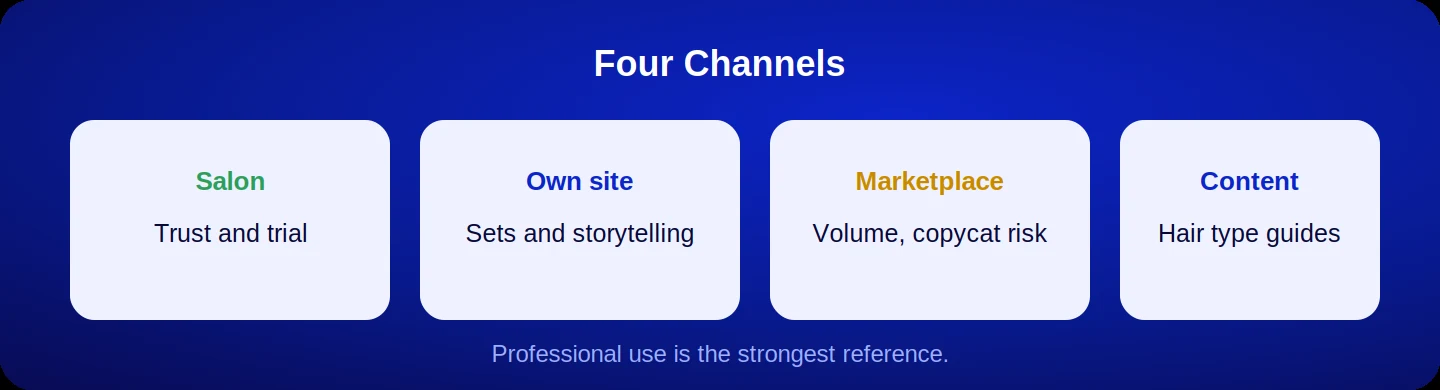
Four headings:
First 90 Days: Counted Output
BU BÖLÜMÜN ÖZETİ
- Month one: product type, manufacturer, sample
- Month two: notification, file, label
- Month three: small batch, two channels
The aim of the three months isn’t a wide line but setting documentation and repeat purchase on one product.
Four headings:
Month one: product type, manufacturer, sample
One product, two manufacturer candidates, sample tests and an audience description. No sample is approved without real-world use; scent and texture decisions happen here.
Month two: notification, file, label
The notification process, safety assessment, label content and warnings, packaging. The same month a claim list is written: what we’ll say, what we won’t.
Month three: small batch, two channels
Small batch, your own site and a few salon trials. Data to collect: repeat purchase, usage questions, salon feedback. Overall planning is done with digital consulting.
The Meeting Test and Formula X-Ray
BU BÖLÜMÜN ÖZETİ
- “Is the formula standard or bespoke?”
- “Are the notification and safety file ready?”
- “Which sentences won’t you write?”
- “What do we get if we start small?”
The closing ruler. Four questions:
What good answers sound like:
“Is the formula standard or bespoke?”
A good answer says so plainly and knows the ownership position. If it’s unknown, the same product may be sold under other brands too.
“Are the notification and safety file ready?”
A good answer describes the process and who holds the file. “The manufacturer handles it” isn’t enough; liability is the brand’s.
“Which sentences won’t you write?”
A good answer produces a banned-phrase list. Without one, the line gets crossed in the first advertising copy.
“What do we get if we start small?”
A formula X-ray: product type and audience decisions, formula ownership clauses, a notification and labelling checklist and a salon channel plan — fixed fee, the documents are yours. Bring your sample to a preliminary assessment; the scope is on the brand consultancy page. Neighbouring door: the natural oil guide.
Field Notes
· Brands starting with one product and validating sales carry small stock risk when they move to a set; those starting with a set learn late which product sells.
· Where scent or texture changes in the second batch, complaints arrive immediately; a written acceptance criterion closes that risk up front.
· Products used in salons feed retail sales; brands building a salon line depend less on advertising budget.
Mini Glossary
Standard formula: The manufacturer’s ready formula; fast to start with, no differentiation.
Product information file: The file held by the brand containing formula, safety assessment and production information.
Salon line: The professional channel of salon-size products, training and regular supply.
Quick Summary
· The first product decision sets the route: shampoo for volume, mask for balance, serum for high price and high claim risk.
· The formula is usually the manufacturer’s; ownership and quality criteria go into the contract.
· Notification, safety file and labelling are entry conditions; claims stay narrow. The salon line is the strongest reference.
Your Next Step
Make two decisions this week: which single product you’re starting with and which hair type you’re addressing. With both clear you can move to sampling. We’ll write the claim list together in a preliminary assessment.
Frequently Asked Questions
Is a natural-ingredient product an advantage?
Demand exists, but “natural” isn’t a positioning on its own and its definition isn’t clear; customers look at the ingredient list. The advantage appears when you can describe concretely which ingredients you avoid or foreground. Using natural ingredients has operational challenges: the preservative system is built differently, shelf life and stability become separate concerns, and scent and colour can vary between batches. Clarify that technical side with your manufacturer before deciding.
What size should I start with?
Starting with a single size and a reasonable volume is most practical: multiple sizes multiply stock lines and you can’t know which will sell. A trial size is a separate matter — on expensive products a small size lowers the customer’s risk and eases the first sale. Entering the salon channel requires large sizes, but stocking them before that channel opens is premature. The healthy order: one retail size, a trial size if needed, salon size once the channel opens.
Can I use before-and-after images?
Care is needed: these images can be read as results claims and may cross the cosmetic claim line. Images that aren’t genuine or have been edited are both an enforcement and a reputational risk. A safer route is describing the usage experience — texture, scent, ease of application, combability. When publishing genuine user reviews, moderation is also needed: featuring comments containing treatment or hair-loss claims can turn them into the brand’s own claim.
Sık Sorulan Sorular
Volume and regular repeat purchase; everyone uses it. In return the shelf is very crowded, price comparison is constant and margins are thin. Entering the shampoo market without differentiation is entering a price race — the crowded-shelf logic matches the sock guide.
Price tolerance is higher than shampoo and the audience wider than serums; usage frequency is regular. For most independent brands it is the most realistic entry point. Balance matters for cash flow in the first year.
Price tolerance is high but so is expectation: people expect results from these products, and a results claim immediately crosses the line. In intensive care products managing claims is harder than the formula.
Validate with one product, then build a set. Built from the start, you won’t know which product sells and stock triples. A set is the reward of sales, not a starting method.
A ready formula on the manufacturer’s shelf; the label changes, the contents stay. That’s fine as a start, but your competitor may hold the same formula, and then differentiation rests on packaging and telling.
After sales are steady and a repeated demand becomes clear. Bespoke development brings cost and minimum quantities. For an unvalidated idea, a bespoke formula is the most expensive start.
If it isn’t in the contract it’s contested; with a bespoke formula, ownership, confidentiality and exclusivity clauses must be written. That is the critical clause as you grow — the same discipline appears in the wellness guide.
Written tolerances for texture, scent, pH, fill volume and packaging quality. Customers notice batch differences immediately. A scent change in the second batch brings the first wave of complaints.
Before the product goes on the market; responsible person and product information file procedures apply. For the notification and oversight framework covering cosmetic products, TİTCK resources are the reference point. Selling without notification undermines the ground a brand stands on.
Expert evaluation of the formula and its conditions of use; the file is held by the brand. A contract manufacturer may prepare it, but the file’s owner and the responsible party is the brand.
Ingredient list, net quantity, usage instructions, warnings, batch number and relevant dates. Allergenic components are stated separately. A missing label is a reason for sales to stop.
Growing hair, stopping loss or treating a condition falls outside the cosmetic boundary. Cosmetics address appearance and care. Don’t promise outcomes, describe the product and its use — the band logic is the same in the intimate care guide.
Trust and trial: a product used in a salon turns directly into a recommendation. The channel also brings regular bulk purchasing. Professional use is retail’s strongest reference.
Salon-size packaging, training and sample support, reasonable trade discounts and regular visits. This line is relationship work and takes time. A salon line is built on continuity, not one-off sales.
Marketplaces carry volume but price pressure and copycat risk are high; your own site suits storytelling and set sales. Channel design runs through e-commerce consulting, the site side through website consulting, the advertising measure through advertising consultancy.
Hair type, usage frequency, application method — consumers search these constantly. A brand giving accurate information wins trust before selling. Distribution is planned with digital media.
Narrows the product type and audience, gets formula ownership into the contract, sets up the notification and file regime, draws the claim line and plans the salon channel. A consultant doesn’t write the formula; they stop you launching undocumented and over-claiming. Brand architecture sits with brand consultancy; category choice in the sector map and choosing a consultancy in the umbrella guide.