
Building an Adult Products Brand: How Do You Set Up Sales Channels Under Advertising Restrictions?
In the adult products category demand exists, competition is relatively narrow and price tolerance is reasonable. But the category has a difficulty founders usually learn during their first advertising attempt: most promotional channels are closed to these products.
Advertising platforms restrict them, some marketplaces don’t allow listings, and additional rules appear on the payment and shipping side. So even with your product ready, the route to announcing it has to be built first.
This guide covers the business side of this category: how a sales channel is built under restrictions, age verification and privacy, the documentation burden by product group, limits on telling, and the first 90 days’ output. Here the brand is whoever builds the channel first.
Building a Channel Under Restrictions
The first decision here is the channel. There are four routes and all are planned alongside the restrictions.
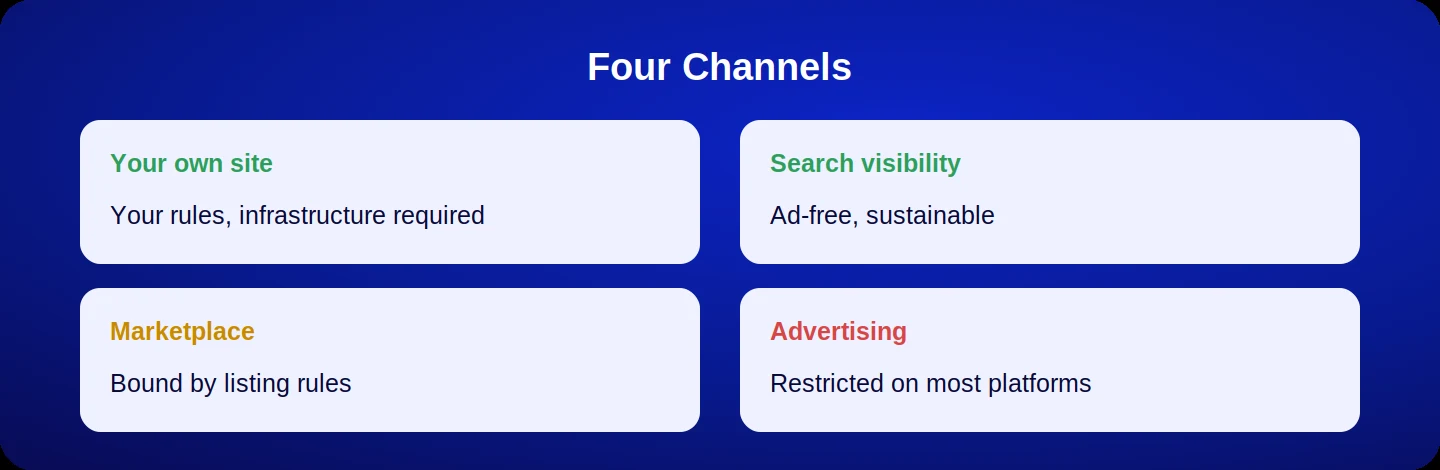
Inside the channels:
Age Verification and Privacy
This is the category’s second main heading. Four decisions:
Four decisions:
Product Group and Documentation Burden
Under this heading sit products subject to different regimes. Four headings:
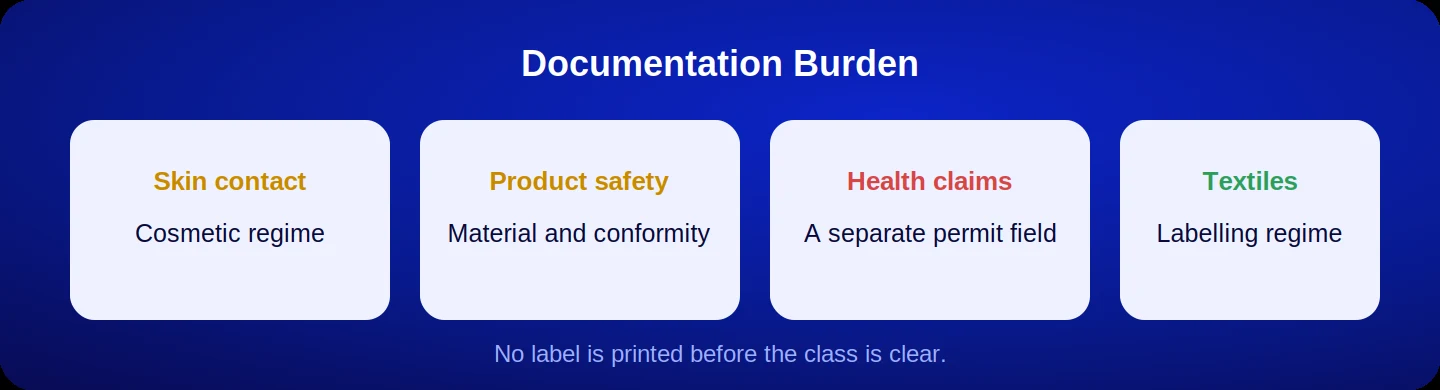
Inside the headings:
Products in contact with skin
Items falling into the cosmetic class require notification, safety assessment and labelling; even in contract manufacturing the file stays with the brand. This group carries the most frequently overlooked documentation burden.
Telling, Visual Language and Returns
Here language and presentation matter as much as the sale itself. Four headings:
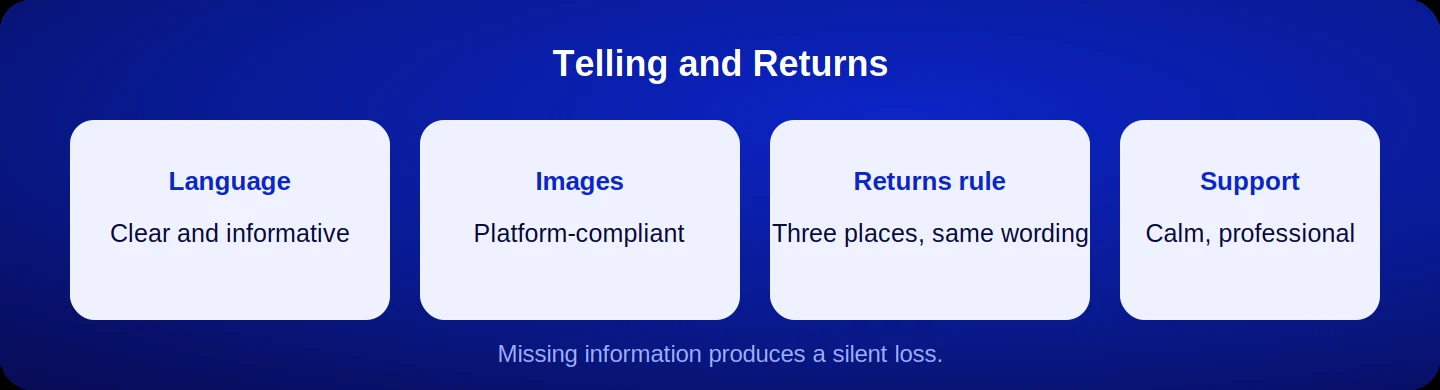
Four headings:
First 90 Days: Counted Output
BU BÖLÜMÜN ÖZETİ
- Month one: channel and infrastructure
- Month two: product group, documents, label
- Month three: small batch, content and first sales
The aim of the three months isn’t buying stock but building the channel and the regime.
Four headings:
Month one: channel and infrastructure
Which channel will it sell through, does the payment infrastructure accept it, how will age verification be set up? No stock is bought before the channel exists; that is this category’s most expensive mistake.
Month two: product group, documents, label
Classification, document list, labelling and warnings; privacy packaging and shipping arrangements. Claim and image rules are written the same month.
Month three: small batch, content and first sales
Small batch, your own site and first sales through search-focused content. Data to collect: which information gets asked about, return reasons, repeat purchase. Overall planning is done with digital consulting.
The Meeting Test and Channel X-Ray
BU BÖLÜMÜN ÖZETİ
- “Does your payment infrastructure accept this category?”
- “If advertising is closed, where will traffic come from?”
- “What is your privacy regime?”
- “What do we get if we start small?”
The closing ruler. Four questions:
What good answers sound like:
“Does your payment infrastructure accept this category?”
A good answer says it’s been discussed with the provider. If it hasn’t, a payment problem appears at the first sale and stock stays put.
“If advertising is closed, where will traffic come from?”
A good answer describes a search and content plan. A plan dependent on advertising stops at the first restriction here.
“What is your privacy regime?”
A good answer covers packaging, sender details and invoice description. If it’s missing, repeat purchase doesn’t come.
“What do we get if we start small?”
A channel X-ray: a channel and payment suitability check, an age verification and privacy regime, classification and document list, and a content-led reach plan — fixed fee, the documents are yours. Bring your idea to a preliminary assessment; the scope is on the brand consultancy page.
Field Notes
· Where stock is bought before the channel and payment infrastructure are built, product usually waits in the warehouse; it’s the category’s most expensive sequencing error.
· Brands building reach through search-focused content grow unaffected by advertising restrictions; those relying on advertising stop with every rule change.
· Neutral packaging and a plain invoice description make a noticeable difference to repeat purchase.
Mini Glossary
Channel restriction: The limits advertising and listing platforms apply to this category.
Privacy regime: Neutral packaging, plain sender details and invoice description.
Age verification: Stating that the site is intended for adults and controlling entry.
Quick Summary
· The channel comes before the product decision: your own site and search visibility are the main routes, advertising a bonus.
· Age verification, privacy and data security are this category’s basic regime.
· The product group sets the documentation burden; language stays clear, respectful and information-led.
Your Next Step
Close one question this week: do your payment provider and sales channel accept this category? Don’t buy stock until the answer is clear. We’ll build the channel plan together in a preliminary assessment.
Frequently Asked Questions
Can I sell on marketplaces?
It varies by platform and sub-category: some allow certain product groups, others don’t accept them at all, and rules can change over time. So designing a marketplace as your only channel is risky. The healthy structure is making your own site the main channel and using marketplaces as additional volume. When listing, applying category selection and image rules carefully reduces the risk of removal. Following rule changes regularly is part of the routine work in this category.
How do I become visible on social media?
Platform content policies are restrictive here; educational and informative content encounters fewer limits than direct product promotion. Against the risk of account closure, avoid depending on a single platform and build your own email list. The most sustainable route is search visibility: people ask questions and come to the site giving the right answer. That traffic isn’t affected by advertising restrictions and accumulates over time.
How should I set up returns and warranty?
Where returns are limited for hygiene reasons, that must be written clearly and understandably; the rule should appear on the product page, in the basket and in the box with the same wording. For faulty or defective products consumer rights apply and the process must be clear: where to apply, how it’s resolved, who pays shipping. Because customer communication is hesitant in this category, having the process written and visible matters especially; ambiguity loses the customer quietly.
Sık Sorulan Sorular
You set the rules: age verification, visual language, depth of information and the privacy regime are in your hands. In return you must build the traffic yourself. Here the site isn’t a shop window but the main channel; it’s set up with website consulting.
Even with advertising closed, people still search; informative, accurate and respectful content brings both traffic and trust. Ad-free reach is this category’s most valuable asset and it accumulates over time; distribution is planned with digital media.
Platforms differ: some permit certain sub-categories, others don’t, and rules change. Depending on a single marketplace is risky. A brand whose sales stop when a rule changes hasn’t diversified its channels; channel design is planned with e-commerce consulting.
Most large platforms apply serious restrictions here; limited space may exist for some product groups but the rules change often. Relying on an advertising budget is risky. If advertising exists it’s a bonus; if not, the plan shouldn’t break — the measurement logic sits with advertising consultancy.
A clear age declaration at entry and a statement that the site is intended for adults; in some cases stronger verification may be required. Beyond a legal requirement, this is also what platforms and payment providers expect.
A neutral box, the brand name invisible from outside and plain sender details. This is the customer’s baseline expectation and the condition for repeat purchase. Privacy is part of the product here — a similar sensitivity is described in the intimate care guide.
Payment providers may take different approaches to this category; when setting up the infrastructure the category declaration must be made accurately. A plain invoice description is part of privacy too. Payment infrastructure is settled before stock.
Customer information is especially sensitive here; compliance with data protection rules and data minimisation are essential. For security practice, USOM advisories are a reference. A data breach is an unrecoverable error in this category.
For products in contact with the body, material suitability and safety are critical; supplier documents must cover your product. Liability sits with whoever places the product on the market — the same principle appears in the electronics guide.
Any expression implying treatment, cure or a medical outcome moves the product into a different authorisation field. Claim language needs particular care here. Describe the product and its use; don’t promise outcomes.
For intimate garments and similar items, textile labelling and sizing regimes apply; pattern discipline is set out in the underwear guide.
Clear, respectful and information-led; what the product is, how it’s used and what to watch for, rather than implication and exaggeration. Informative language suits both platform rules and customer expectations.
Product-focused, compliant with platform rules and non-intrusive presentation. Image-driven rejections are common here; the rules are read in advance. A rejected listing is lost time.
Returns can be limited for hygiene reasons; that limit must be stated clearly before purchase and in three places with the same wording. A rule learned afterwards turns into a complaint — the same discipline applies in the makeup guide.
Customers hesitate to ask here; writing out frequently asked questions in full and communicating calmly and professionally builds trust. Missing information produces a silent loss.
Builds the channel and payment infrastructure first, produces the classification and document list, plans the privacy regime and has the claim and image rules written. A consultant doesn’t pick the product; they stop you buying stock while the route to sale is closed. Brand architecture sits with brand consultancy; category choice in the sector map and choosing a consultancy in the umbrella guide.