
Building an Organic Food Brand: What Does Saying “Organic” Without Certification Cost?
Organic food is one of the categories that most appeals to people wanting to build a brand: meaningful work, a loyal audience, acceptance of higher prices. But this category has one rule that isn’t open to debate: “organic” is not an adjective you can use without documentation.
Village-sourced, natural, additive-free, heritage variety — these are all different things, and none of them on its own means organic. Printing that word on a label has a procedure, an inspection and a cost.
This guide covers the reality of an organic food brand: how certification works, what you can and can’t say without it, the fragility of the supply chain, price and storytelling, and the first 90 days’ output. In this category a brand speaks only as far as it can prove.
How Does Certification Work?
Before entering this category you need to know how the chain is built. There are four stages.
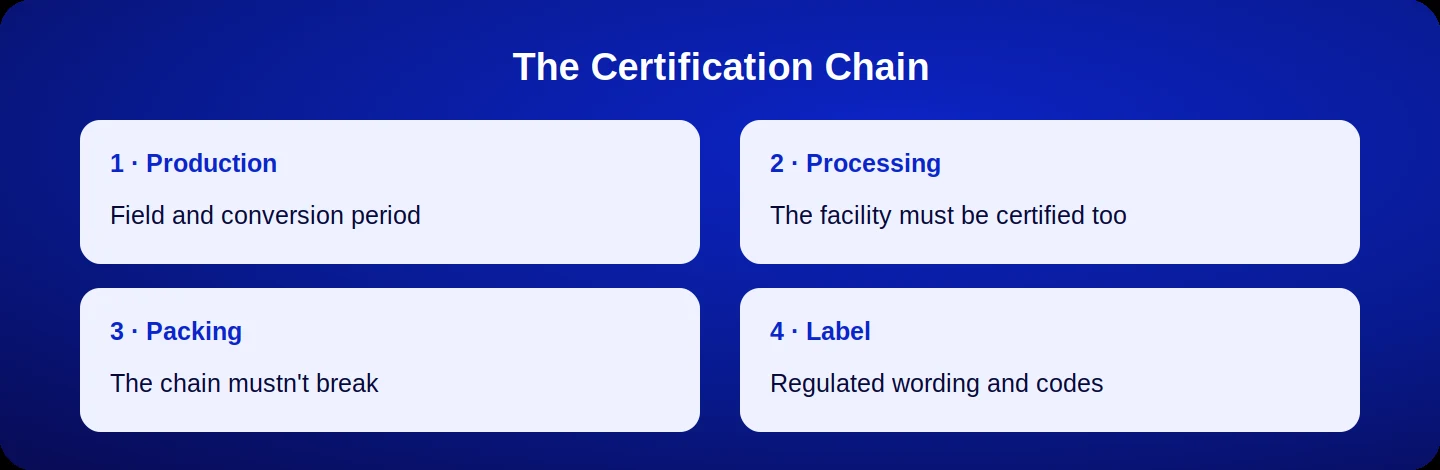
Inside the stages:
What Can You Say Without Certification?
For those setting out uncertified the line is clear. Four headings:
Four headings:
The Supply Chain: The Fragile Side
The biggest operational risk here isn’t production but supply. Three fragilities:
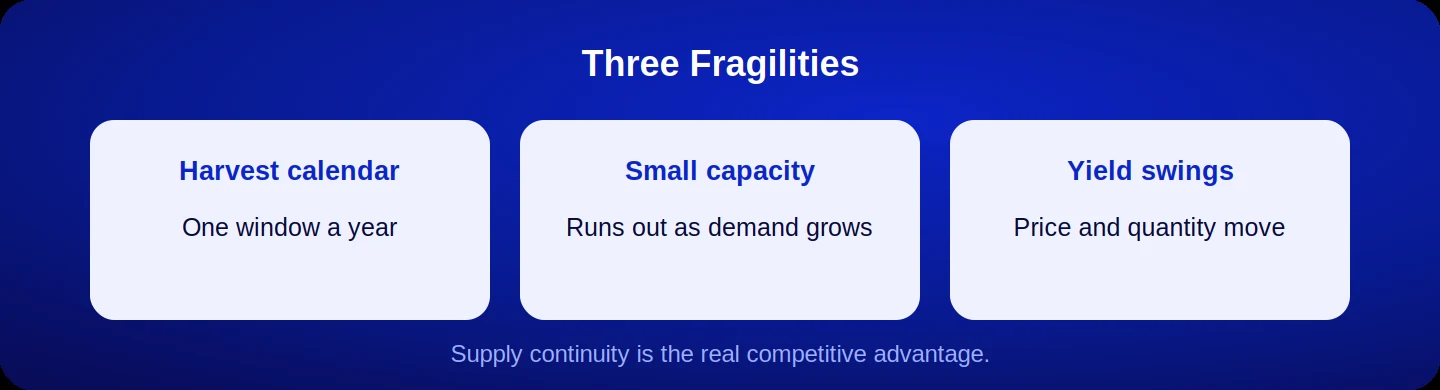
Inside the fragilities:
Price, Storytelling and Channel
A high-cost product looks merely expensive if it isn’t explained well. Four decisions:
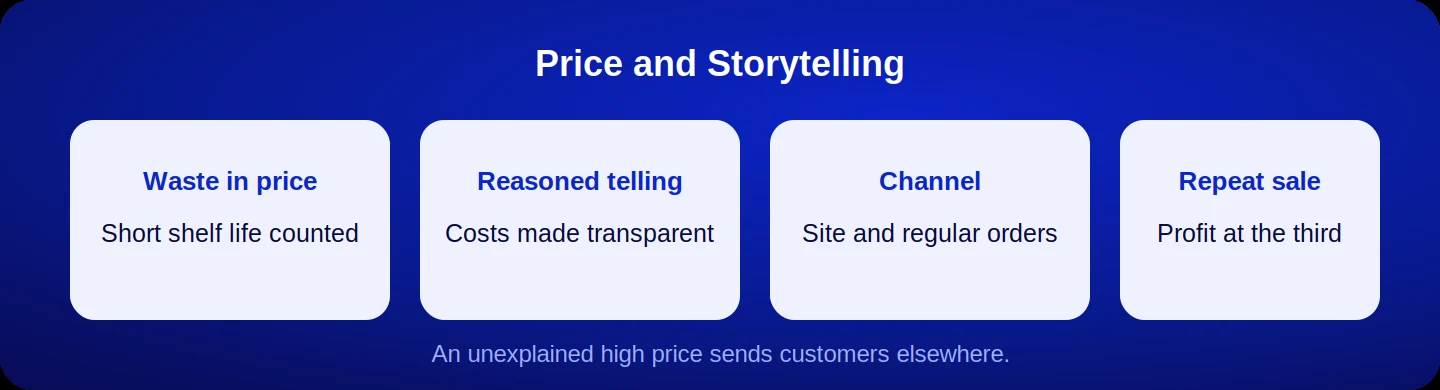
Four decisions:
First 90 Days: Counted Output
BU BÖLÜMÜN ÖZETİ
- Month one: product, grower, documentation status
- Month two: label, packaging, storytelling
- Month three: small batch, one channel, repeat purchase
The aim of the three months isn’t a wide range but building chain and storytelling on one product.
Four headings:
Month one: product, grower, documentation status
One product, two grower candidates, clarity on certification status. Label wording isn’t written before documentation status is clear. The claim is chosen to match the documentation; the reverse creates rework costs later.
Month two: label, packaging, storytelling
Ingredient list, dates and batch information, correct wording, packaging decisions and the grower’s story. This is the month the brand builds its language.
Month three: small batch, one channel, repeat purchase
Small batch, one channel and a subscription or reminder trial. Data to collect: repeat purchase rate, waste, customer questions. The advertising measure sits with advertising consultancy, overall planning with digital consulting.
The Meeting Test and Documentation X-Ray
BU BÖLÜMÜN ÖZETİ
- “Which links of the chain are certified?”
- “If you have no certificate, what will you write?”
- “Do you have a second supplier?”
- “What do we get if we start small?”
The closing ruler. Four questions:
What good answers sound like:
“Which links of the chain are certified?”
A good answer counts production, processing and packing individually. If a link is missing, the organic term can’t appear on the label — and packaging printed in ignorance goes in the bin.
“If you have no certificate, what will you write?”
A good answer chooses concrete description: origin, grower, method, ingredient list. An answer taking refuge in vague adjectives creates problems at the first inspection or complaint.
“Do you have a second supplier?”
A good answer names at least one alternative. A brand tied to one source halts production the day demand grows.
“What do we get if we start small?”
A documentation X-ray: a chain checklist, a claim-to-document matching table, draft label wording and a price calculation including waste — fixed fee, the documents are yours. Bring your product idea to a preliminary assessment; the scope is on the brand consultancy page. Neighbouring door: the chocolate and confectionery guide.
Field Notes
· Brands discovering a missing link after printing packaging lose both the print cost and time; the document check belongs before packaging.
· Brands positioning through concrete description (origin, grower, method) face fewer objections and defend higher prices more easily than those using vague adjectives.
· Brands working with a single grower either change the product or halt sales when demand rises; both cost customers.
Mini Glossary
Chain integrity: Production, processing and packing all being certified.
Conversion period: The period during which produce moving from conventional to organic isn’t yet counted as organic.
Waste: Loss from short shelf life and natural produce; a line that must be priced in.
Quick Summary
· “Organic” is a protected term; every link of the chain must be certified.
· Entering without certification means choosing concrete description: origin, grower, method, ingredient list.
· The real operational risk is supply: harvest window, small capacity, yield swings. Continuity is the biggest advantage.
Your Next Step
Produce one page this week: every link in your product’s chain and its documentation status. If a link is missing, build the label wording around that. We’ll fill in the claim-to-document table together in a preliminary assessment.
Frequently Asked Questions
I’m uncertified but genuinely produce naturally — what can I write?
You can write the truth, and it is often stronger: where the produce is grown, who grows it, how it’s processed, what’s inside. These are verifiable facts and don’t crush you under a burden of proof. What to avoid is using legally protected terms and unprovable health claims. In practice the most effective route is answering the questions customers actually ask on the product page: where from, from whom, how, when. That approach builds trust and keeps you clear of legal risk.
When does certification cost become worthwhile?
Once sales volume reaches a degree of regularity: certification and inspection are fixed costs, so they weigh heavily per unit at low volumes and dilute as volume grows. The second determinant is your sales channel — chain retailers, exporters and corporate buyers generally require documentation, while in direct-to-consumer sales storytelling can matter more. The practical route is starting uncertified with concrete description and moving to certification once volume and channel needs become clear.
Is selling imported organic products easier?
Sometimes it is, in terms of supply continuity, because the scale is larger and documentation arrives already structured. On the other hand importing brings customs, document equivalence and currency risk; you also lose the “local grower” narrative, which is a powerful sales argument in this category. When deciding, compare two things: the value of continuity and the value of the story. Some brands combine them — local supply where domestic production exists, imported supply where it doesn’t, building a mixed range.
Sık Sorulan Sorular
Organic farming is an inspected method in which certain inputs aren’t used; moving from conventional to organic takes a defined period, during which produce is described as being in conversion. So you can’t decide today and have organic produce tomorrow. For organic farming legislation, the agricultural authority’s official announcements publish the current list of authorised bodies; support and training programmes for small producers can be followed through TKDK.
Even where the raw material is organic, if the processing facility isn’t certified the product can’t be sold as organic. Roasting, milling, packing — every step is part of the chain. Break one link and the term falls away; the product isn’t worse, it simply can’t be called organic.
Not the brand — the business and the product are certified. If you don’t produce yourself, you work with certified growers and processors and build the chain with documentation. The document file matters as much as the product file here.
Regular checks, record-keeping and traceability obligations; this is a cost line and it goes into the price. In return you become able to defend your claim. Inspection isn’t a cost but insurance — it’s the only document in your hand when a complaint arrives.
“Organic” and equivalent terms are tied to legislation and their uncertified use is subject to enforcement. Terms like “natural”, “additive-free” or “village produce” are subject to different rules and still require substantiation — none of them is a free association zone.
The truth: where the product comes from, who grew it, how it was processed, what’s inside it. Concrete, verifiable description beats vague adjectives. “From this village, this grower, this method” is more persuasive than “organic” and needs no certificate.
If you use no additives, showing that through a list is more effective than claiming it. A short ingredient list on the label is a sales argument in itself. The same claim discipline is detailed in the vegan product guide.
Once sales are steady and supply continuity is established. Certification is a fixed cost; at small volumes it weighs heavily per unit. Build the sales first, grow the documentation second — that sequence is safer on cash.
Most products have a single harvest window each year; what you buy in that window is what you sell all year. A wrong estimate means either selling out early or holding stock. The harvest calendar is this category’s production plan — the same discipline appears in the fruit product guide.
As demand grows: a small grower can’t scale, a second supplier becomes necessary, and the new supplier’s produce may differ. A brand tied to one supplier breaks the day it grows; research the second source from the start.
In a low-yield year raw material gets expensive and margin erodes; price agreements and stock planning soften the swing. Discuss yield risk before committing to an annual price.
Multiple growers, written purchase commitments, early payment for priority and storage where needed. These relationships aren’t built in a year; the supply relationship is the brand’s real asset here, and the general measure matches the advantage definition in the sector map.
Raw material, processing, certification and inspection costs, packaging, shipping, returns allowance and waste. In organic products waste and short shelf life form a separate line. A price ignoring waste turns into a loss as revenue grows.
With reasons: why yields are lower, why inspection costs money, why the grower earns more. An unexplained high price pushes customers toward cheaper alternatives. Transparent cost storytelling is the most persuasive marketing here; the content side is built with digital media.
Your own site and regular orders (subscription) suit this category well; on marketplaces price comparison hurts the product. Local markets and specialist shelves work for first sales. Channel and payment design runs through e-commerce consulting, the site side through website consulting.
Being a consumable is an advantage: regular packs, reminders and subscription models make repeat sales easier. In this category profitability arrives not at the first sale but the third.
Audits the claim-to-documentation match, has a second supply source researched, writes waste into the price and grounds the storytelling in concrete information. A consultant doesn’t grow the produce; they stop you writing a sentence you can’t prove. Brand name and registration sit with brand consultancy; choosing a consultancy with the umbrella guide.