
Havilland takes its 72-year beauty heritage to modern shelves, can an old brand return?
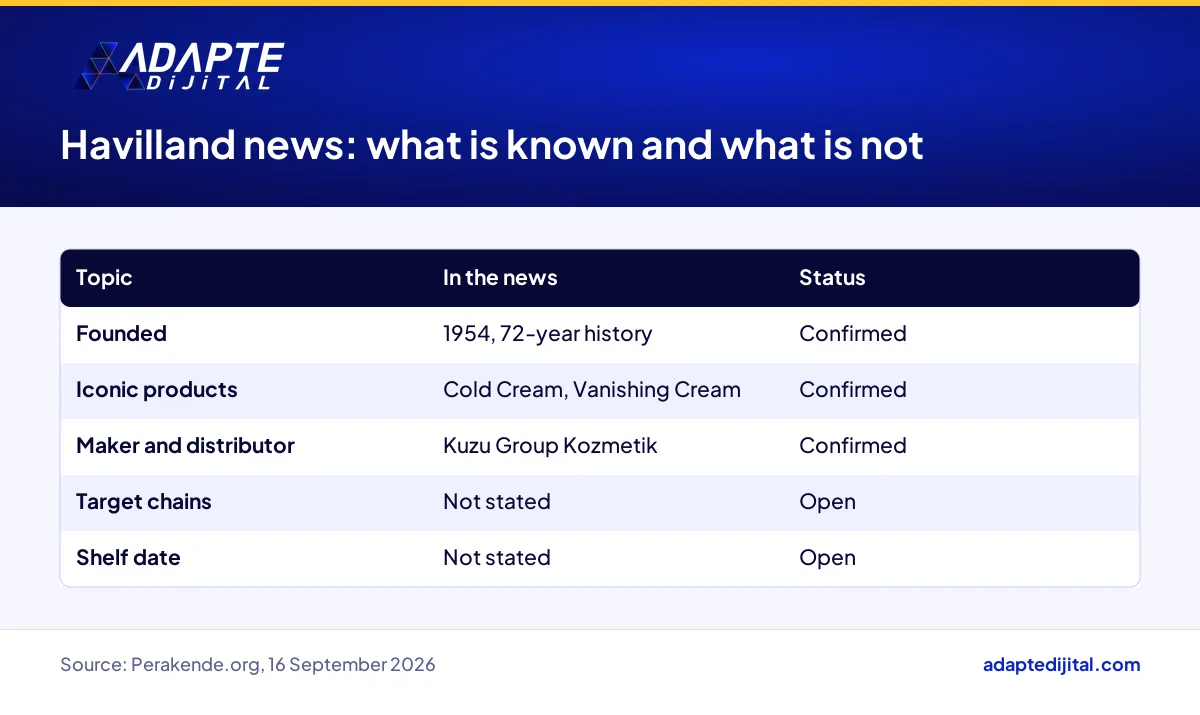
Havilland, a cosmetics brand founded in 1954, is preparing to raise its visibility in modern retail channels and reach a new generation of shoppers (Perakende.org, 16 September 2026). Known for its Cold Cream and Vanishing Cream and its distinctive yellow packaging, the brand is made and distributed by Kuzu Group Kozmetik. The news does not say which chains it will enter or when the products will reach the shelves.
Here is what it means for you: in autumn 2026, Turkish cosmetics retail is watching a 72-year-old brand try to move from pharmacy e-commerce sites into the modern channel. If you own a brand people know by name but that sits forgotten on the shelf, you face the same question. Do you rebuild it from scratch, or find the part people remember and carry that to a new shelf?
Why is Havilland preparing for modern retail shelves now?
The news does not spell out the reasons, but the goal is clear: visibility in modern channels and a new generation of shoppers. Today, Havilland products sell on pharmacy e-commerce sites. Moving into the modern channel means reaching not only people who search for the brand, but also people who see it on a shelf for the first time.
Why does an old cosmetics brand like Havilland start ahead of a new one?
Because it does not have to buy recognition. A new brand leans on its ad budget just to get its name known. A long-established brand already has a name people have heard of. The corporate line quoted in the news sums it up well, in our translation: “Some brands are not recreated. They are rediscovered.”
Let’s say you own a brand you inherited from your father
Let’s say you run a cologne or cream brand in an Anatolian city, sold in the same box for years. People still ask for it at the neighbourhood pharmacy, but you are nowhere on the chain store shelf. The till still rings, yet your customers get a little older every year.
Why is growth in the cosmetics category an opening for brands like Havilland?
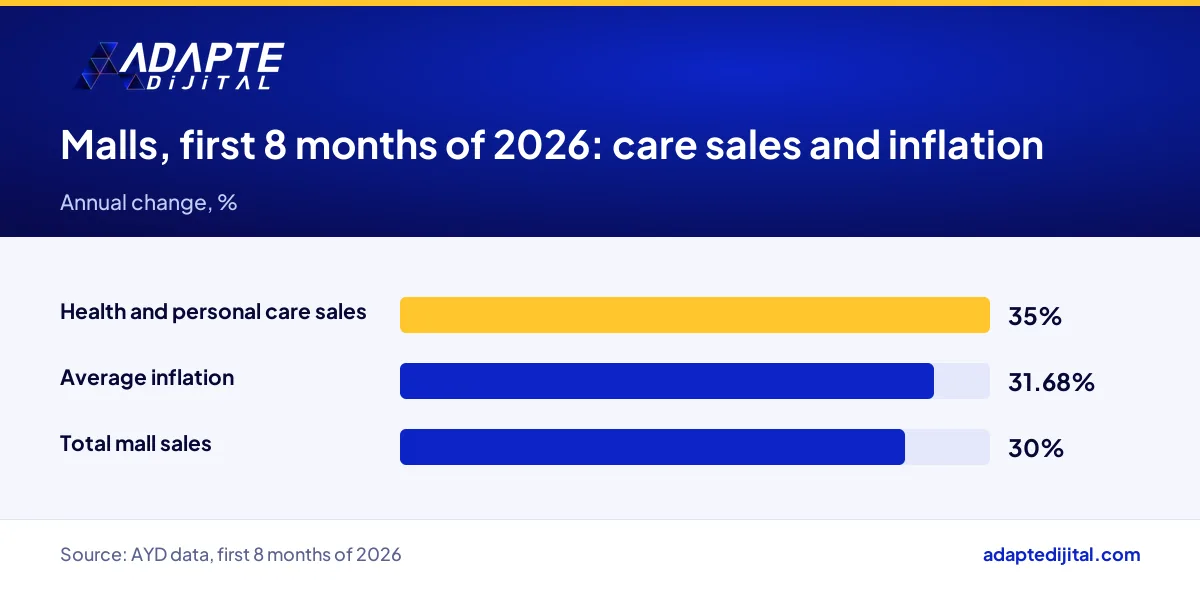
Because demand is rising in one of the fastest-growing mall categories. In the April 2026 index of AYD, the Turkish shopping mall association, personal care and cosmetics was the fastest-growing mall category, up 55.5% year on year in nominal terms. AYD data also shows health and personal care sales in malls up 35% in the first eight months of 2026, against 30% for total mall sales and average inflation of 31.68%.
Who does Havilland’s move into the modern channel affect, and how?
Likely winners are cosmetics and personal care chains that want nostalgic products to lift their average basket. Those under pressure are newly launched cream brands in the same price range with low recognition. Pharmacies and packaging and printing suppliers feel the effect indirectly.
How does a heritage brand like Havilland become findable online again?
By watching how people search and linking the brand’s old name and product names to the right pages. Customers often search for a description, such as “the cream in the yellow box”, not the brand name. A product page that answers those searches turns nostalgia into sales.
What should an owner of an old brand like Havilland’s do this week?
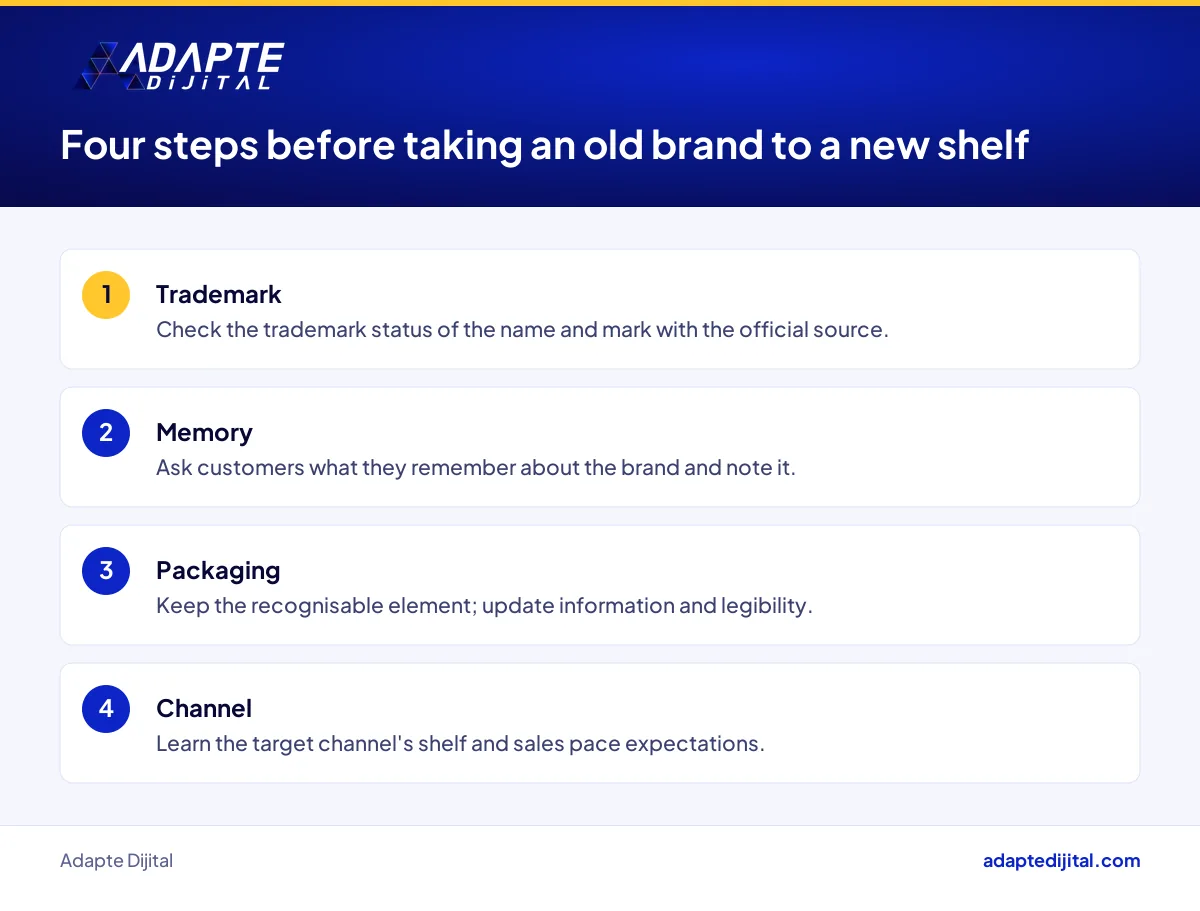
Do three things this week: check your trademark status, write down what customers remember about your brand and learn the shelf requirements of the channel you are targeting. For the trademark check, the Turkish Patent and Trademark Office website is the first stop. Verify with the official source; this is not legal or financial advice.
Quick Summary
- Havilland, founded in 1954, is preparing to raise its visibility in modern retail channels (Perakende.org, 16 September 2026).
- Kuzu Group Kozmetik makes and distributes the brand, and the target chains have not been announced (Perakende.org).
- In AYD’s April 2026 index, personal care and cosmetics was the fastest-growing mall category, up 55.5% in nominal terms (AYD).
- A heritage brand’s most valuable assets are often its familiar packaging and name.
- The first checkpoint in reviving a brand is its trademark status.
Short Glossary
- Modern channel
- Modern channel is the term used to describe the sales network made up of chain stores and organised retail outlets.
- Shelf share
- Shelf share is the measure used to show how much of a category’s shelf space a brand takes up in a store.
- Trademark registration
- Trademark registration is the official filing used to give a brand name or mark legal protection.
Frequently Asked Questions
Next Step
If you are thinking about moving your brand into a new channel, fill in the consult your expert form. You can find similar developments on our retail page, where we interpret retail news for you.
Sources: Perakende.org, 16 September 2026 · AYD April 2026 index and first eight months of 2026 data · Turkish Patent and Trademark Office
Updated: October 2026
Sık Sorulan Sorular
It confirms that the brand was founded in 1954, that it is described as one of Türkiye’s long-established cosmetics brands, and that Kuzu Group Kozmetik makes and distributes it. The news names Murat Gülmez as Brand Director and Mehmet Berat Kuzu as the owner of Kuzu Group Kozmetik.
The chains, the timeline, the investment amount and whether the packaging or formula will change are all missing from the news. It also does not say how the brand came to the company. Rather than filling these gaps with guesses, it makes sense to wait for the company’s own statements.
Here’s the interesting bit: what keeps a brand like this alive can be the colour and shape of its pack rather than its formula. The news makes a point of Havilland’s yellow packaging too. So a brand’s most valuable asset is sometimes the look that makes it recognisable on the shelf at first glance.
Keep what people remember and simplify the rest. When familiar elements such as colour, logo shape and product name change, customers cannot find the product on the shelf. Ingredient information, barcodes and legibility can be updated to meet what a modern shelf expects.
No. In a growing category, the fight for shelf space gets tougher too. In the modern channel, every SKU is expected to sell at a certain pace, and a product that does not move soon comes off the shelf. A heritage brand enters this race with recognition, but recognition alone is not enough.
In cosmetics, in-store experience lets customers try the product and get to know the brand. We look at that side through Sephora’s new store.
For a chain, giving a product shelf space means taking that space away from another product. So beyond a known name, the chain wants steady supply, consistent pricing and a clear promotion plan. If a heritage brand reaches the shelf without meeting these, the product soon starts gathering dust.
Havilland products currently sell on pharmacy e-commerce sites. Once the product appears on other shelves, pharmacies may face more visible competition on price and stock. Advice and trust remain the areas where a pharmacy stands apart.
The news shows that heritage brands do not have to stay dormant. For brands people still know but cannot find on shelves, a change of channel is an option. What matters is not taking that step before trademark and packaging work is done.
Target the brand name, the iconic product names and phrases that describe the packaging. Product names like Cold Cream and Vanishing Cream deserve their own explanatory pages. Using the same product name and image consistently across marketplace and pharmacy e-commerce listings matters as well.
Short content that tells the brand’s story, usage tips and genuine customer reviews work well here. But the story should not overshadow the product. A younger shopper first wants to know what the product does, and only then why it has lasted so long.
Investing before it is clear who owns the brand name and the packaging is risky. Checking that documents are genuine takes the same care in every sector; we cover that through MKS’s warning about fake certificates.
Ask past customers and stockists three simple questions: how they describe the product, where they buy it and why they stopped. The answers show which element to keep on the pack and which story to put forward. Our brand consultancy team builds this kind of positioning.
Do not reinvent an old brand; find what customers remember and carry that to the new shelf.
The news names no chains and gives no shelf date. For now, the products sell on pharmacy e-commerce sites; for new points of sale, you need to wait for the company’s announcement.
Not always. Keep the colour, logo and product name customers remember; areas such as legibility and product information can be updated to meet what a modern shelf expects.
Trademark searches and registration are handled by the Turkish Patent and Trademark Office. Verify the result with the official source; this is not legal or financial advice.