
MilleFée enters Türkiye with Distribution Group, can one chain launch an imported brand?
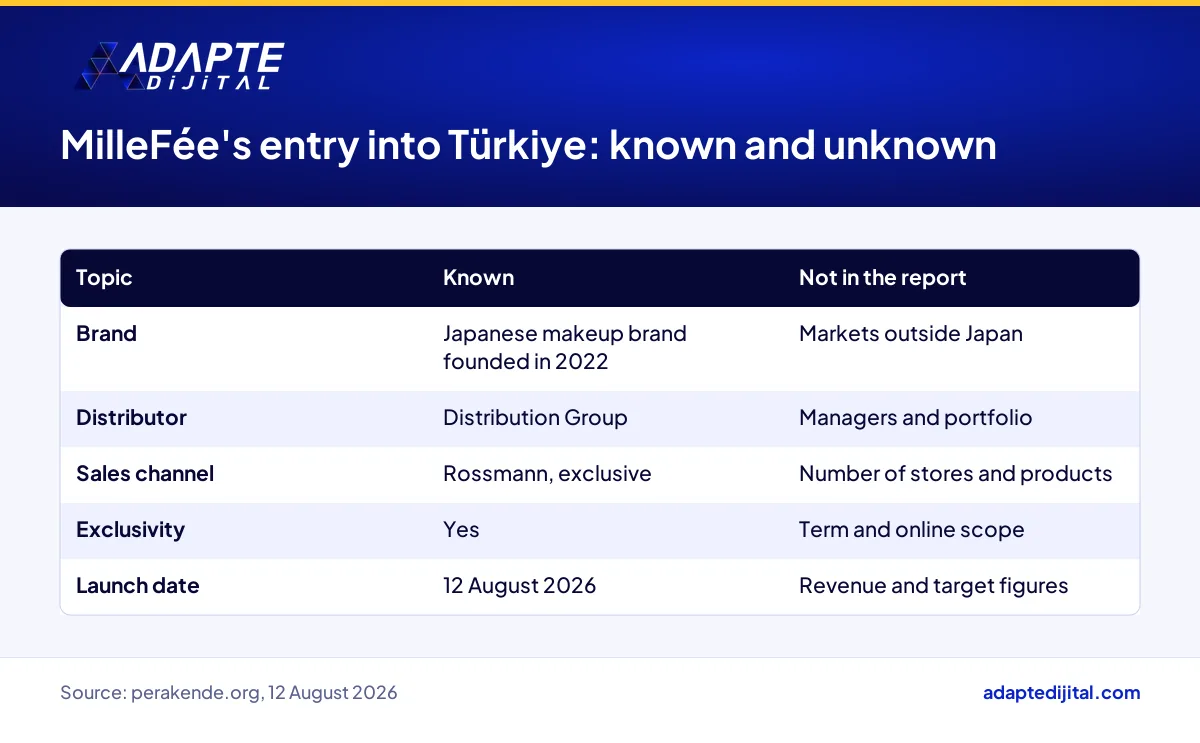
MilleFée, a Japanese makeup brand founded in 2022, has entered Türkiye through the distributor Distribution Group and is sold only in Rossmann stores under an exclusive deal (perakende.org, 12 August 2026). Distribution Group aims to grow the brand through its sales channel, communication strategy and long-term positioning.
For a distributor or importer bringing in a foreign brand, launching through one chain or several channels shapes your first year of sales. An exclusive launch gives you shelf space fast and a clear message. But if the term, scope and exit conditions are not in writing, it ties the brand to a single door.
Which distribution model does MilleFée use to enter Türkiye?
A distributor plus a single chain. Importing and brand management sit with Distribution Group, while shelf space is only at Rossmann (perakende.org). The brand takes its name from the French pastry mille-feuille and positions itself in colour cosmetics with art-inspired designs. Its slogan is “The magic of meeting a new me”, and the report does not say how many stores or products it launched with.
What are the pros and cons of an exclusive single-chain launch like MilleFée’s?
The upside is speed and focus, and the downside is dependence. In one chain, a brand sets up its shelf space, trained sales staff and promotion calendar with a single counterpart. If that chain changes its shelf decision, though, the brand’s only door into the country narrows. Before you decide, both sides need measurable thresholds in writing.
How can a distributor grow an imported brand like MilleFée in one chain, step by step?
BU BÖLÜMÜN ÖZETİ
- Step 1: Write the term and a review date into the contract
- Step 2: Calculate your break-even units
- Step 3: Read shelf performance every week
- Step 4: Set the channel expansion threshold in advance
In four steps: write a measurable contract, calculate your break-even units, track shelf performance weekly and set the channel expansion threshold in advance. The numbers in each step come from your own data, while the formulas stay fixed.
Step 1: Write the term and a review date into the contract
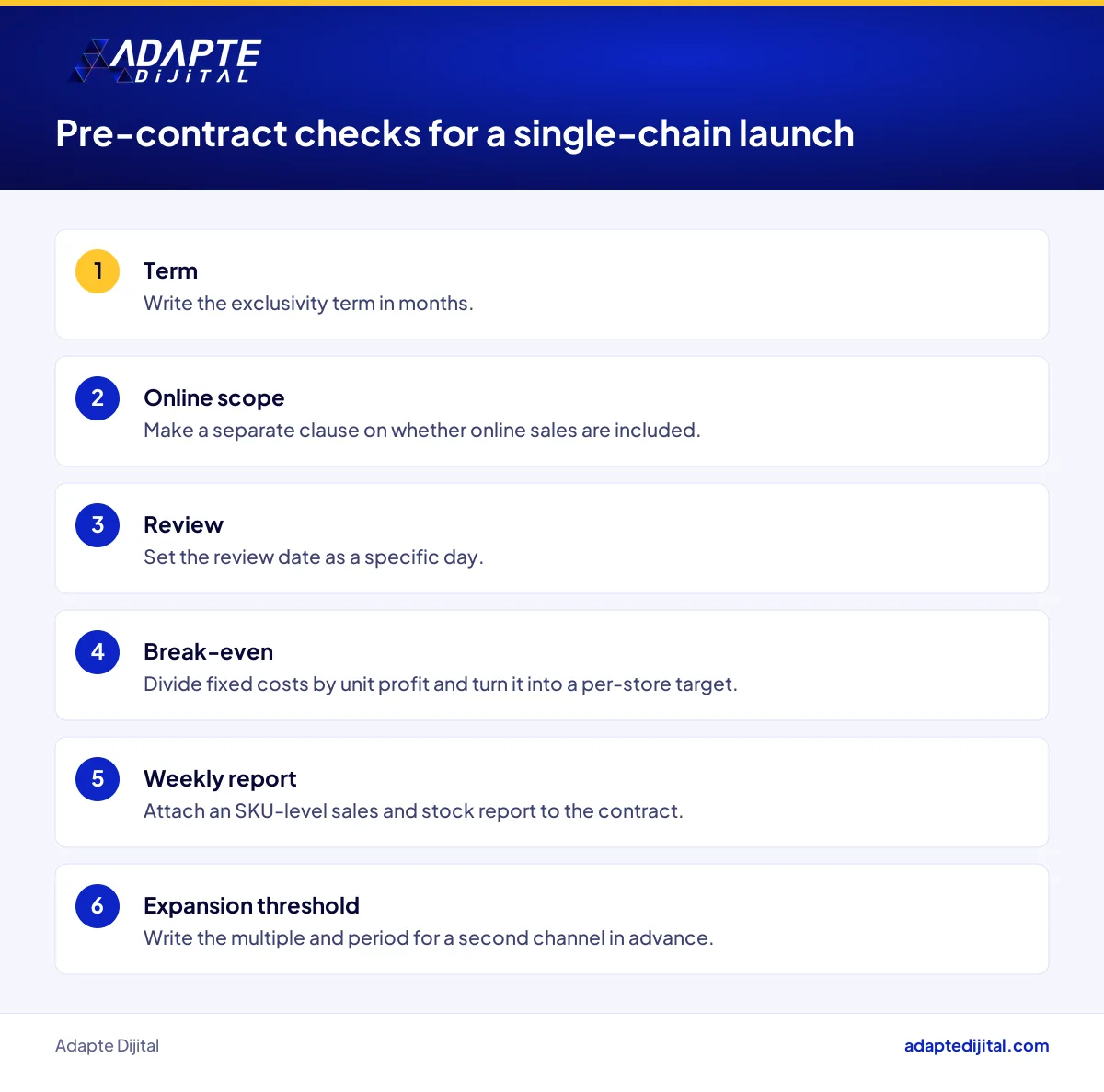
State the exclusivity term in months and the review date as a specific day. Make a separate clause on whether online sales fall within its scope. Always get a lawyer’s opinion on the legal text; this is not legal or financial advice.
Step 2: Calculate your break-even units
Formula: monthly fixed costs ÷ (shelf price − unit landed cost − chain margin) = units you need to sell per month. Divide that by the number of stores to get a weekly target per store.
Step 3: Read shelf performance every week
Ask for units sold, stock turnover and average basket by SKU every week. Flag any SKU that stays below target in two consecutive readings and propose a faster-moving product in its place.
Step 4: Set the channel expansion threshold in advance
For instance, a second channel is discussed only if sales per store beat a set multiple of break-even units for several months in a row. You choose the multiple and the period based on your own costs, and you write them into the contract.
Who does MilleFée’s exclusive Rossmann launch affect, and how?
BU BÖLÜMÜN ÖZETİ
- Winner: the chain that builds the concept
- Under pressure: independent cosmetics stores
- Indirectly affected: local makeup brands
It affects the chain, the distributor, rival imported brands and small cosmetics shops differently. In Türkiye’s cosmetics retail in autumn 2026, Rossmann is setting niche categories such as Japanese and Korean makeup apart through a dedicated concept. The winner is whoever builds the category first, and the one under pressure is the independent seller who cannot get the same product.
Winner: the chain that builds the concept
Rossmann gives shoppers a reason to visit with a brand they cannot find in other stores. It is a shelf strategy that works like a tenant mix, only inside a single category.
Under pressure: independent cosmetics stores
The neighbourhood cosmetics shop cannot put this product on its shelf. When shoppers cannot find what they want, they head to the chain. The independent seller’s answer is to find its own niche products.
Indirectly affected: local makeup brands
An imported brand winning shelf space at a higher price band than its Korean neighbours raises price and positioning questions for local brands. We look at how local brands can win a share of this market in our article on Türkiye’s cosmetics market.
How do you build digital visibility for an imported brand sold exclusively, like MilleFée?
By pointing searches for the brand name to the right point of sale. If the product is sold in one chain, a shopper searching for the brand should land on that chain’s product page and store information. Even when the point of sale is Rossmann’s website, the distributor should build the ground that explains the brand in search results.
What should a distributor or importer do this week after the MilleFée launch?
Put the channel decision on paper for the imported brand you hold or are negotiating. Write down the exclusivity term, the online scope and the review date, and calculate your break-even units. The checklist below lists what to complete before you sit down at the contract table. For an example of a channel standard, see our article on Bosch’s partner standards.
Ask for the missing information on day one
Without the store count, shelf space and first order quantity in writing, you cannot run the numbers. Ask the chain for these three at the first meeting.
Compare your price with the rival concept
Map the price band of the products that will sit on the same shelf. If you are above that band, explain the difference in one sentence on the packaging and in shelf communication.
- Is the exclusivity term written in months?
- Are online sales inside the scope or outside it?
- Has a review date been set?
- Have break-even units been turned into a weekly target per store?
- Is a weekly SKU-level report attached to the contract?
- Are the channel expansion threshold and its period written down?
We cover channel decisions in cosmetics and other retail sectors regularly on our retail page, where we interpret the retail agenda for you.
Quick Summary
- MilleFée entered Türkiye through Distribution Group and is sold only at Rossmann (perakende.org, 12 August 2026).
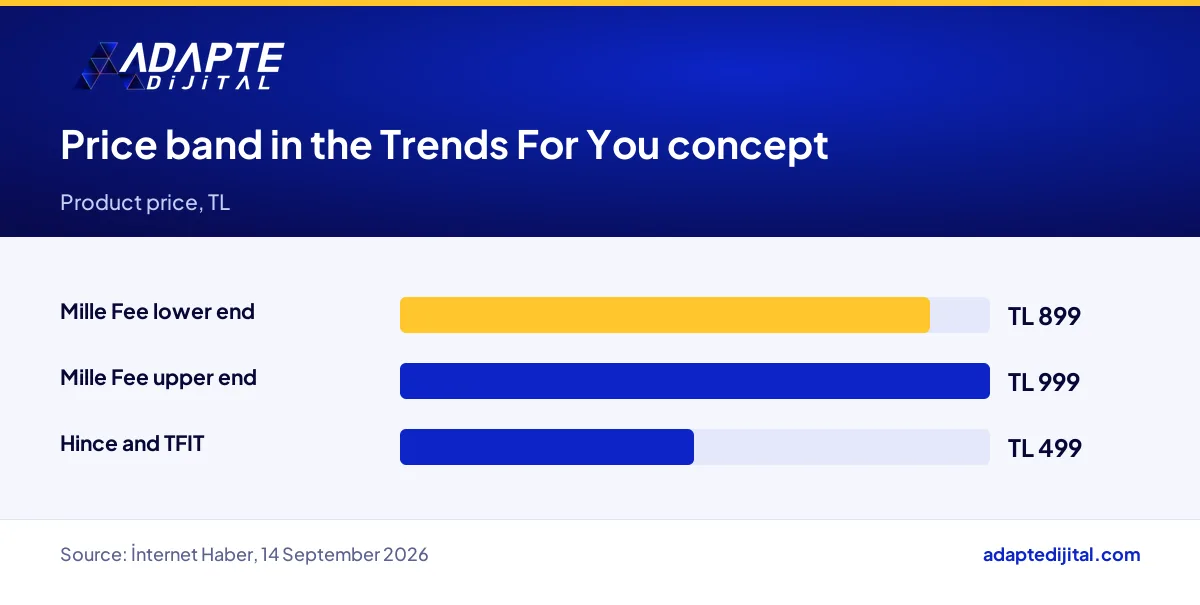
- Mille Fee products sit in the TL 899 to TL 999 band in Rossmann’s Trends For You concept (İnternet Haber, 14 September 2026).
- The report does not give the exclusivity term, its online scope, or the number of stores and products.
- A single-chain launch brings speed and focus, but without written thresholds it ties the brand to one door.
- A distributor should turn break-even units into a weekly target per store and write it into the contract.
Short Glossary
- Exclusive distribution
- Exclusive distribution is the type of agreement used to sell a brand in a given territory through only one distributor or channel.
- Break-even units
- Break-even units is the measure used to show the minimum number of products you must sell in a period to cover fixed costs.
- Colour cosmetics
- Colour cosmetics is the category name used to separate makeup such as lipstick, eyeshadow and blush from skin care.
Frequently Asked Questions
Next Step
If you would like to work out together which channel to use for bringing an imported brand into Türkiye, fill in the consult your expert form.
Sources: perakende.org, 12 August 2026 · İnternet Haber, 14 September 2026 · Rossmann Türkiye (rossmann.com.tr)
Updated: October 2026
Sık Sorulan Sorular
According to İnternet Haber, a Turkish news site, Rossmann launched a concept called “Trends For You” in September 2026, bringing Japanese and Korean makeup brands together (14 September 2026). Mille Fee sits in this concept alongside the Korean brands Hince and TFIT.
The same source puts Mille Fee products at TL 899 to TL 999, and Hince and TFIT products at TL 499. The perakende.org report does not include prices; they appear only in this second source.
The report gives only its role, not its managers, other brands or corporate details. So we look at the model, not the company.
When the brand is unknown and would struggle to find shelf space on its own. The chain places the brand in its own concept and brings in foot traffic. MilleFée’s place inside a Japanese-Korean concept is an example of this logic.
When demand outgrows the chain’s store network. If a shopper looks for the product and cannot find it, they leave empty-handed and the sale goes to another brand. That is why the contract must spell out whether online sales are covered.
Signing exclusivity with no end date and no measures. Even if stock is sitting unsold on the chain’s shelves, without a written sales threshold the distributor can neither widen the channel nor renegotiate. The term, the scope and the review date belong on the first page.
They can. Reports use both “MilleFée” and “Mille Fee”. Build a keyword list that covers both spellings across product pages, social accounts and ad copy.
Yes. A page with the brand story, product list and “where to buy” details sends shoppers to the right place, even if the product is slow to appear on the chain’s site.
Not clicks, but visitors who move on to the chain’s page and use of the store locator. Add these two metrics to your weekly table.
Customs sets your calendar as much as the channel contract. We run this work with importers through our foreign trade consultancy service.
No, that is set separately in the contract. The MilleFée report does not say whether the exclusivity covers the online channel. Have this clause written clearly into your own agreement and get legal advice.
Prepare your category difference, price band and first-period sales plan on a single page. The chain’s buying team wants to see which concept or shelf the brand will fit into.
There is no single right length. Calculate how long you need to reach your break-even units and set the review date accordingly. Leaving the term without measures is the most common mistake.