
ETİ starts making TRUBAR bars in Turkey, what changes when a brand goes local?
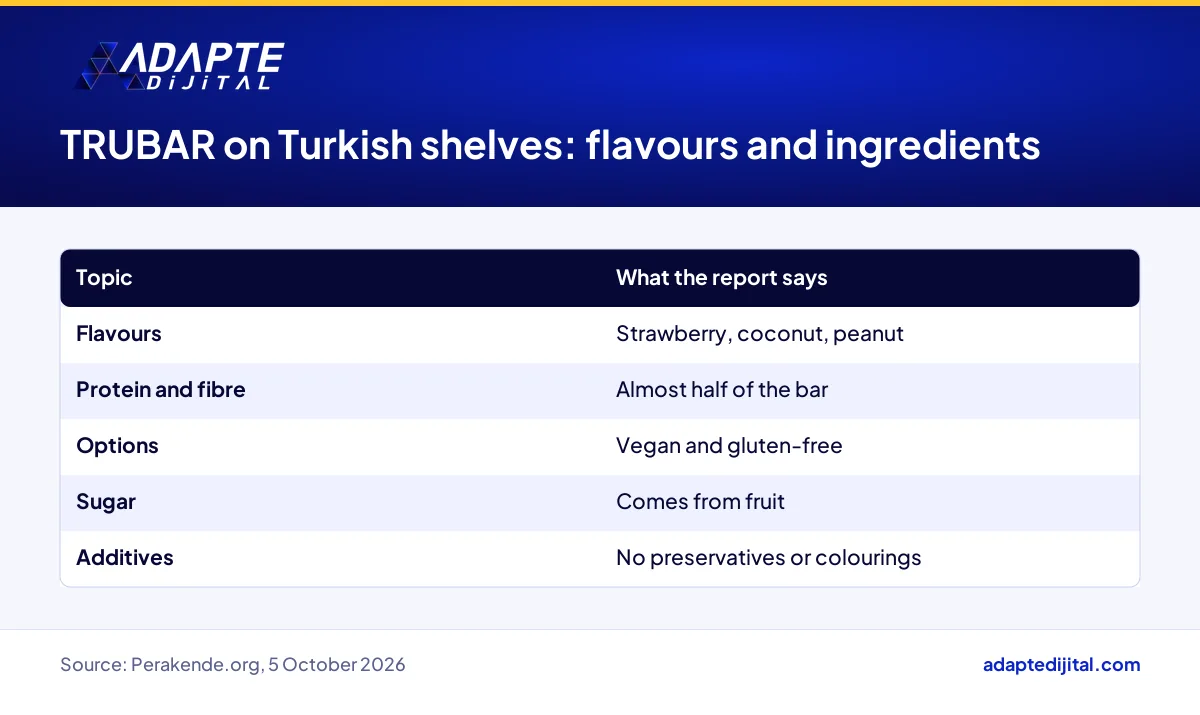
ETİ has started producing TRUBAR, the protein bar brand it added to its portfolio early this year, in Türkiye, and the bars are now on shelves in strawberry, coconut and peanut flavours (Perakende.org, 5 October 2026). Here’s something most people don’t know: ETİ Gıda, founded in 1961, bought the whole of this brand, which was founded in Miami in 2019.
What it means for you: a new imported name is entering the healthy snack shelf, backed by a large Turkish producer’s distribution. If you run a grocery, pharmacy, gym kiosk or café, you may need to rethink your shelf layout. If you own a local protein bar brand, you may need to rethink your price and positioning.
Which TRUBAR flavours has ETİ brought to Turkish shelves?
Three: strawberry, coconut and peanut. The report describes TRUBAR as one of North America’s fast-growing protein bar brands. It does not say which plant makes the bars in Türkiye or at what capacity.
What does the deal that ties TRUBAR to ETİ cover?
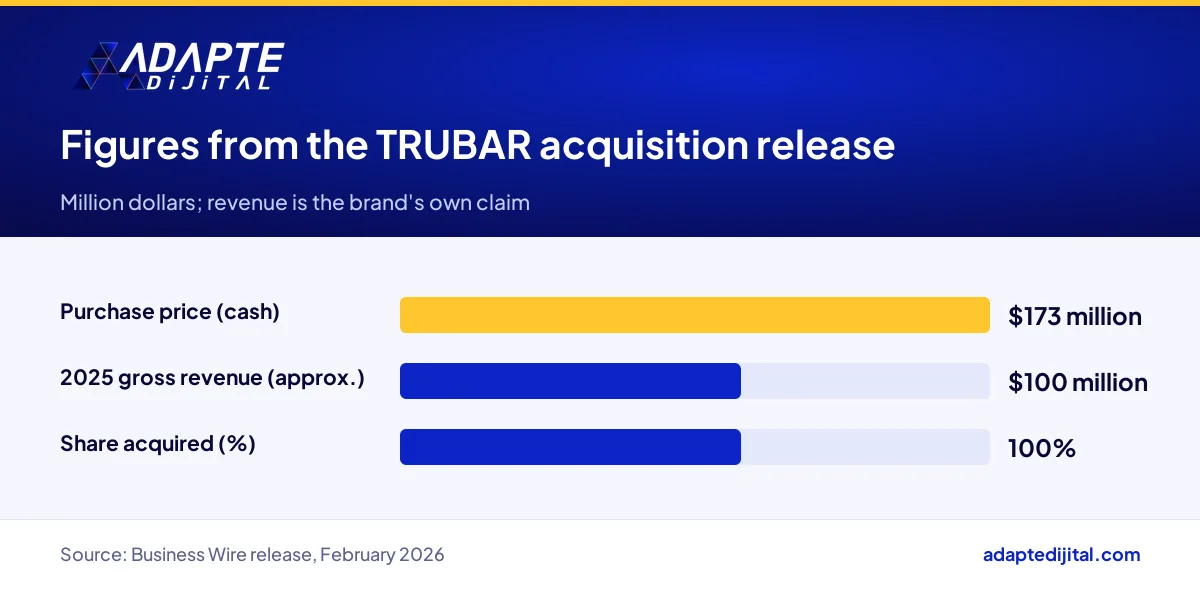
It covers the whole brand. According to a Business Wire release from February 2026, ETİ Gıda bought 100% of TRUBAR for $173 million in cash, with no earn-out. Those figures come from that separate announcement, not from the report on Turkish production.
What does a locally made import like TRUBAR change on the healthy snack shelf?
It can change the balance between price and availability. An imported product’s price and delivery can depend on exchange rates and shipping, while local production removes the shipping leg. The report does not give a price, so how that plays out on the shelf is still open. What the shopper sees is a “foreign brand” sitting in the same spot every week.
Which brands and businesses does TRUBAR’s arrival in Türkiye affect, and how?
It affects small local protein bar and healthy snack brands the most. On the same shelf, they now face a rival that arrives through a large producer’s distribution network. For retailers, the category gets wider, but the shelf space stays the same.
What changes for protein bars in search, marketplaces and reviews?
Brand-name searches and comparison searches tend to grow. Shoppers arrive with queries like “TRUBAR price” or “which protein bar is best”. A local brand with no product page, or one that explains its ingredients poorly, stays invisible in those searches.
What should snack retailers and local brand owners do this week about TRUBAR?
Retailers should check their shelf, and brand owners should check their product story. The job this week is not to order new stock but to measure where you stand. We sharpen brand positioning with local producers in our brand consultancy work.
Quick Summary
- ETİ has started making TRUBAR in Türkiye, and the bars are on shelves (Perakende.org, 5 October 2026).
- The flavours in Türkiye are strawberry, coconut and peanut.
- ETİ Gıda bought the whole brand for $173 million in cash (Business Wire release, February 2026).
- The Turkish price, protein content per bar and sales channels have not been announced.
- For small local brands, the real question is standing out on the shelf, not price alone.
Short Glossary
- Earn-out
- An earn-out is the term used for an extra payment made to the seller later if the acquired business reaches agreed targets.
- Planogram
- A planogram is the plan used to show in what order and with how much space products are arranged on a shelf.
- Private label
- Private label is the term used for products a retail chain sells under its own name.
Frequently Asked Questions
Next Step
If you want to work out together how to set your brand apart from new rivals on the shelf, fill in the consult your expert form.
Sources: Perakende.org, 5 October 2026 · TRUBAR/ETİ Gıda acquisition release, Business Wire, February 2026 · Food Industry Executive, March 2026 · TRUBAR official website (linked in the text). This is not investment advice.
Updated: October 2026
Sık Sorulan Sorular
A protein bar is a packaged bar eaten between meals that contains more protein than an ordinary snack. It has travelled from the gym bag to the office desk and on to the rack beside the supermarket till.
According to Perakende.org, protein and fibre make up “almost half” of the bar. There are vegan and gluten-free options, the sugar comes from fruit, and the bars contain no preservatives or colourings. The brand’s official website positions it as plant-based with all-natural ingredients, and it does not list protein grams per bar either.
That is not clear. Nobody has said whether all the US flavours will come to Türkiye. For shelf planning, it is safer to think in terms of three SKUs, or stock-keeping units, for now.
An earn-out is an extra payment made to the seller later if the business hits agreed targets. This deal has no such clause, so no part of the price depends on future results. Put simply, nobody has to come back to the negotiating table to settle the bill.
According to the release, the brand’s 2025 gross revenue was about $100 million, and it sells in more than 21,000 retail locations. The revenue figure is the brand’s own claim. Food Industry Executive reports that the bars are stocked by chains such as Costco, Target and Whole Foods.
The release names Firuzhan Kanatlı as Chairman of ETİ Gıda. According to Kanatlı, the deal is a strategic step to expand ETİ Gıda’s presence in North America.
Because the bar on the shelf now says two things at once: an American protein bar brand, and made in Türkiye. Picture a cousin who grew up abroad and comes home to open a shop on your street. Everyone feels they know him, yet they still turn the packet over to read the label.
Category management means planning the shelf as a product group, not item by item. When a new brand with strong distribution arrives, shelf share gets divided again. If slow sellers are just sitting on the shelf, they are the first to go to make room.
Local identity also sells on the shelf by another route. Metro Türkiye’s Ayvalık stop for geographically protected olive oil shows a brand telling its local story through origin.
Grocery chains, pharmacies and gym kiosks, if the bars reach them. A new name with a big producer behind it gives them a way to refresh the healthy snack shelf and lift the average basket at the till.
Small local protein bar makers, and the private label bars that chains sell under their own names. When a rival with strong distribution arrives, a brand that cannot explain its difference slides to the bottom shelf.
Cafés and coffee chains. A customer who wants a healthy snack with their coffee may look for the name they saw in the supermarket. Tchibo’s campaign is a useful case on how a coffee business grows sales beyond its core product.
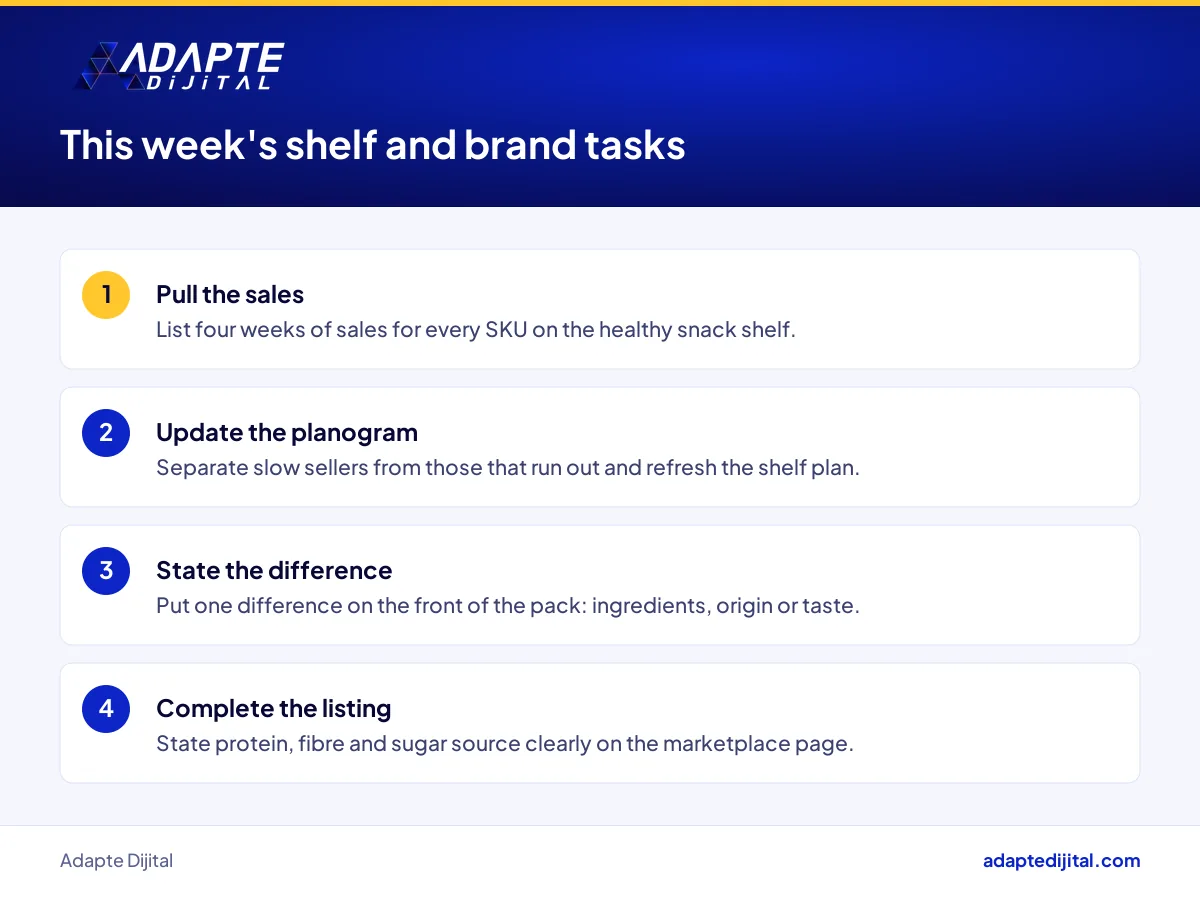
Ingredient information must be complete and consistent. Protein grams, fibre content and the sugar source should be clear in the product title and images. Shoppers compare on the same screen, and missing information sends the click to a rival.
With protein bars, taste reviews drive the purchase. A review that says “tastes like chalk” gets read faster than two paragraphs of product copy. Replying to reviews and fixing the recurring complaint in the recipe is a small brand’s cheapest tool against a big rival.
Pull the last four weeks of sales for every SKU on your healthy snack shelf. Separate the slow sellers from the ones that keep running out. Your planogram, the plan for where each product sits on the shelf, should be updated with this list before a new name arrives.
Put one clear difference on the front of the pack: ingredients, origin or taste. A product that says the same thing as its rival ends up competing on price. Our retail page, where we interpret retail news for you, makes it easier to follow what competitors are doing.
Now you know: TRUBAR is a US-born brand that ETİ Gıda bought outright, and it is now made in Türkiye and on shelves in three flavours. Its price and sales channels are not yet known. What will change the shelf is an imported brand image and local distribution meeting in the same packet.
The report does not name the sales channels. It says the bars are on shelves, but not which chains or online stores carry them.
No, the report gives no price. Check the price at the store where you find the product.
It can describe its product with one clear difference. Writing complete ingredient information and replying to reviews are first steps that need no budget.