
Migros opened a 9 million euro breeding farm, when should a retailer go upstream?
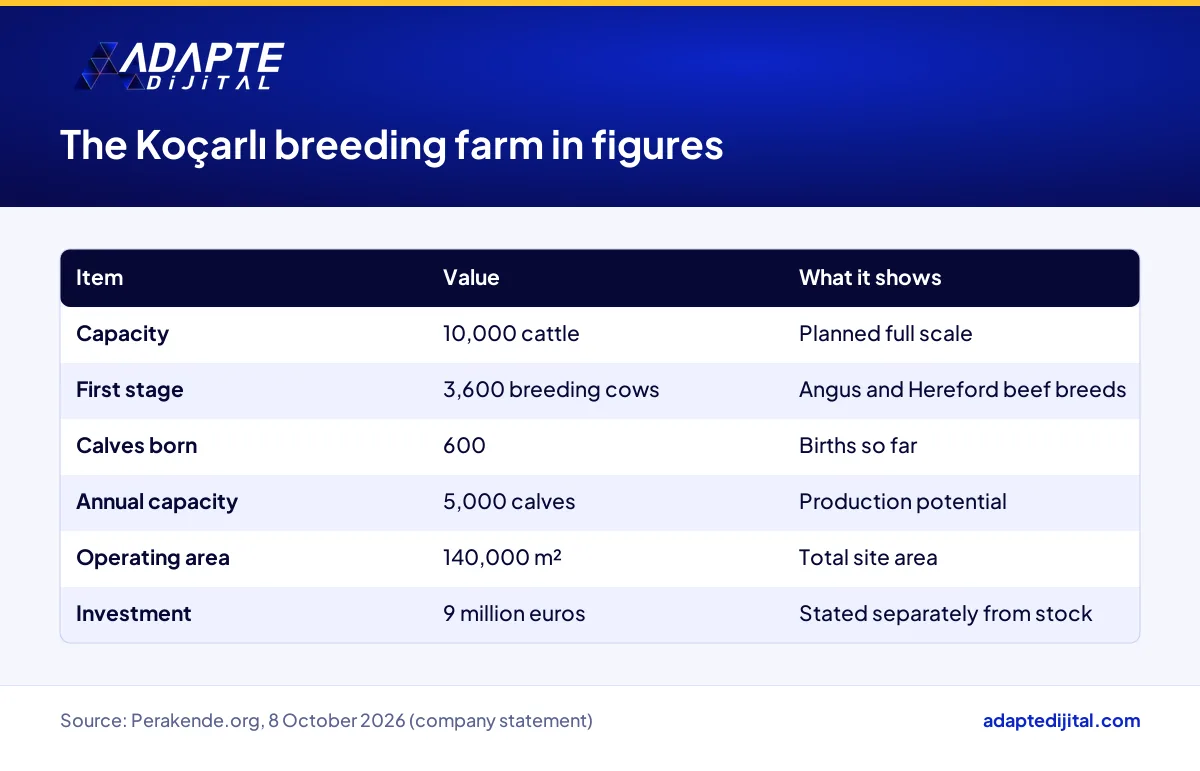
Migros has opened the “Migros Beef Breed Breeding Farm”, with capacity for 10,000 cattle, in Koçarlı, a district of Aydın province in western Türkiye (Perakende.org, 8 October 2026). The investment is 9 million euros, and the current livestock and feed stock is stated separately at TL 1 billion. The first stage holds 3,600 Angus and Hereford breeding cows; 600 calves have been born so far, and annual capacity is 5,000 calves.
For grocery retailers and butcher chains, the meaning is this: as supply tightens, a large player is tying its sourcing to its own farm. According to TÜİK, Türkiye’s statistics institute, red meat production fell 10.5 percent in 2025. The question is not “should we go into production” but “at what scale, at which stage and when”.
At what scale did Migros build its breeding farm in Koçarlı?
The farm has capacity for 10,000 cattle on a 140,000 m² operating area. The first stage holds 3,600 beef breed cows. The site includes 14 barns, an indoor sick bay, a 5,000 m² roughage store, a 12,000-tonne silage store and a 4,000-tonne underground liquid manure discharge centre. The team includes veterinarians, animal scientists, agricultural engineers and veterinary technicians.
Why is Migros moving into production while red meat supply shrinks?
Because its sourcing is large and supply is shrinking. According to TÜİK, Türkiye produced 1,885,130 tonnes of red meat in 2025, down 10.5 percent, and beef production fell 11.5 percent to 1,313,007 tonnes. According to Ekmel Baydur, Member of the Migros Group Marketing Executive Board, the company produces 40,000 tonnes of veal and lamb a year. At that scale, a gap in supply means an empty meat counter.
How does Migros’s farm investment affect other food businesses?
Farmers in the area are affected directly, since seasonal crops and fruit pulp are bought from them or from juice producers. Grocery chains and independent butchers are affected indirectly: as a large player secures its own supply, the bargaining balance in the open market may shift. No figure has been given on price effects. Whether the calves will be sold, or breeding stock passed on to producers, is not known either.
When, and at what scale, should a grocery retailer go into production the way Migros did?
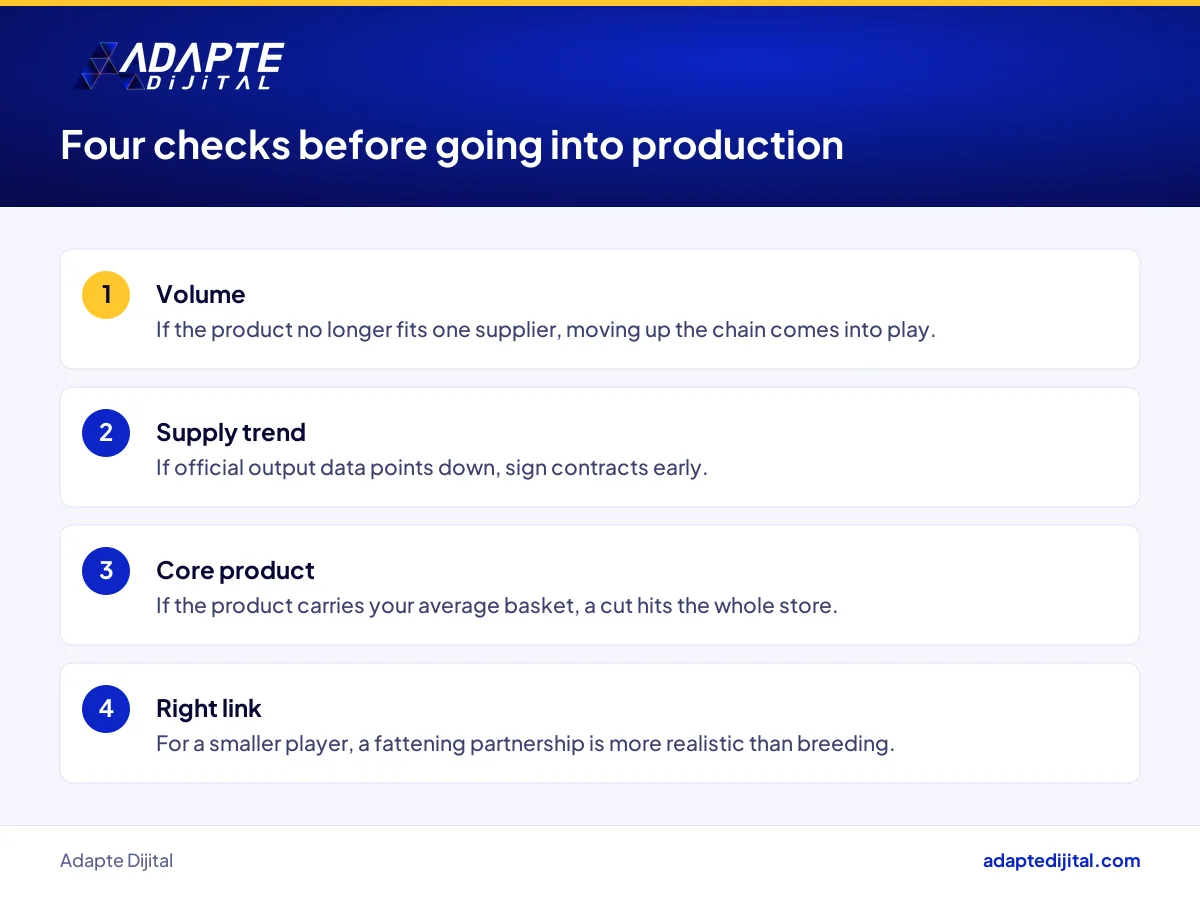
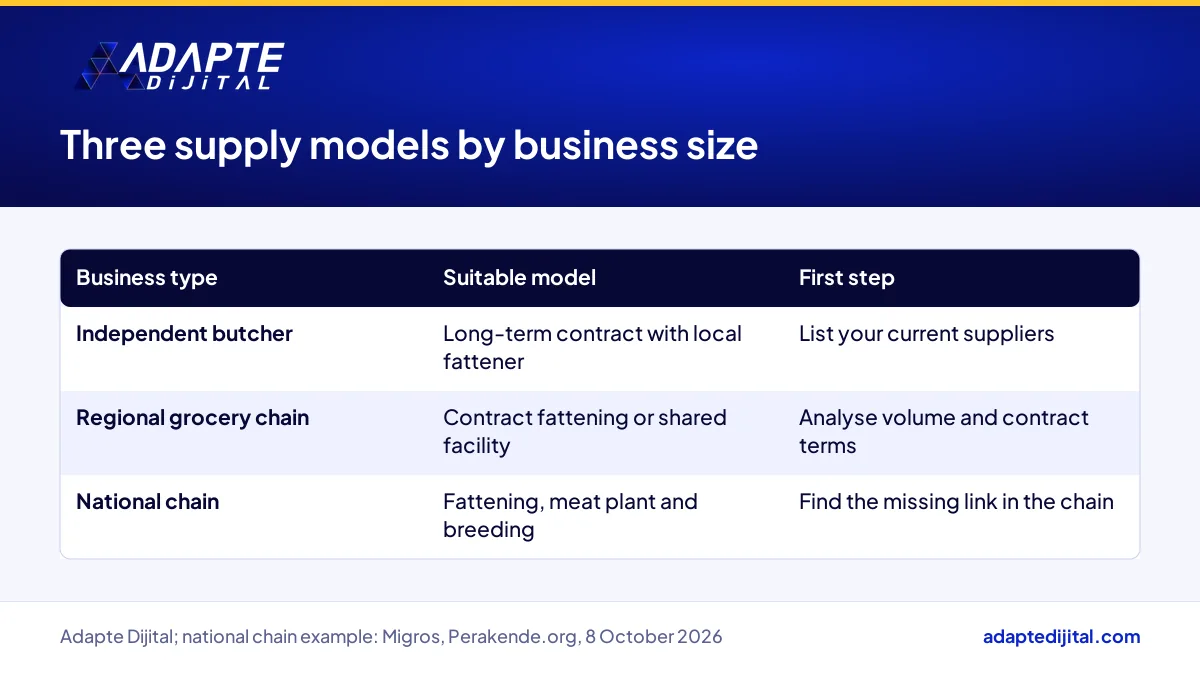
When three conditions hold together: supply volume no longer fits one supplier, supply has been shrinking, and the product sits at the core of sales. The Migros case shows the first two clearly: a sourcing network of hundreds of thousands of animals and a market where output fell in 2025. For a smaller player, the right scale is usually not breeding but contract fattening or a shared facility. This is not investment advice; the decision should rest on your own cash and risk picture.
How can a butcher or grocery chain show its supply chain online the way Migros does?
Through origin details on the product page, an up-to-date business profile in local search and the sourcing story on social media. If a shopper wonders where the meat comes from, the answer should be easy to find online. Following announcements on the Migros corporate website is also a way to see how a large player builds that story.
What should a grocery retailer do this week to secure meat supply after Migros’s move?
For a grocer or butcher selling meat in Türkiye in autumn 2026, there are three steps this week: put supplier dependence into a table, check how long current contracts run and set up a first meeting with a local fattener. If you want to build your supply and digital decision processes together, digital consulting is work we do.
Quick Summary
- Migros opened a breeding farm for 10,000 cattle in Koçarlı with a 9 million euro investment (Perakende.org, 8 October 2026).
- The first stage holds 3,600 breeding cows, and annual capacity is 5,000 calves (Perakende.org).
- According to TÜİK, red meat production fell 10.5 percent in 2025 (via Ekonomi Gazetesi).
- The “first in the sector” insurance cover is a Migros claim with no independent confirmation.
- For a smaller player, the realistic scale is contract fattening or a shared facility, not breeding.
Short Glossary
- Vertical integration
- Vertical integration is the term used when a company brings earlier or later links of its supply chain in-house.
- Breeding stock
- Breeding stock is the term used for animals raised to produce offspring.
- Breeding cow
- A breeding cow is the term used for a female animal in the herd that gives birth to calves.
Frequently Asked Questions
Next Step
Let’s look at your supply dependence and how you tell your sourcing story online, together. Fill in the consult your expert form; our retail page, where we interpret the retail agenda for you, also tracks FMCG news.
Sources: Perakende.org, 8 October 2026 · Ekonomi Gazetesi, 8 October 2026 · TÜİK data, via Ekonomi Gazetesi · Migros corporate website
Updated: October 2026
Sık Sorulan Sorular
The news gives 9 million euros as the investment and TL 1 billion as the current livestock and feed stock. It is not clear whether the 9 million euros covers the animals. So the two figures should not be added together; each belongs in its own context.
So far, 600 calves have been born, against an annual capacity of 5,000. What this means: the farm is still in its first stage. No date has been given for reaching full capacity.
According to Migros, all breeding animals on the farm are covered by Cattle Life Insurance, a first in the sector. The insurer is not named, and there is no independent confirmation. Seasonal crops are bought from farmers in the area, and fruit pulp comes from juice producers as part of a zero-waste approach.
What this means: there was less red meat to go around in 2025 than in 2024. A smaller pool can mean more buyers chasing fewer animals. A retailer that depends on outside suppliers may find it has less room to negotiate.
According to Baydur, Migros sources around 600,000 sheep and goats and 100,000 cattle a year. What this means: the company depends on a wide supplier network. He adds that the group also runs a fattening farm and MİGET, its meat production business.
Fattening raises animals that already exist; breeding produces the animals themselves. Adding breeding on top of the existing fattening farm and meat plant closes the chain from the very start. Baydur says they believe the investment will add “lasting value to Türkiye in red meat production.”
A chain without its own farm stays tied to wholesalers and fatteners. When supply tightens, that dependence becomes the main risk to keep an eye on. The length and volume of supply contracts matter more than ever.
A butcher competes on trust, not scale. A butcher who knows where each animal comes from can tell that story at the counter. When supply gets tight, a long-term deal with a local fattener works like the butcher’s own insurance.
Seasonal crops come from farmers in the area. A large facility in the region means a buyer for local producers. You can see what a local tie-in does for a brand in the case of Nutella Café pairing with Ankara simit, the sesame bread ring sold on Turkish streets.
Look at the product’s share of total revenue and at how much you rely on a single supplier. If meat is one of the items that carries your average basket value, a supply cut affects the whole store.
The start of the chain demands the most capital and expertise. At the Migros farm, a team runs from veterinarians to animal scientists and agricultural engineers. For a smaller player, the next link, such as a slaughterhouse or a partnership with a fattener, is more realistic.
Signing a contract while supply data points down puts you in a stronger position than signing once the shortage deepens. TÜİK’s annual production data is the earliest warning sign for this decision.
Verifiable details such as breed, fattening region and slaughter date. Fill in the same fields for every SKU. A field left blank weakens trust.
When someone searches for “butcher near me”, your business profile, photos and current opening hours do the talking. If your supplier is a local fattener, saying so in the profile sets you apart from the big chains.
When its supply model changes. A business that has moved into production should not keep telling the old story with the old logo. Filiz refreshing its 52-year-old brand raises a similar question about when a legacy brand should update its identity.
List the last six months of meat purchases by supplier. If one supplier’s share is high, that is where you see the risk of a cut first.
Term, volume commitment and price adjustment terms. When supply is tight, a short contract can hand bargaining power to the supplier. Verify with the official source; this is not legal or financial advice, so review the contract with your legal adviser.
No figure has been announced on its price effect. There is not enough data to make a forecast.
First measure your supplier dependence, then look at contract fattening with a local farmer. A breeding investment needs high capital and a specialist team.
The news lists 9 million euros as the investment and TL 1 billion as the current livestock and feed stock, separately. Their relationship has not been explained, so they should not be added together.