
Building a Natural Oil Brand: Does Everyone Who Bottles Oil Own a Brand?
Natural oils are one of the categories where building a brand looks easiest: buy oil from a wholesaler, fill bottles, print a label. The entry threshold is so low that anyone can enter — and that is exactly why not everyone who bottles oil owns a brand.
There are hundreds of similar bottles on the shelf and most sell the same oil bought from the same wholesaler. The only difference sits on the label. Building a brand in such a place means building not the product but the knowledge and the chain behind it.
This guide covers the reality of a natural oil brand: extraction method and purity, analysis and documentation, the claim line, channel and telling decisions, and the first 90 days’ output. Here the brand is whoever can prove where the oil came from.
Classification: Cosmetic or Food?
The same oil falls under a different regime depending on the purpose it’s sold for. Four headings:
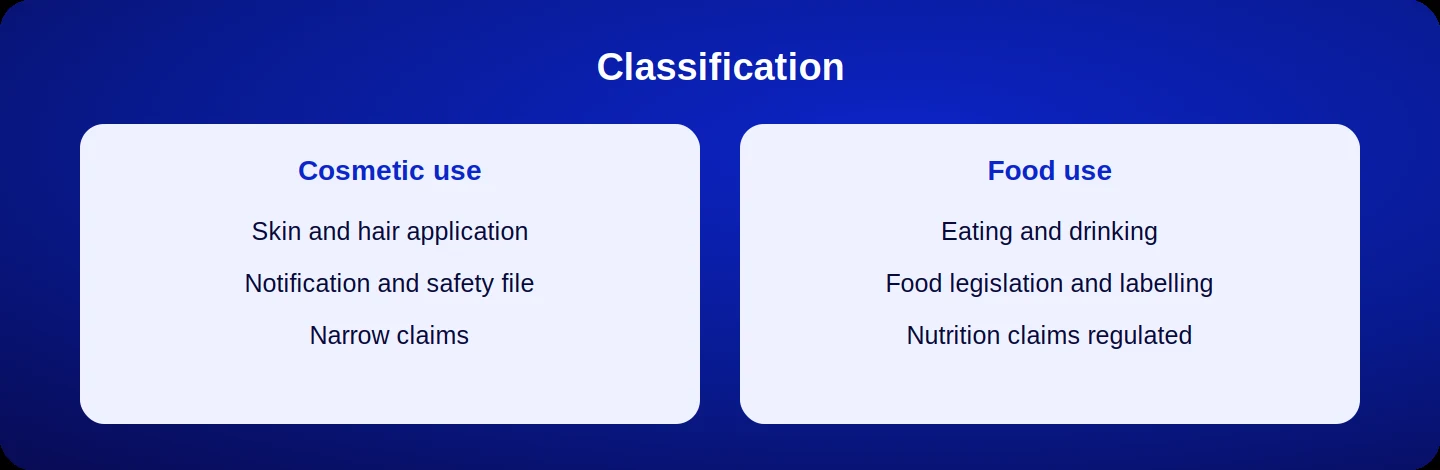
Inside the headings:
Source, Extraction and Purity
This is where differentiation actually lives. Four headings:
Four headings:
The Claim Line and Label Language
Here the most common mistake is turning traditional knowledge into a health claim. Four rules:
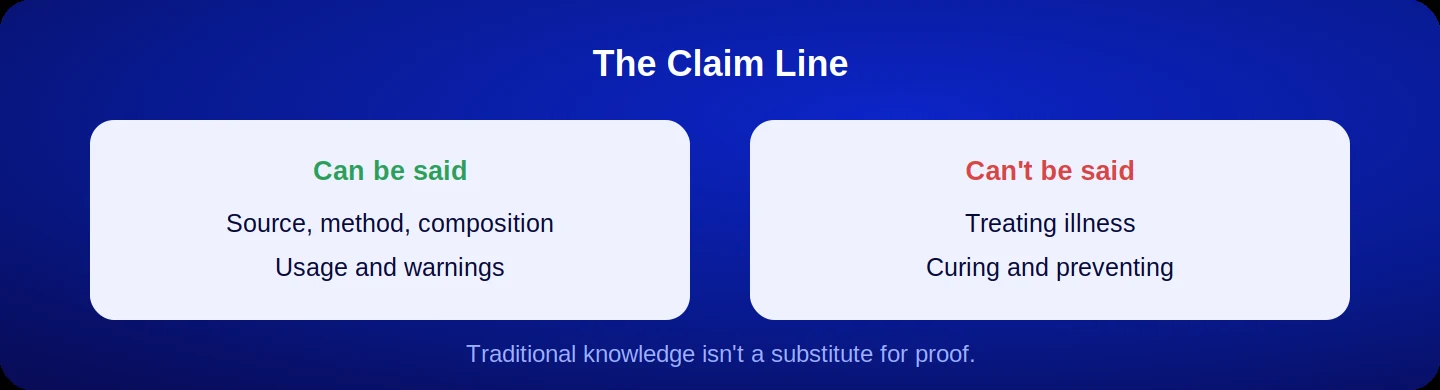
Inside the rules:
Packaging, Channel and Price
The product looks simple, but logistics and presentation decisions set the margin. Four headings:
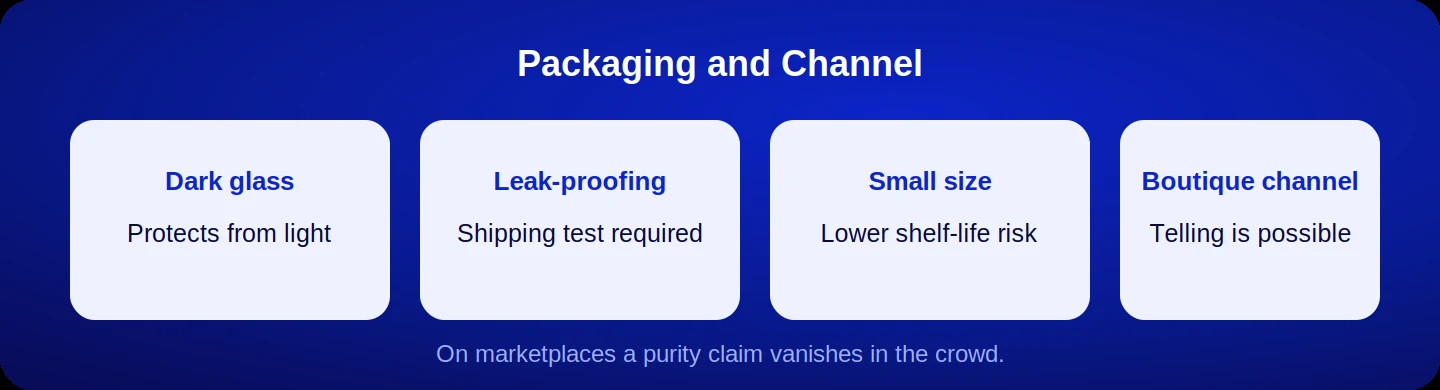
Four headings:
First 90 Days: Counted Output
BU BÖLÜMÜN ÖZETİ
- Month one: class, source, supplier
- Month two: analysis, documents, label
- Month three: small batch, one channel
The aim of the three months isn’t a wide range but building chain and documentation on one product.
Four headings:
Month one: class, source, supplier
Cosmetic or food, which oil, which supplier and which method? No documentation process starts before the class decision.
Month two: analysis, documents, label
Batch analysis, notification or the relevant registration regime, labelling and warnings, packaging and leak testing. The claim list is written the same month.
Month three: small batch, one channel
Small batch, your own site and a boutique channel trial. Data to collect: repeat purchase, usage questions, leakage and return reasons. Overall planning is done with digital consulting.
The Meeting Test and Purity X-Ray
BU BÖLÜMÜN ÖZETİ
- “Which class will the product be sold in?”
- “Do you have an analysis report?”
- “Do you state the extraction method?”
- “What do we get if we start small?”
The closing ruler. Four questions:
What good answers sound like:
“Which class will the product be sold in?”
A good answer names the class and its documentation regime. Ambiguity means the label will be printed again.
“Do you have an analysis report?”
A good answer mentions batch analysis. Without analysis a purity claim shouldn’t be made; made anyway, it becomes both a risk and a reputational issue.
“Do you state the extraction method?”
A good answer says it states method and source. A brand that doesn’t gets levelled with the cheapest equivalent on the shelf.
“What do we get if we start small?”
A purity X-ray: a classification decision, an analysis and document list, a permitted-and-banned phrase list, and packaging testing and a price table — fixed fee, the documents are yours. Bring your sample to a preliminary assessment; the scope is on the brand consultancy page. Neighbouring door: the makeup brand guide.
Field Notes
· Brands sharing analysis reports separate themselves clearly from rivals buying from the same wholesaler; documentation is the most concrete difference here.
· Where no leak test is done, courier leakage repeats in the early months; dark glass and a good cap cost less than a single return.
· Brands giving complete usage and dilution information see “it irritated my skin” complaints fall noticeably.
Mini Glossary
Extraction method: How the oil is obtained — cold pressing, distillation, extraction; it sets composition and price.
Batch analysis: The composition and purity report for each production batch.
Adulteration: Diluting an expensive oil with a cheap one; detected by analysis.
Quick Summary
· The class decision comes first: cosmetic and food mean different documentation, labelling and channels.
· Differentiation comes from the chain: source, method, analysis. No purity claim without analysis.
· Packaging is a technical decision; claims stay narrow and usage and warning information is given in full.
Your Next Step
Answer two questions this week: in which class will you sell your product, and do you hold an analysis report? With both clear you can move to label language. Bring the documents to a preliminary assessment.
Frequently Asked Questions
Does buying from a wholesaler and bottling count as a brand?
Technically you can sell, but that produces a label rather than a brand: everyone buying the same oil from the same place sells the same product and competition falls straight to price. Building a brand means owning the chain — knowing the source, choosing the method, commissioning analysis and explaining all of it. That route looks costly but it is the only sustainable one. Otherwise, when the next cheaper bottler arrives, your customer will be there.
Is there a business difference between essential and carrier oils?
Yes, and an important one: essential oils are far more concentrated and carry risk in direct use, so dilution and warning information becomes critical; their high prices also make adulteration risk greater. With carrier oils the risk is lower but shelf life and oxidation come forward. If you’ll sell both in one range, make labelling, warning and packaging decisions separately for each. If you’re entering the essential oil side, the analysis and warning regime must be set up from the start.
Should I do my own production?
Small-scale cold pressing is possible for some oils but requires equipment, raw material supply and a hygiene regime; producing also changes your documentation obligations. The right sequence is usually this: start with a reliable supplier, build the chain and the analysis, then evaluate production once sales are steady. Own production becomes far more meaningful if you’re close to the raw material — in a growing region, for instance — and delivers genuine differentiation.
Sık Sorulan Sorular
Label, documentation and sales channel are all built around the class; changing class later means redoing packaging and process. A label printed under the wrong class is the first cost thrown away.
Notification, safety assessment, a product information file and cosmetic labelling rules. Even in contract filling the file stays with the brand — the same regime is described in the hair care guide. Saying “it’s just oil, there’s no formula” doesn’t remove the liability.
Business registration, food labelling, nutritional values, shelf life and storage conditions. Food business registration and approval processes are defined in the relevant food legislation. The food class demands a different business setup from cosmetics.
Selling the same bottle for two purposes creates problems; two separate products, two labels and two documentation regimes are needed. A dual-purpose label ends up incomplete for both.
Cold pressing, distillation and solvent extraction give different products: composition, scent and price all change. Stating the method is the most concrete way to describe the product. A brand that doesn’t state its method is assumed to have used the cheapest one.
With analysis reports: composition profile and purity indicators. Words like “pure” or “100%” demand proof and shouldn’t be written without analysis. An unanalysed purity claim is the most common risk in this category.
Diluting expensive oils with cheap ones is a known problem in this sector; if you don’t know your supplier, your product is at risk too. Analysis protects you against your own supplier as well.
Because it’s a natural product, scent and colour can vary between batches; that is character, not a defect, but unexplained it becomes a complaint. Managing expectations prevents returns — the same principle holds in the fermented product guide.
The line between cultural knowledge and a health claim is thin; even “traditionally used for” can count as a claim depending on context. The safe route is describing the product and its composition.
Some oils shouldn’t be used undiluted, some can cause photosensitivity, some aren’t recommended in pregnancy. Those warnings are both a safety and a trust matter. A brand writing warnings shows seriousness.
How much, how, diluted with what and how often. If that information is missing customers use the product wrongly and blame the product. A wrongly used product is assumed to be a bad product.
In this category copy is often written on social media and that’s where the line gets crossed. A written list protects the team; for the measure of misleading commercial communication, Advertising Board decisions give a sense of the boundary.
Light and oxygen degrade oil; dark glass, a dropper and a leak-proof seal are required. A product leaking in transit is both a return and a reputational loss. Nothing ships without a packaging test.
A small bottle lowers trial risk, a large one improves unit cost. Because oils are consumed slowly, large sizes carry shelf-life risk. A small size is usually the better start here.
Your own site is ideal for presenting information; on marketplaces price comparison is harsh and purity claims disappear in the crowd. Boutiques, herbalists and salon channels carry trust value. Channel design runs through e-commerce consulting, the site side through website consulting.
Raw material (highly variable by source and method), analysis cost, packaging, shipping, leakage and waste allowance. A brand paying for analysis prices that in and explains why. The advertising measure sits with advertising consultancy; content is built with digital media.
Clarifies classification, sets up the analysis regime, has the claim list written, insists on the packaging test and prices in analysis and waste. A consultant doesn’t press the oil; they stop you setting out on an unprovable purity claim. Brand architecture sits with brand consultancy; category choice in the sector map and choosing a consultancy in the umbrella guide.