
The First 90 Days of a Neighborhood Business Opening with a Turnkey Website

A tailor on a quiet Istanbul side street says the same sentence everyone says: there is no time for a website. The business in this story is representative, a composite of many owners; the steps are the real delivery flow of our turnkey website package. Over the first 90 days, that sentence turns into something else: approving a few choices and receiving the keys.
The story follows each stage in order: the first call, the plan that arrives, the approvals, the handover and the first signals in Search Console. There are no invented results here, no customer counts and no revenue. What it shows is how little the owner has to do, and what to watch once the site is live. For the basics first, see what a turnkey website is.
What happens at the first call when a business owner has no time for a website?
The tailor expects a long list of homework: texts, photos, a logo, technical details. None of that is asked for. The call has one purpose, which is to hear about the work in the owner’s own words. Who comes in, what they ask for most, which neighborhoods they come from and what sets the shop apart.
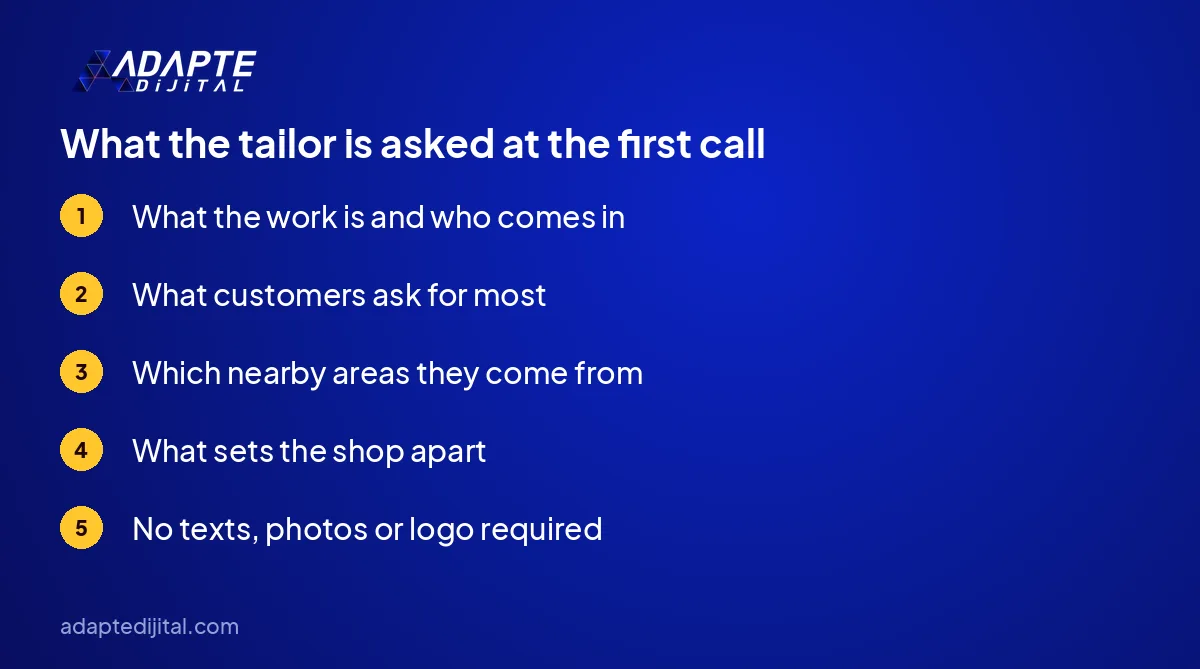
“No time for a website, the shop is full all day.”
That is the opening line, and it is a fair one. The reply is simple: the only thing needed is a description of the work. Everything else comes back as choices to approve.
What does the business owner receive after the first call?
A sector setup comes back for review. It holds a page map, six keyword groups, a domain suggestion and design directions, each with a short reason. The plan is shaped around a tailor’s work, not copied from another business. A dentist and a mover would never receive the same plan, and neither would this shop.
“Do people really search for a tailor online?”
The keyword groups answer that question better than any promise. They show the kinds of searches the site is built to meet, such as alterations or custom fittings in nearby areas.
How does “no time” turn into “just approve”?
This is the turning point: the tailor looks at the domain suggestion, the page map, the keyword groups and the design direction, and picks, with no writing and no meetings about fonts. After the setup and domain are approved, a written build calendar arrives. From then on, the owner’s role is to say yes or ask for a change.
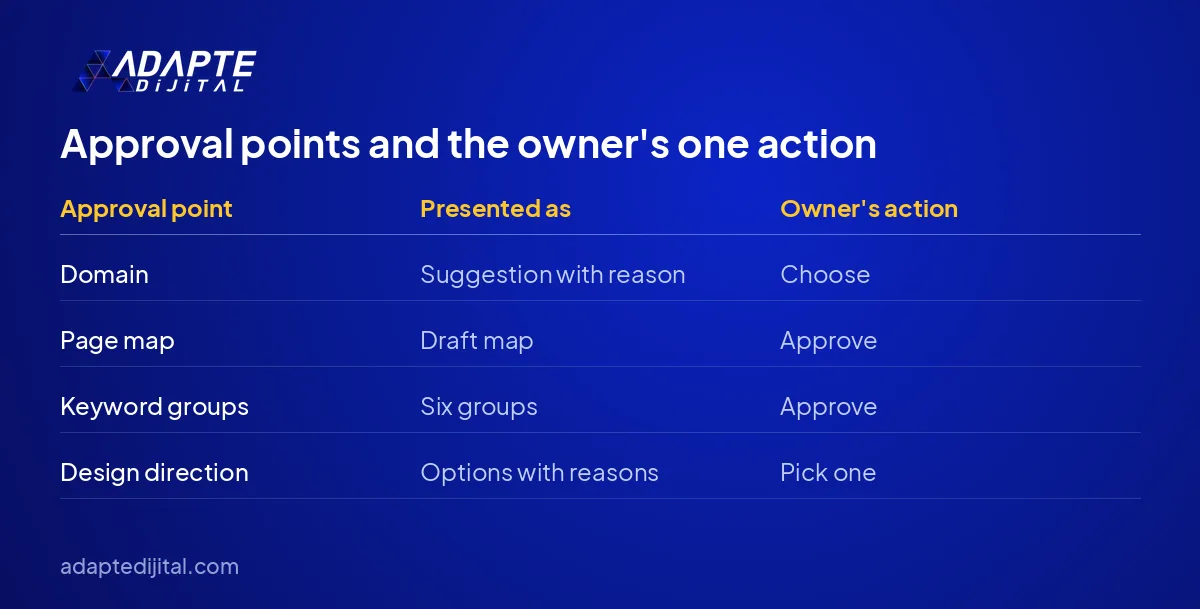
“So all that’s needed is a yes?”
Mostly, yes. The articles are written by the team, and the schedule for them is part of the plan. The owner reads, approves and goes back to the shop.
What does handing over the keys actually include?
At handover, the tailor receives access to the site, the measurement panel and the page map. The domain is registered in the business’s name. Hosting for the first year is included, and the renewal after that belongs to the owner, with notice in advance. Then the matter is closed: no subscription and no surprise invoice later.
| Moment | Asked of the owner | Received by the owner |
|---|---|---|
| First call | Describe the work | A sector setup to review |
| Setup review | Choose among options | A written build calendar |
| Build | Approve or ask for changes | Pages and first articles |
| Handover | Nothing new | Access, measurement panel, page map |
The same flow is open to a limited number of businesses this period. See what the real turnkey website package delivers.
What shows up in Search Console after the launch?
After launch, the tailor learns to open one report, where the sitemap shows as read. Then the first impressions appear, small at first, as Google starts testing the pages in real searches. No one counts customers at this stage, and the early signal is simply that the site is being seen.
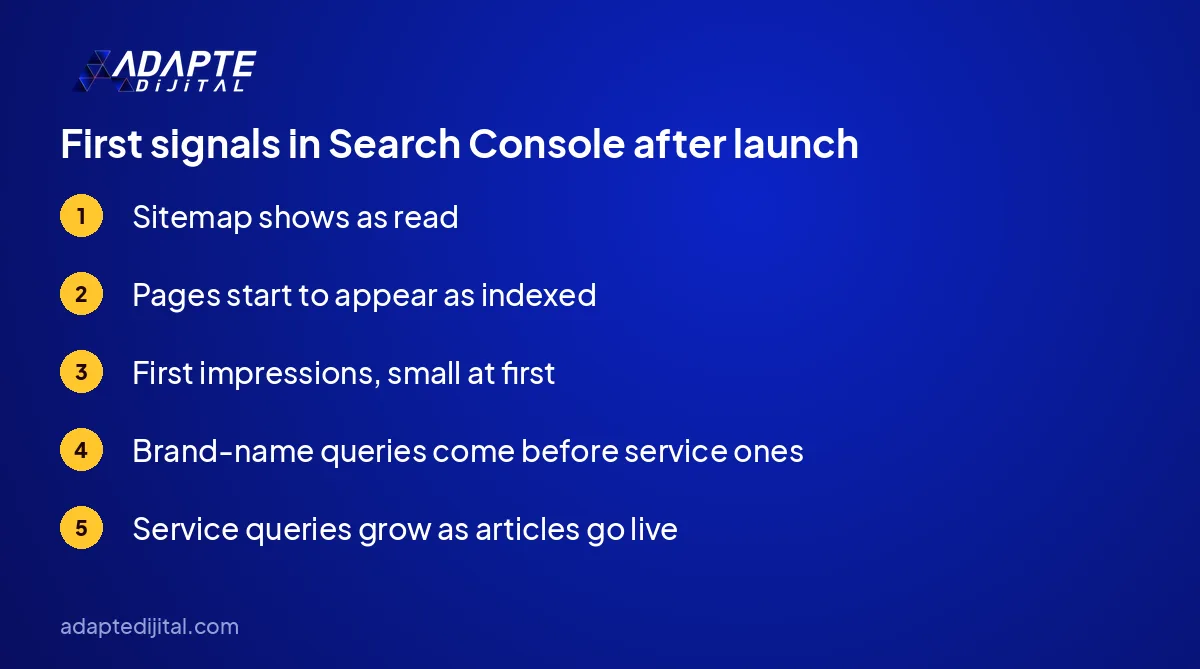
“Is this working, or is it too early to tell?”
Both, in a sense. Impressions mean pages are indexed and tested. Clicks tend to follow later, and Google guarantees no timeline.
What should a neighborhood business watch in its first 90 days?
Three things, in order: first, that the sitemap is read and the pages are indexed; second, that impressions keep appearing as new articles go live. Third, the query list, by day 90, should include searches describing the service and not only the shop’s name. Timing details are in when a new turnkey website shows up on Google.
Quick Summary
- The business is representative; the steps are the real delivery flow.
- The first call asks about the work, not texts, photos or a logo.
- A sector setup arrives with options and reasons for each.
- The turning point: the owner only approves.
- Handover includes access, the measurement panel and the page map.
- The first 90 days are about indexing, impressions and the query list.
Short Glossary
- Sector setup
- Sector setup is the term used for the page map, keyword groups, domain suggestion and design directions prepared for one business.
- Build calendar
- Build calendar is the term used for the written schedule given after the setup and domain are approved.
- Handover
- Handover is the term used for delivering the site with its access, measurement panel and page map.
Frequently Asked Questions
Next Step
If there is no time for a website in your week either, the first step fits into a single conversation. Describe your work, review the sector setup and approve. Building starts only after that. Apply for a real turnkey website and receive your setup first.
Sources: Google Search Console · Google Search Central, How Google Search works
Updated: November 2026
Sık Sorulan Sorular
If a logo or photos exist, they are used. If they do not, the team solves it. The owner is not sent away to produce material.
Because a busy owner should not have to research anything. Each option arrives with its reason, so the decision takes minutes, not evenings. That is the difference from working with a website consultant by the hour.
Waiting decisions, not workmanship. Keeping approvals quick keeps the build calendar on track. The full sequence is laid out in the six steps from first call to launch.
Part of the 108 articles are live at launch. The rest follow the calendar and publish on time, without the owner lifting a finger.
A new request becomes a new development, with its own delivery list and price. The original delivery stays closed and complete, which is how a web design agency working on fixed deliveries keeps scope clear.
Usually the shop’s own name, from people who already know it. Service searches from strangers come with more content, which is why the article calendar matters.
Change everything at once or judge the site by clicks in the first month. Both lead to the wrong conclusion too early.
If the tailor’s sentence sounds familiar, the answer is the same: describe your work once, approve a few choices, and let the site be built around you. The roadmap for owners who want a site without the hassle is a good next read.
No. The business is representative, a composite of many owners. The steps described are the real delivery flow of the package.
Very little. The owner describes the work once and approves the options presented. Texts, images, a logo and technical setup are not requested.
Check that the sitemap is read, that impressions appear in Search Console and that the query list grows to include service searches by day 90.