
Building an Electronics Brand: Import or Contract Manufacturing, and What Does a Consultant Ask?
The first fork in building an electronics brand is this: will you import a finished product and put your name on it, or work with a manufacturer here on a contract basis? Both are possible, and their cost, risk and speed are entirely different. Choosing the wrong fork shows up in the first batch.
The supplier explains the product, the customs broker explains the paperwork, the accountant explains the cost. None of them discusses what the brand looks like in three years. That question is yours to ask — or someone’s to ask on your behalf.
This guide covers what building an electronics brand really involves: the actual difference between importing and contract manufacturing, the documentation and liability chain, stock and model risk, setting up after-sales, and the first 90 days’ output. In electronics a brand starts with paperwork and ends with service.
Import or Contract Manufacturing? Two Arms of the Fork
Both routes are legitimate; the question is which suits your situation. Four measures compare them.
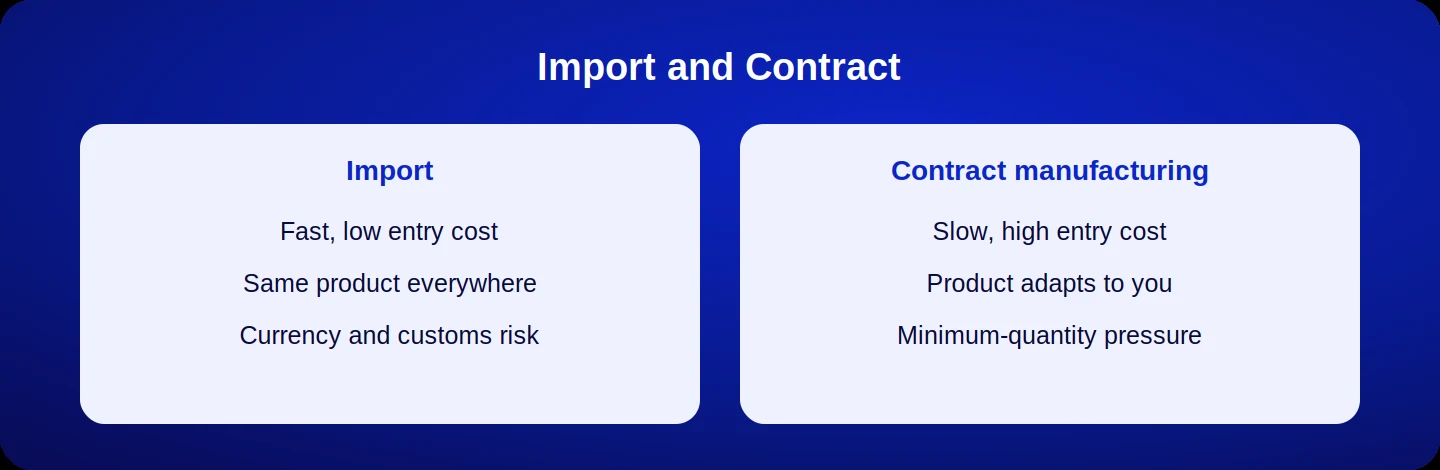
Inside the arms:
Documentation and the Liability Chain
The most common mistake in electronics is treating documentation as the supplier’s job. Four headings clarify it.
Four headings:
Stock, Models and Price Pressure
In electronics money is tied to product, the product ages fast and the price is visible. Three pressures are managed together.
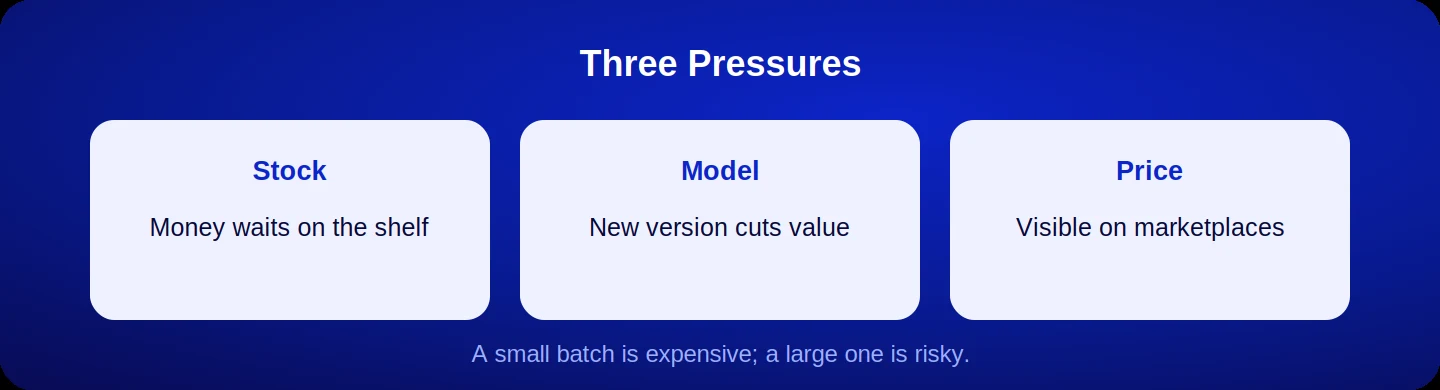
Inside the pressures:
After-Sales: Where the Brand Is Tested
In electronics a fault isn’t a possibility but a rate. Four decisions are made up front.
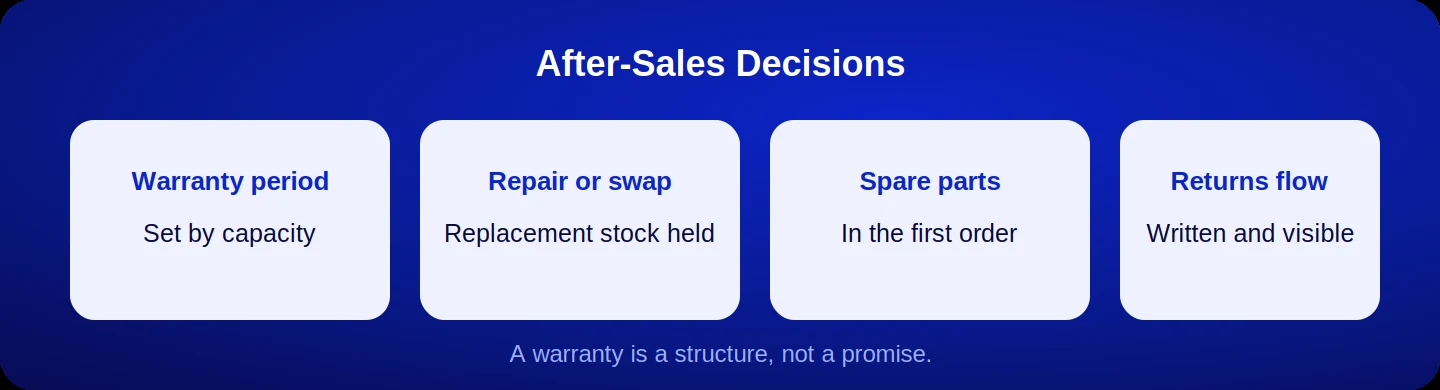
Four decisions:
First 90 Days: Counted Output
BU BÖLÜMÜN ÖZETİ
- Month one: category, supplier, sample
- Month two: documents and packaging
- Month three: small batch, one channel
In electronics the three months are paperwork and validation months. Sales arrive in month three.
Four headings:
Month one: category, supplier, sample
A narrow category, two or three supplier candidates, sample testing. No order is placed without using the sample yourself. Supplier choice matters more than product choice: one who can supply parts and continuity beats a cheap one.
Month two: documents and packaging
Conformity and test paperwork, warranty certificate, local-language manual, box and barcode structure. Skip this month and month three stops. A product missing documents can’t be sold and generates cost in the warehouse.
Month three: small batch, one channel
Small batch, one variant, one channel and measured advertising. Data to collect: sales velocity, return and fault rates, types of customer question. Overall planning is done on the digital consulting side.
The Meeting Test and Electronics X-Ray
BU BÖLÜMÜN ÖZETİ
- “Whose name are the documents in, and which model do they cover?”
- “What is the total landed cost?”
- “What happens if it breaks?”
- “What do we get if we start small?”
The closing ruler. Four questions:
What good answers sound like:
“Whose name are the documents in, and which model do they cover?”
A good answer shows they cover your model and commercial identity. “The supplier has them” isn’t enough; the responsibility for placing the product on the market is yours.
“What is the total landed cost?”
A good answer counts the lines: product, freight, customs, tax, documentation, shipping, returns allowance. A single figure shows the margin hasn’t been calculated.
“What happens if it breaks?”
A good answer gives steps and days and discusses replacement stock and spare parts. With no answer, the warranty is a sentence.
“What do we get if we start small?”
An electronics X-ray: an import-versus-contract comparison, a document checklist, a landed-cost table and a draft warranty-service model — fixed fee, the documents are yours. Bring your product idea to a preliminary assessment; the scope is on the brand consultancy page. Neighbouring doors: technology brands and kitchenware brands.
Field Notes
· Where documentation is left until after the order, the product usually waits in the warehouse; the same period also locks the advertising and sales plan.
· Brands starting with a single variant get noticeably faster returns on the same budget than those starting with many.
· Where replacement stock is set aside, fault complaints close before becoming reviews; without it, a single incident stays visible for a long time.
Mini Glossary
Landed cost: The total cost of a product until it reaches your warehouse; the real floor for pricing.
Placing on the market: The documentation, safety and warranty responsibility of whoever sells under their own brand.
Replacement stock: Units set aside to swap faulty products quickly.
Quick Summary
· Importing starts fast and cheap but is hard to differentiate; contract manufacturing starts slow and expensive and makes the product yours. Validate by importing, deepen through contract work.
· Documentation is the entry condition and responsibility sits with whoever places the product on the market.
· Three pressures managed together: stock, model obsolescence, price. After-sales builds the brand.
Your Next Step
Produce two lists this week: the documents to request and the lines in your landed cost. If both are complete, you’re ready for supplier talks. We’ll check them together in a preliminary assessment.
Frequently Asked Questions
Does importing in small quantities make sense?
At the validation stage, yes: unit cost is higher but risk stays small and you test the category through real sales. The aim at this stage is data rather than profit — which variant sells, what the return rate is, what customers ask. Once the data is clear, scaling up becomes both cheaper and safer. The point to watch in small quantities is that documentation and testing costs weigh heavily per unit; price the first batch accordingly.
Many brands sell the same product — how do I differentiate?
If you can’t differentiate on the product, differentiate around it: who it was chosen for (a narrow category), the experience out of the box (a clear manual, a setup video), after-sales (fast replacement, spare parts) and the package contents (extra accessories, extended warranty). All of these are cost lines and get priced in; in return you leave the price race. Spending on advertising before making the differentiation decision is the most expensive route.
What signals it’s time to move to contract manufacturing?
When three signals arrive together: sales have become steady, it’s clear which feature is in demand, and customers keep asking for the same change to the existing product. At that point contract manufacturing lets you make the product yours and makes you harder to copy. Set two things in writing as you move: who owns the mould and design, and what quality control standard applies. Without those two clauses, a contract-manufacturing agreement becomes your most fragile point as you grow.
Sık Sorulan Sorular
Speed and ease of testing: samples arrive in weeks, small batches are possible, and you test the category at low cost. It is the cheapest route to category validation. Its weakness is that dozens of others hold the same product; differentiation is built outside the product — the narrowing and after-sales logic matches the technology brand guide.
Once sales data has accumulated and a product-specific demand becomes clear: a different capacity, a different connection, a different casing. Contract work lets you make the product yours but brings minimum quantities and tooling costs; it isn’t entered on an unvalidated idea.
Import cost isn’t a single line: product price, freight, customs, taxes, testing and documentation, currency movement. If these aren’t written into pricing from the start, margin erodes. Import cost isn’t the figure on the invoice; it’s the total landed cost.
Yes, and the healthy sequence is usually this: validate the category by importing, let sales data accumulate, then move to contract manufacturing and adapt the product. Contract manufacturing is validation’s reward, not a starting method. The general measure for category choice sits in the sector map.
The party selling it under its own brand — you. The chain of responsibility for safety, conformity and consumer rights starts there. If the supplier’s document doesn’t cover your product model and commercial identity, it doesn’t protect you. For import and customs procedures in practice, customs administration guidance is a starting point.
Declaration of conformity and test reports, product label and marking information, the warranty certificate structure, and a local-language user and installation manual. This list is requested before ordering; gathered afterwards, the product waits at customs or on a shelf.
For electrical products, battery, packaging and electronic-waste obligations arrive alongside sales volume. Invisible at small scale, they get asked about as you grow. A brand planning growth knows this line from the start.
The name printed on the box is your most fragile point when it isn’t registered in the relevant class. The product gets copied, the name gets protected; registration and brand architecture are built within brand consultancy.
Below what you think you can sell. The first batch exists for data, not profit: sales velocity, return rate, fault rate. A large-batch discount taken without knowing sales velocity isn’t a discount but a risk.
One colour, one capacity, one model. Variants open after sales data arrives. Every variant means more capital tied up for the same revenue, and in electronics tied-up capital is ageing capital.
On total landed cost rather than product cost: freight, customs, tax, documentation, shipping, returns allowance, marketplace commission and advertising. An electronics brand that doesn’t know its margin loses more as revenue grows; the measure of advertising waste sits with advertising consultancy.
You appear side by side with everyone selling the same product; if price is your only weapon, margin disappears. The way out is package differentiation: adding spare parts, extending the warranty in writing, offering setup support. Channel design is planned with e-commerce consulting.
The minimum legal conditions and your own service capacity. A brand without capacity announcing a long warranty is issuing a post-dated debt. A warranty is a structure, not a promise.
For small brands replacement usually resolves things faster and cheaper; but replacement stock must be held as a separate line. A brand without replacement stock keeps customers waiting through a wave of faults.
Adapters, cables and covers prevent a large share of returns; requesting them later is both expensive and slow. A warranty without parts is a warranty on paper.
Separately for your site and each marketplace: who pays shipping, how many days to resolution, which channel to apply through. A written, visible process halves complaints; the site side is built with website consulting, and choosing a consultancy sits in the umbrella guide.
Tests the route choice, produces the document list, protects quantity and parts terms in supplier negotiation, forces the warranty-service model and caps the first batch. A consultant doesn’t pick the product; they stop you buying the wrong one in the wrong quantity.