
Own Site, Marketplace or Boutique for a Bag Brand? Three Channels on Six Criteria
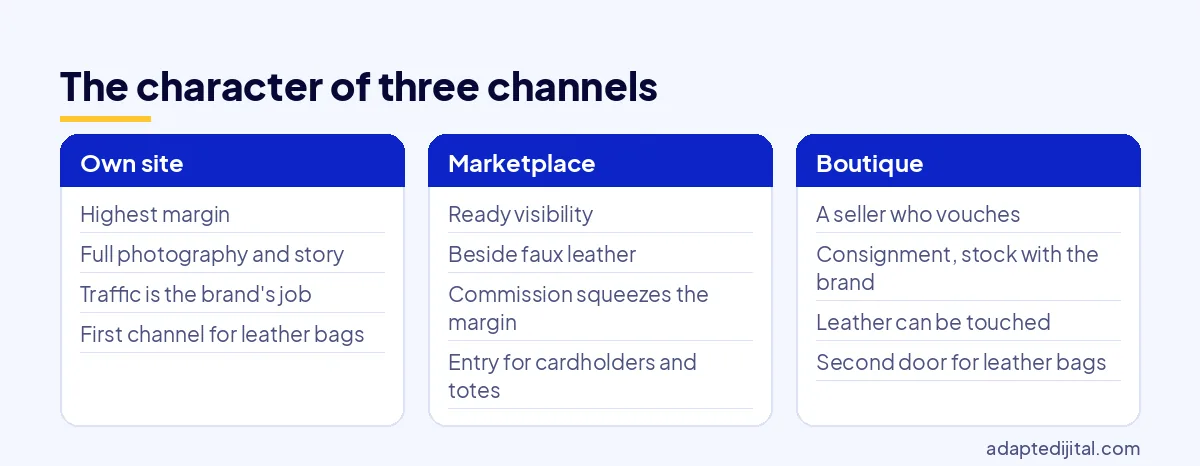
Leather bags sell on the brand’s own site and in boutiques, small leather goods and textile bags enter through a marketplace, and corporate totes are a separate door. The own site has the highest margin but needs its own traffic; the marketplace gives visibility but puts leather beside cheap faux leather; the boutique offers a seller who vouches, on consignment.
This article compares the three channels on six criteria and adds a decision rule by product group. No figures, only relative margin structure.
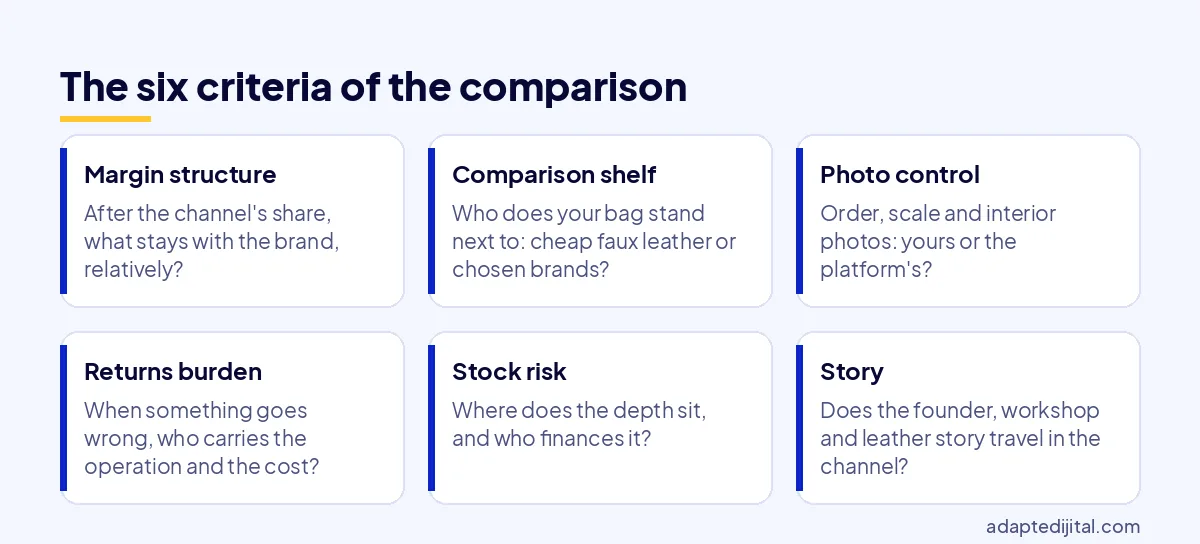
Which six criteria is the comparison made on?
Margin structure, comparison shelf, photo control, returns burden, stock risk and story. These six shape a bag brand’s first two years; price is deliberately left out, because price is the brand’s decision, not the channel’s, and should be the same across all three. Each channel is scored low, medium or high; there is no total, and the weighting changes by product group.
Own site: the main channel for photography and story
The own site has the highest margin and the fullest control; photo order, scale shot, interior layout and the founder’s story work in full only here. The price is traffic: the brand brings the visitor, through content, an Instagram shop window and advertising. Visibility starts low, returns and shipping sit with the brand, stock sits on the brand’s own shelf.
Strengths
Highest margin, your own comparison shelf, full story, your own data. Pre-orders and a repair promise live here.
Weaknesses
Early traffic is slow and expensive, trust starts from zero. E-commerce consulting covers building and converting.
Marketplace: an entry for small leather goods and textiles, the wrong comparison for leather bags
A marketplace hands you visibility; the searching customer is already there, and for products bought by comparison, such as wallets, cardholders and canvas totes, the first sale comes here. The price is twofold: commission and campaigns squeeze the margin, and the list view puts a leather bag beside faux leather at the faux leather price. Photo control is low.
Strengths
Ready traffic and a fast first sale. For seller rules and commission, the Trendyol seller page is the primary source; read the current version.
Weaknesses
Leather is compared with faux leather, the story does not travel, the product sells rather than the brand. Without a bridge to your site you stay a cardholder brand.
Boutique and concept store: a seller who vouches, a consignment shelf
The boutique is the natural shelf for a leather bag: the seller holds the product, lets the customer smell the leather and vouches for it. The price is consignment: payment comes as items sell, unsold items come back, stock risk stays with the brand. Margin is medium, there is no photo control, but the product is in hand and the story in the seller’s mouth.
Strengths
A seller who vouches, the right customer, touchable leather. The site address on the dust bag carries the customer home.
Weaknesses
Late payment, returns, a separate negotiation per boutique. Districts are in starting a bag brand in Istanbul; why people pay a small brand is in why people pay for small bag brands.
Three channels on six criteria: the comparison table
The table gives the six criteria for three channels in relative terms; no figures, only high, medium and low. The last row answers who each channel is for. There is deliberately no total, because for leather bags comparison shelf and photo control weigh most, while for small leather goods and textiles visibility and stock turnover do.
The table
| Criterion | Own site | Marketplace | Boutique |
|---|---|---|---|
| Margin | Highest | Tightest | Medium, delayed |
| Comparison shelf | Yours | Beside faux leather | Chosen brands |
| Photo control | Full | Low | None |
| Returns | Brand’s | High | Back to brand |
| Stock risk | Controlled | Needs depth | Scattered |
| Story | Full | Does not travel | Partial |
| Who for | Leather handbags | Cardholders, totes | Leather, local |
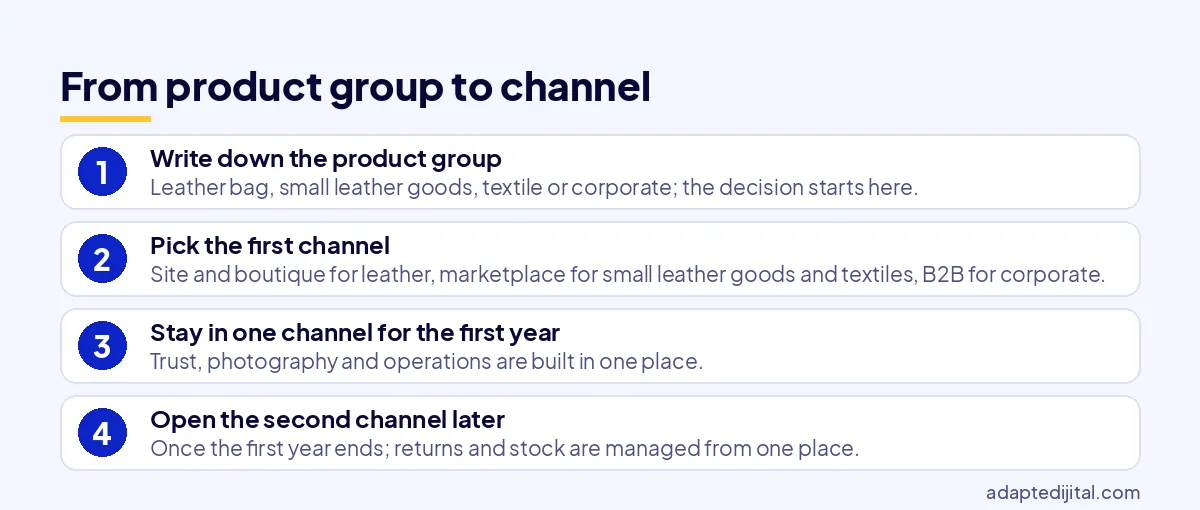
The decision rule: first and second channel by product group
The decision comes from the product group, not preference: leather handbags and shoulder bags go to the own site and boutiques, small leather goods and textile bags to a marketplace as entry products, corporate totes straight to a B2B proposal. The second channel opens after the first year. A brand entering all three at once stays half-finished in all three.
The decision table
| Product group | First channel | Second channel | Reason |
|---|---|---|---|
| Leather handbags | Own site + boutique | European boutiques | Shelf and photos |
| Wallets, cardholders | Marketplace | Own site | Bridge product |
| Canvas and textile bags | Marketplace | Own site, corporate | Volume |
| Backpacks, laptop bags | Own site | Marketplace | Interior shown |
| Corporate totes | B2B proposal | Own-site page | Buyer wants a file |
The exception
A founder with a ready community can start with the site alone; the exception reaches only as far as the community.
Frequently Asked Questions
Quick Summary
- Six criteria; price is not one.
- Own site: highest margin; traffic is the brand’s job.
- Marketplace: visibility, but leather meets faux leather.
- Boutique: a seller who vouches; consignment.
- The product group picks the channel.
- One main channel in the first year.
Short Glossary
- Consignment: paid as it sells, unsold items returned
- Comparison shelf: the products placed next to yours
- The one who vouches: whoever endorses the product at purchase
- Entry product: a low-priced first item, such as a cardholder
Next Step
To set your channel order, use the consult your expert form; the scope is on the brand consultancy page. Next: the cost of starting a bag brand: cost items, three thresholds and the first batch.
Updated: October 2026
Sık Sorulan Sorular
A leather handbag listed beside a cheap faux leather bag looks wrong itself, not just its price. The case is in why a leather bag brand stalls at its first collection.
A bag is a visual product. Does the channel show your photos in your order, with a scale shot, or squeeze them into a square box? See the photography-first positioning method.
At launch, once the capsule and photo set are finished. Pick the channel first and you bend the product, swapping leather for faux. Find your stage in the hub article on which consulting a bag brand needs.
A brand starting with leather handbags that has photography and a story. Tote bags alone cannot pay back the traffic.
Brands entering with small leather goods and textiles. For leather bags it is a visibility channel; see the Trendyol store roadmap.
Corporate totes are a fourth door: a proposal to a purchasing manager. Export is a fifth: small batches to European online boutiques; see foreign trade consulting.
Brand consultancy ties product group to channel. The overall order is in the pillar article on starting a bag brand, channel cost in the cost of starting a bag brand; to decide, consult your expert.
It depends on the product group: leather bags on the own site and in boutiques, small goods and textiles via a marketplace, corporate totes via B2B.
Yes, but beside cheap faux leather and without the story; it is a visibility channel, not a margin channel.
Paid as it sells, returned if unsold; stock risk stays with the brand.