
From Makeup Artist to Makeup Brand: One Founder’s Story and Three Lessons
A makeup artist can start her own makeup brand, and the artist in this story is doing it. For bridal makeup she mixes lipsticks from five brands; today she runs a six-shade lipstick family, her own site and two salons. We name neither her nor the salons, but give the shades, the three manufacturers, the wear-time problem and the safety report in her name.
We use the present tense because the brand runs today; her own words are in quotation marks. Her decisive choice: she looks for shade on the client’s skin, not in a catalogue. Three lessons for non-artist founders close the story.
Lipstick mixed from five brands and an artist’s palette
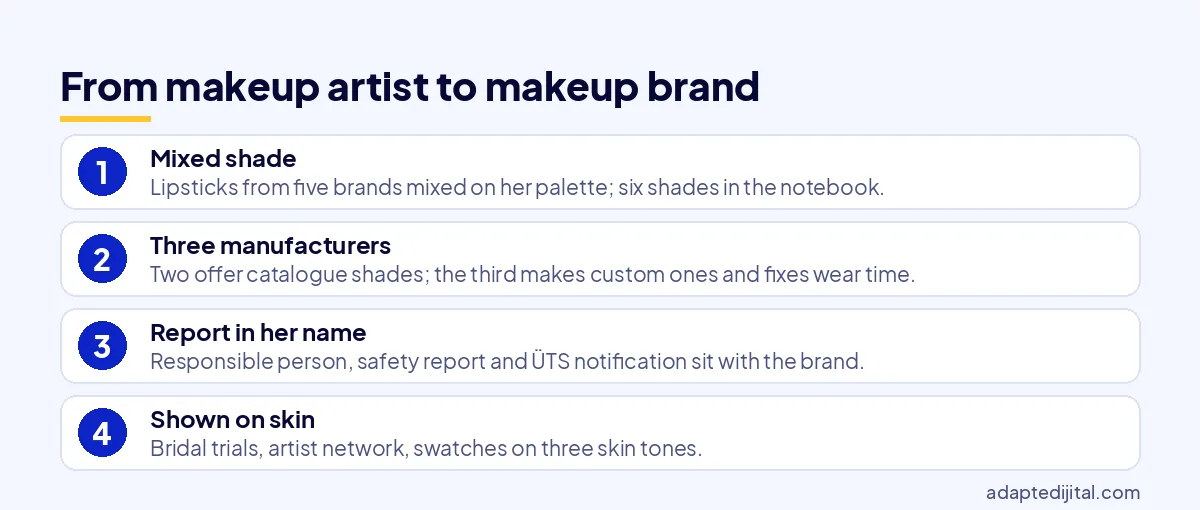
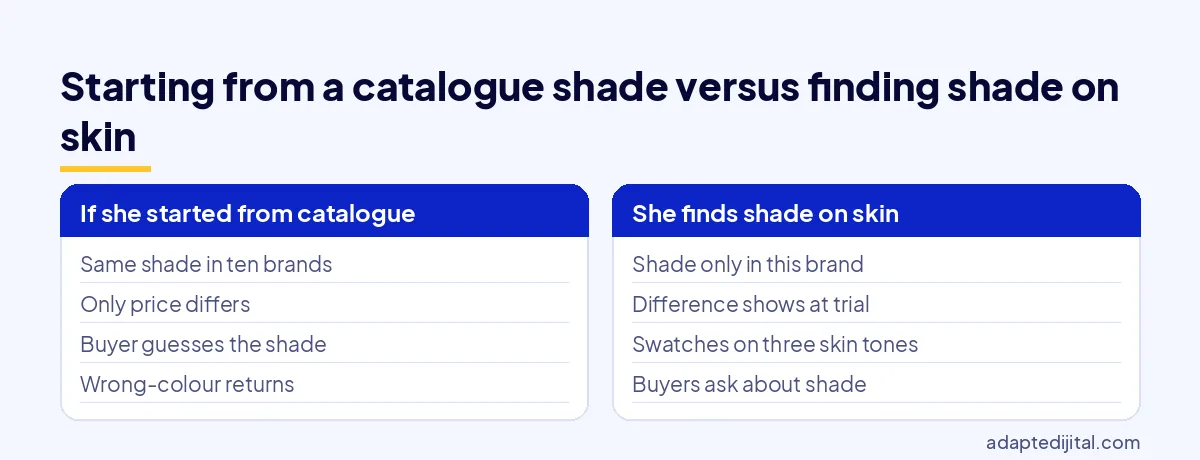
In a busy wedding season, no ready-made lipstick gives the shade she wants on the bride’s skin, so she mixes five brands on her palette. After every bride she notes the mix: which lipstick, how much, which skin tone. One day the bride’s mother looks in the mirror and says: “Where is this shade sold? I want one too.” That day the founder writes: shade is found on skin, not in a catalogue.
The turning point
In one week three brides ask for the same shade, and it is on no shelf. She says: “Every time, I mix the same shade again. The client loves it, but she cannot take it home.” Why people switch to small makeup brands is covered in the four reasons and one case article.
Three manufacturers, catalogue offers and a wear-time problem
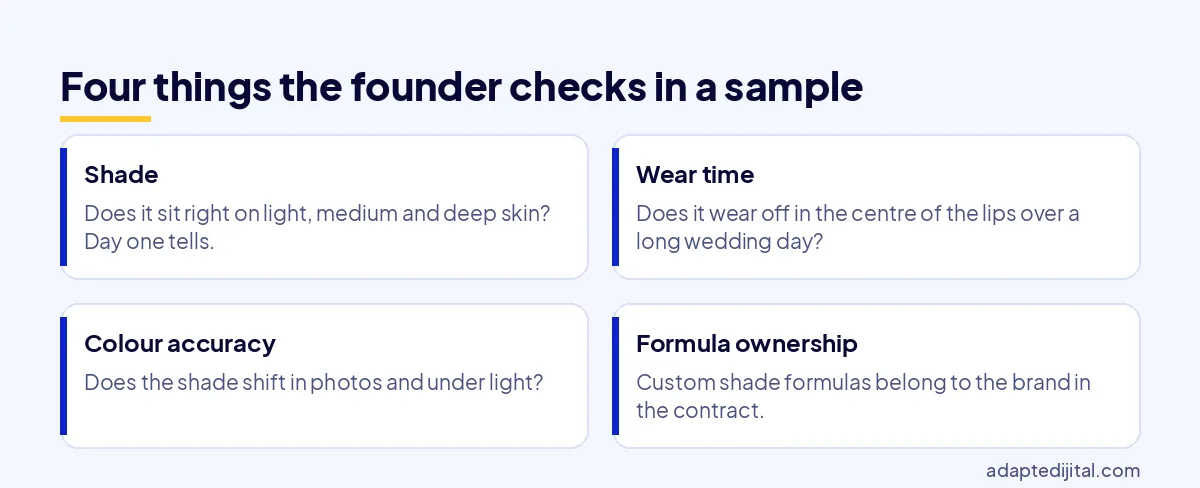
She takes the six mixes to three manufacturers, two on Istanbul’s western side and one on the Asian side. Two suggest the closest shade from their chart; she refuses, since that shade is in ten brands, and the third agrees to develop custom shades. The shades are right, but over a long wedding day the lipstick wears off in the centre of the lips.
The founder’s words
She puts it this way: “The bride puts on lipstick at nine in the morning, and photos are still being taken at midnight. A lipstick with the right shade but no staying power is no use to me.” What a wear-time claim means in plain language is in the pigment, shade and wear time article.
The clause she adds to the contract
The contract states that custom formulas and shade names belong to her brand, with a shade deviation limit as acceptance criterion. The founder says: “The mix was born in my notebook, so the formula will be mine too.” Which cost is paid when, line by line, is in the cost article.
She takes the safety report and responsible person role in her own name
Once the sample is approved, the manufacturer offers to handle the documents; she stops here. The responsible person is the brand placing the product on the market, and the safety report, product information file and ÜTS notification are all in its name. She gets the CI numbers and INCI list in writing and the report issued in her name. The founder says: “I know what I put on a bride’s face, so I want to know what is inside the lipstick.”
Documents asked for at inspection
The safety report, product information file and ÜTS notification record sit in one folder. Details of the three documents are in the notification and inspection rules article.
Showing shade on the client’s skin: the first channel is her own brides
The first batch goes not to a marketplace but to her brides and artist friends. At each trial she tries all six shades on the bride, then applies the chosen one to the mother and bridesmaids. Her site shows every shade swatched in the same light on light, medium and deep skin. She says: “On a marketplace my lipstick is a small square among a hundred. At a trial it is on a bride’s face.”
The swatch standard
Same light, same angle, three skin tones, checked against the real colour. The swatch shooting template is in the shade-led method article; setting up the site falls under e-commerce consulting.
The artist network, two salons and the brand today
Her artist friends use the lipsticks on their brides and show clients her site. Today the brand runs on one lipstick family: six shades, her own site and two salons. She has not given up bridal makeup; “Brides teach me shade, the brand teaches me patience,” she says.
The artist kit
Artist friends get minis of the six shades and an application note. The founder says: “Selling lipstick to an artist is not easy, but I know what an artist asks.” The season calendar for the kit and the lipstick is in the when should a makeup brand launch article.
Three lessons from the story (for non-artists)
One: makeup is seen on skin first, so shade, wear time and colour accuracy are tested on different skin tones in real use. Two: the responsible person role, safety report and formula ownership are settled in the brand’s name before selling. Three: among catalogue lipsticks, showing shade on the client’s skin sets a brand apart.
Frequently Asked Questions
Quick Summary
- The artist founder mixes lipsticks from five brands for bridal makeup; the bride’s mother becomes the first buyer.
- She works with the one manufacturer of three that develops custom shades and fixes wear time.
- She takes the responsible person role and safety report in her own name; INCI and CI numbers sit in one folder.
- The first channel is her own brides and artist network; every shade is swatched on three skin tones on her site.
- Today: a six-shade lipstick family, her own site and two salons.
Short Glossary
- Lipstick family: a group of complementary shades made with the same formula and packaging
- Custom shade: a shade developed at the brand’s request rather than taken from the manufacturer’s chart, found in no other brand
- Responsible person: the person or company that places a cosmetic product on the market and is responsible for its compliance
- Swatch: a photo of the mark a product leaves on skin, showing the shade’s real colour
Next Step
To start your own story from the first shade, write via the talk to a specialist form; the scope is on the brand consultancy page. To return to the start of the set, see I want to start a makeup brand.
Updated: October 2026
Sık Sorulan Sorular
The founder says: “In a bridal photo, the lips show most. A complexion product needs ten shades; a lipstick family can start with six.” Why catalogue lipstick is easy but standing out is hard is explained in the pillar article.
She tests on herself and two artist friends first, then swatches on light, medium and deep skin. Shade shows on day one, wear time after a meal, colour shift in photos. The acceptance criteria for sample and swatch testing are in the contract manufacturer article.
At inspection the brand is the named contact; why assuming the manufacturer notifies is a mistake is explained in the six misconceptions article. The rules are on TİTCK (Turkish Medicines and Medical Devices Agency) pages and in the Cosmetics Regulation.
INCI list, nominal quantity, PAO symbol, batch number and responsible person, repeated on the page. She says: “Whatever we agree at the bride’s trial happens at the wedding; whatever is on the label is in the lipstick.”
On marketplaces, catalogue shades look alike, only price differs, and wrong-colour returns start. How the gap between screen colour and real colour stalled one brand is in the stalled first collection case.
The buyer asks about shade before price: “Will this shade look like this on my skin too?” She writes the answer on the page: undertone, look on each skin tone, and the basis of the wear-time claim.
The salon owner puts out testers and asks: “If a client likes the shade, where does she buy it the next day?” The founder opens her site’s swatch gallery. How channel order is set by product group is in the own site, marketplace or beauty retailer article.
Turns the bridal trial into method: buyer card, three-tone swatches, document folder, artist network, shade finder. Bringing these together is the work of brand consultancy; your stage is in the hub article.
The sector picture is in the makeup brand sector guide, and the twelve pre-launch items are in the checklist. For your own story, talk to a specialist.
Yes; this founder starts from bridal mixes, finds a custom-shade manufacturer, takes the safety report in her name and sells through clients and artists.
The brand placing the product on the market is the responsible person; the safety report, product information file and ÜTS notification are held in its name.
Test shade and wear time on different skin tones, settle documents and formula ownership before selling, and show shade on the client’s skin.